
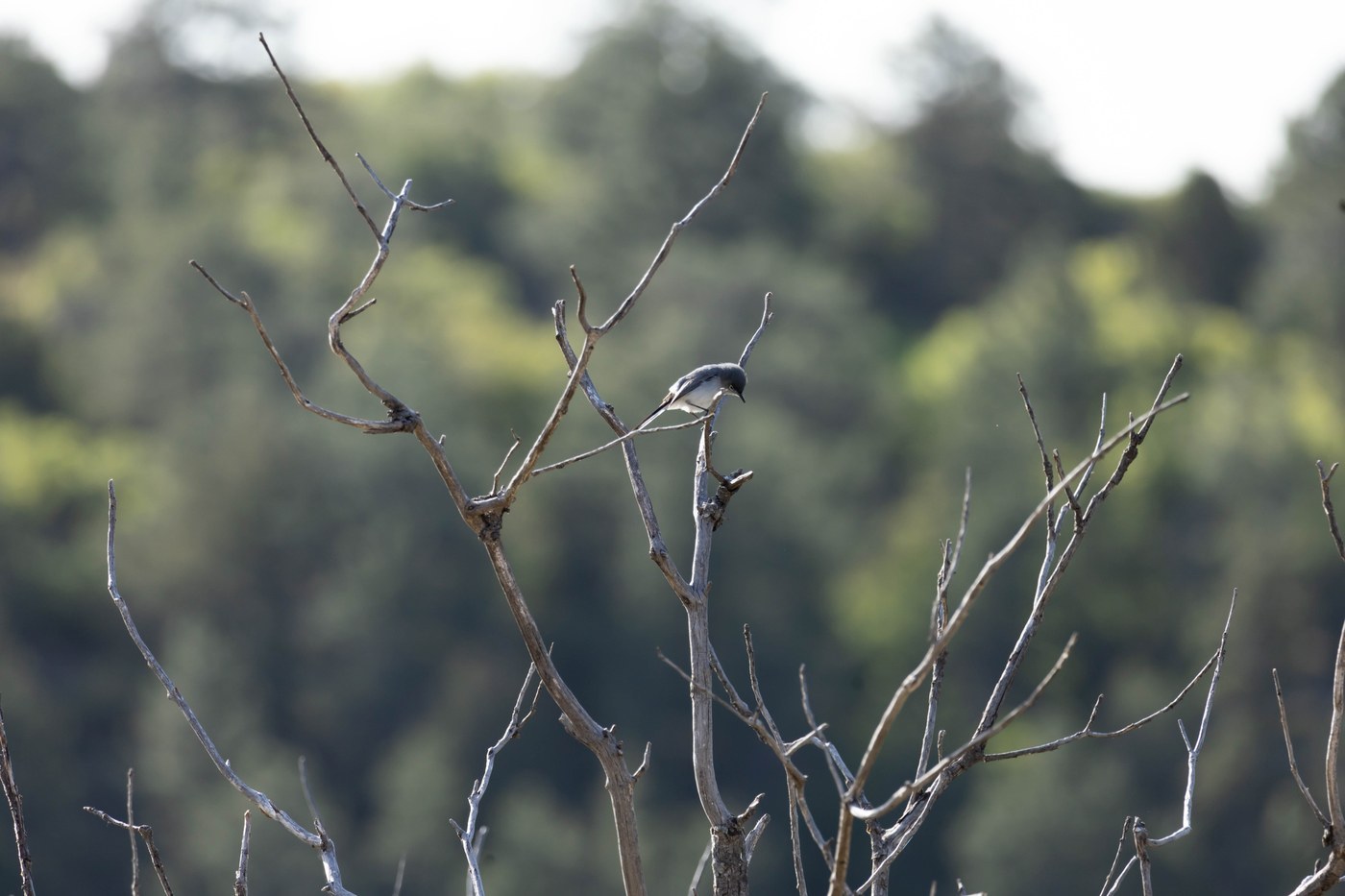
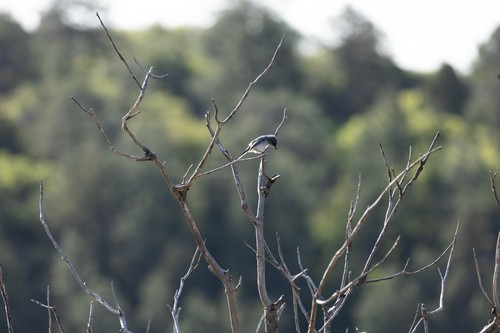
Blue-gray Gnatcatcher
Polioptila caerulea
A slender, blue-gray songbird with a long, expressive black-and-white tail, constantly flicking as it hunts tiny insects.
- Size
- 10-13 cm (4-5 in) long, 15-16 cm wingspan
- Habitat
- open deciduous and mixed woodlands, scrub, and woodland edges
- Type
- songbird
Spotted a bird like this?
Identify any bird from a photo, free.
Overview
The Blue-gray Gnatcatcher is a small, slender, long-tailed songbird that behaves almost like a miniature flycatcher crossed with a warbler. Its upperparts are a soft blue-gray, its underparts pale grayish-white, and its most conspicuous feature is a long, narrow tail that is black above with white outer edges, flicked and fanned almost constantly as the bird forages.
Breeding males show a thin black brow line above the eye that is absent or reduced in females and winter birds. This active little bird has a thin, fine bill well suited to picking tiny insects directly off leaves and twigs, and it often draws attention by its habit of flicking its tail sideways while hopping through the outer branches of trees and shrubs.
How to identify it
Key Field Marks
- Slender body with a long, narrow black-and-white tail, frequently flicked and cocked
- Soft blue-gray upperparts, paler grayish-white underparts
- Thin white eye-ring
- Thin black eyebrow line present in breeding males, faint or absent otherwise
- Fine, thin dark bill
Similar Species
Kinglets are smaller, shorter-tailed, and lack the gnatcatcher's long, actively flicked tail. Gray vireos and some small flycatchers can superficially resemble gnatcatchers in color, but lack the constant tail-flicking behavior and long black-and-white tail pattern that make Blue-gray Gnatcatcher distinctive at a glance.
Habitat & range
Habitat
This species favors open deciduous woodlands, riparian corridors, oak scrub, and woodland edges, generally avoiding dense unbroken forest interior in favor of more open or edge habitats.
Range
Blue-gray Gnatcatchers breed across most of the eastern and southern United States and the Southwest, with the range having expanded northward in recent decades. They winter along the Gulf Coast, Florida, the Southwest, Mexico, and Central America.
Migration
Most populations are medium-distance migrants, withdrawing from northern and interior breeding areas in winter, though birds in the mildest southern parts of the range may remain resident year-round.
Behavior & voice
Behavior
Blue-gray Gnatcatchers are restless and acrobatic, hopping through outer branches and foliage while constantly flicking and cocking their long tails sideways, a signature behavior that helps flush insects and aids identification.
Voice
The song is a thin, wheezy, and somewhat scratchy warble of short notes. The call is a nasal, cat-like 'speee' or 'zpee,' often the first sign of the bird's presence in the canopy.
Feeding
It gleans small insects and spiders directly from leaves and twigs, and frequently hover-gleans or makes short sallying flights to catch flying insects in midair.
Nesting & Breeding
The pair builds a compact, neat cup nest of plant fibers and spider silk camouflaged with lichen, saddled on a horizontal branch, resembling a small hummingbird nest. The female lays 3-5 pale, speckled eggs, and both parents help incubate and feed the young.
Frequently asked questions
Why does the Blue-gray Gnatcatcher flick its tail?
It constantly flicks and fans its long black-and-white tail while foraging, a behavior thought to help startle and flush hidden insects into view.
How do you identify a Blue-gray Gnatcatcher?
Look for a small, slender blue-gray bird with a long, narrow black-and-white tail that is frequently flicked, a thin white eye-ring, and constant restless movement in outer branches.
What does a Blue-gray Gnatcatcher eat?
It eats small insects and spiders gleaned from foliage, occasionally catching flying insects in short aerial sallies.
What does a Blue-gray Gnatcatcher's nest look like?
It builds a small, neat cup nest covered in lichen and bound with spider silk, saddled on a horizontal branch and resembling a miniature hummingbird nest.
Where do Blue-gray Gnatcatchers live?
They favor open deciduous woodlands, riparian areas, and scrub across the eastern and southern United States, expanding into northern areas in recent decades.
Blue-gray Gnatcatcher guides
In-depth guides for identifying, finding, and understanding Blue-gray Gnatcatcher.
Other birds you may enjoy
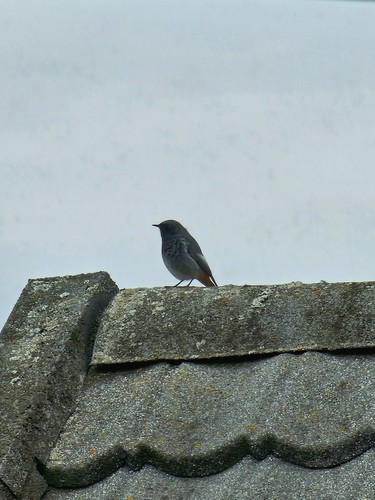
Black Redstart
13-14.5 cm (5.1-5.7 in) long, 23-26 cm wingspan
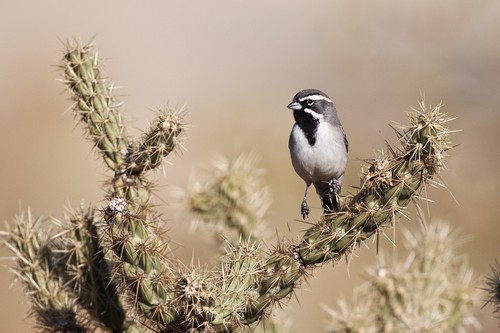
Black-throated Sparrow
12-14 cm (4.7-5.5 in) long, about 19-20 cm (7.5-8 in) wingspan
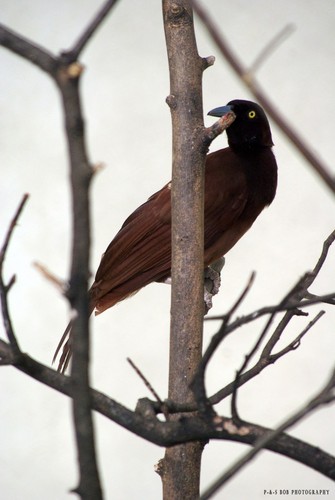
Greater Bird-of-paradise
Body about 43 cm; males with additional flank plumes up to 50 cm and long tail wires
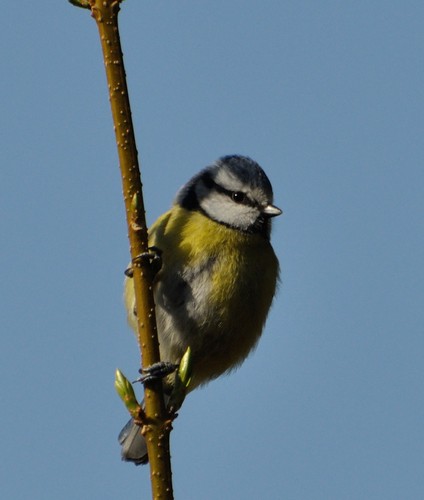
Blue Tit
11-12 cm (4.3-4.7 in) long, 17-20 cm wingspan

Red-billed Quelea
11.5–13 cm long, wingspan about 20–22 cm
White-plumed Antbird
13-14 cm (5-5.5 in) long
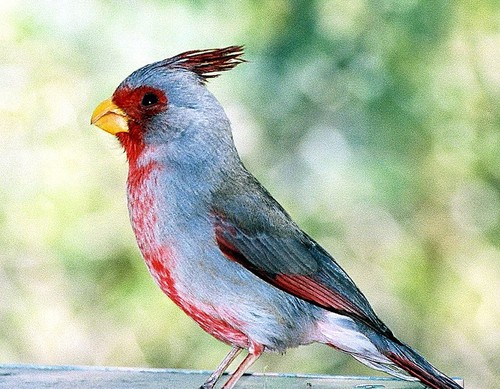
Pyrrhuloxia
19-22 cm (7.5-8.7 in) long, 30 cm wingspan
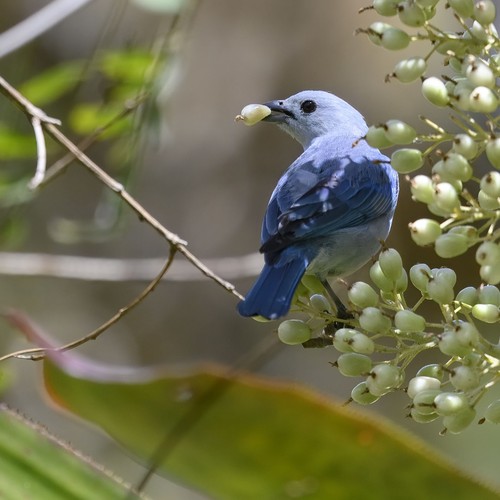
Blue-gray Tanager
16-18 cm (6-7 in) long
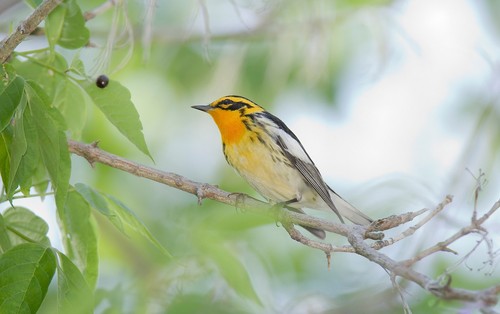
Blackburnian Warbler
11-13 cm (4.3-5.1 in) long, 20-22 cm wingspan
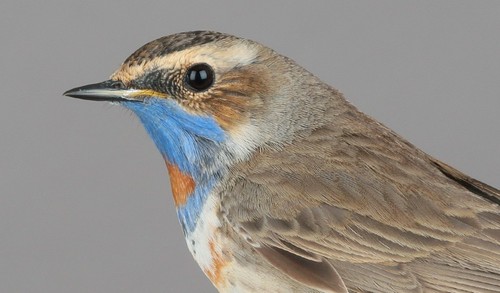
Bluethroat
13-14 cm (5.1-5.5 in) long, 20-22 cm wingspan
Eurasian Nuthatch
12-14.5 cm (4.7-5.7 in) long, 22.5-27 cm wingspan
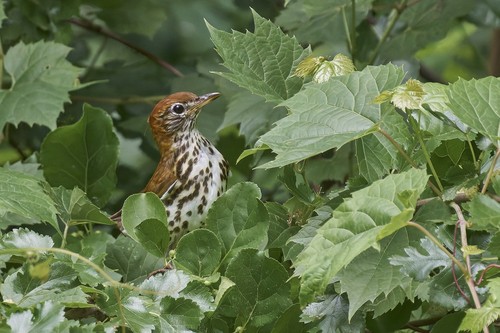
Wood Thrush
19-21 cm (7.5-8.3 in) long, about 33 cm (13 in) wingspan