
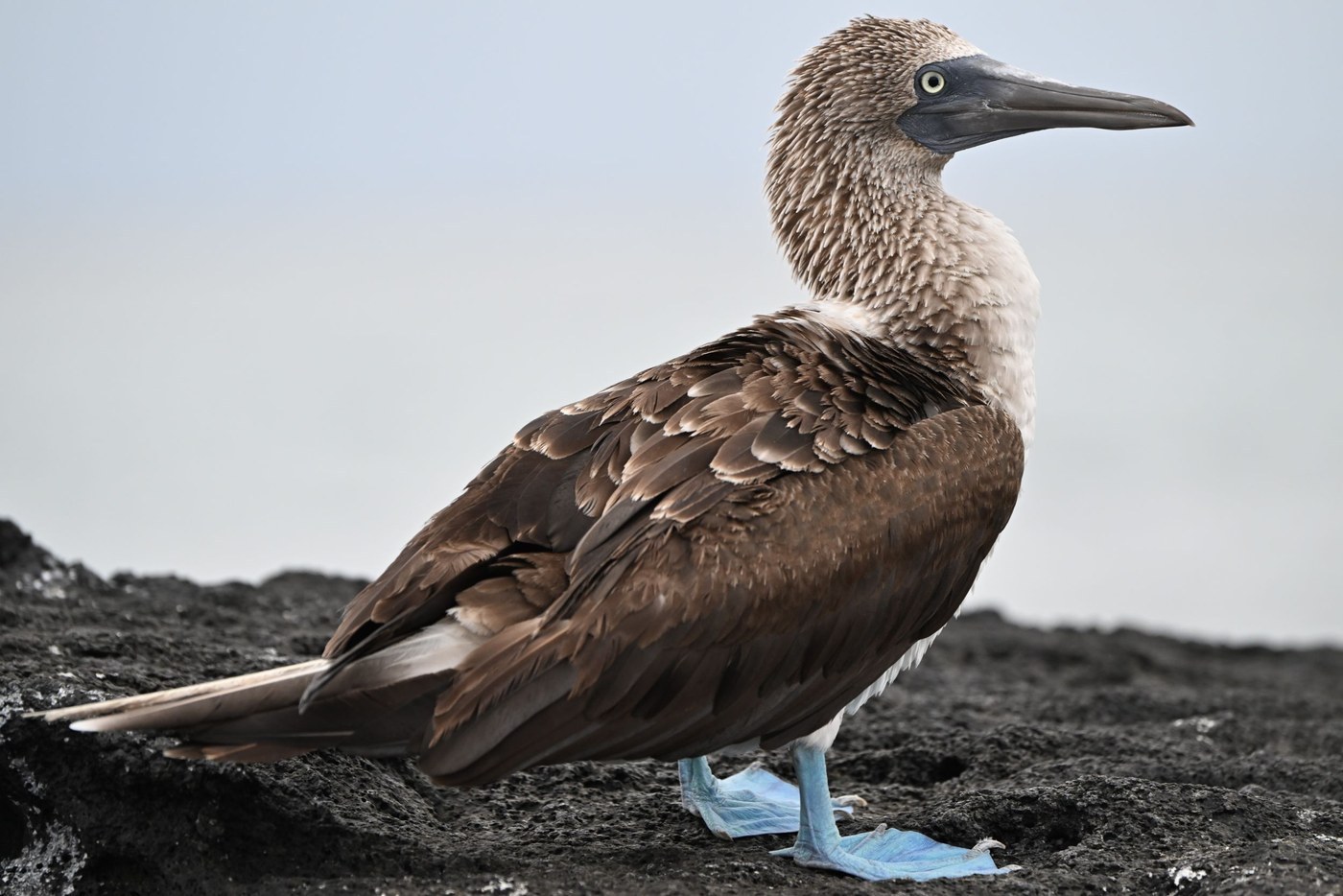
Blue-footed Booby
Sula nebouxii
An unmistakable brown-and-white booby famous for its bright blue feet, used in an elaborate courtship dance on Pacific coasts and islands.
- Size
- 80-84 cm (31-33 in) long, about 145-155 cm wingspan
- Habitat
- tropical and subtropical Pacific coasts and islands, including the Galápagos
- Type
- seabird
Spotted a bird like this?
Identify any bird from a photo, free.
Overview
The Blue-footed Booby is one of the most instantly recognizable seabirds in the world, renowned for its vividly colored, webbed blue feet, which range from pale turquoise to a deep, almost electric blue. The body is mottled brown above with a clean white belly and rump, and the head and neck are streaked with fine pale markings. The pale eyes and long grey bill give the face a distinctive, slightly comical expression.
Brightly colored feet are more than decorative: they play a central role in courtship, with males lifting and showing off their feet in an exaggerated, high-stepping dance to attract females, foot color intensity signaling individual health and diet quality.
How to identify it
Key field marks
- Bright blue webbed feet, unique among boobies
- Brown upperparts with a scaly or mottled pattern
- Clean white underparts and rump
- Pale, straw-colored eyes and long grayish bill
Similar species
- Brown Booby has dark brown upperparts and breast sharply demarcated from a white belly, but lacks blue feet.
- Peruvian Booby, a close relative found along the coast of Peru and Chile, is very similar but slightly smaller and more streamlined; range generally separates the two.
- Juveniles are duller brown overall with grayish feet that brighten with age.
Habitat & range
Blue-footed Boobies breed along the Pacific coast from the Gulf of California south to Peru, with the Galápagos Islands hosting one of the largest and most famous populations. They favor rocky or sandy islands and coastal cliffs close to productive, nutrient-rich waters where schooling fish concentrate.
The species is largely non-migratory, though birds may shift foraging areas in response to shifting fish availability, such as during El Niño events, when breeding can fail entirely in poor food years.
Behavior & voice
Behavior
Courtship involves an elaborate ritualized dance in which the male lifts his feet high, one after another, while pointing his bill and tail skyward and whistling, often presenting a stick or stone to a prospective mate.
Voice
Males give thin, whistling calls, while the larger females produce a deeper, honking trumpet call; both sexes vocalize during greeting and courtship displays at the colony.
Feeding
Birds plunge-dive, sometimes in synchronized groups, folding their wings back just before entering the water to chase fish at shallow depth.
Nesting and breeding
Nests are simple scrapes on bare ground, often decorated with guano rings marking territory boundaries; clutches of one to three eggs are laid, and siblicide (the strongest chick outcompeting or killing weaker ones) is common in years of food scarcity.
Frequently asked questions
Why do Blue-footed Boobies have blue feet?
Foot color comes from carotenoid pigments obtained through their fish diet, and brighter blue signals better health and body condition, which is important in mate selection.
Where can you see Blue-footed Boobies?
They are most famously seen in the Galápagos Islands but also breed along the Pacific coast from Mexico's Gulf of California south to Peru.
What is the Blue-footed Booby's mating dance?
Males perform a high-stepping strut lifting their bright blue feet, combined with sky-pointing and whistling, to attract and impress females.
What do Blue-footed Boobies eat?
They eat small schooling fish such as sardines and anchovies, caught by plunge-diving from the air.
Are Blue-footed Boobies endangered?
No, the species is currently classified as Least Concern, though local populations can be affected by El Niño-driven food shortages.
Blue-footed Booby guides
In-depth guides for identifying, finding, and understanding Blue-footed Booby.
Other birds you may enjoy
Peruvian Pelican
137-152 cm (54-60 in) long, up to 228 cm wingspan
Bonaparte's Gull
28-33 cm (11-13 in) long, 76-84 cm wingspan
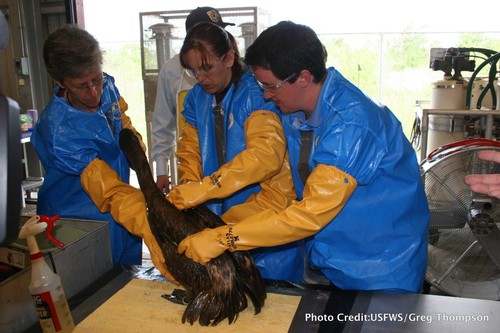
Brown Pelican
106-137 cm (42-54 in) long, 200-230 cm wingspan
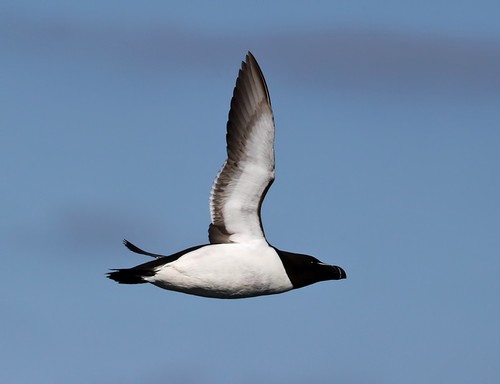
Razorbill
37-39 cm (15-15.5 in) long, 63-68 cm wingspan
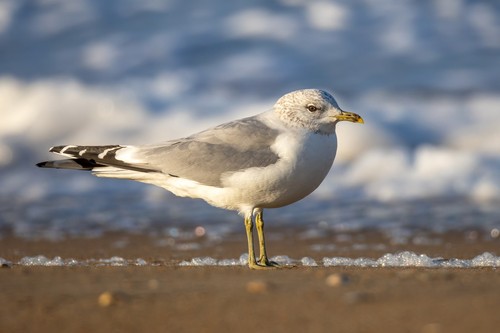
Common Gull
40-46 cm (16-18 in) long, 110-130 cm wingspan
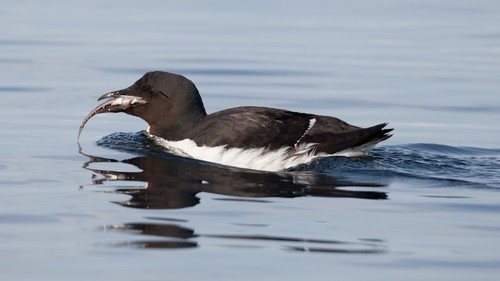
Thick-billed Murre
40-48 cm (16-19 in) long, 65-75 cm wingspan
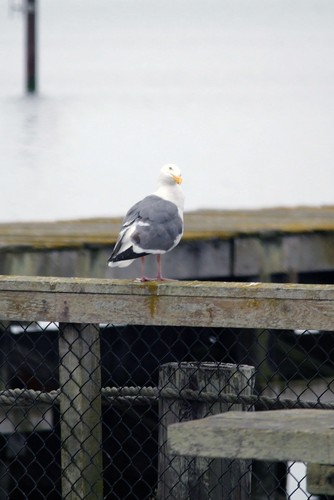
Western Gull
55-68 cm (22-27 in) long, 130-144 cm wingspan
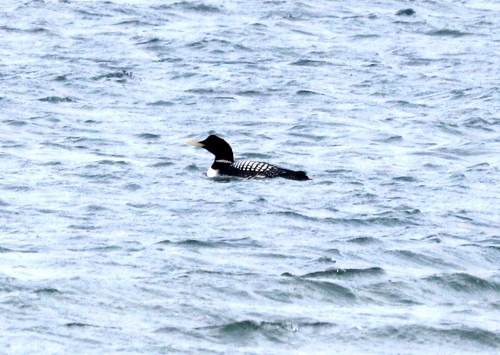
Yellow-billed Loon
76-97 cm (30-38 in) long, 135-152 cm wingspan
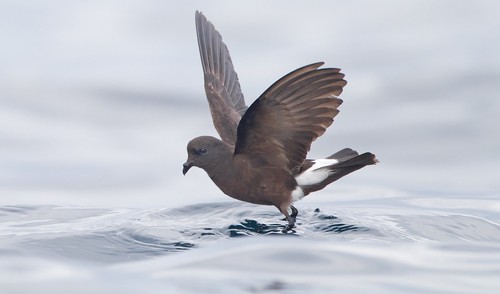
Wilson's Storm-Petrel
15-19 cm (6-7.5 in) long, wingspan 38-42 cm (15-16.5 in)
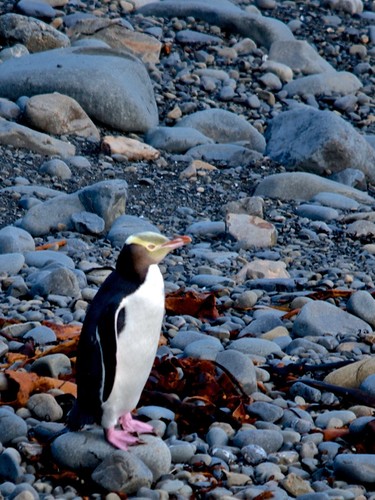
Yellow-eyed Penguin
62-79 cm (24-31 in) tall, 3-8.5 kg (6.6-18.7 lb)
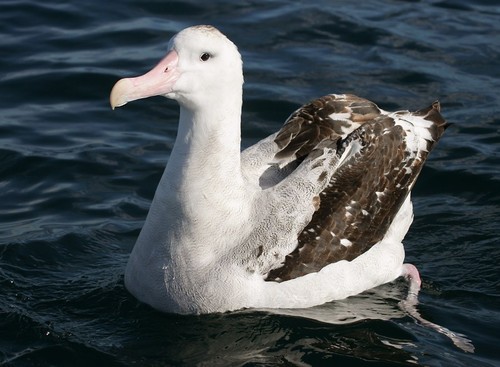
Wandering Albatross
107-135 cm (42-53 in) long, wingspan up to 3.5 m (11.5 ft)
Tufted Puffin
35-41 cm (14-16 in) long, about 63-70 cm wingspan