
Blue-footed Booby Identification Guide
A large Pacific seabird famous for its bright blue webbed feet, plunge-diving fishing style, and elaborate foot-flaunting courtship dance.
Read the full Blue-footed Booby encyclopedia entry →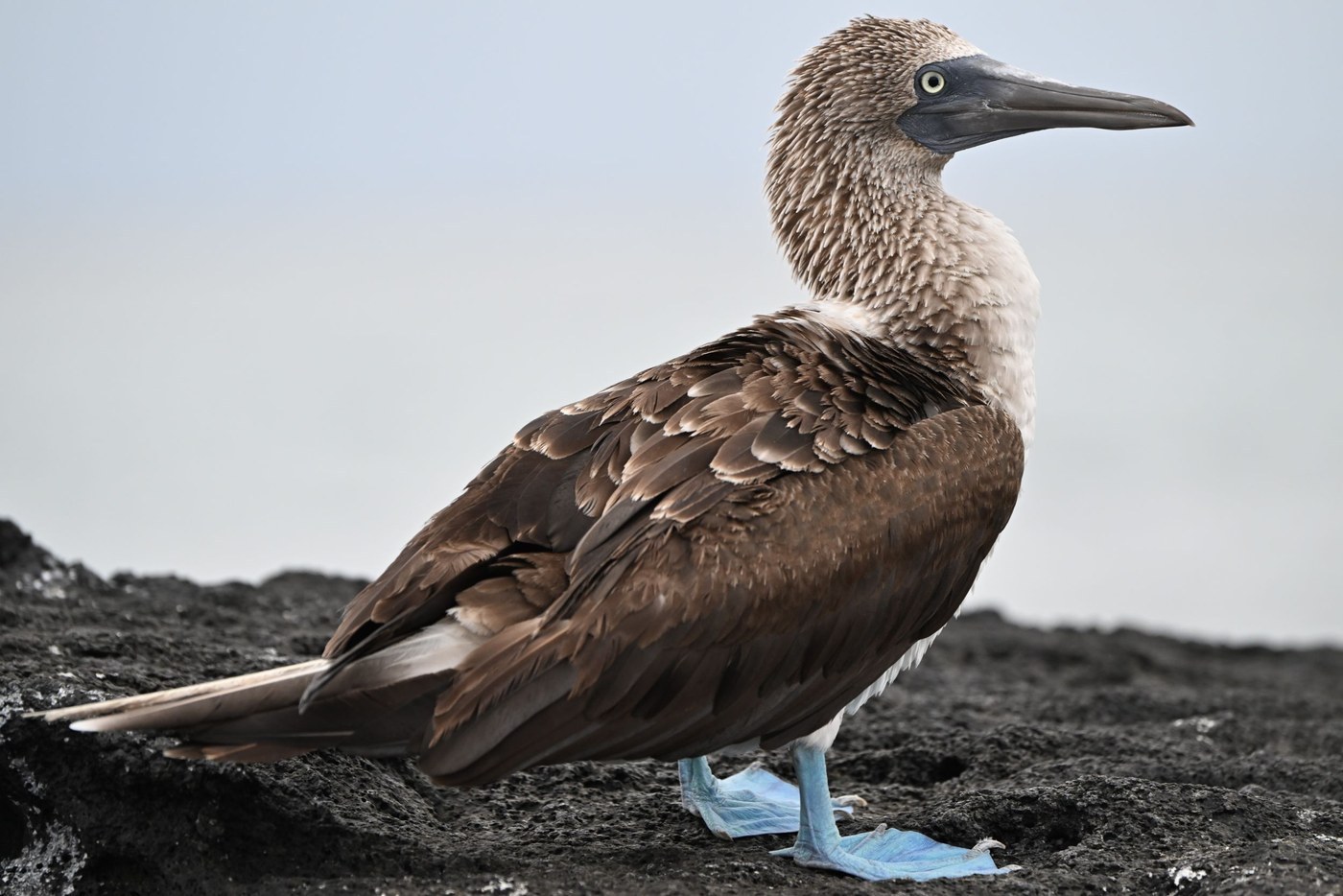
Key Field Marks
- Size & shape: A large seabird with a wingspan around 1.5 m and body length roughly 80–84 cm, showing long, pointed wings, a wedge-shaped tail, and a heavy, dagger-like bill typical of boobies.
- Plumage: Brown, mottled upperparts contrasting with clean white underparts and a white patch on the upper back/rump visible in flight; a somewhat masked facial appearance.
- Feet: Bright blue webbed feet — the signature field mark, with color intensity thought to signal individual health and condition, and playing a central role in courtship displays.
- Bill: Pale grayish-blue, long and pointed.
- Sex differences: Females are slightly larger than males and have a noticeably wider dark pupil (giving the eye a larger, darker appearance), while males show a narrower pupil with more visible pale iris around it. Female calls are also deeper and more honking, while males give thinner whistles.
- Juvenile: Browner overall with a duller, grayish-brown foot color and a mottled brown head and neck, gradually developing the bright blue feet and cleaner plumage with age.
Separating It from Similar Species
- Nazca Booby has white body plumage (not brown), an orange-pink bill, and gray-olive feet, quite different from Blue-footed's brown-and-white pattern and blue feet.
- Brown Booby shows a sharply demarcated dark brown chest/upperparts against a white belly, with yellow (not blue) feet.
- Peruvian Booby, found along the same Pacific coast, can show somewhat similarly toned bluish-gray feet but differs in overall body pattern and proportions; range and close study of plumage details help confirm identification where the two overlap.
Where & When to See It
- Range: Pacific coast and offshore waters from the Gulf of California and Mexico south to Peru, including the Galápagos Islands, where it is especially famous and easily observed.
- Habitat: Breeds colonially on rocky islands and coastal cliffs; forages over nearshore and offshore waters.
- Season: A year-round resident across its range, with breeding timing varying by colony and tied to local food availability rather than a strict season.
Behavior & Voice
- Famous for plunge-diving from height directly into the water to catch schooling fish such as sardines and anchovies, often foraging cooperatively in groups.
- Renowned for an elaborate courtship display in which birds lift and show off their blue feet in a slow, exaggerated "dance," along with sky-pointing and wing displays.
- Voice: males give thin, high whistles, while the larger females give louder, deeper honking or trumpeting calls.
Frequently asked questions
What is the easiest way to identify a Blue-footed Booby?
Bright blue webbed feet combined with brown mottled upperparts and clean white underparts make it easy to identify wherever it occurs along the Pacific coast.
How can you tell male and female Blue-footed Boobies apart?
Females are slightly larger and show a noticeably wider, darker pupil, plus deeper honking calls, while males have a narrower pupil and give higher, thinner whistles.
How is the Blue-footed Booby different from the Brown Booby?
Brown Booby has sharply demarcated dark brown upperparts and chest against a white belly, with yellow feet, while Blue-footed Booby has mottled brown-and-white plumage and blue feet.
Why does the Blue-footed Booby show off its feet?
Foot color signals condition and health, and both sexes perform a slow, exaggerated foot-lifting courtship dance to attract and assess potential mates.
Where is the best place to see Blue-footed Boobies?
The Galápagos Islands are especially famous for close, easy observation, though the species occurs along the Pacific coast from the Gulf of California to Peru.