
Black Woodpecker
Dryocopus martius
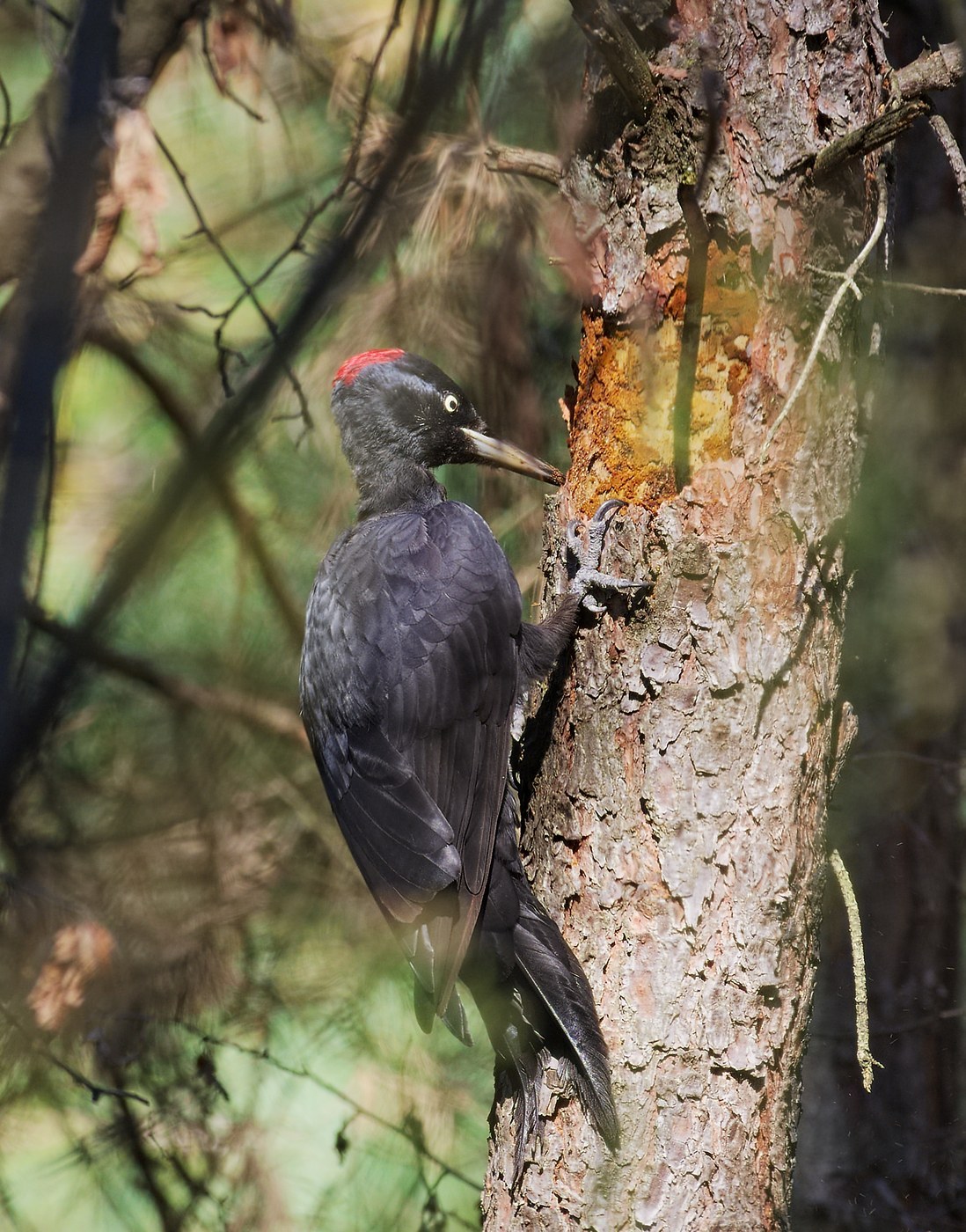
Europe's largest woodpecker, an all-black, crow-sized bird with a striking red crown and powerful excavating bill.
- Size
- 45-57 cm (18-22 in) long, 64-68 cm wingspan
- Habitat
- mature coniferous and deciduous forest with large old trees
- Type
- woodpecker
Spotted a bird like this?
Identify any bird from a photo, free.
Overview
The Black Woodpecker is a huge, crow-sized woodpecker, almost entirely glossy black except for a bold red patch on the crown. Males show red across the entire crown from bill to nape, while females have red restricted to the back of the head.
A specialist of extensive old-growth forest, it excavates large, distinctive rectangular holes in tree trunks while searching for wood-boring insects, and its nest cavities are subsequently used by many other forest species.
How to identify it
Key field marks
- Large, crow-sized woodpecker, entirely glossy black
- Red crown patch: full crown in males, nape only in females
- Pale ivory-colored bill
- Deep, undulating flight with slow wingbeats
- Loud, far-carrying calls and powerful drumming
Similar species
- No other European woodpecker approaches its size or all-black plumage; a jackdaw or crow lacks the red crown and has a very different bill and flight.
Its great size and uniform black plumage make the Black Woodpecker unmistakable within its range.
Habitat & range
Habitat
Requires extensive mature forest, both coniferous and deciduous, with large old trees suitable for excavating its sizeable nest and roost holes.
Range
Found across much of continental Europe from the Pyrenees and Alps through central and eastern Europe into Scandinavia and across the boreal forest belt of Russia to Japan; absent from Britain and Ireland.
Migration
Resident and sedentary, holding large territories year-round.
Behavior & voice
Behavior
A powerful excavator, capable of chiseling deep, rectangular holes into solid wood to reach beetle larvae or expose ant galleries within tree trunks and stumps.
Voice
Gives a loud, far-carrying "kri-kri-kri" flight call and a ringing "kluu" contact call, along with slow, resonant, powerful drumming.
Feeding
Feeds heavily on carpenter ants and wood-boring beetle larvae, excavated from dead wood and ant-infested tree trunks and stumps.
Nesting and breeding
Excavates a large oval nest hole, often high in a mature tree, that is later reused by species such as owls, stock doves, and martens once vacated. Females lay 2-6 white eggs, incubated by both sexes for about 12-14 days.
Frequently asked questions
How big is the Black Woodpecker?
It is Europe's largest woodpecker, roughly the size of a crow, with a wingspan approaching 70 cm.
Is the Black Woodpecker found in the UK?
No, it does not occur in Britain or Ireland, though it is widespread across much of continental Europe.
Why are Black Woodpecker nest holes important for other species?
Their large, disused nest cavities are later used by owls, stock doves, and other hole-nesting animals unable to excavate their own.
How do you tell a male from a female Black Woodpecker?
Males have red covering the whole crown, while females show red only on the back of the head.
Black Woodpecker guides
In-depth guides for identifying, finding, and understanding Black Woodpecker.
Other birds you may enjoy
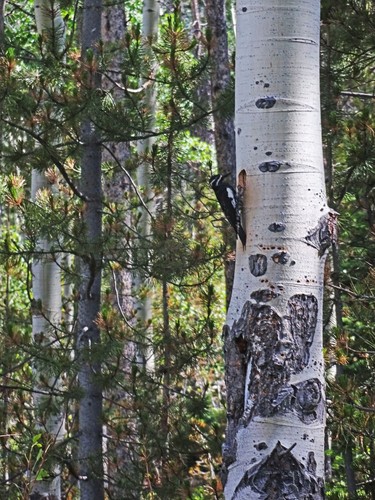
Williamson's Sapsucker
21-25 cm (8-10 in) long, 40-42 cm wingspan
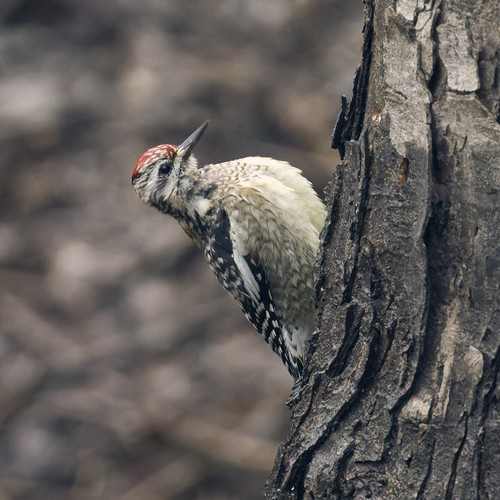
Yellow-bellied Sapsucker
18-21 cm (7-8.3 in) long, 34-40 cm wingspan
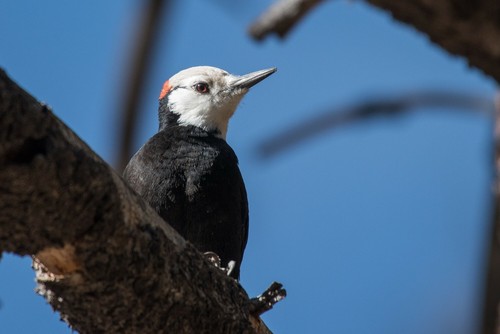
White-headed Woodpecker
20-23 cm (8-9 in) long, 38-41 cm wingspan
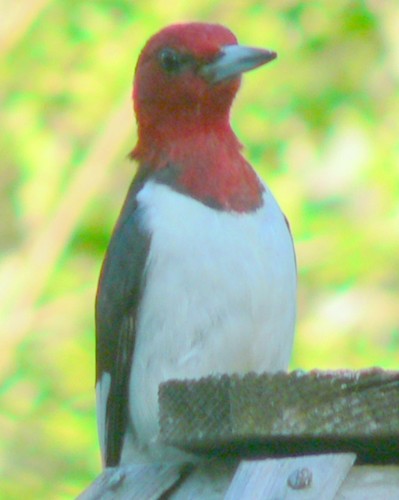
Red-headed Woodpecker
19-23 cm (7.5-9 in) long, 42-46 cm wingspan
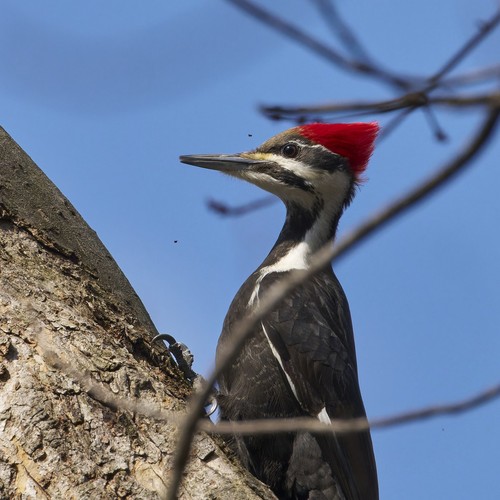
Pileated Woodpecker
40-49 cm (16-19 in) long, 66-75 cm wingspan
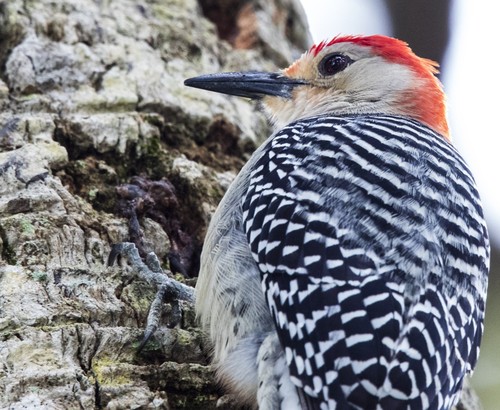
Red-bellied Woodpecker
22-27 cm (9-10.5 in) long, 38-46 cm wingspan
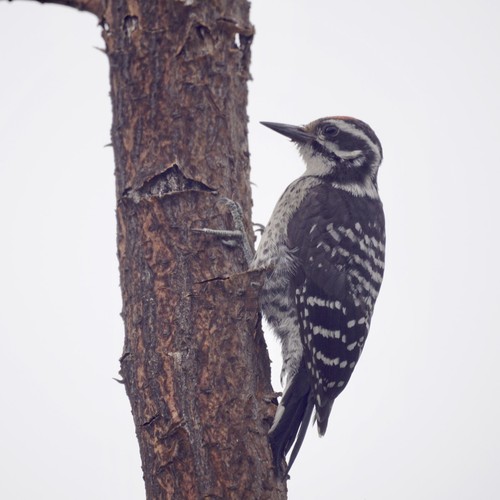
Nuttall's Woodpecker
18-20 cm (7-8 in) long, 34-38 cm wingspan
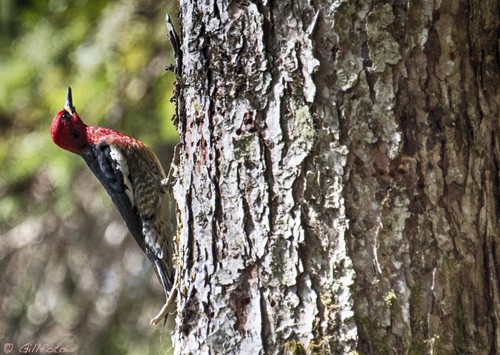
Red-breasted Sapsucker
20-23 cm (8-9 in) long, 34-40 cm wingspan
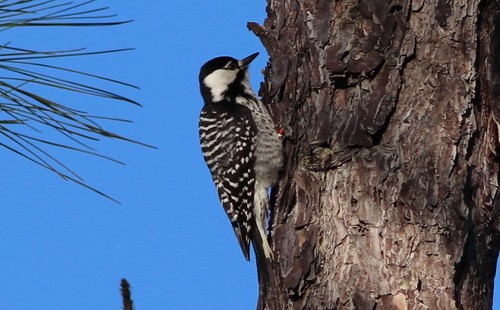
Red-cockaded Woodpecker
20-23 cm (8-9 in) long, 35-38 cm wingspan
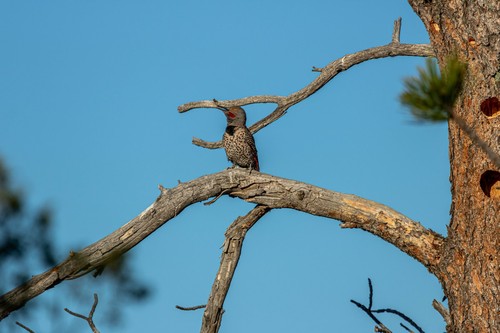
Northern Flicker
28-36 cm (11-14 in) long, 42-51 cm wingspan
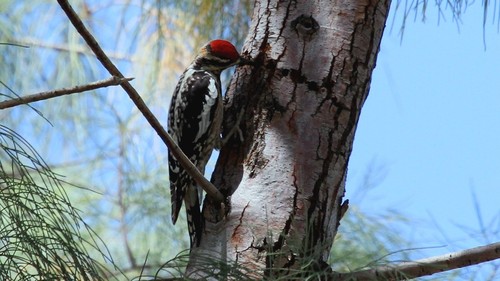
Red-naped Sapsucker
19-21 cm (7.5-8.3 in) long, 34-40 cm wingspan
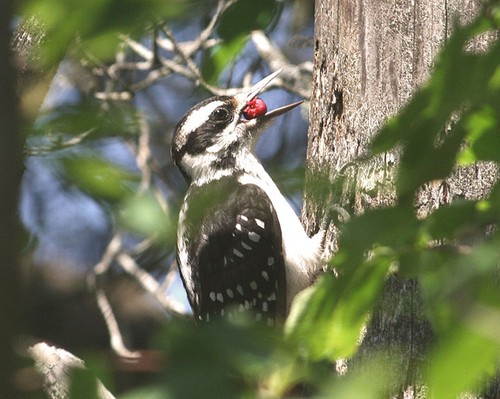
Hairy Woodpecker
23-26 cm (9-10 in) long, 33-41 cm wingspan