
Black Woodpecker Identification Guide
Europe's largest woodpecker, an all-black crow-sized bird with a bold red crown patch, powerful bill, and slow, direct flight.
Read the full Black Woodpecker encyclopedia entry →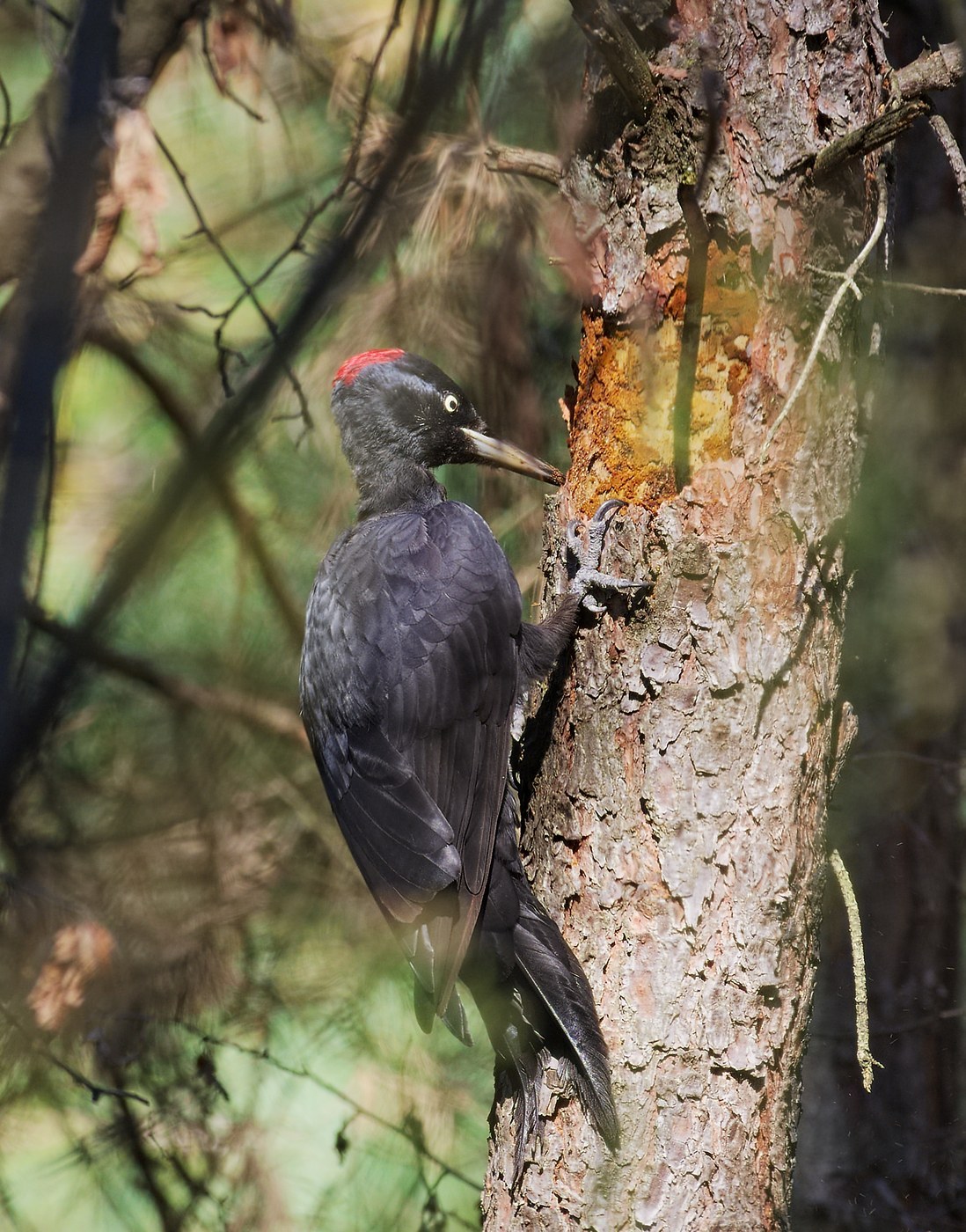
Key Field Marks
- Very large woodpecker, 45-57 cm long, roughly the size of a crow, with an entirely black plumage overall
- Male: red patch covering the entire crown from forehead to nape
- Female: red restricted to a smaller patch on the nape only, with the rest of the crown black
- Pale, whitish-yellow eye, visible at close range against the black head
- Long neck, heavy chisel-like grayish bill, and an upright posture when perched on tree trunks
- Flight is slow, direct, and crow-like with steady, deep wingbeats, lacking the strongly undulating flight typical of smaller woodpeckers
Similar Species
- Crows and ravens: similar all-black impression at a distance, but have short stubby bills, different flight action, and no red on the head; woodpecker flight and bounding tree-climbing behavior quickly separate the two
- No other European woodpecker approaches Black Woodpecker's size or all-black plumage, making adults unmistakable once size is appreciated
- Juveniles are duller black with a less clearly defined red patch but retain the same overall structure
Habitat & Range
- Found in mature forest, particularly old-growth coniferous, beech, and mixed woodland with large, tall trees needed for excavating its large nest and roost cavities
- Also uses extensive parkland and wooded landscapes with scattered large trees
- Widely distributed as a resident across most of temperate and boreal Europe and across northern Asia (the Palearctic), generally absent from the British Isles historically though slowly expanding in parts of its range
Seasonality
- Non-migratory resident throughout its range, present and detectable year-round
- Drumming and calling activity peaks in late winter and early spring during territory establishment and courtship
Voice
- Loud, far-carrying calls including a ringing "kliuu" and a rapid, laughing "krri-krri-krri-krri" series
- Drumming is exceptionally loud, deep, and powerful compared to other European woodpeckers, in long rolls that carry a considerable distance through forest
- Excavates large, distinctive rectangular or oval nest holes, often a clue to the species' presence even when the bird itself is not seen
Frequently asked questions
How can you tell a Black Woodpecker from a crow at a distance?
Look for the red crown or nape patch, undulating-yet-steady woodpecker flight with deep wingbeats, and its habit of clinging upright to tree trunks — crows lack red on the head and never climb trunks like a woodpecker.
How do you distinguish male and female Black Woodpeckers?
Males have a red patch covering the entire crown from the bill to the nape, while females show red only on the nape, with the forecrown remaining black.
What kind of forest does Black Woodpecker need?
Mature forest with large, tall trees, especially old-growth conifer or beech stands, since it excavates unusually large nest and roost cavities that require substantial trunk diameter.
Is Black Woodpecker's drumming different from smaller woodpeckers?
Yes, its drumming rolls are notably louder, deeper, and more powerful than those of smaller European woodpeckers, and can carry a long distance through forest.