
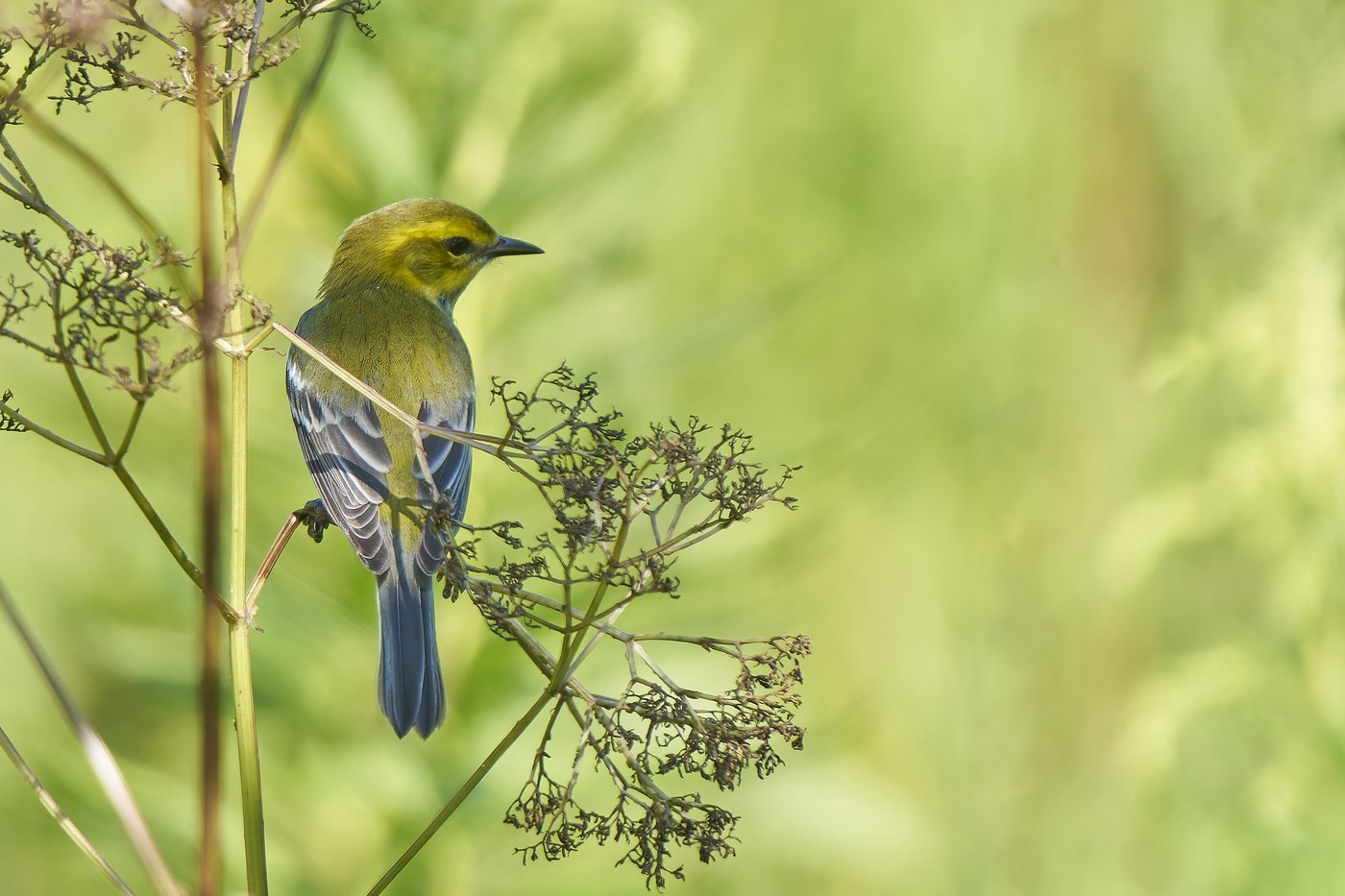
Black-throated Green Warbler
Setophaga virens
A bright yellow-faced warbler with an olive-green back and a black throat and bib on breeding males, common in northern conifer and hemlock forests.
- Size
- 11-13 cm (4.3-5.1 in) long, 17-20 cm wingspan
- Habitat
- coniferous and mixed forests, especially hemlock and spruce stands
- Type
- songbird
Spotted a bird like this?
Identify any bird from a photo, free.
Overview
The Black-throated Green Warbler is a strikingly colored warbler with a vivid yellow face bordered by an olive-green crown and back, giving it a warm, glowing appearance even in dense conifer canopy. Breeding males show a solid black throat and upper breast forming a bold bib, while females and immatures show reduced black, sometimes limited to streaking or spotting on an otherwise pale throat.
The wings are dark with two white wingbars, and the flanks are streaked with black. This species is a characteristic breeding bird of northern hemlock and spruce forests, where its buzzy, lazy song is a familiar summer sound, and it is also a common and readily identified migrant across much of eastern North America.
How to identify it
Key Field Marks
- Bright yellow face with a plain, unmarked look framed by an olive-green crown and cheek border
- Black throat and upper breast in breeding males, forming a solid bib
- Olive-green back, unstreaked
- Two white wingbars
- Black streaking along the white flanks
Similar Species
Black-throated Gray Warbler has a gray, not olive-green, back and lacks yellow on the face except for a small spot before the eye. Townsend's Warbler shows a similar black throat and yellow face but has dark auricular patches and streaking on a more heavily marked face, and an olive rather than plain back. Golden-cheeked Warbler, a range-restricted Texas specialist, has a solid black back rather than olive-green.
Habitat & range
Habitat
This species breeds in coniferous and mixed forests, with a strong association with eastern hemlock and spruce in the Northeast and Appalachians, and various conifer types elsewhere in its range.
Range
Black-throated Green Warblers breed across a broad swath of Canada and the northeastern United States, south through the Appalachian Mountains. They winter in Mexico, Central America, and the Caribbean.
Migration
This species is a medium- to long-distance Neotropical migrant, moving through much of the eastern United States each spring and fall in substantial numbers.
Behavior & voice
Behavior
Black-throated Green Warblers forage methodically through the mid to upper canopy, gleaning insects from foliage and occasionally hovering to reach the tips of branches.
Voice
The song has two main variants: an unaccented, lazy 'zee-zee-zee-zoo-zee' and a more emphatic version used near the nest. The call is a flat, sharp 'chip.'
Feeding
It gleans caterpillars, other insects, and spiders from needles and leaves, generally staying higher in the canopy than many other warblers.
Nesting & Breeding
The female builds a compact cup nest of bark strips, twigs, and plant down, typically placed on a horizontal conifer branch. She lays 3-5 eggs, and pairs often return to the same general breeding area in subsequent years.
Frequently asked questions
How do you identify a Black-throated Green Warbler?
Look for a bright yellow face framed by an olive-green crown and back, a solid black throat and upper breast in breeding males, and two white wingbars.
What is the difference between Black-throated Green and Black-throated Gray Warblers?
Black-throated Green has an olive-green back and yellow face, while Black-throated Gray has a gray back and a mostly black-and-white face with only a small yellow spot near the eye.
Where do Black-throated Green Warblers breed?
They breed in coniferous and mixed forests, especially hemlock and spruce stands, across Canada, the northeastern United States, and the Appalachian Mountains.
What does a Black-throated Green Warbler sound like?
Its typical song is a lazy, buzzy 'zee-zee-zee-zoo-zee,' with a more emphatic version used near the nest.
What does a Black-throated Green Warbler eat?
It eats caterpillars and other insects and spiders gleaned from foliage, mainly in the mid to upper canopy.
Black-throated Green Warbler guides
In-depth guides for identifying, finding, and understanding Black-throated Green Warbler.
Other birds you may enjoy
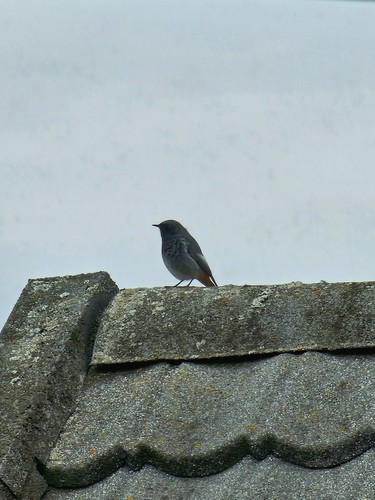
Black Redstart
13-14.5 cm (5.1-5.7 in) long, 23-26 cm wingspan
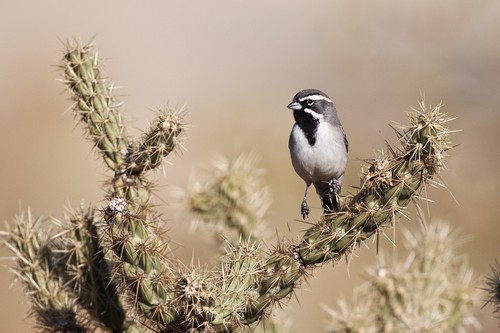
Black-throated Sparrow
12-14 cm (4.7-5.5 in) long, about 19-20 cm (7.5-8 in) wingspan
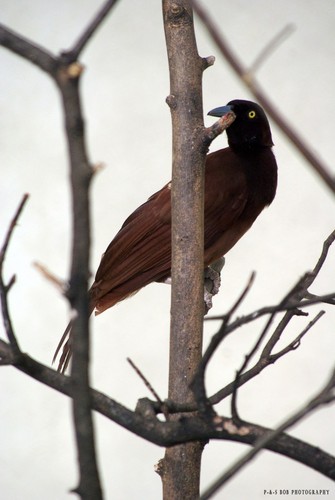
Greater Bird-of-paradise
Body about 43 cm; males with additional flank plumes up to 50 cm and long tail wires
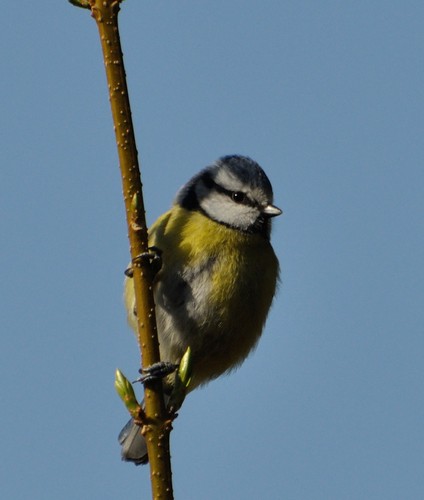
Blue Tit
11-12 cm (4.3-4.7 in) long, 17-20 cm wingspan
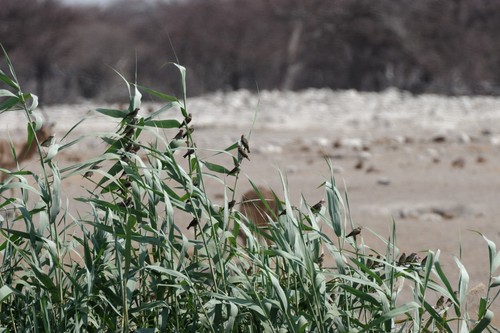
Red-billed Quelea
11.5–13 cm long, wingspan about 20–22 cm
White-plumed Antbird
13-14 cm (5-5.5 in) long
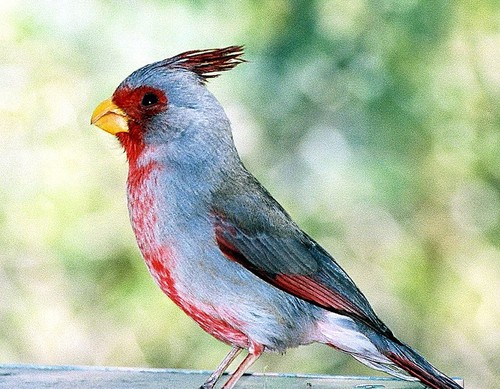
Pyrrhuloxia
19-22 cm (7.5-8.7 in) long, 30 cm wingspan
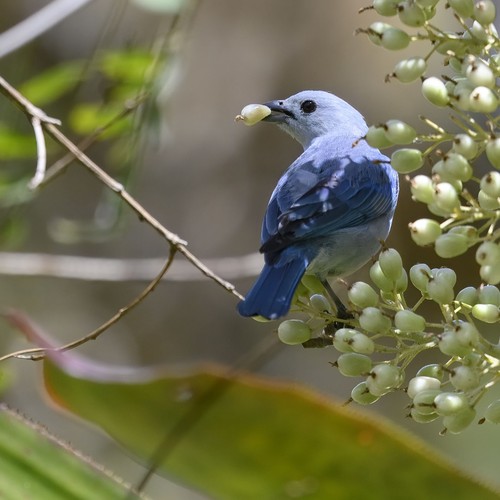
Blue-gray Tanager
16-18 cm (6-7 in) long
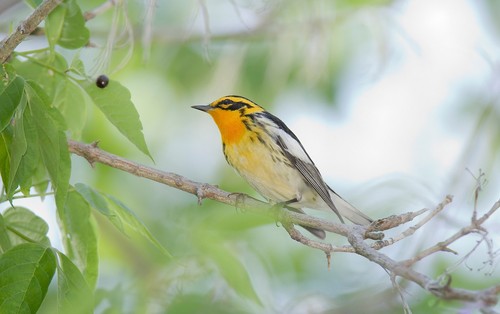
Blackburnian Warbler
11-13 cm (4.3-5.1 in) long, 20-22 cm wingspan
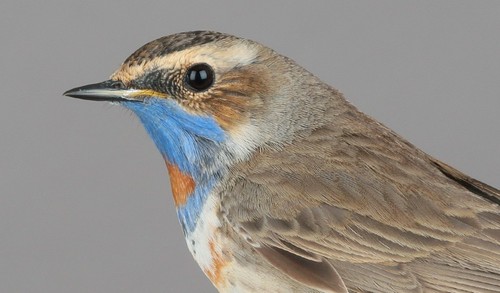
Bluethroat
13-14 cm (5.1-5.5 in) long, 20-22 cm wingspan
Eurasian Nuthatch
12-14.5 cm (4.7-5.7 in) long, 22.5-27 cm wingspan
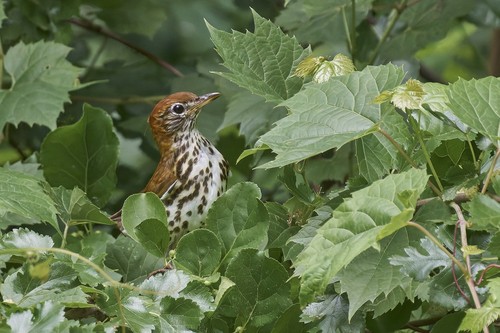
Wood Thrush
19-21 cm (7.5-8.3 in) long, about 33 cm (13 in) wingspan