
Black Skimmer
Rynchops niger
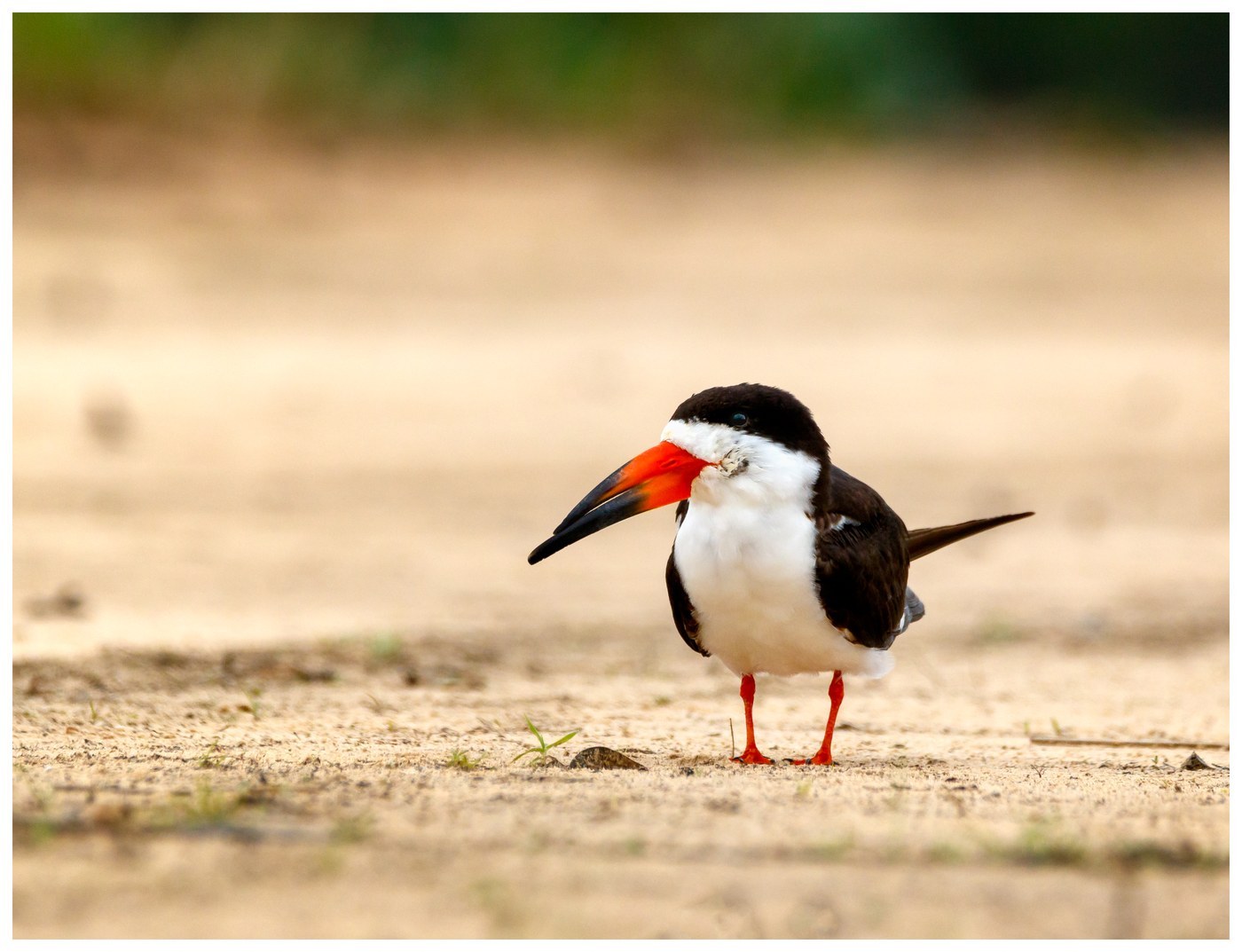
A unique black-and-white coastal bird with an oversized red-and-black bill whose lower mandible is longer than the upper, used to skim fish from the water's surface in flight.
- Size
- 40-50 cm (16-20 in) long, 107-127 cm wingspan
- Habitat
- coastal beaches, sandbars, and estuaries
- Type
- seabird
Spotted a bird like this?
Identify any bird from a photo, free.
Overview
The Black Skimmer is one of the most distinctive birds along American coastlines, instantly recognizable for its extraordinary bill and its habit of flying low over calm water with the lower mandible slicing the surface. It is the largest of the world's three skimmer species.
Appearance
Adults have black upperparts and a white forehead and underparts, with a large, laterally compressed bill that is red at the base and black toward the tip. The lower mandible is notably longer than the upper, a unique feature among birds, and the legs are short and red.
How to identify it
Key field marks
- Oversized bill with the lower mandible distinctly longer than the upper
- Bright red bill base fading to black at the tip
- Black upperparts contrasting with white underparts and forehead
- Short red legs
- Low, buoyant flight just above the water surface while foraging
Similar species
No other bird in its range shares the Black Skimmer's uniquely elongated lower mandible, making it essentially unmistakable once seen well. In flight, its black-and-white pattern can suggest a large tern, but the bill shape and low skimming flight are diagnostic.
Habitat & range
Habitat and range
Black Skimmers breed along sandy and shelly beaches, sandbars, and barrier islands from the United States coasts south through Central America and much of South America. They favor calm, sheltered waters such as estuaries, lagoons, and bays for foraging.
Northern populations are migratory, moving south to warmer coastal waters in winter, while populations in the tropics tend to be resident.
Behavior & voice
Behavior
Black Skimmers feed in a spectacular fashion, flying low with the elongated lower mandible cutting through the water's surface; when it contacts a fish, the bill snaps shut instantly. This technique allows them to feed effectively at dusk, dawn, or even at night when fish are less able to see and evade the approaching bird.
Voice
The call is a series of short, barking "kip" or "yip" notes, often given in flight or when alarmed near the colony.
Nesting and breeding
Skimmers nest colonially on open sand or shell beaches, scraping a shallow depression with no lining, and typically lay three to five eggs. Chicks are notable for hatching with mandibles of equal length; the lower bill only grows longer than the upper as the young bird matures and begins to feed itself.
Frequently asked questions
Why is the Black Skimmer's bill shaped that way?
The lower mandible is longer than the upper so the bird can slice through the water's surface in flight and snap the bill shut the instant it touches a fish.
Do young Black Skimmers have the same bill shape as adults?
No, chicks hatch with mandibles of equal length; the lower bill only becomes longer as the bird grows and starts to feed on its own.
Where do Black Skimmers nest?
In colonies on open sandy or shelly beaches and sandbars, laying eggs in a shallow, unlined scrape.
When do Black Skimmers feed?
They often feed at dawn, dusk, or even at night, since their skimming technique does not rely on seeing prey visually from above.
What do Black Skimmers eat?
Primarily small fish, captured by skimming the lower bill through calm water while flying low over the surface.
Black Skimmer guides
In-depth guides for identifying, finding, and understanding Black Skimmer.
Other birds you may enjoy
Peruvian Pelican
137-152 cm (54-60 in) long, up to 228 cm wingspan
Bonaparte's Gull
28-33 cm (11-13 in) long, 76-84 cm wingspan
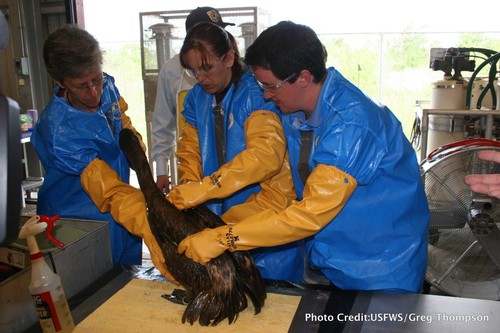
Brown Pelican
106-137 cm (42-54 in) long, 200-230 cm wingspan
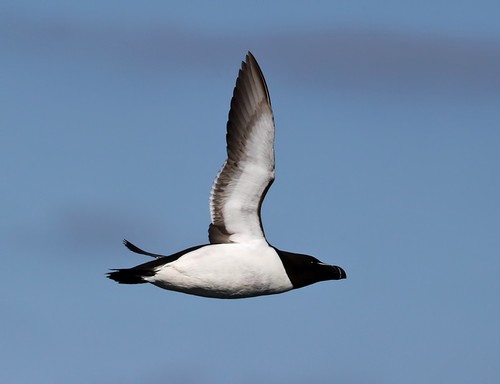
Razorbill
37-39 cm (15-15.5 in) long, 63-68 cm wingspan
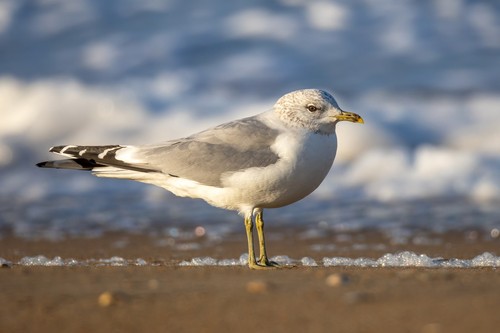
Common Gull
40-46 cm (16-18 in) long, 110-130 cm wingspan
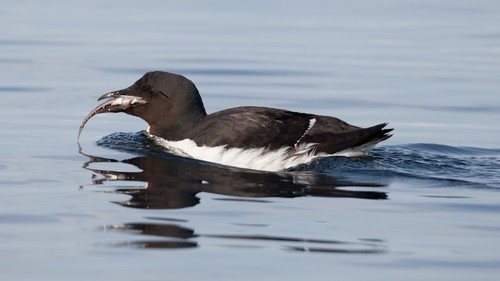
Thick-billed Murre
40-48 cm (16-19 in) long, 65-75 cm wingspan
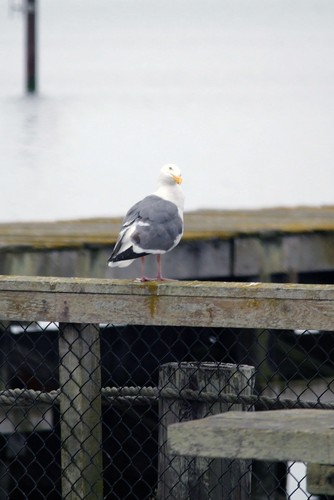
Western Gull
55-68 cm (22-27 in) long, 130-144 cm wingspan
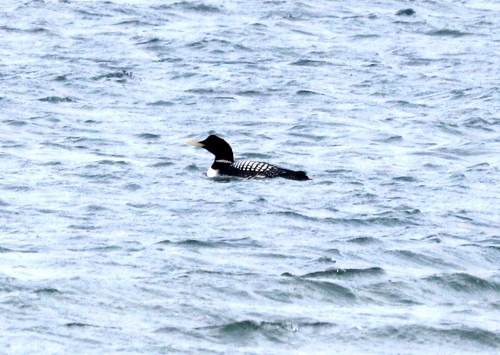
Yellow-billed Loon
76-97 cm (30-38 in) long, 135-152 cm wingspan
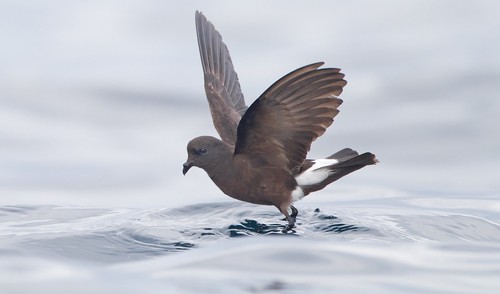
Wilson's Storm-Petrel
15-19 cm (6-7.5 in) long, wingspan 38-42 cm (15-16.5 in)
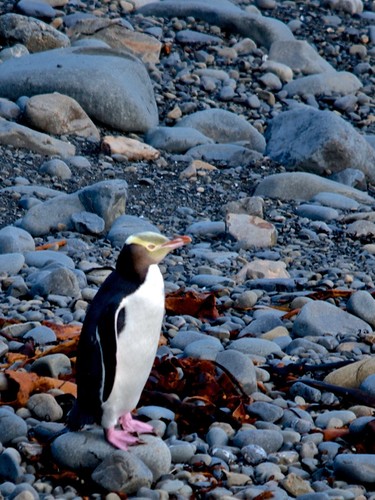
Yellow-eyed Penguin
62-79 cm (24-31 in) tall, 3-8.5 kg (6.6-18.7 lb)
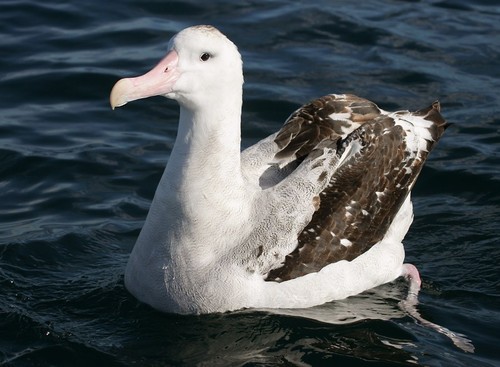
Wandering Albatross
107-135 cm (42-53 in) long, wingspan up to 3.5 m (11.5 ft)
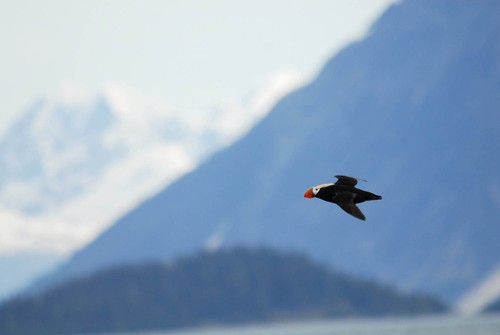
Tufted Puffin
35-41 cm (14-16 in) long, about 63-70 cm wingspan