
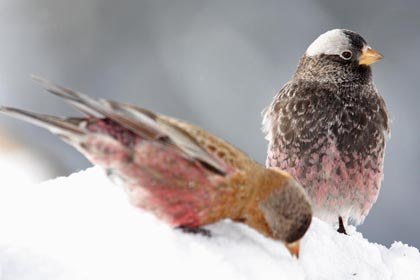
Black Rosy-Finch
Leucosticte atrata
The darkest of the three rosy-finches, breeding only in a narrow band of high central Rocky Mountain peaks and considered especially vulnerable to a warming climate.
- Size
- 14-16 cm (5.5-6.3 in) long, about 32 cm (12.6 in) wingspan
- Habitat
- high alpine tundra, cliffs, and talus slopes above treeline in the central Rocky Mountains
- Type
- songbird
Spotted a bird like this?
Identify any bird from a photo, free.
Overview
The Black Rosy-Finch has the most restricted breeding range of the three North American rosy-finch species, nesting only among the highest peaks of a narrow band of the central Rocky Mountains, an extreme alpine environment even by rosy-finch standards.
Adults appear notably darker than their relatives, with a blackish-brown body overall, offset by a rosy-pink wash on the wings, rump, and belly, a black forehead, and a pale gray patch on the crown and nape. This dark base coloring, darker than either the Gray-crowned or Brown-capped Rosy-Finch, is the species' most distinctive feature.
Because its breeding range is confined to a small number of high mountain ranges, and because alpine habitat is expected to shrink as the climate warms, the Black Rosy-Finch is considered one of the more climate-vulnerable songbirds in North America despite its stable current global population status.
How to identify it
Key Field Marks
- Blackish-brown body overall, the darkest of the three rosy-finch species
- Rosy-pink wash on the wings, rump, and belly
- Black forehead and a contrasting pale gray patch on the crown and nape
- Found only in high alpine terrain of the central Rockies
Similar Species
- Gray-crowned Rosy-Finch: paler, warmer pinkish-brown body overall rather than blackish-brown
- Brown-capped Rosy-Finch: lacks the contrasting gray crown patch, appearing more uniformly brown-headed, and is generally found farther south in Colorado and northern New Mexico
Overall darkness of the body plumage is the single best mark separating this species from its two close relatives where ranges may overlap in winter flocks.
Habitat & range
The Black Rosy-Finch breeds only in high alpine tundra, rocky cliffs, and talus slopes above treeline in a limited portion of the central Rocky Mountains, including parts of Wyoming, Idaho, Montana, Utah, and Nevada, typically near permanent or long-lasting snowfields.
In winter, birds move to somewhat lower elevations nearby, foraging in flocks on open ground and sometimes visiting feeders in mountain towns, occasionally alongside Gray-crowned and Brown-capped Rosy-Finches where their winter ranges overlap. Because the species nests only in a narrow band of the highest peaks, its total range is smaller than that of either of its rosy-finch relatives.
Behavior & voice
Behavior
Black Rosy-Finches forage on the ground across rocky tundra and snowfields, often in flocks, walking and picking at seeds and insects rather than actively hawking prey in flight.
Voice
Calls are simple, high-pitched chirping notes, similar to those of other rosy-finches, often given by flocks in flight over open alpine terrain.
Feeding
Diet includes alpine plant seeds and insects, with insects that have been blown onto snowfields and chilled into torpor forming an especially important food source in the sparse high-elevation environment.
Nesting and Breeding
Nests are built in protected rock crevices or cliff ledges at very high elevation, lined with grass, moss, and feathers for insulation against harsh alpine conditions. Clutches typically contain 3-5 white eggs.
Frequently asked questions
What is the rarest rosy-finch species?
The Black Rosy-Finch has the most restricted breeding range of the three North American rosy-finches, nesting only in a narrow band of the central Rocky Mountains.
How do you identify a Black Rosy-Finch?
Look for a blackish-brown bodied finch, darker than other rosy-finches, with a rosy-pink wash on the wings and rump and a pale gray patch on the crown.
Where does the Black Rosy-Finch live?
It breeds in high alpine tundra and rocky terrain above treeline in Wyoming, Idaho, Montana, Utah, and Nevada, moving to lower elevations nearby in winter.
Why is the Black Rosy-Finch considered vulnerable?
Its breeding habitat is confined to a small number of high mountain peaks, and alpine habitat is expected to shrink as the climate warms, threatening the species' already limited range.
What do Black Rosy-Finches eat?
They eat seeds and insects, including insects that have been blown onto snowfields and chilled, an important food source in their sparse alpine habitat.
Black Rosy-Finch guides
In-depth guides for identifying, finding, and understanding Black Rosy-Finch.
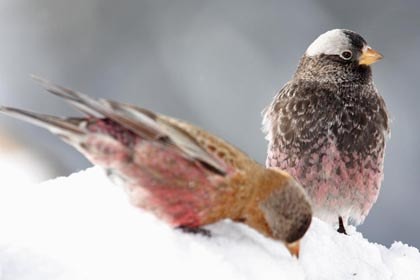
Other birds you may enjoy
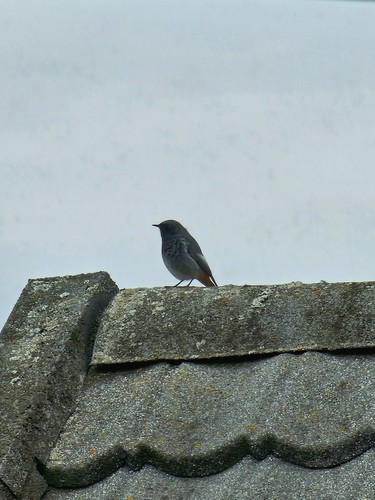
Black Redstart
13-14.5 cm (5.1-5.7 in) long, 23-26 cm wingspan
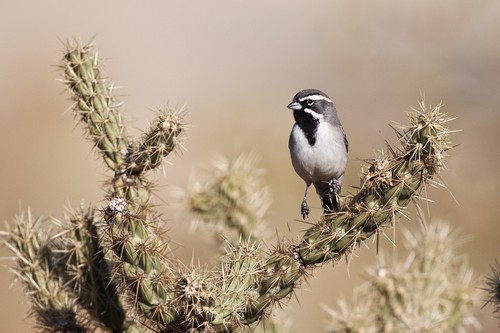
Black-throated Sparrow
12-14 cm (4.7-5.5 in) long, about 19-20 cm (7.5-8 in) wingspan
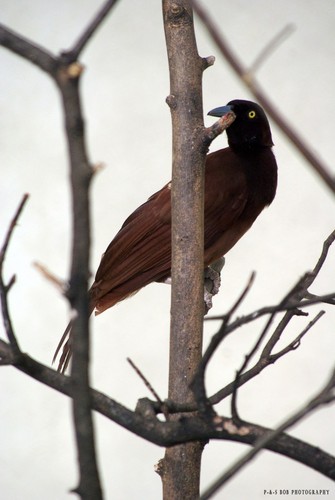
Greater Bird-of-paradise
Body about 43 cm; males with additional flank plumes up to 50 cm and long tail wires
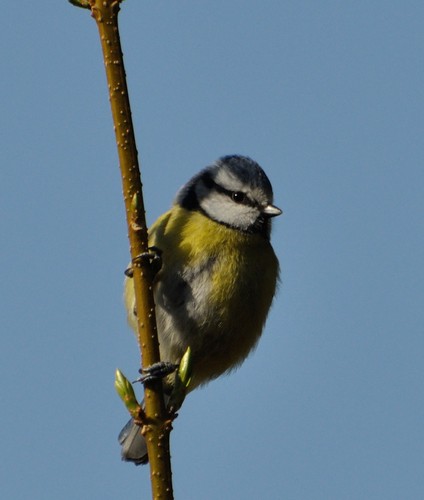
Blue Tit
11-12 cm (4.3-4.7 in) long, 17-20 cm wingspan
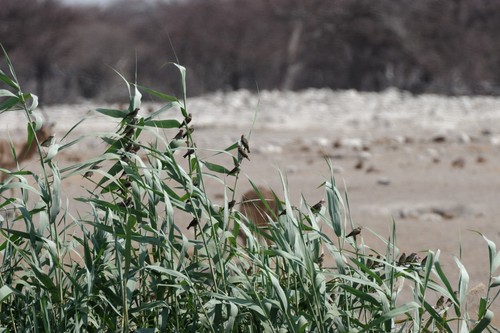
Red-billed Quelea
11.5–13 cm long, wingspan about 20–22 cm
White-plumed Antbird
13-14 cm (5-5.5 in) long
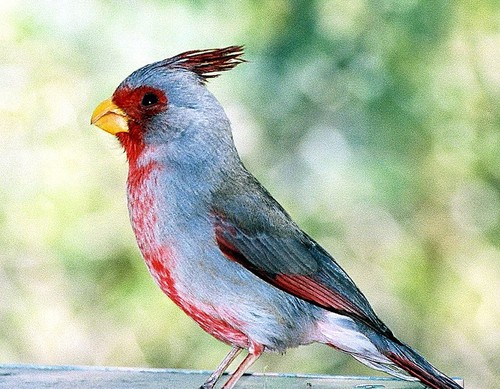
Pyrrhuloxia
19-22 cm (7.5-8.7 in) long, 30 cm wingspan
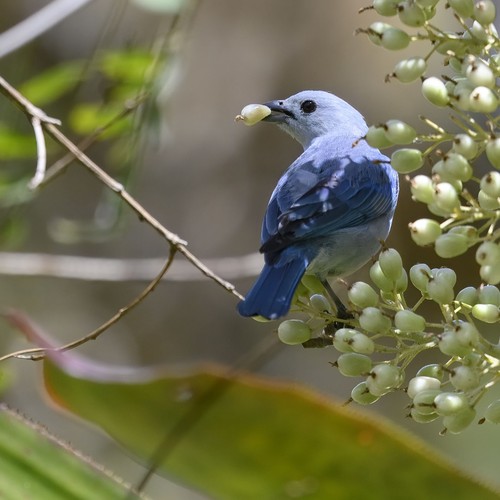
Blue-gray Tanager
16-18 cm (6-7 in) long
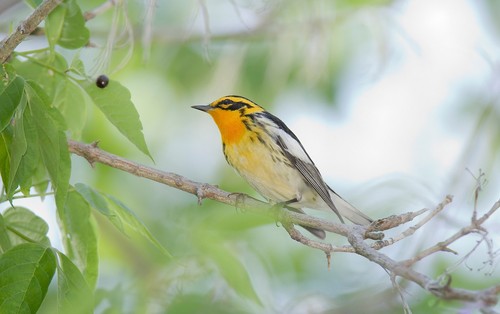
Blackburnian Warbler
11-13 cm (4.3-5.1 in) long, 20-22 cm wingspan
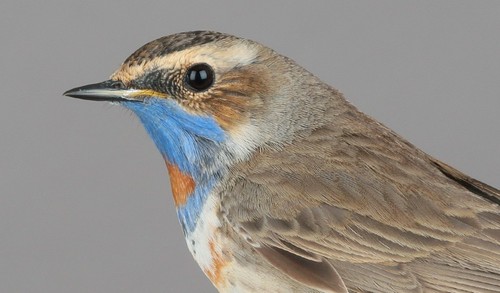
Bluethroat
13-14 cm (5.1-5.5 in) long, 20-22 cm wingspan
Eurasian Nuthatch
12-14.5 cm (4.7-5.7 in) long, 22.5-27 cm wingspan
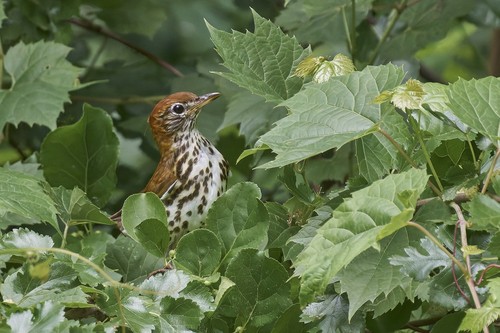
Wood Thrush
19-21 cm (7.5-8.3 in) long, about 33 cm (13 in) wingspan