
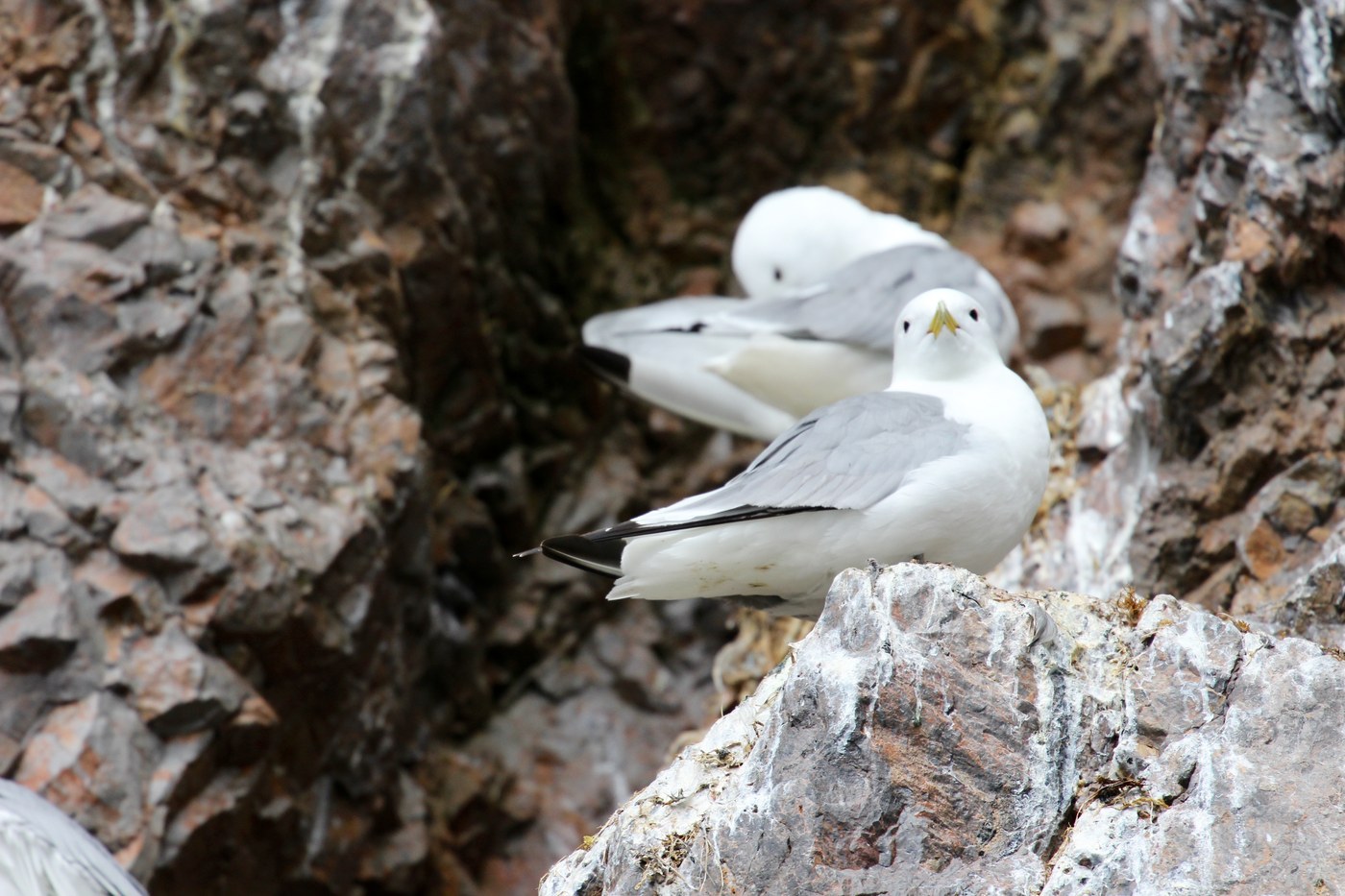
Black-legged Kittiwake
Rissa tridactyla
A true oceanic gull that spends most of its life far from land, breeding in dense, noisy colonies on sheer sea cliffs and named for its distinctive 'kitti-waaake' call.
- Size
- 37-42 cm (15-17 in) long, 91-100 cm wingspan
- Habitat
- open ocean and sheer sea cliffs across the circumpolar Arctic and subarctic
- Type
- seabird
Spotted a bird like this?
Identify any bird from a photo, free.
Overview
The Black-legged Kittiwake is a clean, elegant, and highly pelagic gull that spends the vast majority of its life on the open ocean, coming to land only to breed on precipitous sea cliffs. Adults are a crisp combination of pale gray upperparts, white head and underparts, and jet-black legs, with an unmarked, slim yellow bill.
A key field mark is the wingtip pattern: solid black, as if dipped in ink, without the white spots ("mirrors") shown by most other gulls of similar size. The dark eye and gentle expression complete a tidy, almost dove-like appearance.
Kittiwakes breed in spectacular, densely packed, noisy colonies on narrow ledges of sheer sea cliffs, a habitat few other gulls can exploit, and their name is derived directly from their distinctive calls given at these colonies.
How to identify it
Key field marks
- Solid black wingtips lacking white spots ("dipped in ink")
- Black legs (unusual among similar-sized gulls, which typically have pink or yellow legs)
- Slim, unmarked yellow bill
- Clean pale gray mantle and white head/underparts
Similar species
- Sabine's Gull: shows a bold tricolored wing pattern and forked tail rather than uniform black wingtips.
- Mew/Common Gull: shows white spots in the black wingtips and has yellow-green (not black) legs.
- Ivory Gull: entirely white plumage, quite different overall.
Habitat & range
Habitat
A true pelagic seabird for most of the year, ranging over open ocean far from land; breeds on narrow ledges of sheer, often remote, sea cliffs.
Range and migration
Breeds in colonies circumpolar around the Arctic and subarctic, including coasts of Alaska, Canada, Greenland, Iceland, northern Europe, and Russia. Outside the breeding season, kittiwakes disperse widely across the open North Atlantic and North Pacific, rarely coming close to shore except during storms.
Behavior & voice
Behavior
Highly colonial, kittiwakes nest in dense, tightly packed colonies on cliff ledges, often numbering in the thousands of pairs, and defend very small nest territories with vigorous calling and posturing.
Voice
The species takes its name from its distinctive, far-carrying call, a shrill "kitti-waaake, kitti-waaake," given frequently at breeding colonies.
Feeding
Feeds mainly on small schooling fish such as sand lance and capelin, along with zooplankton, captured by surface-dipping and shallow plunge-diving at sea.
Nesting and breeding
Builds a compact, cup-shaped nest of mud and vegetation cemented to narrow cliff ledges, an adaptation that helps prevent eggs and chicks from falling. Clutches typically contain one to two eggs, incubated by both parents; chicks remain remarkably still on the ledge to avoid falling, unlike the mobile chicks of ground-nesting gulls.
Frequently asked questions
Why is it called a Kittiwake?
The name comes directly from its distinctive call, a shrill 'kitti-waaake' given repeatedly at breeding colonies.
How do you tell a Kittiwake from other gulls?
Look for solid black wingtips without white spots, black legs, and a slim unmarked yellow bill, along with its highly pelagic habits.
Why are Black-legged Kittiwake populations declining?
Changes in the abundance and distribution of small forage fish, linked to shifting ocean conditions and climate change, have driven significant population declines at many colonies, leading to its Vulnerable status.
Where do Kittiwakes spend most of their time?
They are highly pelagic, spending most of the year far out over the open ocean, coming to land only to breed on sea cliffs.
Black-legged Kittiwake guides
In-depth guides for identifying, finding, and understanding Black-legged Kittiwake.
Other birds you may enjoy
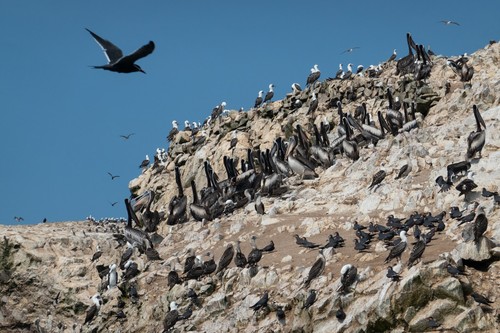
Peruvian Pelican
137-152 cm (54-60 in) long, up to 228 cm wingspan
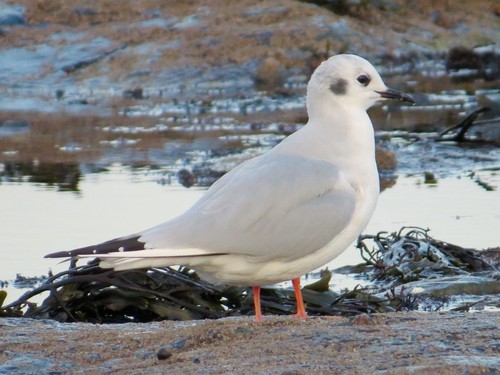
Bonaparte's Gull
28-33 cm (11-13 in) long, 76-84 cm wingspan
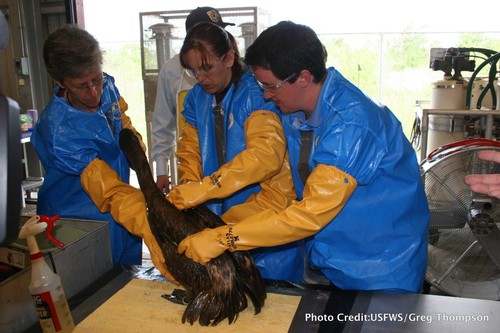
Brown Pelican
106-137 cm (42-54 in) long, 200-230 cm wingspan
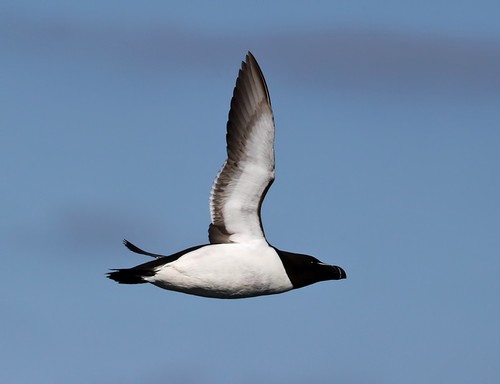
Razorbill
37-39 cm (15-15.5 in) long, 63-68 cm wingspan
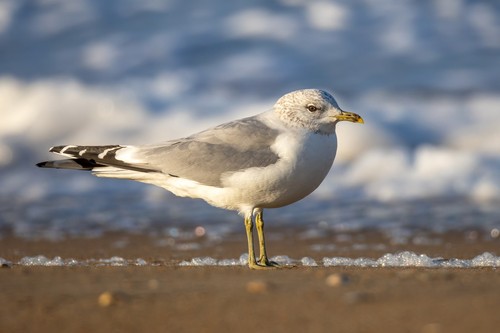
Common Gull
40-46 cm (16-18 in) long, 110-130 cm wingspan
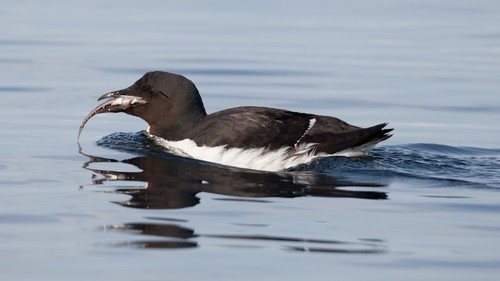
Thick-billed Murre
40-48 cm (16-19 in) long, 65-75 cm wingspan
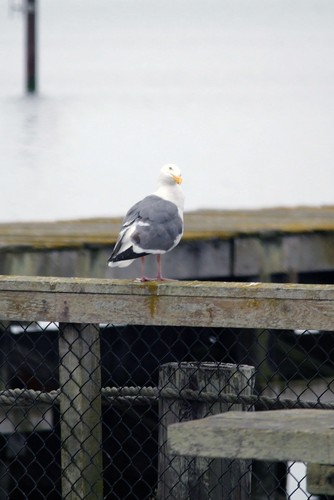
Western Gull
55-68 cm (22-27 in) long, 130-144 cm wingspan
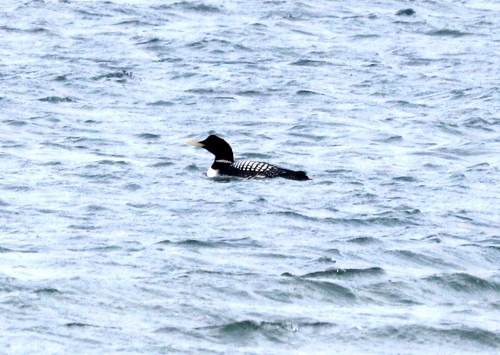
Yellow-billed Loon
76-97 cm (30-38 in) long, 135-152 cm wingspan
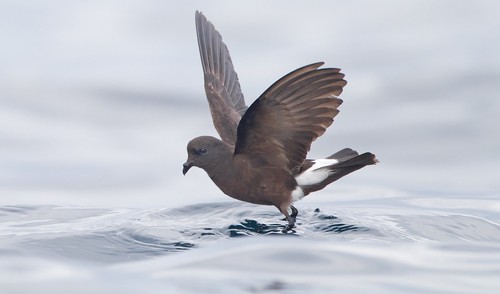
Wilson's Storm-Petrel
15-19 cm (6-7.5 in) long, wingspan 38-42 cm (15-16.5 in)
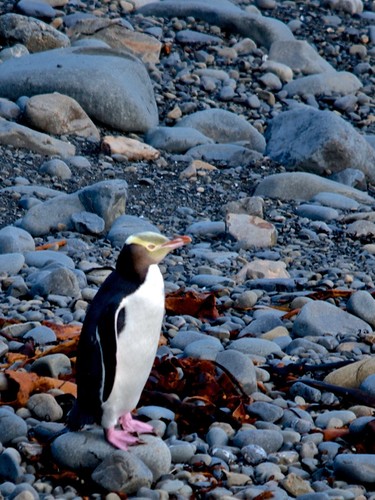
Yellow-eyed Penguin
62-79 cm (24-31 in) tall, 3-8.5 kg (6.6-18.7 lb)
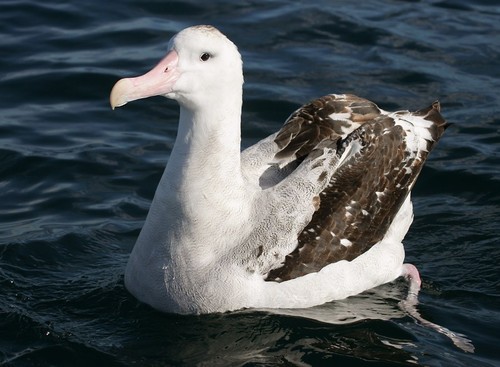
Wandering Albatross
107-135 cm (42-53 in) long, wingspan up to 3.5 m (11.5 ft)
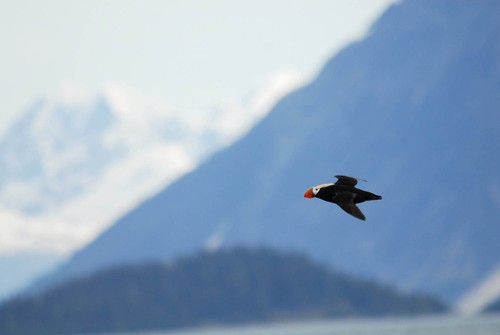
Tufted Puffin
35-41 cm (14-16 in) long, about 63-70 cm wingspan