
Black Grouse
Lyrurus tetrix
A dramatic grouse famous for its communal spring "lek" displays, males glossy blue-black with a lyre-shaped tail, females mottled brown.
- Size
- male 49-58 cm (19-23 in), female 40-45 cm; wingspan 65-80 cm
- Habitat
- moorland edge, heath, upland pasture, and forest-moorland transition zones
- Type
- gamebird
Spotted a bird like this?
Identify any bird from a photo, free.
Overview
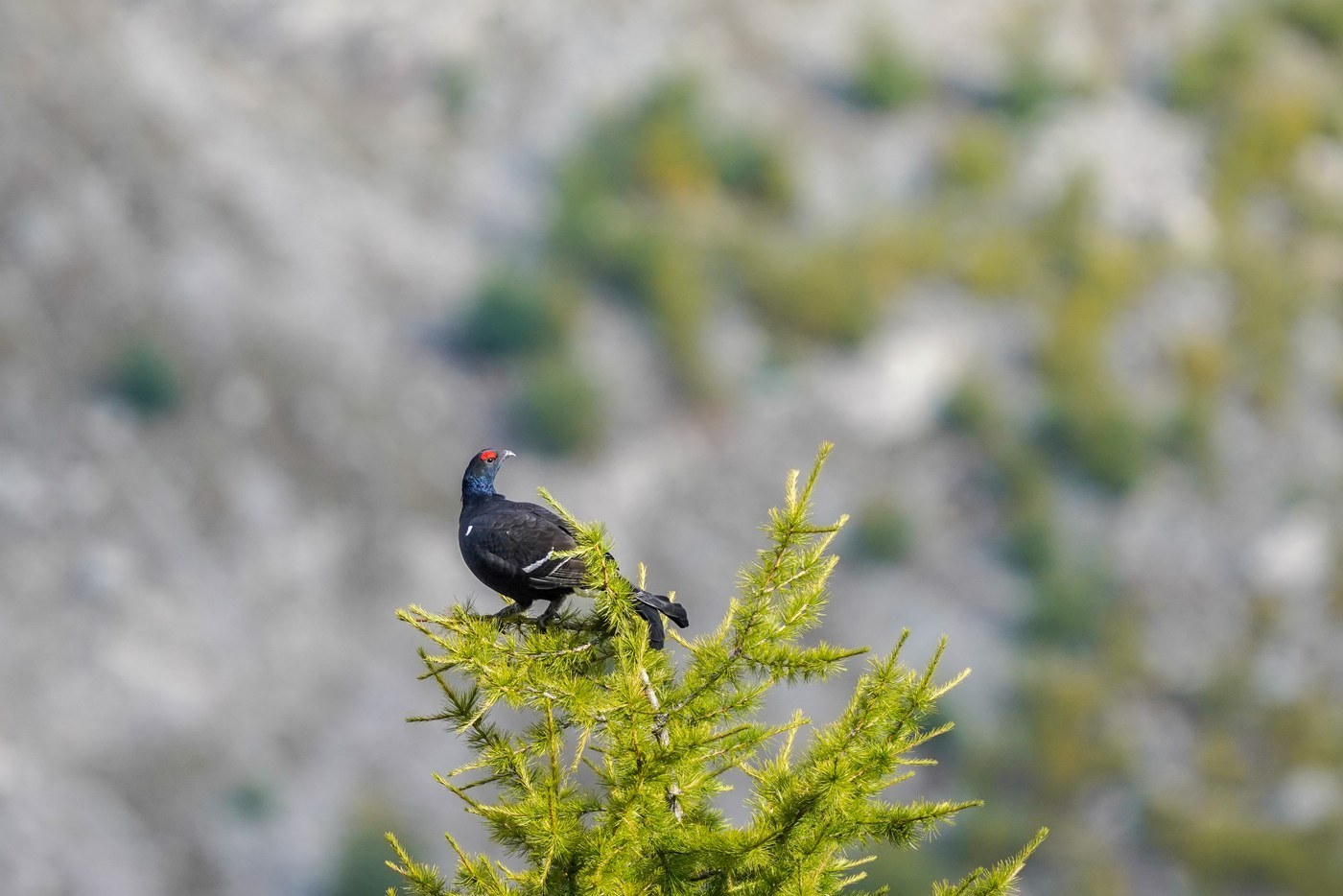
The Black Grouse shows striking sexual dimorphism. Males, known as blackcocks, are glossy blue-black with a distinctive lyre-shaped tail that curls outward, bright red wattles above the eye, and white wing-bars and undertail coverts visible in flight or display. Females, called greyhens, are much less conspicuous, mottled brown and buff overall, larger than Red Grouse females but smaller than male Black Grouse.
The species is best known for its dramatic communal courtship display, or "lek", in which males gather at traditional sites at dawn to strut, fan their tails, and spar for the attention of watching females.
How to identify it
Key field marks
- Male: glossy blue-black plumage, lyre-shaped tail, red eye wattle, white wing-bar
- Female: mottled brown, larger and greyer than Red Grouse, with a slightly forked tail
- Communal lekking display at dawn in spring
- Bubbling, dove-like display calls from males at the lek
Similar species
- Red Grouse males are entirely rufous-brown without a lyre-shaped tail; female Red Grouse are smaller and more rufous than female Black Grouse.
- Western Capercaillie male is much larger and bulkier, lacking the lyre-shaped tail.
The male's unmistakable lyre tail and glossy black plumage make Black Grouse readily identifiable; females require more care but are best told by size and habitat.
Habitat & range
Habitat
Favors transitional habitat between moorland and woodland, including heather moor edges, birch scrub, upland pasture, and young forestry plantations.
Range
Found patchily across northern Britain, and more widely through Scandinavia, the Alps, and boreal and montane regions of continental Europe and Asia.
Migration
Resident and largely sedentary, though birds may move short distances between seasonal habitats.
Behavior & voice
Behavior
Famous for lekking: males gather communally at traditional display grounds (leks) at dawn in spring, fanning their tails, puffing wattles, and sparring to establish dominance and attract females, who visit to select a mate.
Voice
Displaying males give a far-carrying, bubbling "rookoo" song along with sharp hissing and sneezing notes during sparring.
Feeding
Feeds on buds, catkins, shoots, and berries, particularly birch and heather, with insects important for growing chicks.
Nesting and breeding
Females alone build a simple ground nest and incubate 6-11 eggs for about 23-28 days, receiving no help from the male, who takes no part in nesting after mating at the lek.
Frequently asked questions
What is a Black Grouse lek?
A traditional communal display ground where males gather at dawn to compete for female attention through posturing, calling, and sparring.
How do you tell a male from a female Black Grouse?
Males (blackcocks) are glossy blue-black with a lyre-shaped tail, while females (greyhens) are mottled brown and less conspicuous.
Where can Black Grouse be found?
In moorland-edge and upland habitats across northern Britain, Scandinavia, the Alps, and other parts of northern and montane Europe and Asia.
Do male Black Grouse help raise the young?
No, females raise the brood alone after mating at the lek.
Black Grouse guides
In-depth guides for identifying, finding, and understanding Black Grouse.
Other birds you may enjoy
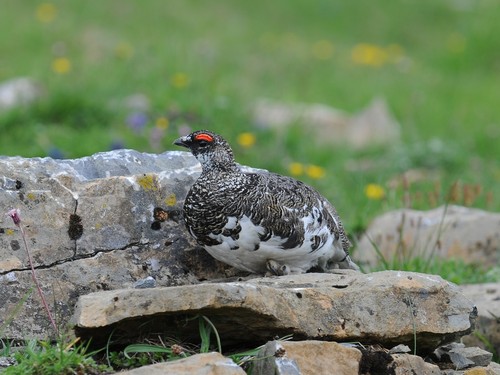
Rock Ptarmigan
34-36 cm (13-14 in) long
Congo Peafowl
Males about 64-70 cm long; females slightly smaller; no elaborate train
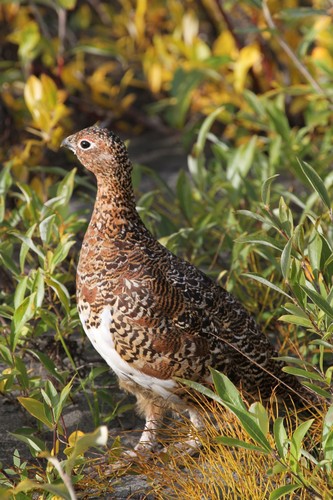
Willow Ptarmigan
37-42 cm (15-16.5 in) long
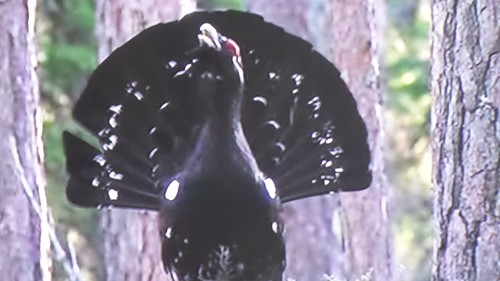
Western Capercaillie
male 74-90 cm (29-35 in), female 54-64 cm; male wingspan up to 125-130 cm
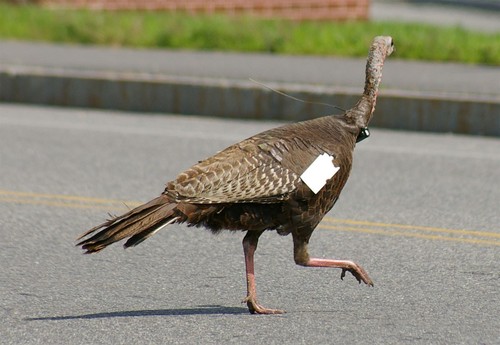
Wild Turkey
males 100-125 cm (39-49 in) long; females smaller, around 76-95 cm (30-37 in)
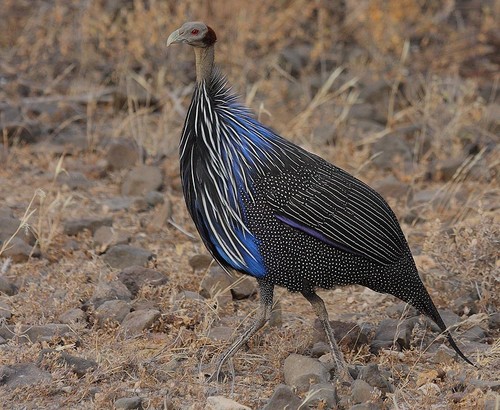
Vulturine Guineafowl
Length 61-71 cm, the largest guineafowl species, with a notably long neck and tail
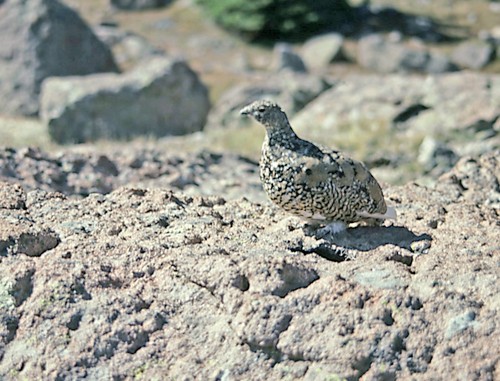
White-tailed Ptarmigan
30-33 cm (12-13 in) long; the smallest ptarmigan species
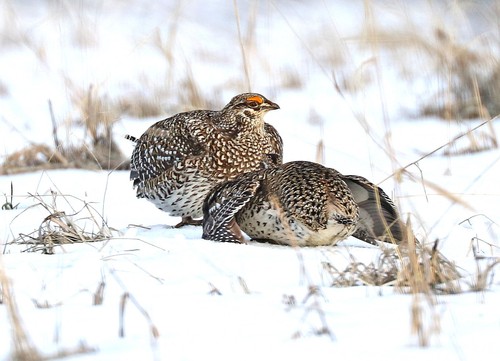
Sharp-tailed Grouse
38-48 cm (15-19 in) long
Ring-necked Pheasant
males 76-90 cm (30-35 in) long including a long tail; females smaller, 55-65 cm (22-26 in)
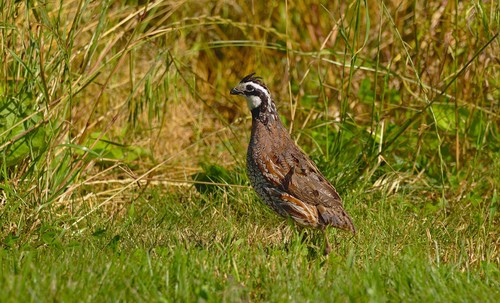
Northern Bobwhite
24-28 cm (9.5-11 in) long, 33-38 cm wingspan
Red-legged Partridge
32-34 cm (13 in) long, 47-50 cm wingspan
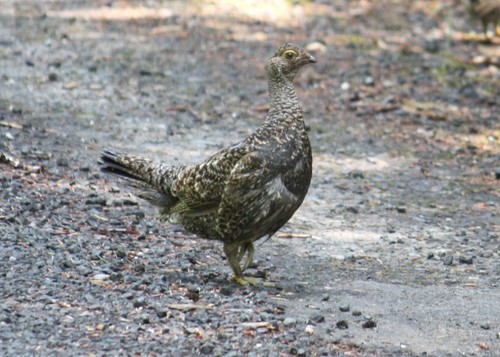
Sooty Grouse
43-48 cm (17-19 in) long; males larger than females