
Black Grouse Identification Guide
A striking Eurasian gamebird best known for the male's glossy black plumage, lyre-shaped tail, and dramatic communal lekking displays.
Read the full Black Grouse encyclopedia entry →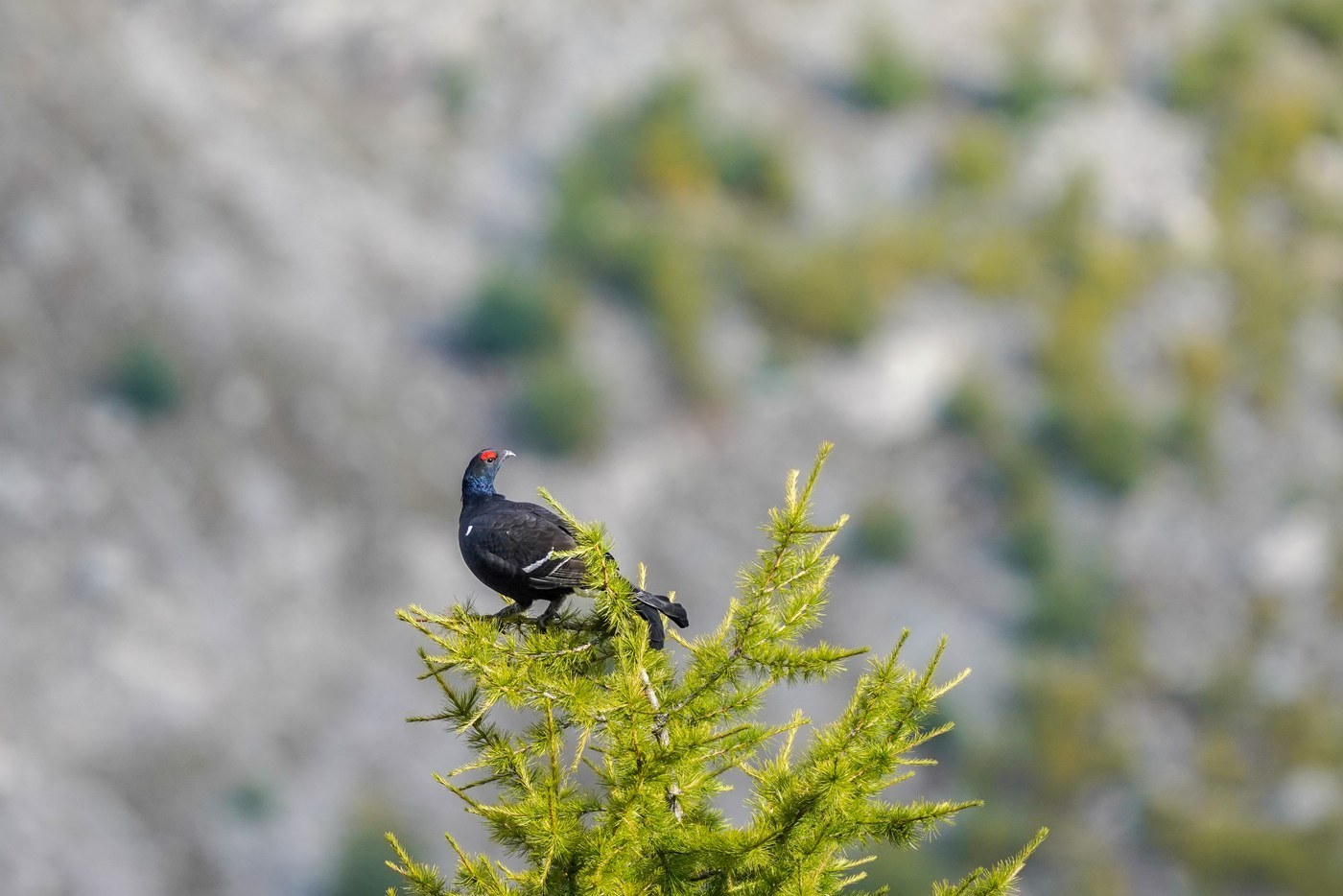
Key Field Marks
- Male ("blackcock") is glossy blue-black overall with a bright red wattle over the eye, a white wingbar, and white undertail coverts that flare conspicuously during display.
- The male's tail curves outward in a distinctive lyre shape, most obvious when fanned during courtship.
- Female ("greyhen") is cryptically mottled brown and buff, notably larger and bulkier than a female Red Grouse, with a shallowly forked tail visible in flight.
- Both sexes are large, heavy-bodied grouse with feathered legs.
Separating It From Similar Species
- Capercaillie is much larger and bulkier, with males showing a heavier build, a fan-shaped (not lyre-shaped) tail, and a more prominent beard of throat feathers.
- Red Grouse/Willow Ptarmigan lacks the lyre-shaped tail and white wingbar; males are rufous-brown rather than glossy black.
- Female Black Grouse is best separated from female Red Grouse by larger size, greyer tone, and a distinctly forked tail versus the Red Grouse's square tail.
Where and When to See It
- Found across northern and central Europe and temperate Asia, from Britain and Scandinavia east through Russia to parts of Central Asia and China.
- Inhabits moorland edges, heath, birch and pine forest margins, and transitional scrub between forest and open ground.
- Non-migratory; the best time to see displaying males is at dawn in spring, when they gather at traditional lek sites.
Voice and Behavior
- Displaying males at the lek produce a far-carrying, bubbling "rookooing" song interspersed with an explosive hissing "chuwish" sound, audible at considerable distance in still dawn air.
- Leks involve multiple males performing tail-fanning, wing-drooping, and jumping displays while competing for the attention of visiting females.
- Diet shifts seasonally, including buds, catkins, berries, and insects taken by chicks.
Frequently asked questions
What is a lek and how does it help identify Black Grouse?
A lek is a traditional communal display ground where male Black Grouse gather at dawn to perform tail-fanning displays and bubbling calls, making this behavior itself a strong identification and locating cue.
How do you tell a male Black Grouse from a Capercaillie?
Black Grouse males are smaller with a lyre-shaped, outward-curving tail, while Capercaillie males are much larger and heavier with a broad, fan-shaped tail.
What does a female Black Grouse look like?
Mottled grey-brown overall ("greyhen"), larger and greyer than a female Red Grouse, with a shallow fork in the tail.
When is the best time to see displaying Black Grouse?
At dawn in early spring, when males gather at lek sites to perform their bubbling and hissing courtship displays.