
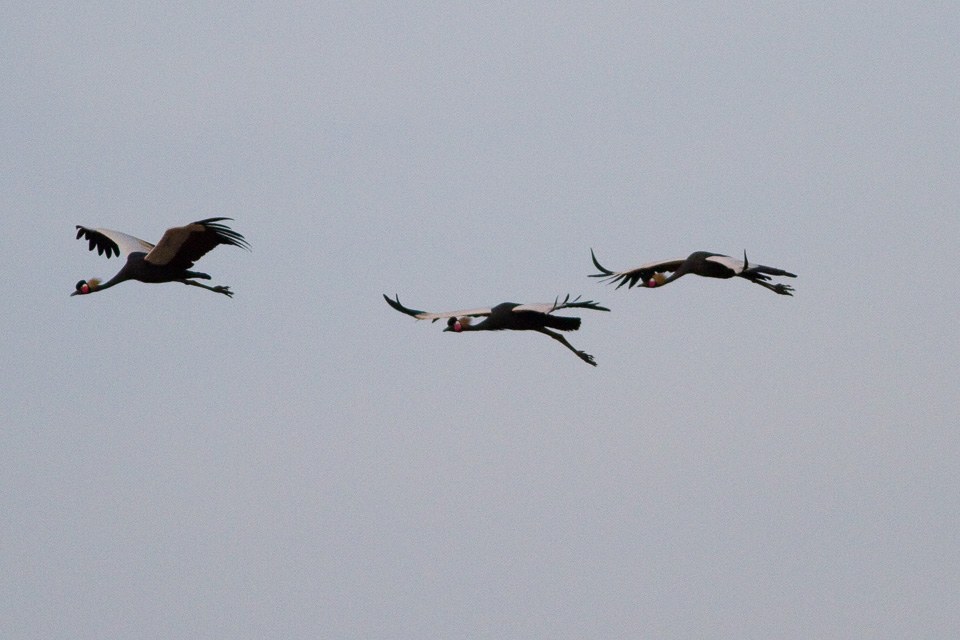
Black Crowned-Crane
Balearica pavonina
A striking West and Central African crane with a golden crown of bristle feathers, a black neck, and bold red and white facial patches.
- Size
- 100-105 cm (39-41 in) long, 180-200 cm wingspan
- Habitat
- wetlands, floodplains, and savanna of West and Central Africa
- Type
- wading-bird
Spotted a bird like this?
Identify any bird from a photo, free.
Overview
The Black Crowned-Crane closely resembles its eastern and southern relative, the Grey Crowned-Crane, but is distinguished by its black (rather than grey) neck. It has the same spectacular crown of stiff, golden bristle feathers, a pale grey body, black-and-white wing pattern, and vivid red and white cheek patches with a small throat wattle.
Like other crowned cranes, it retains the ancestral ability to perch in trees, a trait linked to its relatively long hind toe, distinguishing crowned cranes from all other living crane species.
How to identify it
Key field marks
- Golden crown of stiff bristle feathers
- Black neck (compared to the grey neck of the Grey Crowned-Crane)
- Pale grey body and black-and-white patterned wings
- White cheek patch with red patch above and red throat wattle
Similar species
The Grey Crowned-Crane is nearly identical apart from its grey (not black) neck, and the two species occupy separate, non-overlapping ranges in Africa. No other crane shares the distinctive golden crown.
Habitat & range
Black Crowned-Cranes inhabit wetlands, floodplains, and adjacent savanna and farmland across West and Central Africa, from Senegal and the Sahel region east to South Sudan and Ethiopia, generally favoring areas with seasonally flooded grasslands.
The species has experienced significant declines due to wetland drainage, habitat degradation, and illegal capture for the live bird trade, and is currently classified as Vulnerable, with the West African population considered especially at risk.
Behavior & voice
Black Crowned-Cranes forage in grasslands and wetland margins for seeds, insects, and small vertebrates, often walking through shallow water or short grass, and can form large flocks outside the breeding season.
They produce a distinctive booming call using an inflatable red throat pouch and perform elaborate dancing displays during courtship, similar to the Grey Crowned-Crane. They commonly roost in trees at night and build nests of trampled vegetation in wetlands, typically laying 2-4 eggs, with both parents sharing incubation and chick care.
Frequently asked questions
How is the Black Crowned-Crane different from the Grey Crowned-Crane?
The Black Crowned-Crane has a black neck, while the Grey Crowned-Crane has a pale grey neck; the two species also occupy separate ranges, with the black species in West and Central Africa and the grey species in eastern and southern Africa.
Why is the Black Crowned-Crane vulnerable?
Wetland drainage, habitat degradation, and illegal capture for the live bird trade have driven notable population declines, particularly in West Africa.
Can Black Crowned-Cranes roost in trees?
Yes, like all crowned cranes they have a long hind toe that lets them grip branches, and they regularly roost in trees at night, unlike most other crane species.
What does the Black Crowned-Crane's call sound like?
It produces a distinctive booming call using an inflatable red throat pouch, along with honking calls, especially during displays and in flight.
Black Crowned-Crane guides
In-depth guides for identifying, finding, and understanding Black Crowned-Crane.
Other birds you may enjoy
Demoiselle Crane
85-100 cm (33-39 in) long, 155-180 cm wingspan
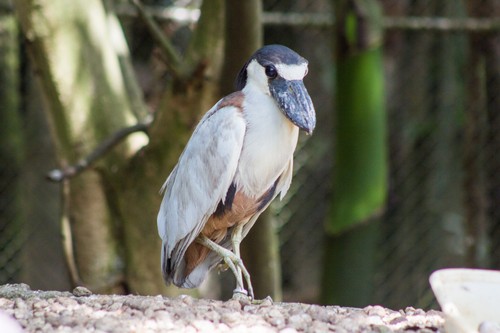
Boat-billed Heron
41-56 cm (16-22 in) long
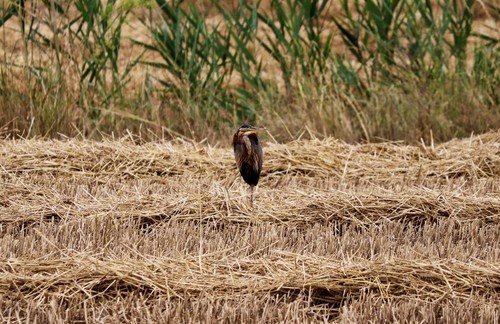
Purple Heron
78-90 cm (31-35 in) long, 120-152 cm wingspan
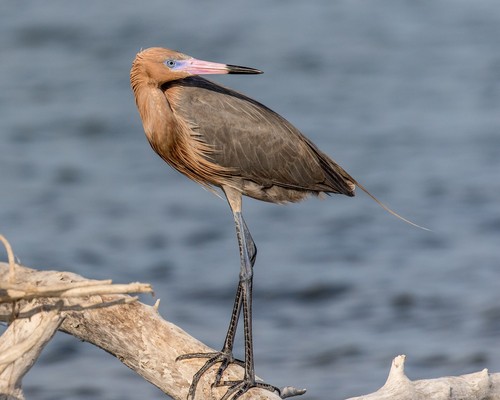
Reddish Egret
68-82 cm (27-32 in) long, 116-125 cm wingspan
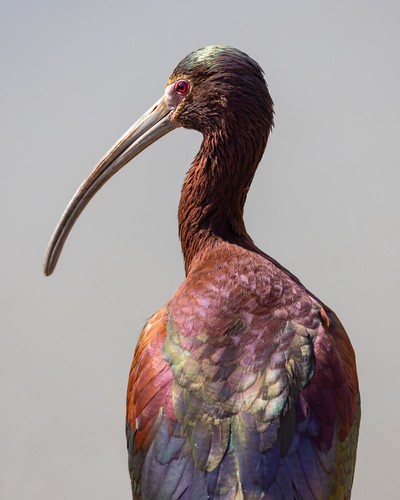
White-faced Ibis
46-56 cm (18-22 in) long, 88-93 cm wingspan
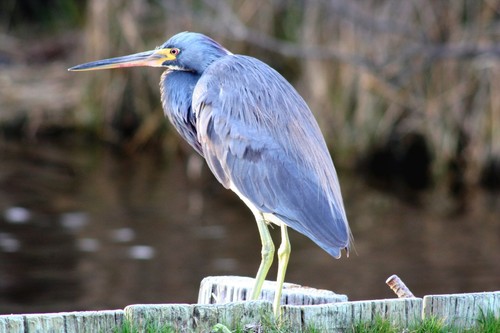
Tricolored Heron
61-76 cm (24-30 in) long, about 96 cm wingspan
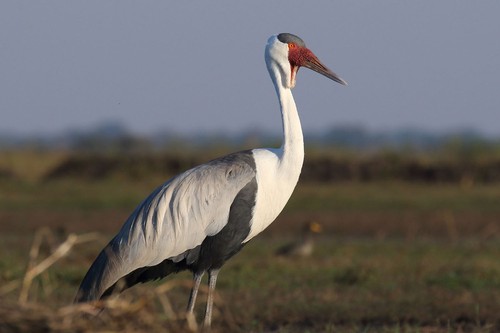
Wattled Crane
120-175 cm (47-69 in) tall, one of the tallest cranes, wingspan up to about 230 cm (7.5 ft)
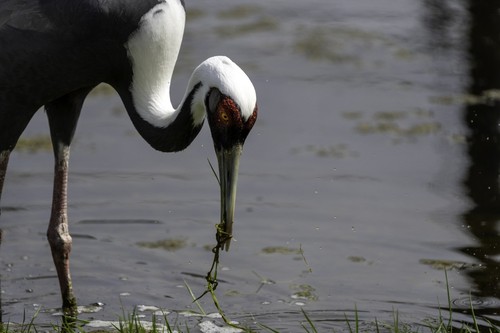
White-naped Crane
112-125 cm (44-49 in) long, 195-210 cm wingspan
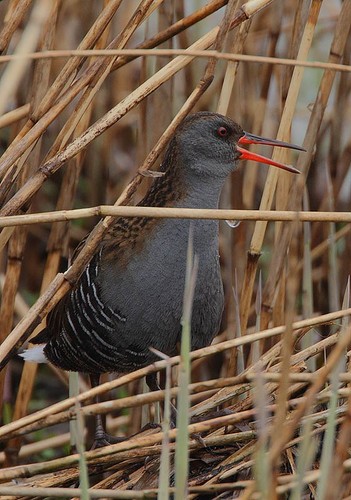
Water Rail
23-28 cm (9-11 in) long, wingspan 38-45 cm
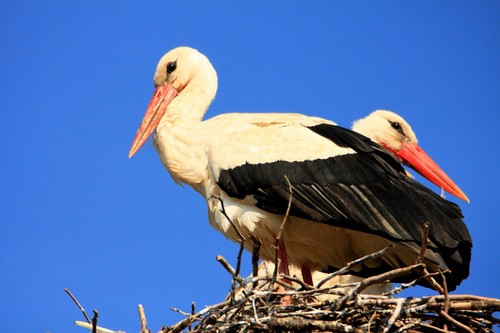
White Stork
100-125 cm (39-49 in) long, 155-215 cm wingspan
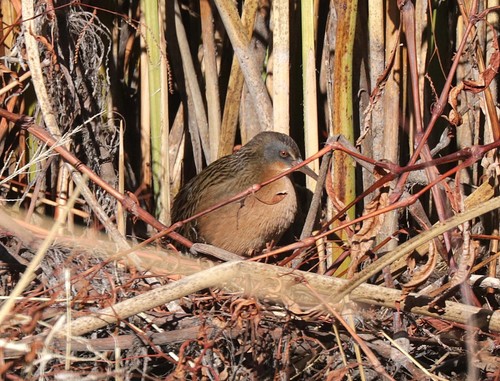
Virginia Rail
20-27 cm (8-11 in) long, wingspan 32-38 cm
Wattled Jacana
17-23 cm (7-9 in) long