
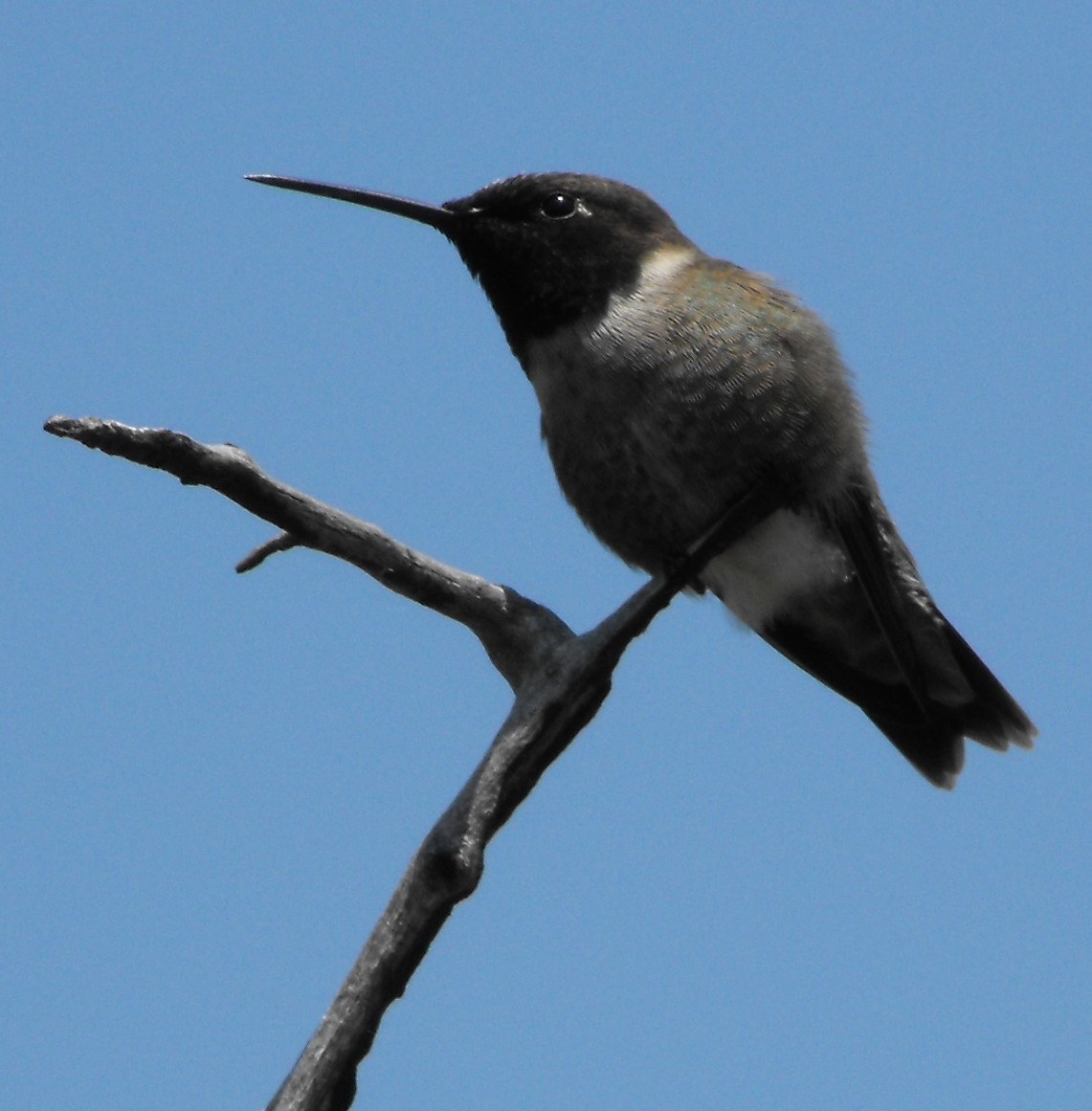
Black-chinned Hummingbird
Archilochus alexandri
A widespread western hummingbird whose males show a velvety black throat edged with a thin band of iridescent purple.
- Size
- 8.5-9.5 cm (3.5 in) long, 11 cm wingspan
- Habitat
- canyons, riparian corridors, desert lowlands, and mountain foothills
- Type
- hummingbird
Spotted a bird like this?
Identify any bird from a photo, free.
Overview
The Black-chinned Hummingbird is one of the most adaptable and widespread hummingbirds of the western United States, equally at home in desert washes, mountain canyons, and suburban gardens. Adult males have a metallic green back and crown, clean white underparts, and a throat that appears velvety black in most light, revealing a narrow band of iridescent purple only when it catches direct sun. Females and immatures lack the dark gorget, showing a plain whitish throat, green back, and pale underparts, making them very similar to several other female hummingbirds.
A distinctive habit is its frequent tail-pumping while hovering, a behavior that can help identify the species even when plumage details are hard to see.
How to identify it
Key Field Marks
- Male: black chin/throat with a thin iridescent purple lower band, green back, white breast
- Female: green back, whitish throat and underparts, faint dusky streaking on throat
- Distinctive habit of pumping the tail up and down while hovering at flowers
- Slightly drooped bill tip compared to some relatives
Similar Species
- Ruby-throated Hummingbird males have a red, not black, throat; females are very similar and best separated by range and tail-pumping behavior.
- Costa's Hummingbird males have a purple gorget that extends into pointed "mustache" streamers along the neck.
- Anna's Hummingbird is larger with a rose-pink to magenta crown and throat in males.
Habitat & range
Habitat
This species uses a very broad range of habitats, from dry desert arroyos and canyon bottoms to oak woodlands, riparian cottonwood groves, and residential gardens with flowering plants and feeders.
Range
It breeds across much of the western United States from the Pacific coast to the Great Plains and south into northern Mexico.
Migration
Black-chinned Hummingbirds are short- to medium-distance migrants, wintering mainly along the Gulf Coast of Mexico and in parts of the southwestern United States.
Behavior & voice
Behavior
Males perform steep pendulum-shaped display dives near females, producing a soft whirring or buzzing sound with their wings at the bottom of the arc.
Voice
Calls include a soft, low chattering and a sharp "tsip" note; the species lacks a musical song typical of songbirds.
Feeding
Black-chinned Hummingbirds visit a wide variety of tubular red, orange, and purple flowers for nectar and hawk small insects from the air or glean them from spider webs and foliage.
Nesting
The female builds a small, camouflaged cup nest of plant fibers and spider silk, often on a low horizontal branch, and raises two young broods per season in warmer parts of its range.
Frequently asked questions
How do you identify a female Black-chinned Hummingbird?
Females have a green back, whitish underparts, and a plain throat; the best clue is their habit of pumping the tail while hovering, which many similar species do not do as consistently.
Why does the male's throat look black instead of purple?
The iridescent purple band at the base of the throat only flashes color when it catches direct light at the right angle; otherwise the throat looks solid black.
Where do Black-chinned Hummingbirds nest?
They build small cup nests on low horizontal branches near water or in shaded canyons and gardens across much of the western United States.
Do Black-chinned Hummingbirds migrate?
Yes, most populations migrate south to Mexico for the winter, though a few remain along the U.S. Gulf Coast.
Black-chinned Hummingbird guides
In-depth guides for identifying, finding, and understanding Black-chinned Hummingbird.
Other birds you may enjoy
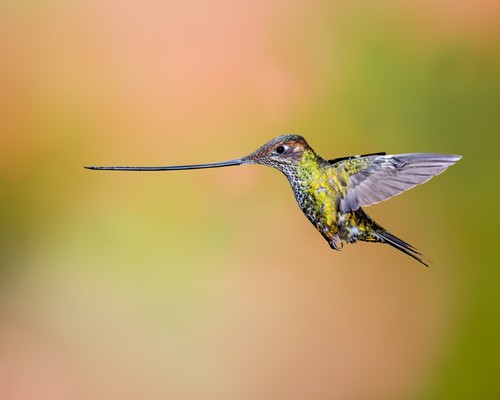
Sword-billed Hummingbird
Body about 13-15 cm (5-6 in) including a bill up to 10 cm long, the longest bill relative to body size of any bird
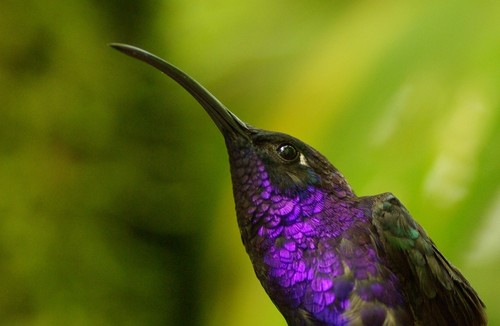
Violet Sabrewing
14-15 cm (5.5-6 in) long
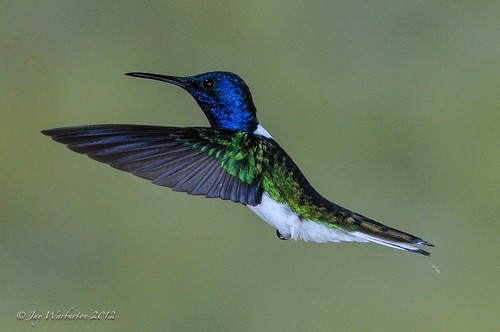
White-necked Jacobin
11-12 cm (4.3-4.7 in) long
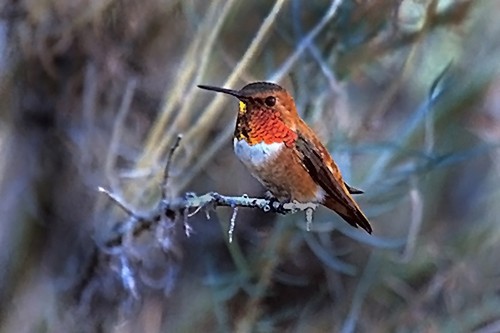
Rufous Hummingbird
8-9 cm (3-3.5 in) long, 11 cm wingspan
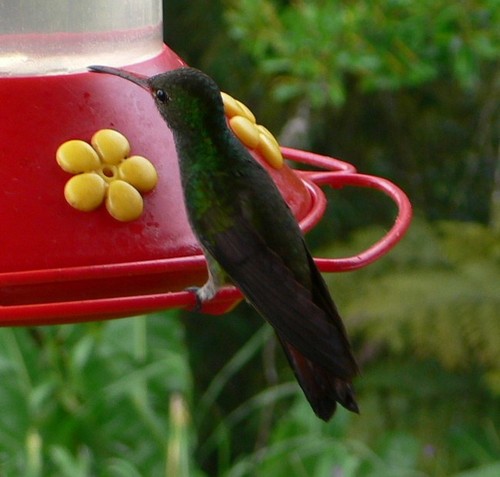
Rufous-tailed Hummingbird
10-11.5 cm (4-4.5 in) long
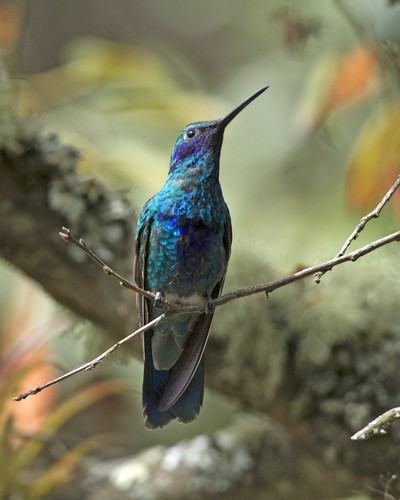
Sparkling Violetear
13-14 cm (5-5.5 in) long including bill
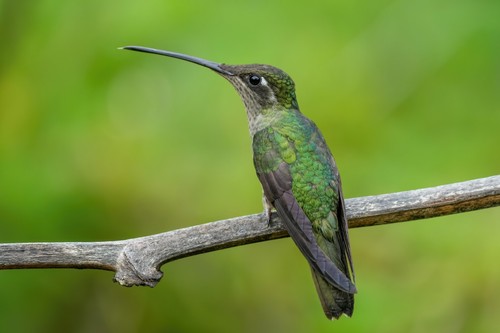
Rivoli's Hummingbird
11-14 cm (4.5-5.5 in) long, 17-18 cm wingspan
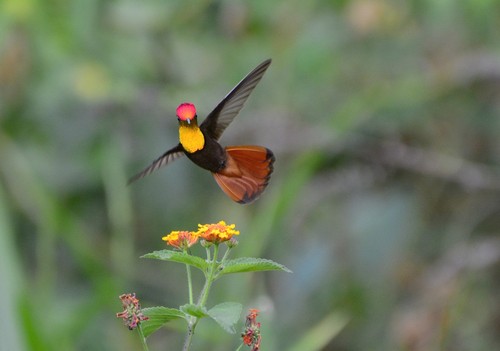
Ruby-topaz Hummingbird
7.5-9 cm (3-3.5 in) long
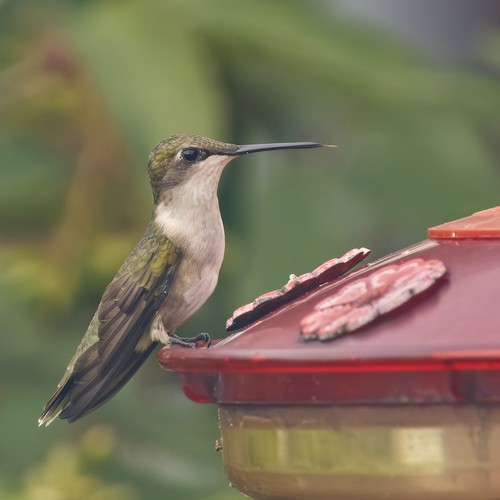
Ruby-throated Hummingbird
7-9 cm (3-3.5 in) long, 8-11 cm wingspan
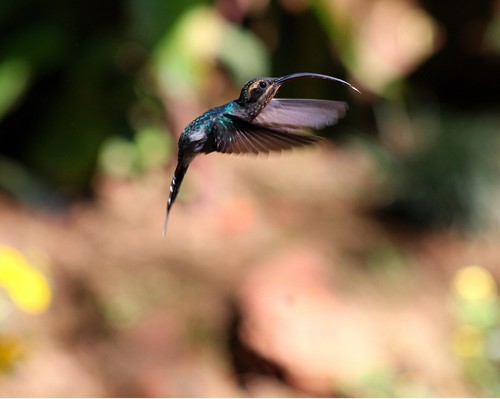
Green Hermit
15-16 cm (6-6.3 in) long including elongated central tail feathers
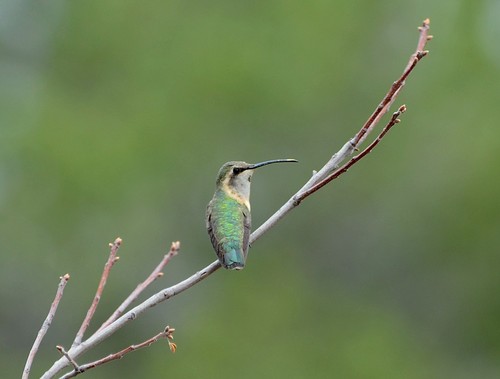
Lucifer Hummingbird
8.5-9.5 cm (3.5 in) long, 11 cm wingspan
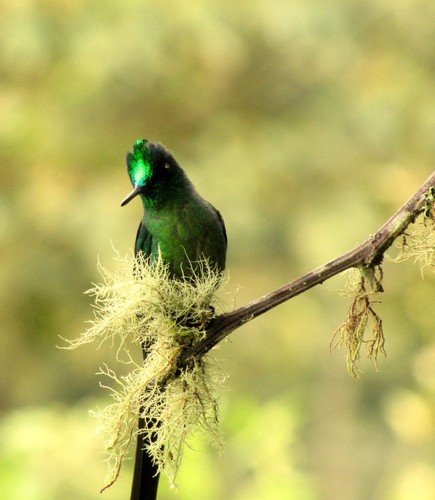
Long-tailed Sylph
males 18-19 cm (7-7.5 in) including tail; females 9-10 cm (3.5-4 in)