
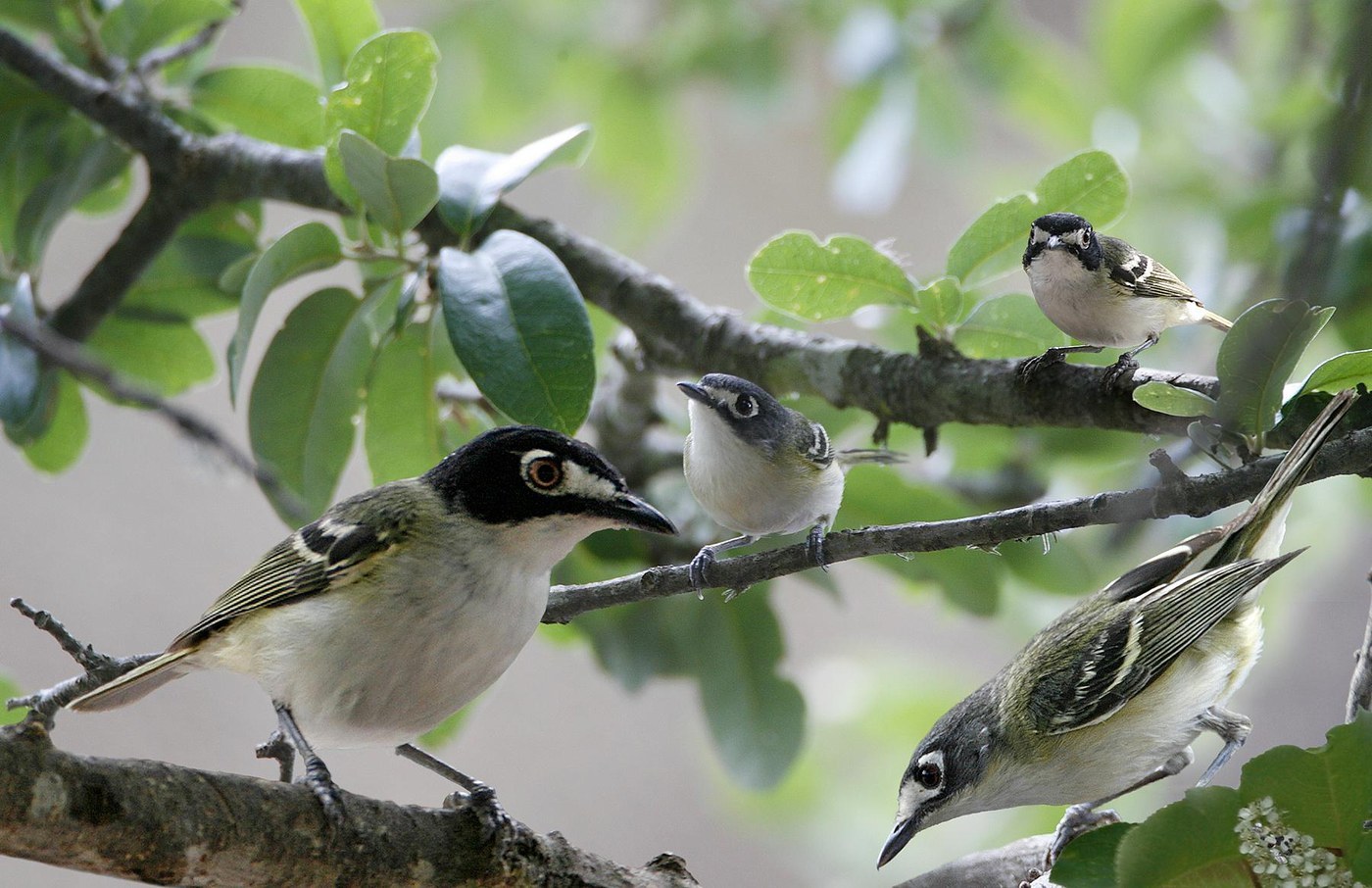
Black-capped Vireo
Vireo atricapilla
A small vireo of Texas oak scrub with a glossy black cap, bold white spectacles, and a red eye, a conservation success story after habitat restoration and cowbird control.
- Size
- 11-12 cm (4.5 in) long, 17-19 cm wingspan
- Habitat
- scrubby oak thickets on rocky hillsides in central Texas, Oklahoma, and northern Mexico
- Type
- songbird
Spotted a bird like this?
Identify any bird from a photo, free.
Overview
The Black-capped Vireo is a small, striking bird of shrubby oak habitat, with males showing a glossy black cap sharply set off by bold white spectacles and a deep red eye, an olive-green back, and white underparts washed with pale yellow on the flanks. Two white wing bars complete the pattern. Females are similar but have a duller, gray-black cap.
This species requires a very specific habitat structure—patchy, low, shrubby oak thickets with open ground between clumps, often maintained historically by fire or grazing. Habitat loss and heavy nest parasitism by Brown-headed Cowbirds caused steep declines through the 20th century, prompting the species to be listed as federally endangered in the US; intensive habitat management and cowbird control efforts led to a strong recovery, and it was removed from the US Endangered Species List in 2018.
How to identify it
Key field marks
- Male: glossy black cap, bold white spectacles, red eye
- Female: duller gray-black cap
- Olive-green back, white underparts with pale yellow flanks
- Two white wing bars
Similar species
- Black-capped Chickadee: unrelated songbird with a black cap and bib but no spectacles or red eye, different shape and behavior entirely.
- Other vireos in its range lack the combination of a solid black or blackish cap with bold white spectacles.
Habitat & range
Range and habitat
Black-capped Vireo breeds in a limited range centered on the Edwards Plateau and Hill Country of central Texas, with smaller populations in southwestern Oklahoma and northern Mexico. It requires patchy, low, shrubby oak thickets on rocky slopes, with a mix of open ground and dense low cover.
Migration
Migrates to winter along the Pacific slope of western Mexico.
Behavior & voice
Behavior
Forages low in dense shrubs, gleaning insects and spiders; males are persistent, vigorous singers that defend territory energetically.
Voice
A fast, husky, varied song made up of short, harsh phrases, more scratchy and hurried than most other vireos.
Feeding
Mostly insects and spiders gleaned from low oak shrubs.
Nesting and breeding
Builds a hanging cup nest low in a shrub, typically less than a meter off the ground. The species was historically hit hard by Brown-headed Cowbird nest parasitism; cowbird trapping programs alongside habitat management have been central to its recovery.
Frequently asked questions
Is the Black-capped Vireo endangered?
It was listed as federally endangered in the US due to habitat loss and cowbird parasitism, but intensive recovery efforts led to it being removed from the Endangered Species List in 2018; it remains a species of conservation concern.
Where does the Black-capped Vireo live?
It breeds in scrubby oak thickets on rocky hillsides mainly in central Texas, with smaller populations in southwestern Oklahoma and northern Mexico.
How do you tell male and female Black-capped Vireos apart?
Males have a glossy black cap, while females have a duller, gray-black cap; both sexes show bold white spectacles and a red eye.
What threats does the Black-capped Vireo face?
Historically, loss of shrubby oak habitat and heavy nest parasitism by Brown-headed Cowbirds were the main threats; habitat management and cowbird control have supported its recovery.
Black-capped Vireo guides
In-depth guides for identifying, finding, and understanding Black-capped Vireo.
Other birds you may enjoy

Black Redstart
13-14.5 cm (5.1-5.7 in) long, 23-26 cm wingspan

Black-throated Sparrow
12-14 cm (4.7-5.5 in) long, about 19-20 cm (7.5-8 in) wingspan

Greater Bird-of-paradise
Body about 43 cm; males with additional flank plumes up to 50 cm and long tail wires

Blue Tit
11-12 cm (4.3-4.7 in) long, 17-20 cm wingspan

Red-billed Quelea
11.5–13 cm long, wingspan about 20–22 cm
White-plumed Antbird
13-14 cm (5-5.5 in) long

Pyrrhuloxia
19-22 cm (7.5-8.7 in) long, 30 cm wingspan

Blue-gray Tanager
16-18 cm (6-7 in) long

Blackburnian Warbler
11-13 cm (4.3-5.1 in) long, 20-22 cm wingspan

Bluethroat
13-14 cm (5.1-5.5 in) long, 20-22 cm wingspan

Eurasian Nuthatch
12-14.5 cm (4.7-5.7 in) long, 22.5-27 cm wingspan

Wood Thrush
19-21 cm (7.5-8.3 in) long, about 33 cm (13 in) wingspan