
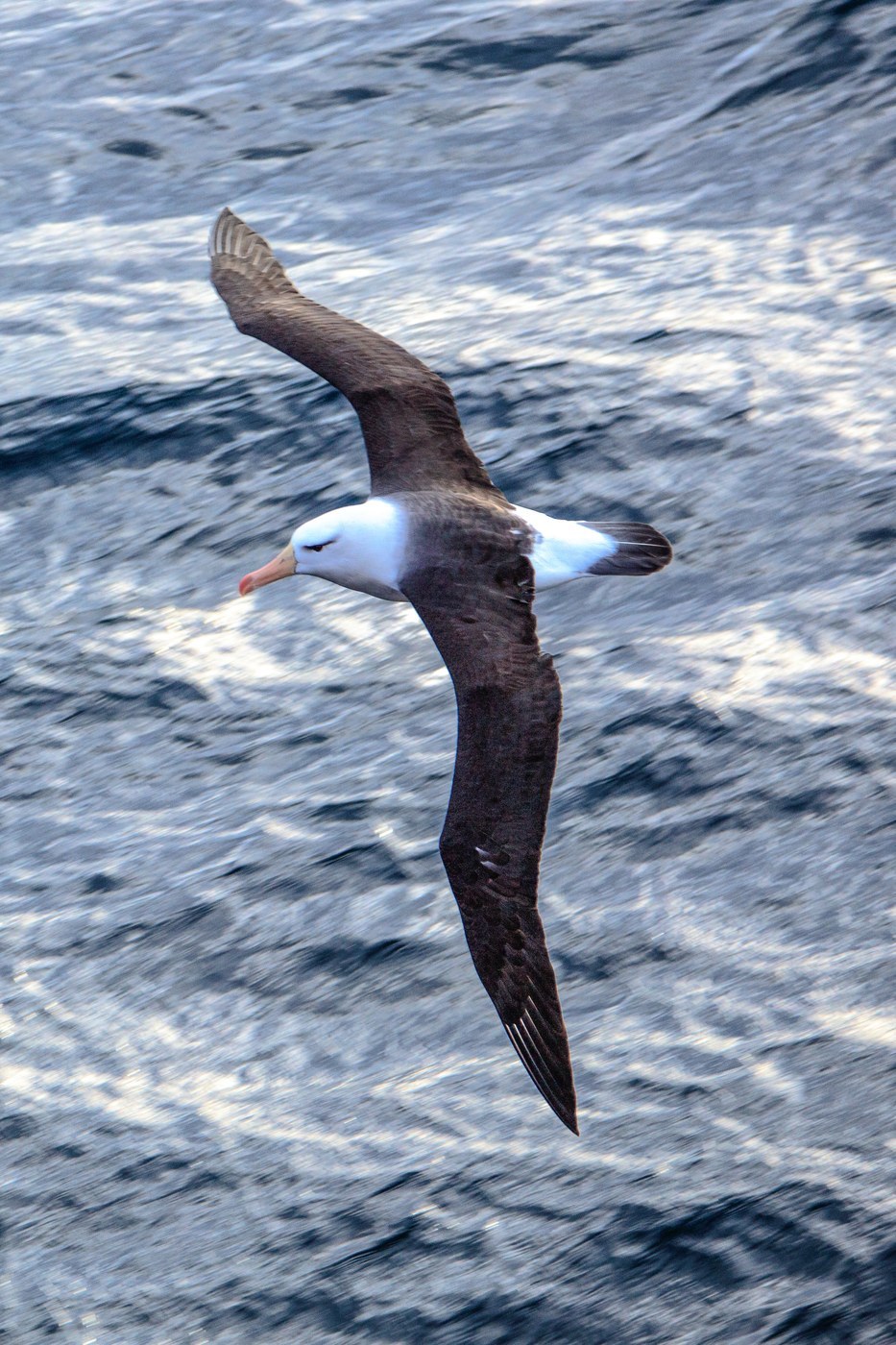
Black-browed Albatross
Thalassarche melanophris
The most abundant and widespread albatross species, easily identified by the bold dark stripe through its eye and its yellow-orange bill.
- Size
- 80-95 cm (31-37 in) long, wingspan 2.1-2.5 m (6.9-8.2 ft)
- Habitat
- open Southern Ocean, breeding on subantarctic and cool-temperate islands
- Type
- seabird
Spotted a bird like this?
Identify any bird from a photo, free.
Overview
The Black-browed Albatross is a medium-sized, stocky albatross and the most numerous and widely distributed member of the albatross family. It has a white head and body, dark grey upperwings, and a bright yellow-orange bill tipped with a darker orange-red hook.
Its most distinctive feature is the dark smudge of feathers through and above the eye, giving the bird a permanently stern, "eyebrowed" expression that gives the species its common name.
With a large global population concentrated in colonies around the Falkland Islands and South Georgia, this species is regularly seen following ships and fishing boats far offshore across the Southern Ocean and beyond.
How to identify it
Key field marks
- Dark eyebrow-like stripe through the eye on an otherwise white head
- Bright yellow-orange bill with a darker reddish tip
- White underwing with a broad, ragged black leading and trailing edge
Similar species
- Shy Albatross has a pale grey-yellow bill without the bold orange-red coloring, and a much narrower dark margin on the underwing.
- Campbell Albatross, a close relative sometimes lumped with this species, has pale yellow-brown eyes instead of the dark eyes of the Black-browed Albatross.
Habitat & range
Black-browed Albatrosses breed in large colonies on subantarctic and cool-temperate islands across the Southern Hemisphere, with the largest populations centered on the Falkland Islands and South Georgia, along with colonies in the Indian Ocean and off South America. Nests are built as raised mud-and-vegetation pedestals on cliffs and slopes.
Outside the breeding season, birds disperse widely across the Southern Ocean and can wander into the South Atlantic, Indian, and Pacific Oceans, with occasional vagrants recorded far into the Northern Hemisphere.
Behavior & voice
Voice
At breeding colonies, Black-browed Albatrosses give loud braying and croaking calls during courtship displays and territorial disputes, but are mostly silent at sea.
Feeding
They feed on fish, squid, and krill taken near the surface, and readily scavenge offal and discards behind fishing vessels, a behavior that has brought them into frequent conflict with longline fishing operations.
Nesting and breeding
Pairs build tall, cone-shaped nests of mud, guano, and vegetation on cliff edges and slopes, returning to the same nest site in successive years. A single egg is laid, and both parents share incubation and chick-feeding duties over several months.
Frequently asked questions
Why is it called the Black-browed Albatross?
It has a dark stripe of feathers through and above the eye that resembles an eyebrow, giving it a stern expression.
Is the Black-browed Albatross common?
Yes, it is the most abundant and widespread albatross species in the world, with large colonies concentrated on the Falkland Islands and South Georgia.
How can you tell a Black-browed Albatross from a Shy Albatross?
The Black-browed Albatross has a bright yellow-orange bill, while the Shy Albatross has a paler, greyer bill without strong orange coloring.
What do Black-browed Albatrosses eat?
They eat fish, squid, and krill, and often scavenge behind fishing boats.
Where do Black-browed Albatrosses breed?
They nest in large colonies on subantarctic and cool-temperate islands, most notably the Falkland Islands and South Georgia.
Black-browed Albatross guides
In-depth guides for identifying, finding, and understanding Black-browed Albatross.
Other birds you may enjoy
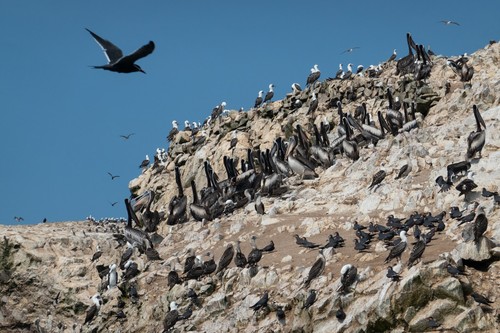
Peruvian Pelican
137-152 cm (54-60 in) long, up to 228 cm wingspan
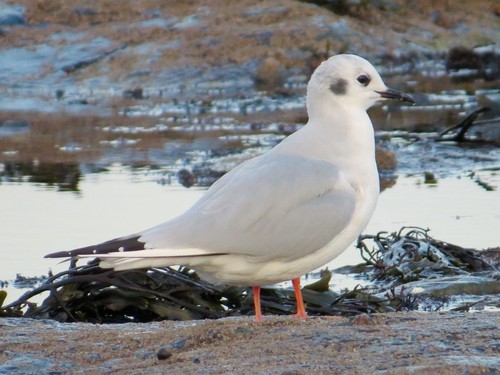
Bonaparte's Gull
28-33 cm (11-13 in) long, 76-84 cm wingspan
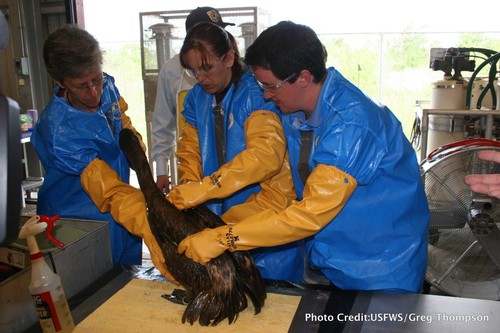
Brown Pelican
106-137 cm (42-54 in) long, 200-230 cm wingspan
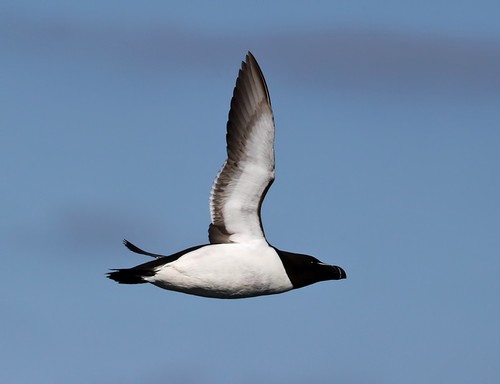
Razorbill
37-39 cm (15-15.5 in) long, 63-68 cm wingspan
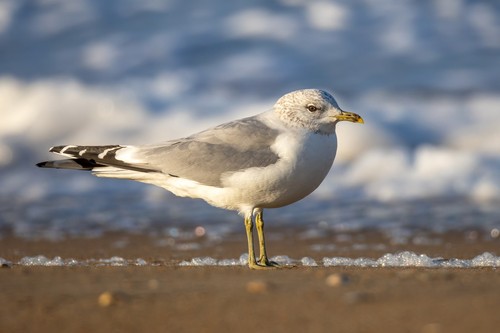
Common Gull
40-46 cm (16-18 in) long, 110-130 cm wingspan
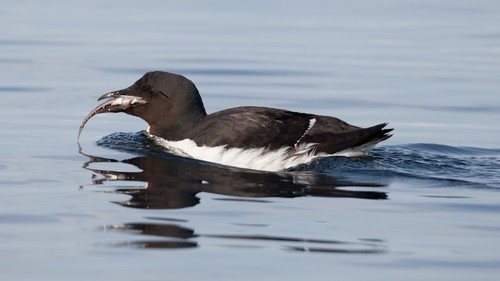
Thick-billed Murre
40-48 cm (16-19 in) long, 65-75 cm wingspan
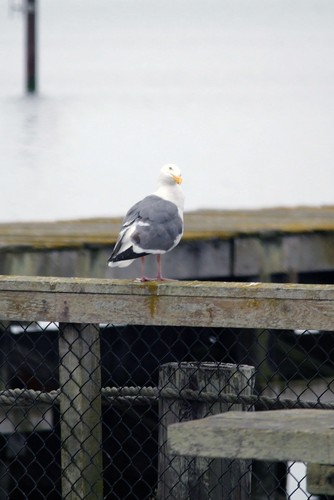
Western Gull
55-68 cm (22-27 in) long, 130-144 cm wingspan
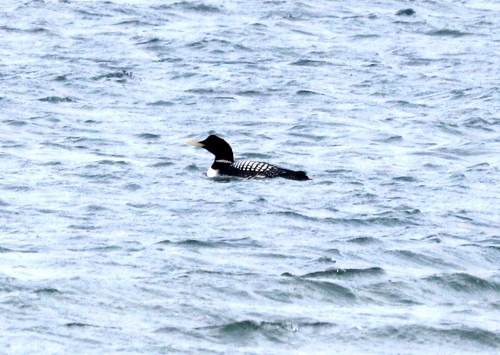
Yellow-billed Loon
76-97 cm (30-38 in) long, 135-152 cm wingspan
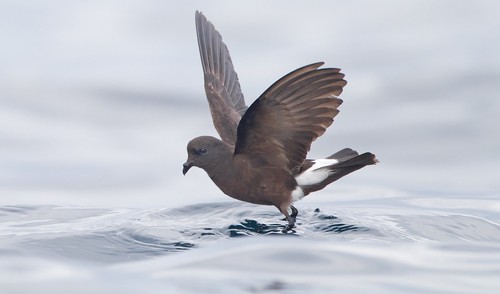
Wilson's Storm-Petrel
15-19 cm (6-7.5 in) long, wingspan 38-42 cm (15-16.5 in)
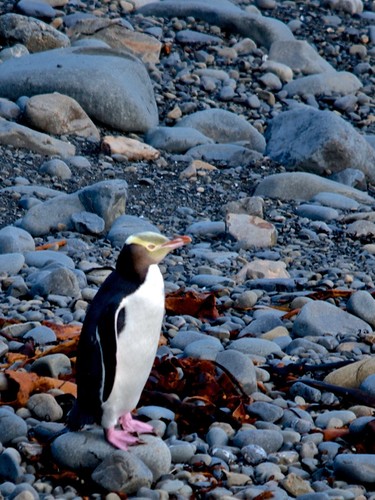
Yellow-eyed Penguin
62-79 cm (24-31 in) tall, 3-8.5 kg (6.6-18.7 lb)
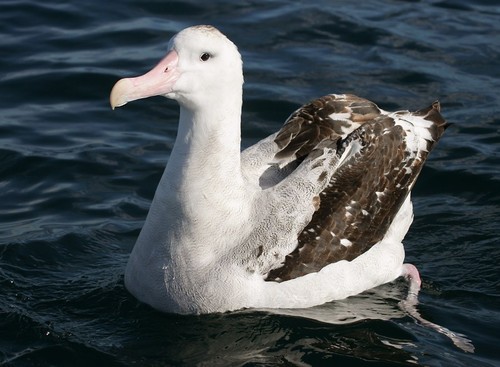
Wandering Albatross
107-135 cm (42-53 in) long, wingspan up to 3.5 m (11.5 ft)
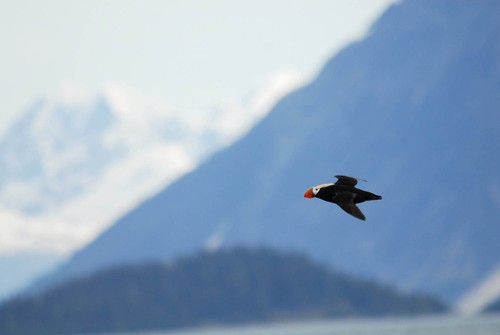
Tufted Puffin
35-41 cm (14-16 in) long, about 63-70 cm wingspan