
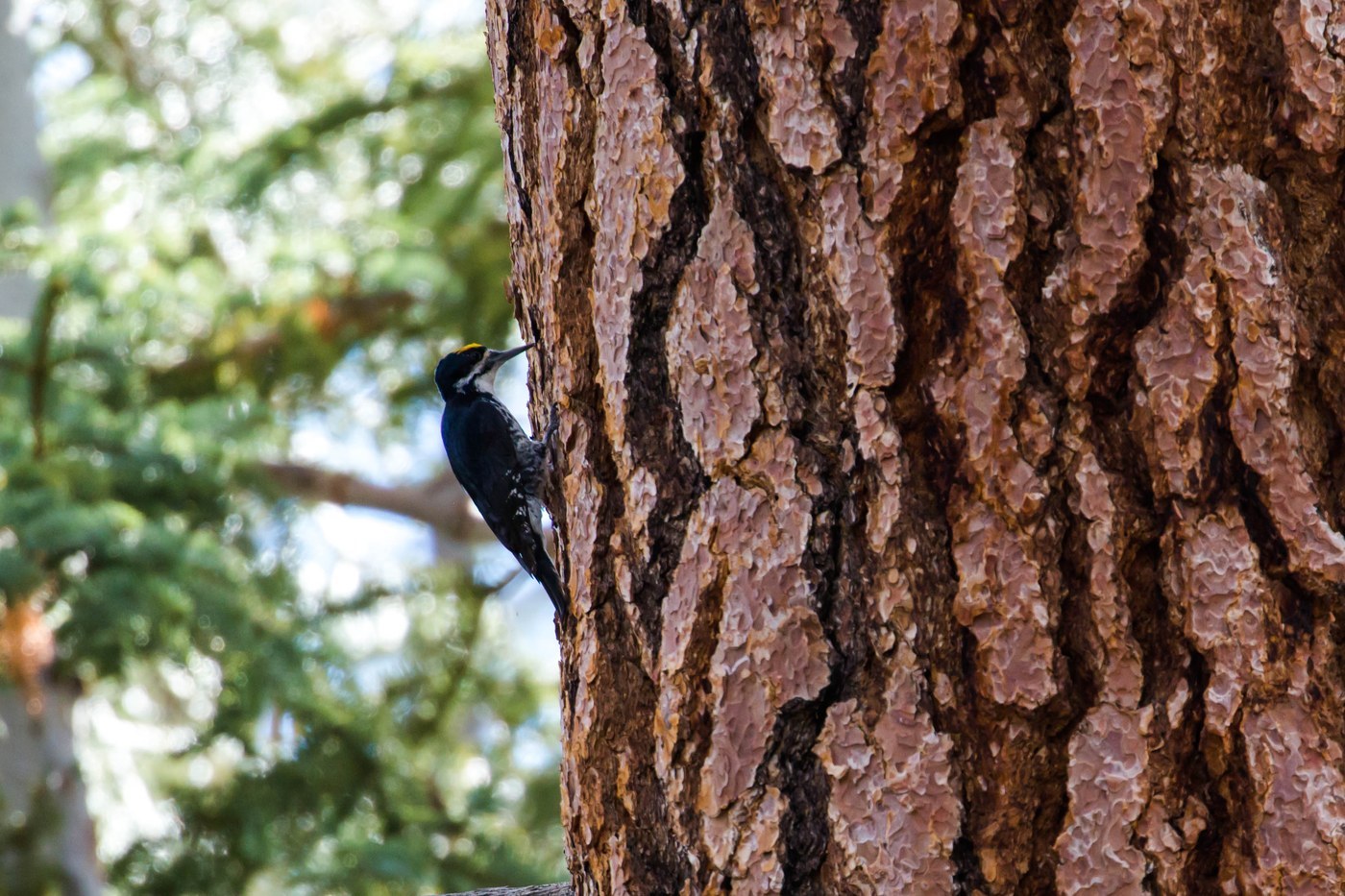
Black-backed Woodpecker
Picoides arcticus
A fire-following specialist woodpecker with a solid black back that thrives in recently burned conifer forests.
- Size
- 23-25 cm (9-9.8 in) long, 40-46 cm wingspan
- Habitat
- burned coniferous forests, boreal spruce forests, and beetle-killed stands
- Type
- woodpecker
Spotted a bird like this?
Identify any bird from a photo, free.
Overview
The Black-backed Woodpecker is a boreal specialist known for its close association with recently burned forests, where it feeds on the larvae of wood-boring beetles that colonize dead and dying trees. It has a solid black back and crown, unlike most North American woodpeckers, contrasting with white underparts, black barred flanks, and a black-and-white striped face.
Males show a small yellow patch on the crown, a feature shared with the closely related American Three-toed Woodpecker. Both species have only three toes per foot instead of the four found in most woodpeckers, an adaptation thought to aid climbing and bracing against bark.
How to identify it
Key Field Marks
- Solid glossy black back, unlike the barred backs of most woodpeckers
- White underparts with black barring on the flanks
- Black-and-white striped face
- Males have a yellow crown patch; females have an all-black crown
- Three toes on each foot rather than four
Similar Species
- American Three-toed Woodpecker has a barred, not solid black, back and generally more extensive white barring, plus a range that overlaps but extends further into high-elevation western forests.
- Hairy Woodpecker shows a white back stripe and lacks the yellow crown patch.
Habitat & range
Habitat
This species is strongly tied to recently burned coniferous forest, especially within the first few years after fire, as well as forests killed by bark beetle outbreaks; it also occurs at lower densities in mature spruce and pine forests.
Range
Black-backed Woodpeckers are found across the boreal forest of Canada and Alaska, extending south through the mountains of the western United States and into the Great Lakes region and northern New England.
Migration
The species is largely non-migratory but shows irruptive movements, dispersing widely to find newly burned habitat, sometimes appearing far outside its typical range following major wildfires.
Behavior & voice
Behavior
Black-backed Woodpeckers forage by flaking off large sheets of bark from dead and dying trees to expose beetle larvae tunneling beneath, a technique that leaves distinctive patches of bare wood.
Voice
Calls include a sharp, single chik note and a rattling call; drumming is a fast, even roll.
Feeding
The diet consists almost entirely of wood-boring beetle larvae, particularly those of longhorn and bark beetles, found in fire-killed or beetle-killed trees.
Nesting
Pairs excavate a nest cavity low in a dead tree, often within burned forest; both parents incubate the 3-4 white eggs and feed the nestlings.
Frequently asked questions
Why are Black-backed Woodpeckers associated with wildfires?
They specialize in feeding on wood-boring beetle larvae that quickly colonize fire-killed trees, so burned forests offer an abundant, short-term food source.
How many toes does a Black-backed Woodpecker have?
It has three toes on each foot, unlike most woodpeckers which have four.
How do you identify a Black-backed Woodpecker?
Look for a solid black back and crown, white underparts with barred flanks, and in males a small yellow crown patch.
Where do Black-backed Woodpeckers live?
They live in boreal and montane conifer forests across Canada, Alaska, and the mountainous western United States, favoring recently burned areas.
Black-backed Woodpecker guides
In-depth guides for identifying, finding, and understanding Black-backed Woodpecker.
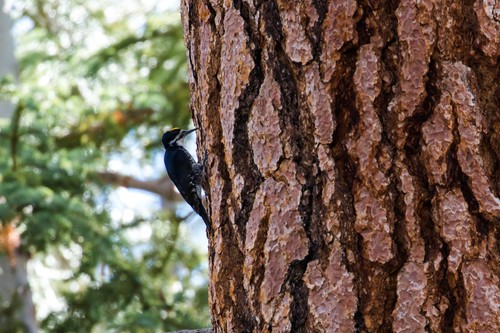
Other birds you may enjoy
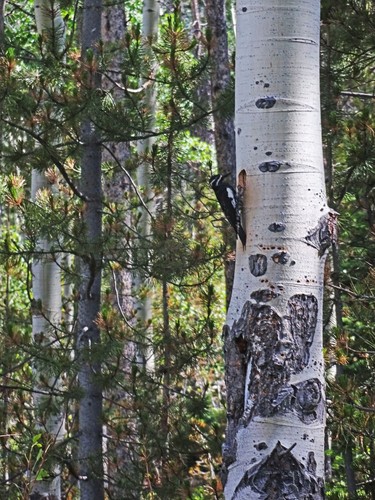
Williamson's Sapsucker
21-25 cm (8-10 in) long, 40-42 cm wingspan
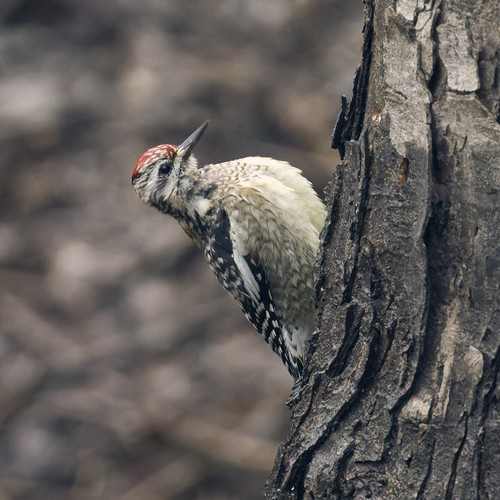
Yellow-bellied Sapsucker
18-21 cm (7-8.3 in) long, 34-40 cm wingspan
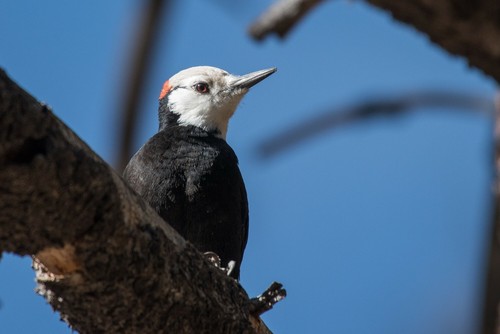
White-headed Woodpecker
20-23 cm (8-9 in) long, 38-41 cm wingspan
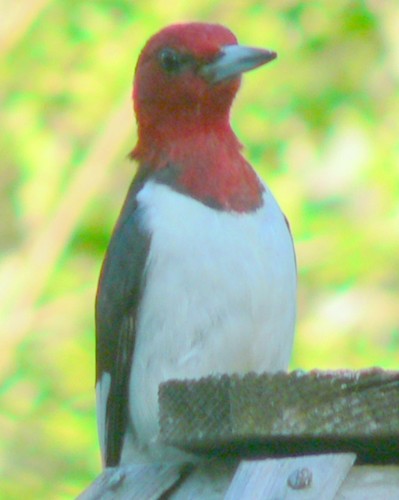
Red-headed Woodpecker
19-23 cm (7.5-9 in) long, 42-46 cm wingspan
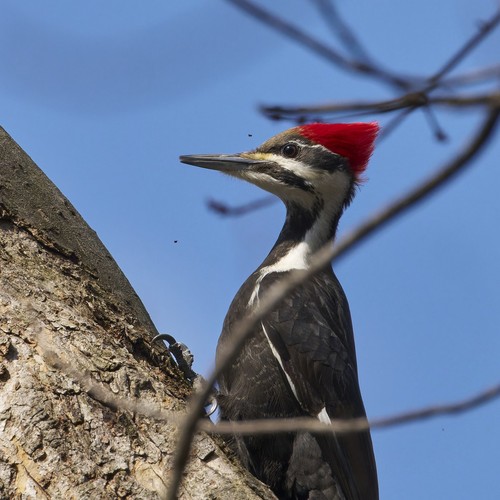
Pileated Woodpecker
40-49 cm (16-19 in) long, 66-75 cm wingspan
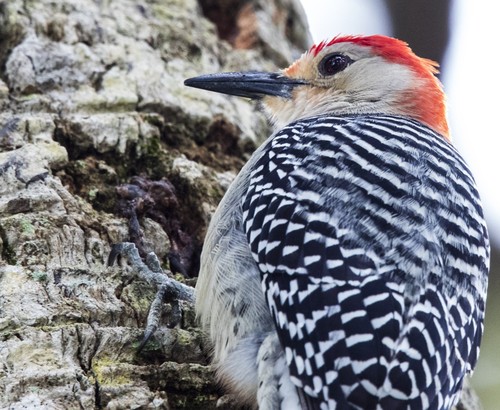
Red-bellied Woodpecker
22-27 cm (9-10.5 in) long, 38-46 cm wingspan
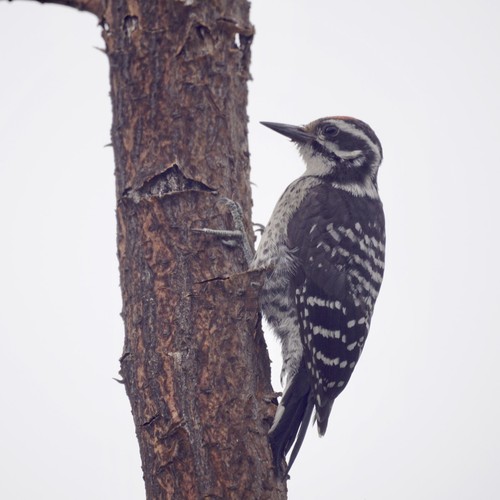
Nuttall's Woodpecker
18-20 cm (7-8 in) long, 34-38 cm wingspan
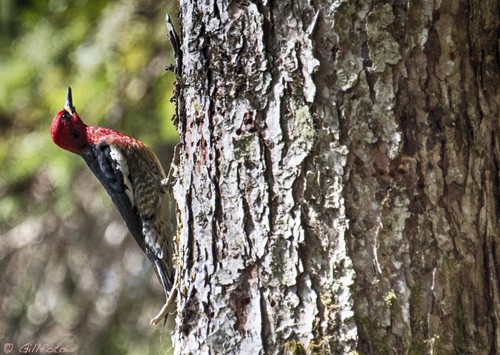
Red-breasted Sapsucker
20-23 cm (8-9 in) long, 34-40 cm wingspan
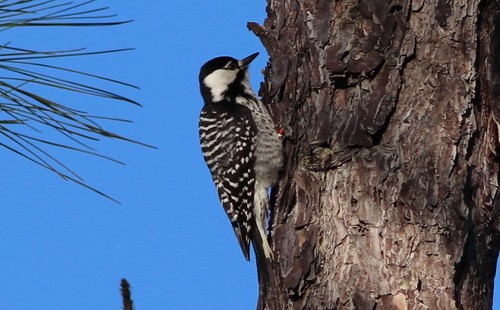
Red-cockaded Woodpecker
20-23 cm (8-9 in) long, 35-38 cm wingspan
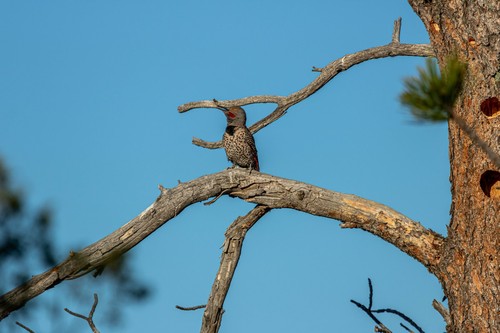
Northern Flicker
28-36 cm (11-14 in) long, 42-51 cm wingspan
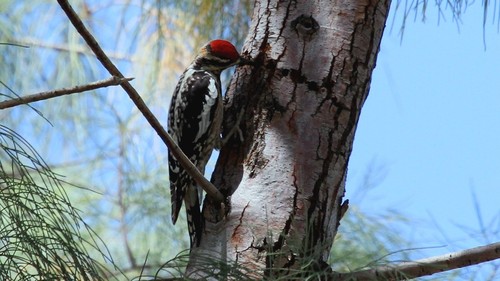
Red-naped Sapsucker
19-21 cm (7.5-8.3 in) long, 34-40 cm wingspan
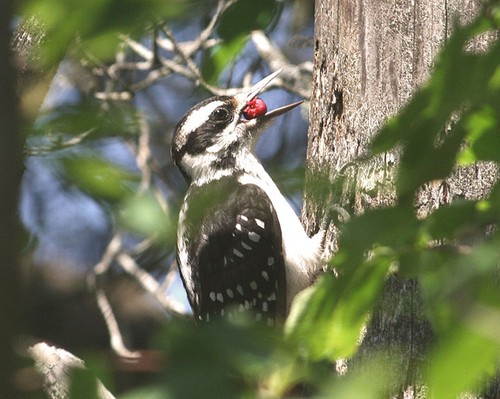
Hairy Woodpecker
23-26 cm (9-10 in) long, 33-41 cm wingspan