
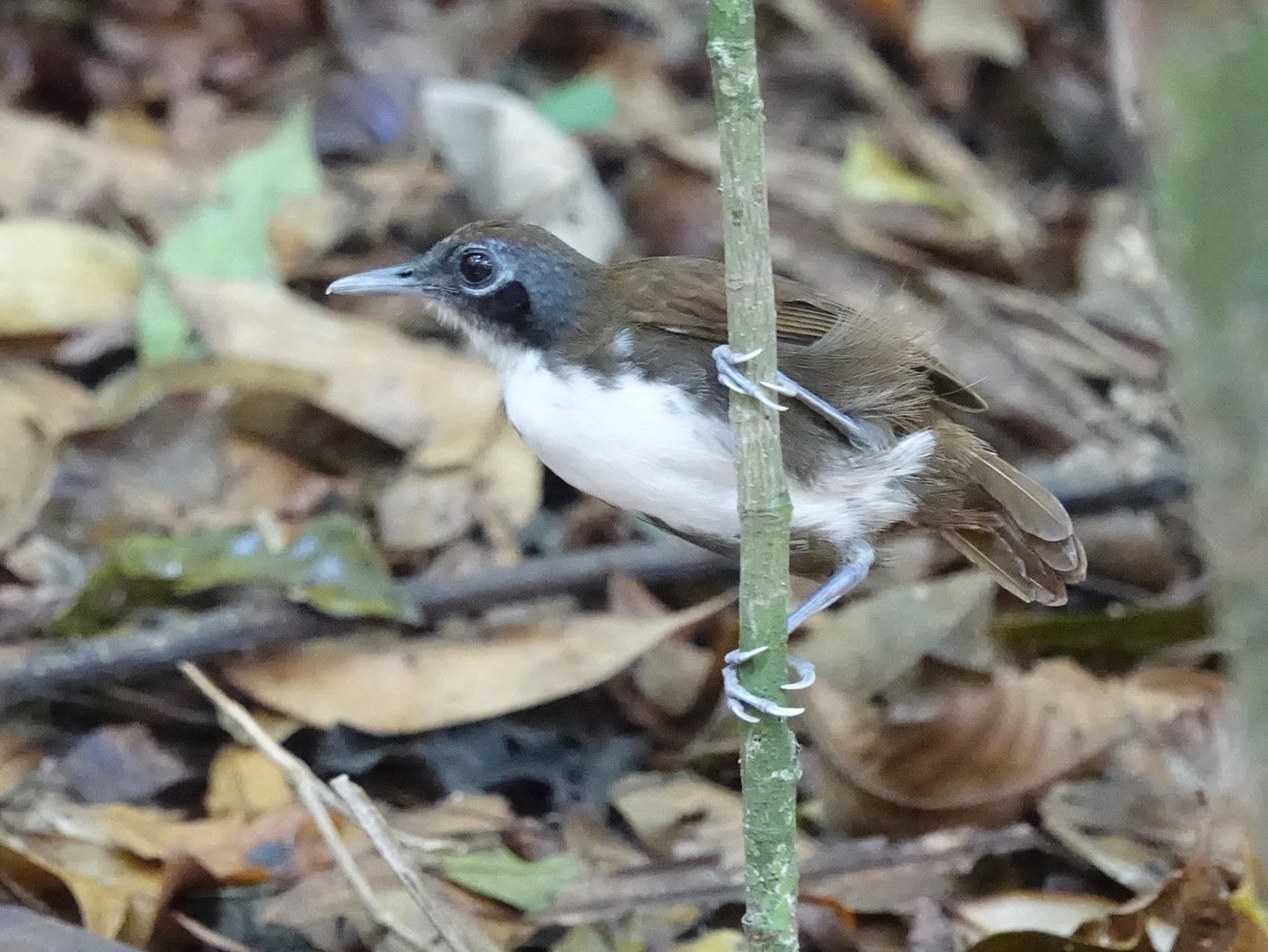
Bicolored Antbird
Gymnopithys bicolor
A plain rufous-brown antbird with a white throat and bare blue facial skin, one of the classic obligate army-ant followers of Central American forests.
- Size
- 13-14 cm (5-5.5 in) long
- Habitat
- understory of humid lowland forest, closely tied to army ant swarms
- Type
- songbird
Spotted a bird like this?
Identify any bird from a photo, free.
Overview
The Bicolored Antbird is a mid-sized, understated antbird named for its simple two-tone plumage: warm rufous-brown upperparts contrasting with a whitish throat and breast fading to gray on the belly. Bare blue skin around the eye adds a splash of color to an otherwise plain bird. Sexes look similar.
It is one of the most reliable "professional" ant-following species in Central American forests, almost always found in the company of an active swarm of army ants.
How to identify it
Key field marks
- Rufous-brown upperparts; whitish throat and upper breast grading to gray belly.
- Bare blue skin around the eye.
- Fairly upright posture, often perched low over ant swarms.
Similar species
Spotted Antbird is smaller with bold black spotting on the breast. Ocellated Antbird is larger with a scaly, scalloped plumage pattern. The Bicolored Antbird's plain, unmarked underparts combined with blue facial skin help separate it from its ant-following relatives.
Habitat & range
Bicolored Antbirds occupy the understory of humid lowland and foothill forest from Honduras through Central America to northwestern Colombia and Ecuador, mostly below about 1,000 m. Closely related, similar-looking populations occur further south in Amazonia (sometimes treated as a separate species). Birds are non-migratory residents, holding territories that overlap with the ranging patterns of local army ant colonies.
Behavior & voice
Voice
A series of sharp, clear whistled notes, often accelerating, given while attending swarms and during territorial interactions with other ant-following species.
Feeding
An obligate ant-follower, it perches low over the leading edge of army ant swarms and sallies to catch insects and other arthropods flushed by the ants, competing and interacting with other ant-following species for the best vantage perches.
Nesting and breeding
Pairs construct a low, open nest in dense understory vegetation. Both parents share incubation and chick-provisioning duties, timing nesting activity around the demands of following productive ant swarms.
Frequently asked questions
What does "bicolored" refer to?
The name refers to the simple two-tone plumage pattern: rufous-brown upperparts against paler, whitish-to-gray underparts.
Does the Bicolored Antbird eat army ants?
No, it feeds on insects and other small creatures that flee the ants, not the ants themselves.
How is it distinguished from other ant-following antbirds?
Its plain, unspotted underparts combined with bare blue skin around the eye separate it from the spotted and ocellated ant-followers.
Where does the Bicolored Antbird live?
In lowland and foothill forest understory from Honduras through Central America to northwestern South America.
Bicolored Antbird guides
In-depth guides for identifying, finding, and understanding Bicolored Antbird.
Other birds you may enjoy
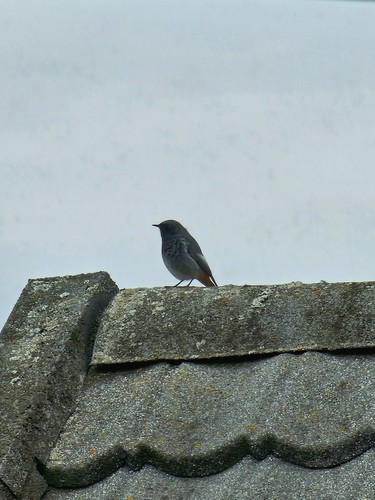
Black Redstart
13-14.5 cm (5.1-5.7 in) long, 23-26 cm wingspan
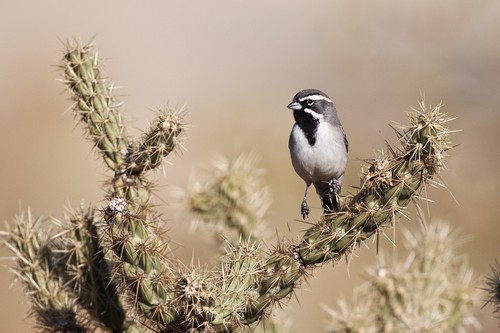
Black-throated Sparrow
12-14 cm (4.7-5.5 in) long, about 19-20 cm (7.5-8 in) wingspan
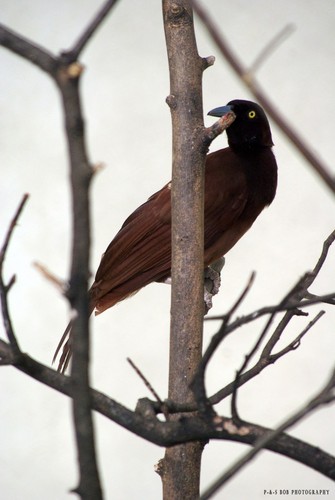
Greater Bird-of-paradise
Body about 43 cm; males with additional flank plumes up to 50 cm and long tail wires
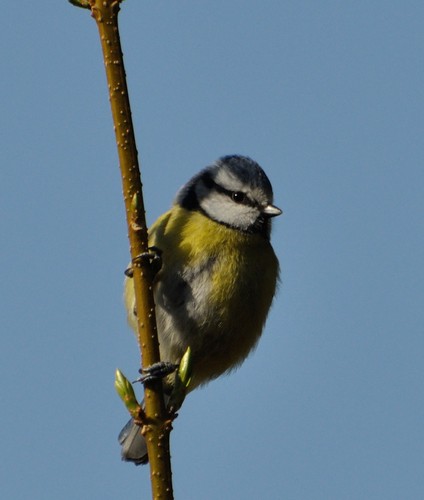
Blue Tit
11-12 cm (4.3-4.7 in) long, 17-20 cm wingspan
Red-billed Quelea
11.5–13 cm long, wingspan about 20–22 cm
White-plumed Antbird
13-14 cm (5-5.5 in) long
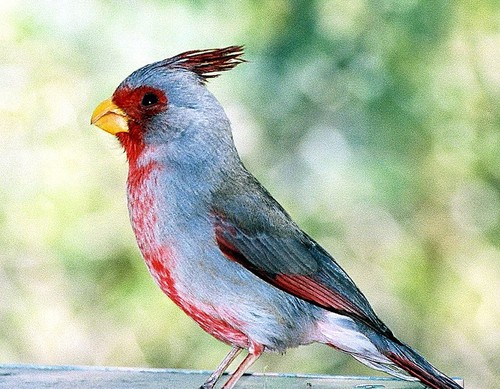
Pyrrhuloxia
19-22 cm (7.5-8.7 in) long, 30 cm wingspan
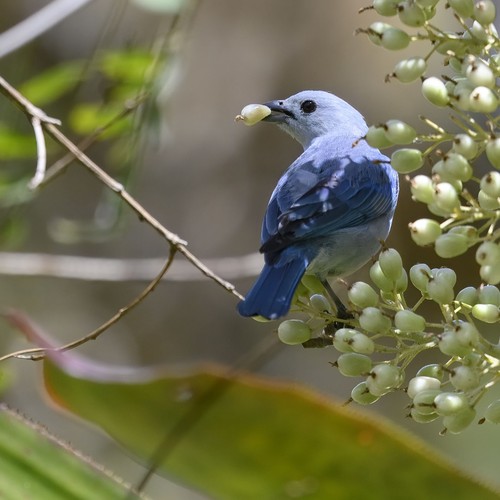
Blue-gray Tanager
16-18 cm (6-7 in) long
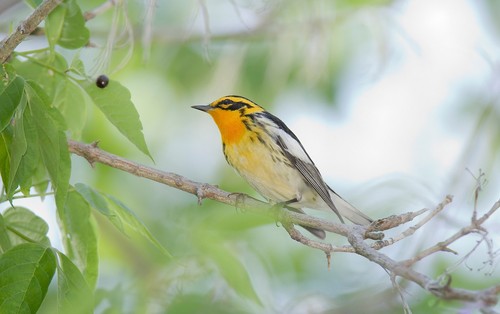
Blackburnian Warbler
11-13 cm (4.3-5.1 in) long, 20-22 cm wingspan
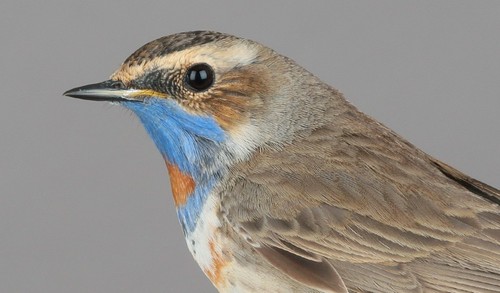
Bluethroat
13-14 cm (5.1-5.5 in) long, 20-22 cm wingspan
Eurasian Nuthatch
12-14.5 cm (4.7-5.7 in) long, 22.5-27 cm wingspan
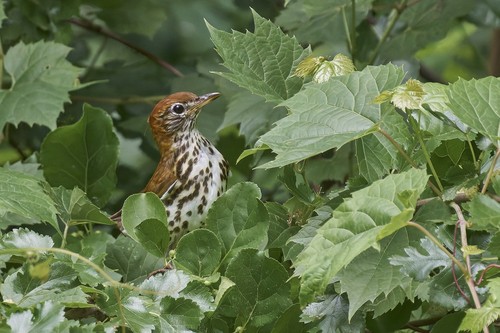
Wood Thrush
19-21 cm (7.5-8.3 in) long, about 33 cm (13 in) wingspan