
Bicolored Antbird Identification Guide
A striking Neotropical understory bird famous for following army ant swarms, identified by its rich rufous-brown upperparts, sharply contrasting gray underparts, and bare blue skin around the eye.
Read the full Bicolored Antbird encyclopedia entry →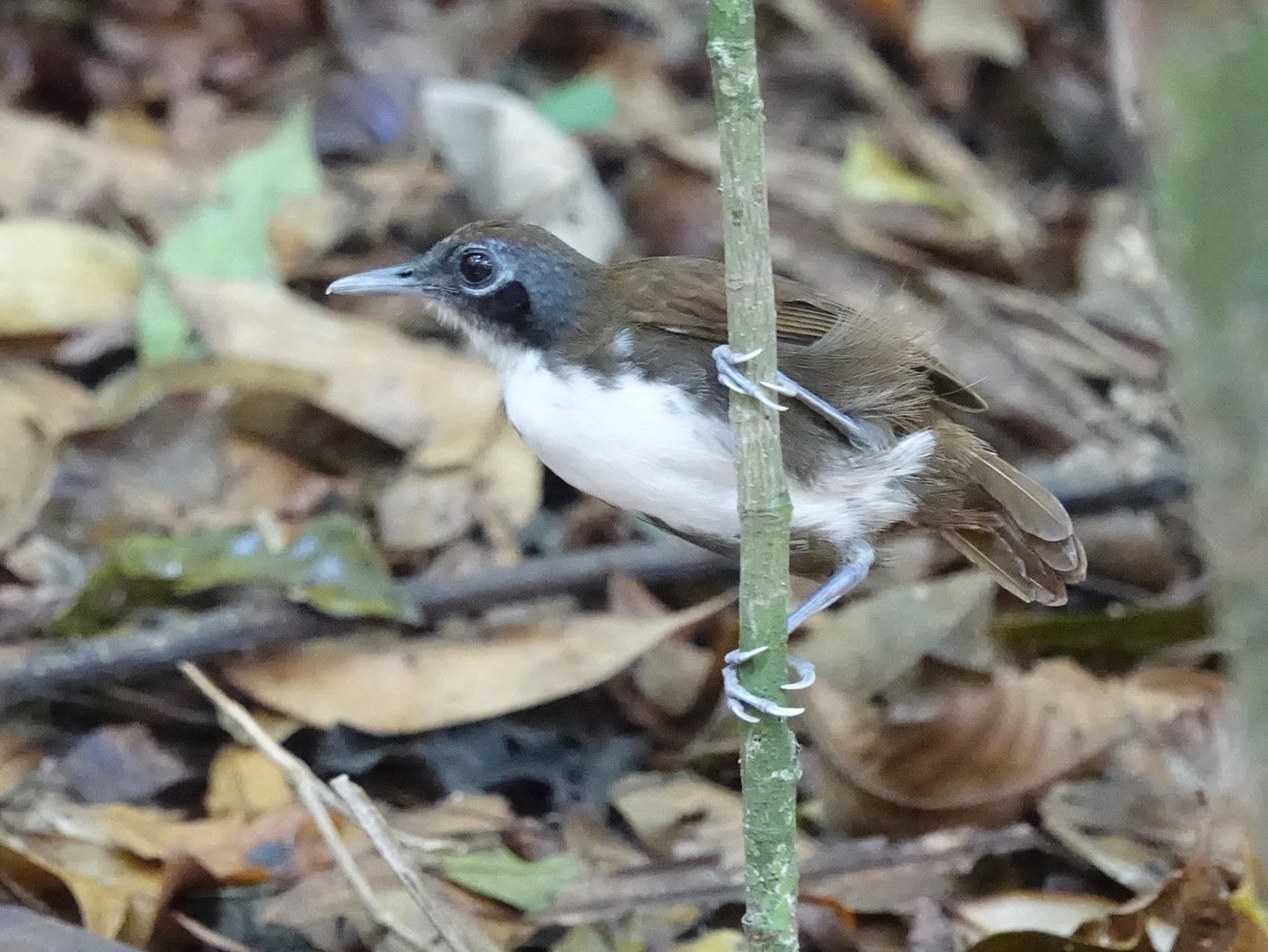
Key Field Marks
- Size & shape: A medium-sized antbird (about 14-15 cm) with a fairly upright posture, moderately long legs, and a stout, slightly hooked bill adapted for seizing insects flushed by army ants.
- Plumage: Rich chestnut to rufous-brown upperparts contrasting sharply with pale gray underparts - the two-tone pattern that gives the species its name.
- Face: A patch of bare, bright blue skin surrounds the eye, standing out clearly against the otherwise brown-and-gray plumage - one of the most distinctive features of the species.
- Sex differences: Males and females are similar, though females can show a slightly duller or more olive tone to the upperparts in some populations.
- Behavior: A classic 'obligate' army-ant follower, spending much of its time low over active swarms of army ants, sallying down to snatch insects and other small prey flushed by the advancing ants rather than eating the ants themselves. Often perches on low stems just above the ant swarm, dropping to seize prey and returning to a perch.
Similar Species
- Other ant-following antbirds sharing swarms (e.g., Ocellated Antbird, Spotted Antbird): These species show bold spotting or scaling patterns rather than the clean bicolored rufous-and-gray pattern of Bicolored Antbird, and often differ in size; Bicolored is typically among the more numerous and vocal birds present at a swarm.
- Chestnut-backed Antbird: Smaller, with more uniformly dark underparts (not sharply contrasting pale gray) and a less extensive bare blue eye-patch.
- Behavior as an identification aid: The strong association with active army ant swarms, combined with the sharp two-tone plumage and blue eye-patch, makes this species relatively straightforward to identify once found at a swarm.
Where & When to See
- Habitat: Understory of humid lowland and foothill tropical forest, particularly where army ant activity is present; also found along forest edges and second growth near primary forest.
- Range: Found from southern Mexico through Central America and into northern and western South America (Colombia, Ecuador, and parts of Peru and Venezuela), with some regional plumage variation across its range.
- Season: Resident year-round throughout its range, without long-distance migration.
- Best viewing tips: The best strategy is to locate an active army ant swarm (often signaled by the presence of antbirds, antshrikes, and other 'ant-following' species, plus swarms of flushed insects and attendant flies) and watch quietly nearby, since Bicolored Antbird is often one of the first and most conspicuous species present.
Voice
- Gives a variety of calls including sharp, chattering notes and a distinctive, sometimes explosive 'chek' or churring alarm call, often heard as birds interact at ant swarms.
- Song is a series of clear, often accelerating or descending whistled notes, used to advertise territory apart from ant-following activity.
- Vocal activity often increases at active swarms, especially when multiple individuals compete for the best sallying perches near the ants.
Frequently asked questions
How can I best find a Bicolored Antbird in the forest?
Locate an active army ant swarm - Bicolored Antbird is a classic 'obligate' ant-follower and is often one of the most conspicuous birds low over an active swarm, sallying down to catch insects flushed by the ants.
Does the Bicolored Antbird eat the army ants themselves?
No, it does not eat the ants; instead it follows swarms to catch insects, spiders, and other small prey that are flushed into the open as the ants advance.
What is the most distinctive facial feature of the Bicolored Antbird?
A patch of bare, bright blue skin surrounding the eye, which stands out clearly against its rufous-brown and gray plumage.
How can I tell males and females apart?
The sexes look quite similar overall, though females may show a slightly duller or more olive tone to the upperparts in some populations, making them difficult to separate reliably in the field.
Where does the Bicolored Antbird live?
It resides in the understory of humid lowland and foothill tropical forest from southern Mexico through Central America into parts of northern and western South America, and is present year-round without migrating.