
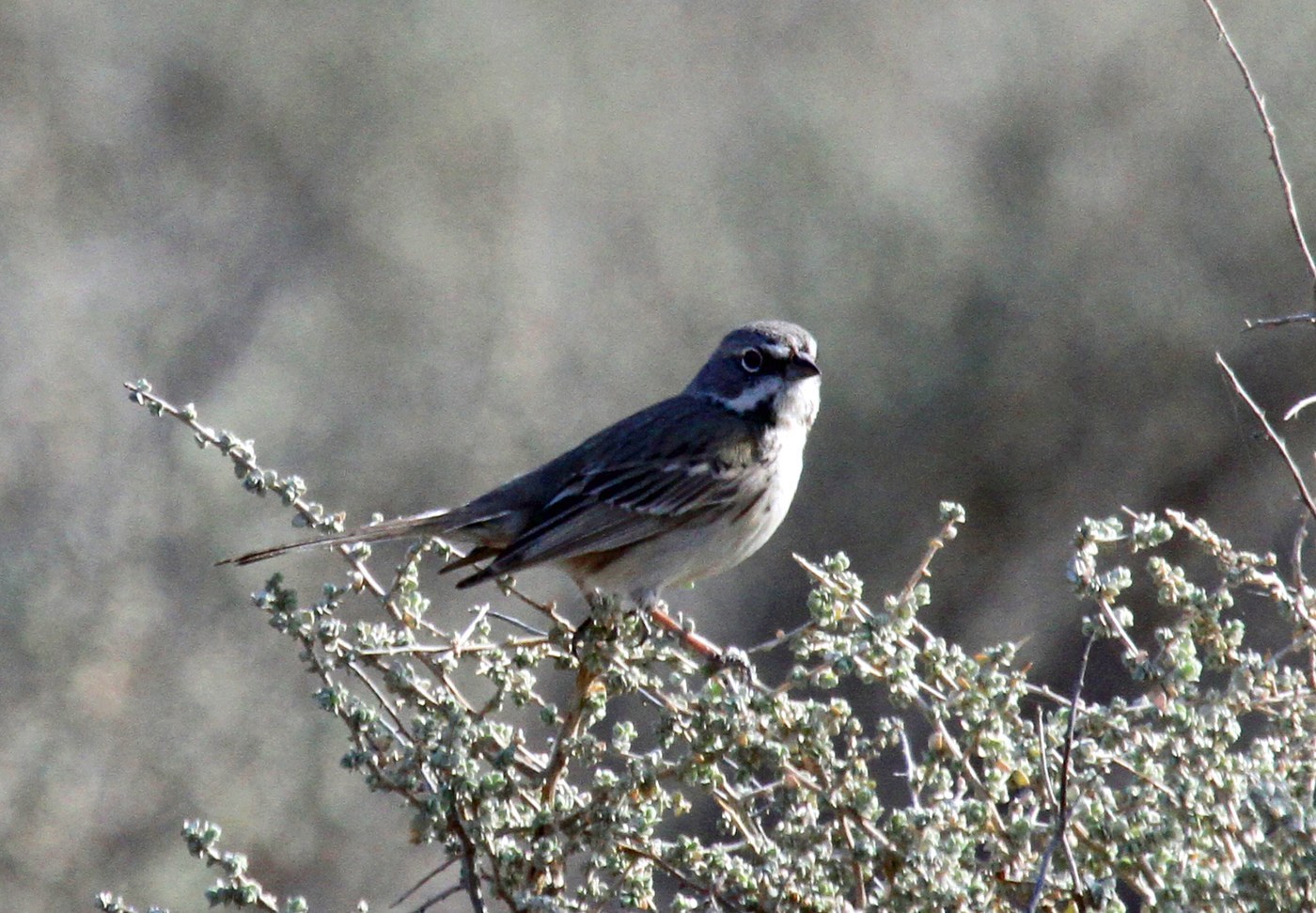
Bell's Sparrow
Artemisiospiza belli
A dark-headed California scrub sparrow, the close relative and former conspecific of the Sagebrush Sparrow.
- Size
- 13-14 cm (5-5.5 in) long, about 19 cm (7.5 in) wingspan
- Habitat
- coastal sage scrub, chaparral, and desert saltbush scrub of California
- Type
- songbird
Spotted a bird like this?
Identify any bird from a photo, free.
Overview
The Bell's Sparrow is a small, dark-toned sparrow closely tied to shrubby habitats of California, including coastal sage scrub, chaparral, and interior desert saltbush flats. It was combined with the Sagebrush Sparrow under the name Sage Sparrow until the two were split into separate species in 2013 based on differences in plumage, voice, and genetics.
Compared to its Great Basin relative, the Bell's Sparrow is generally darker overall, with a darker gray head, a less strongly contrasting white eye-ring, a more solidly dark malar (whisker) stripe, and a smaller, less distinct central breast spot. Like the Sagebrush Sparrow, it has a long tail frequently cocked while running across open ground.
The species includes several subspecies that differ somewhat in color intensity, from the darker coastal sage scrub birds of southern California to paler interior desert populations.
How to identify it
Key Field Marks
- Darker gray head compared to Sagebrush Sparrow
- Less contrasting, thinner white eye-ring
- More solidly dark malar (whisker) stripe
- Smaller, less distinct central breast spot
- Long tail, often cocked while running
Similar Species
- Sagebrush Sparrow: paler overall, with a more contrasting eye-ring and a larger, bolder central breast spot; found in the Great Basin rather than California scrub habitats, with limited range overlap
Range and habitat are useful clues: Bell's Sparrow is largely restricted to California (and northern Baja California) scrub habitats, while Sagebrush Sparrow occupies the Great Basin sagebrush steppe farther east.
Habitat & range
Bell's Sparrow occupies a range of shrubby California habitats, including coastal sage scrub and chaparral along the coast and foothills of central and southern California, as well as desert saltbush scrub in the interior, such as the San Joaquin Valley and parts of the Mojave Desert. The species also occurs in northern Baja California, Mexico.
Many populations are resident year-round, though some interior and higher-elevation birds may shift to lower elevations in winter. Habitat loss from urban development and agricultural conversion, particularly of coastal sage scrub, has reduced available habitat in parts of its range.
Behavior & voice
Behavior
Bell's Sparrows forage on the ground, running between shrubs with a cocked tail, and tend to dive into dense cover rather than fly far when disturbed.
Voice
The song is a sweet, jumbled, tinkling warble similar to that of the Sagebrush Sparrow, delivered from an exposed perch atop a shrub.
Feeding
Diet consists of insects and seeds gathered from the ground and shrub foliage.
Nesting and Breeding
Nests are built low in dense shrubs, a sturdy cup of twigs and grasses lined with finer material. Clutches typically contain 2-4 pale bluish eggs with dark spotting.
Frequently asked questions
Is the Bell's Sparrow the same as the Sage Sparrow?
Bell's Sparrow was formerly considered part of a single species called Sage Sparrow, which was split into Bell's Sparrow and Sagebrush Sparrow in 2013.
Where does the Bell's Sparrow live?
It is found in coastal sage scrub, chaparral, and desert saltbush scrub across California and northern Baja California, Mexico.
How do you tell Bell's Sparrow from Sagebrush Sparrow?
Bell's Sparrow is darker overall with a darker head, a more solidly dark whisker stripe, and a smaller central breast spot compared to the paler Sagebrush Sparrow.
Does the Bell's Sparrow migrate?
Most populations are resident year-round, though some birds at higher elevations move to lower ground in winter.
What threatens Bell's Sparrow habitat?
Urban development and agricultural conversion, especially of coastal sage scrub in southern California, have reduced available habitat.
Bell's Sparrow guides
In-depth guides for identifying, finding, and understanding Bell's Sparrow.
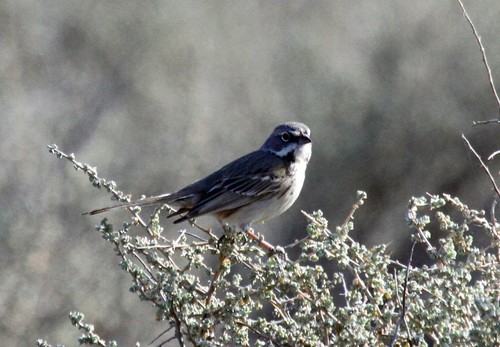
Other birds you may enjoy
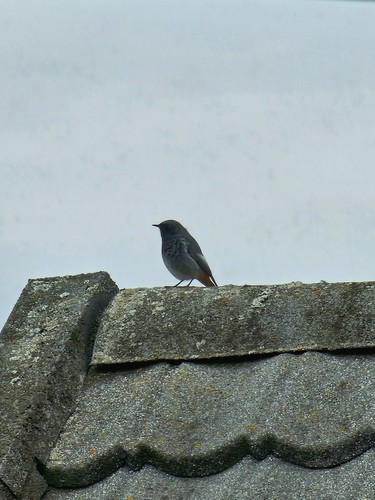
Black Redstart
13-14.5 cm (5.1-5.7 in) long, 23-26 cm wingspan
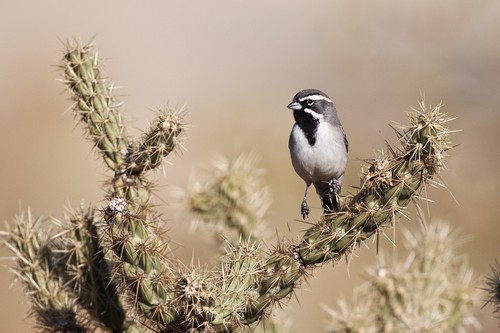
Black-throated Sparrow
12-14 cm (4.7-5.5 in) long, about 19-20 cm (7.5-8 in) wingspan
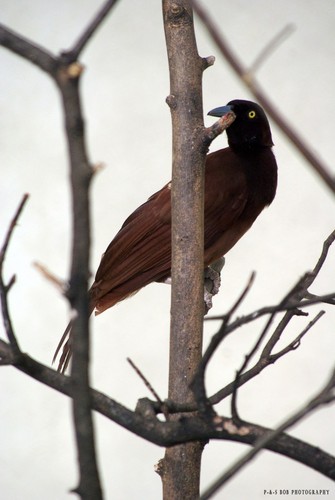
Greater Bird-of-paradise
Body about 43 cm; males with additional flank plumes up to 50 cm and long tail wires
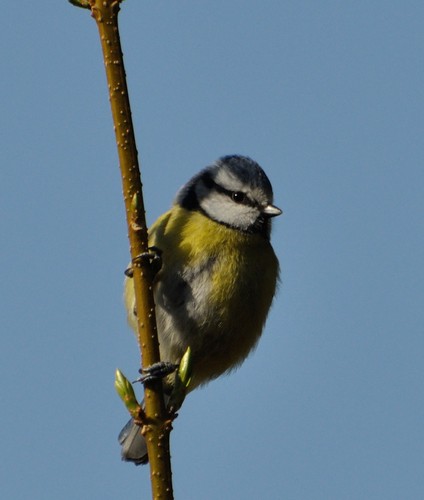
Blue Tit
11-12 cm (4.3-4.7 in) long, 17-20 cm wingspan
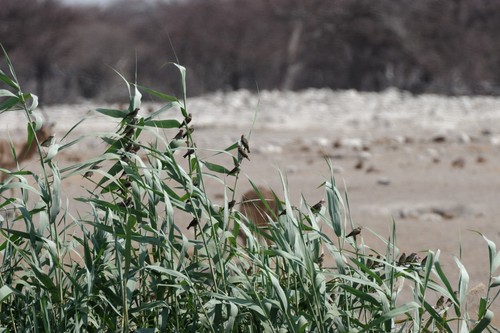
Red-billed Quelea
11.5–13 cm long, wingspan about 20–22 cm
White-plumed Antbird
13-14 cm (5-5.5 in) long
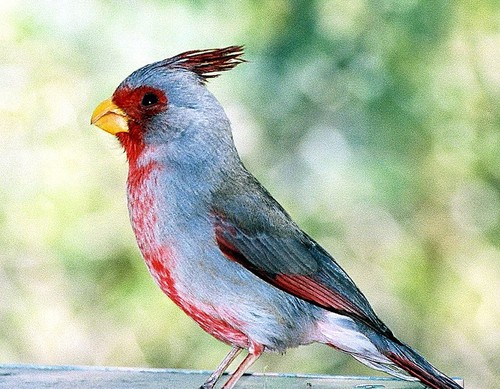
Pyrrhuloxia
19-22 cm (7.5-8.7 in) long, 30 cm wingspan
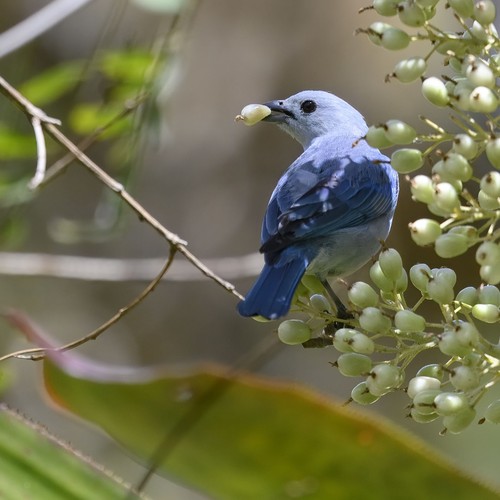
Blue-gray Tanager
16-18 cm (6-7 in) long
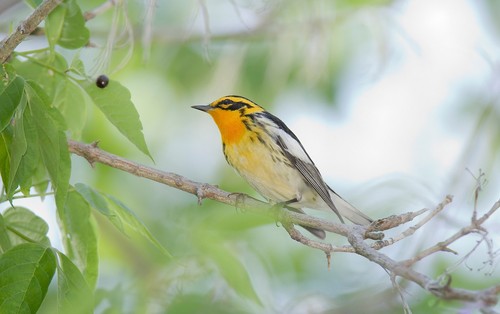
Blackburnian Warbler
11-13 cm (4.3-5.1 in) long, 20-22 cm wingspan
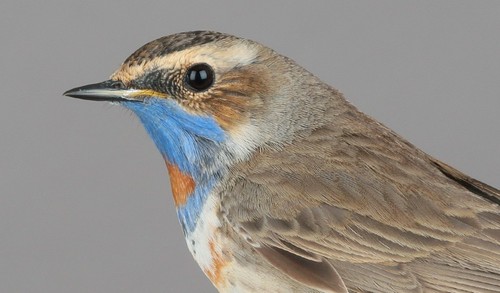
Bluethroat
13-14 cm (5.1-5.5 in) long, 20-22 cm wingspan
Eurasian Nuthatch
12-14.5 cm (4.7-5.7 in) long, 22.5-27 cm wingspan
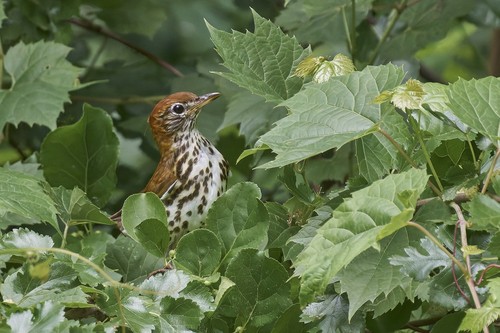
Wood Thrush
19-21 cm (7.5-8.3 in) long, about 33 cm (13 in) wingspan