
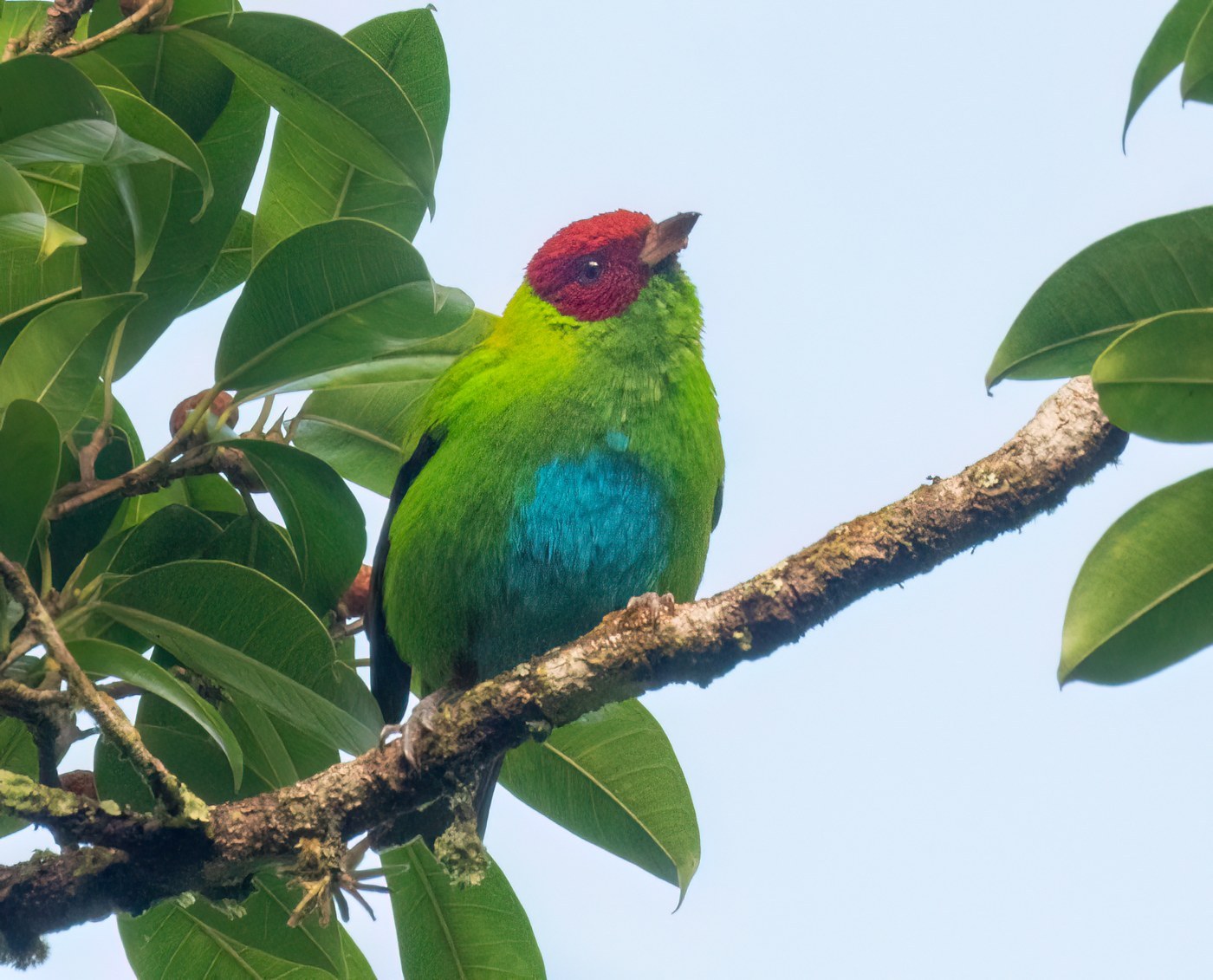
Bay-headed Tanager
Tangara gyrola
A vividly colored tanager with a rich chestnut head and glowing turquoise-green body, common in forest canopy from Central to South America.
- Size
- 13-14 cm (5-5.5 in) long
- Habitat
- humid forest canopy, forest edge, and secondary growth from lowlands to mid-elevations
- Type
- songbird
Spotted a bird like this?
Identify any bird from a photo, free.
Overview
The Bay-headed Tanager is one of the most eye-catching members of the Tangara tanager group, combining a warm chestnut-red ('bay') head with a body glowing in shades of turquoise, green, and gold. The crown, face, and throat are a rich reddish-brown, sharply set off from the bright green to turquoise body plumage, while a patch of golden-yellow often shows on the shoulder or lower back depending on the subspecies.
The wings and tail are dark, edged with the same turquoise-green tone as the body, and the overall effect is a strikingly colorful bird even among a family famous for its color. Plumage varies somewhat across its wide range, with subspecies differing in the extent of the golden shoulder patch and the exact shade of body color.
Sexes look alike, and this tanager is typically encountered in small groups moving actively through the canopy, often as part of mixed-species flocks.
How to identify it
Key field marks
- Rich chestnut ('bay') head and throat
- Turquoise-green body plumage, often with a golden patch on the back or shoulder
- Dark wings and tail edged in turquoise
- Sexes similar
Similar species
Rufous-winged Tanager and Rufous-throated Tanager share some chestnut coloring but lack the Bay-headed Tanager's combination of an entirely chestnut head with turquoise-green body. Within its range, the bold, unmistakable head-body color contrast makes it one of the easier Tangara species to identify.
Habitat & range
Habitat
It inhabits humid forest canopy, forest edge, and adjacent secondary growth, plantations, and gardens with fruiting trees, from lowlands up into subtropical foothills.
Range
The Bay-headed Tanager ranges from Costa Rica and Panama through Colombia, Venezuela, the Guianas, Ecuador, Peru, and into Bolivia and Brazil, making it one of the more widespread Tangara tanagers.
Migration
It is a non-migratory resident throughout its range, though it may move locally to track fruiting trees.
Behavior & voice
Behavior
Bay-headed Tanagers are active, social birds usually seen in pairs or small groups, frequently joining mixed-species canopy flocks alongside other tanagers and small forest birds.
Voice
Its calls are thin, high-pitched 'tsip' or 'seet' notes, unremarkable compared to its bright plumage, given while foraging or in flight.
Feeding
It forages mainly for fruit in the canopy and forest edge, supplementing its diet with insects and occasionally nectar, often gleaning or reaching acrobatically among small branches.
Nesting and breeding
The female builds an open cup nest in a tree, typically well concealed among foliage, and incubates the eggs; both parents assist in feeding the nestlings after hatching.
Frequently asked questions
How do you identify a Bay-headed Tanager?
Look for the combination of a rich chestnut head and throat against a bright turquoise-green body, often with a golden patch on the back.
Where is the Bay-headed Tanager found?
It ranges from Costa Rica and Panama through much of northern and western South America into Bolivia and Brazil.
What does the Bay-headed Tanager eat?
Mainly fruit, supplemented with insects and occasional nectar.
Do male and female Bay-headed Tanagers look different?
No, the sexes are alike in plumage.
Bay-headed Tanager guides
In-depth guides for identifying, finding, and understanding Bay-headed Tanager.
Other birds you may enjoy
Black Redstart
13-14.5 cm (5.1-5.7 in) long, 23-26 cm wingspan
Black-throated Sparrow
12-14 cm (4.7-5.5 in) long, about 19-20 cm (7.5-8 in) wingspan
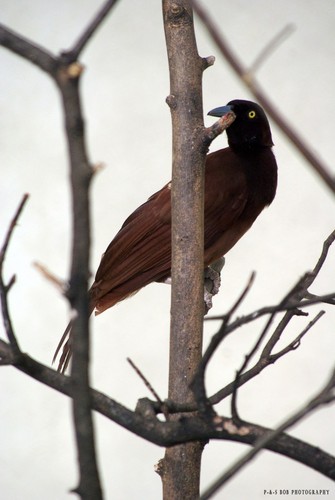
Greater Bird-of-paradise
Body about 43 cm; males with additional flank plumes up to 50 cm and long tail wires
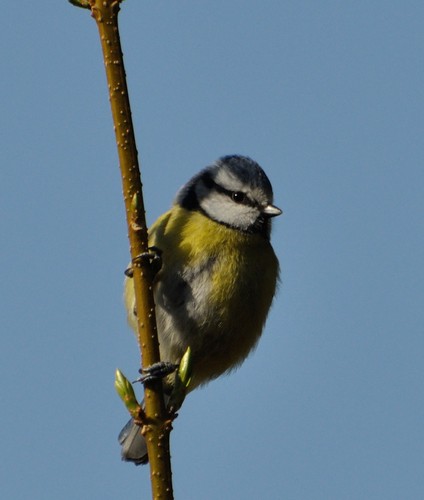
Blue Tit
11-12 cm (4.3-4.7 in) long, 17-20 cm wingspan
Red-billed Quelea
11.5–13 cm long, wingspan about 20–22 cm
White-plumed Antbird
13-14 cm (5-5.5 in) long
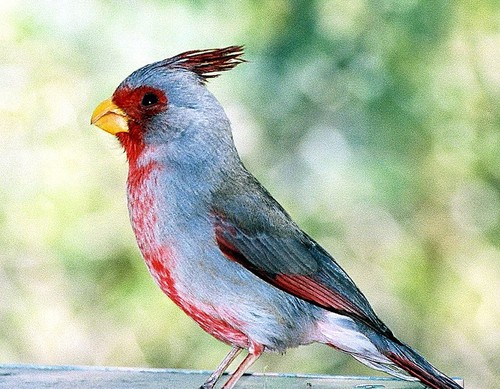
Pyrrhuloxia
19-22 cm (7.5-8.7 in) long, 30 cm wingspan
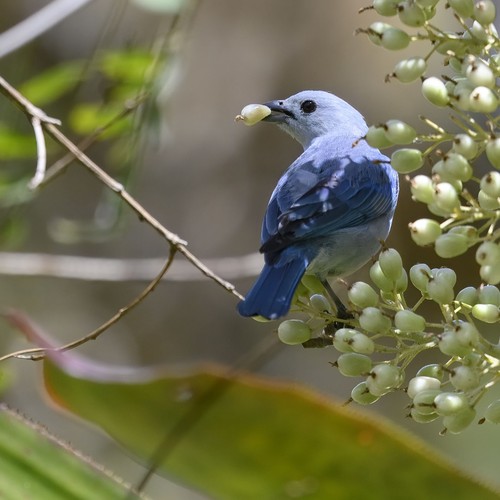
Blue-gray Tanager
16-18 cm (6-7 in) long
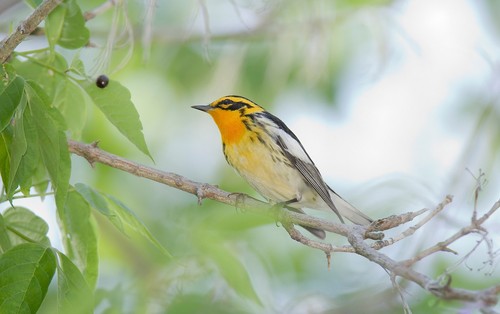
Blackburnian Warbler
11-13 cm (4.3-5.1 in) long, 20-22 cm wingspan
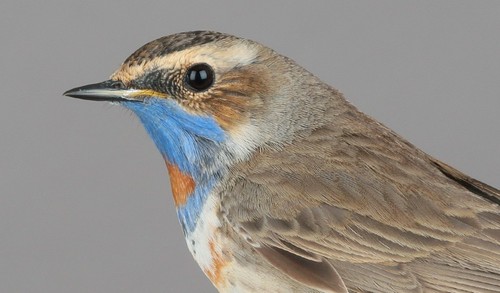
Bluethroat
13-14 cm (5.1-5.5 in) long, 20-22 cm wingspan
Eurasian Nuthatch
12-14.5 cm (4.7-5.7 in) long, 22.5-27 cm wingspan
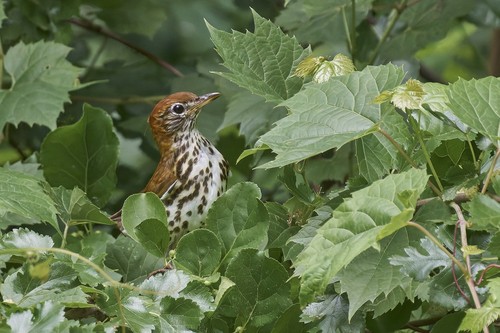
Wood Thrush
19-21 cm (7.5-8.3 in) long, about 33 cm (13 in) wingspan