
Bay-headed Tanager Identification Guide
A vividly colored Neotropical tanager with a chestnut head, turquoise-green body, and golden nape patch, often seen foraging in mixed flocks in humid forest canopy and edge.
Read the full Bay-headed Tanager encyclopedia entry →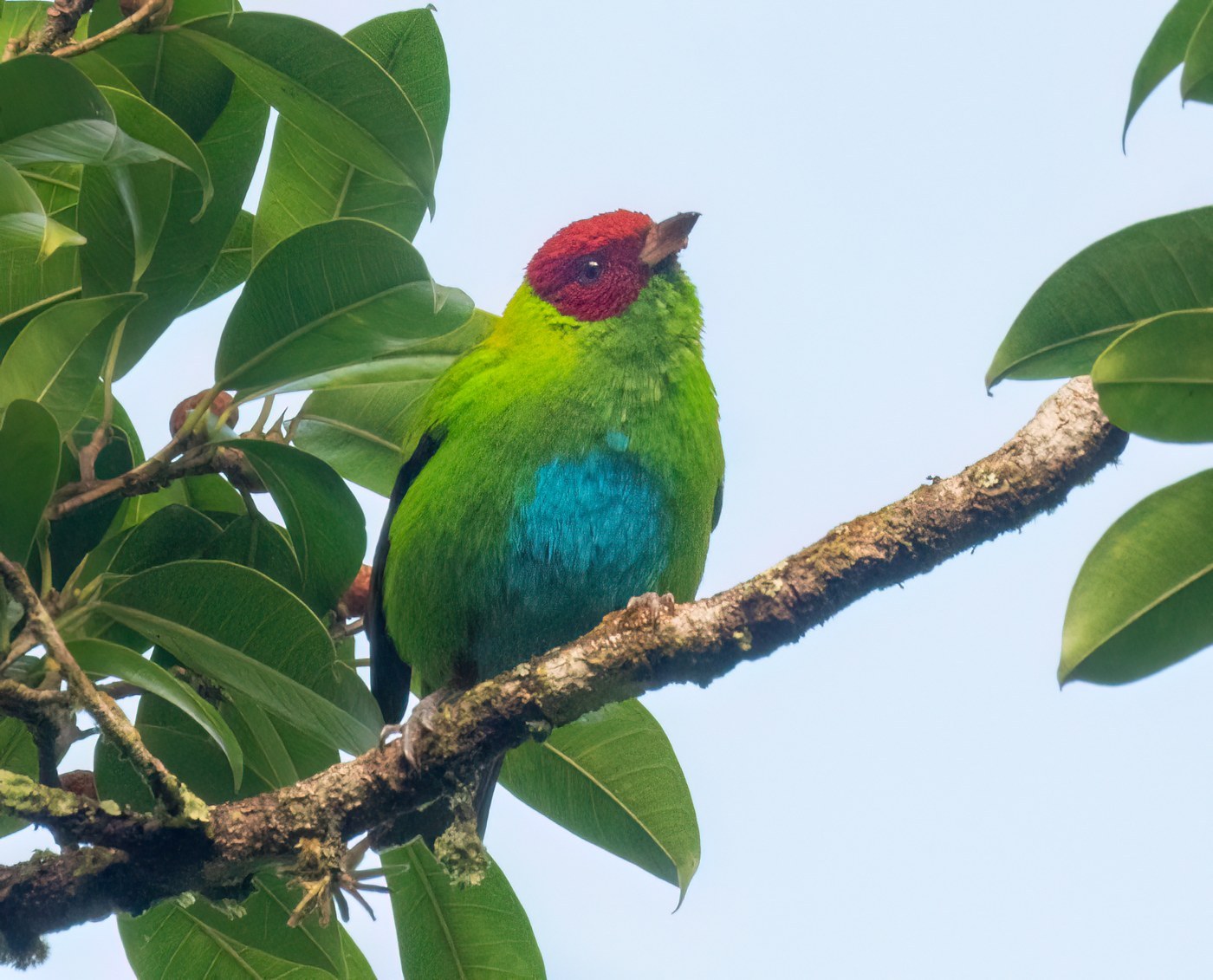
Key Field Marks
- Size & shape: Small, compact tanager (13–14 cm) with a short, conical bill typical of tanagers.
- Head: Rich chestnut ("bay") color covering the head and throat.
- Body: Bright turquoise-green to blue-green covering the back, wings, and underparts, creating a striking contrast with the chestnut head.
- Nape: A golden-yellow to orange patch on the hindneck/nape, variable in extent by subspecies, adding a third bright color to the pattern.
- Sexes: Similar in plumage, though females may average slightly duller than males.
- Behavior: Active and social, typically foraging in pairs or small groups, often joining mixed-species canopy flocks; gleans fruit and insects from foliage in the mid- to upper strata of forest and edge.
Similar Species
- Rufous-winged Tanager and other chestnut-headed tanagers: Differ in the extent of chestnut and the color of the body (Bay-headed's body is turquoise-green rather than having contrasting rufous wing patches).
- Golden Tanager: Lacks the chestnut head, being mostly golden-yellow with black markings on the face and wings.
- Speckled Tanager and other Tangara species: Best distinguished by the unique combination of solid chestnut head, turquoise body, and golden nape patch, which is diagnostic for Bay-headed Tanager within its range.
Habitat & Range
Found from Costa Rica south through much of northern and western South America (to Bolivia), in humid lowland and foothill forest, forest edge, and adjacent clearings with fruiting trees; frequently visits gardens and shade-coffee plantations within its elevational range (roughly sea level to ~2000 m depending on region).
Best Time to See
Resident year-round; best located by watching fruiting trees at forest edge or by tracking mixed-species canopy flocks moving through the mid-story and canopy, most actively foraging in early to mid-morning.
Voice
A thin, high-pitched, insect-like series of "tsip" or "tsee" notes, relatively nondescript compared to its striking plumage; often first detected visually within a mixed flock rather than by voice.
Frequently asked questions
What is the most distinctive feature of the Bay-headed Tanager?
The combination of a solid chestnut head, bright turquoise-green body, and a golden-yellow patch on the nape — a unique three-color pattern among Tangara tanagers.
Where does the Bay-headed Tanager live?
Humid lowland and foothill forest, forest edge, and adjacent gardens or shade-coffee plantations from Costa Rica south through much of northern and western South America.
How is the Bay-headed Tanager best located in the field?
By watching fruiting trees or following mixed-species canopy flocks, since its call is a nondescript thin 'tsip' and it is usually spotted visually first.
Do male and female Bay-headed Tanagers look different?
They are similar in plumage, with females averaging only slightly duller than the brightly colored males.