
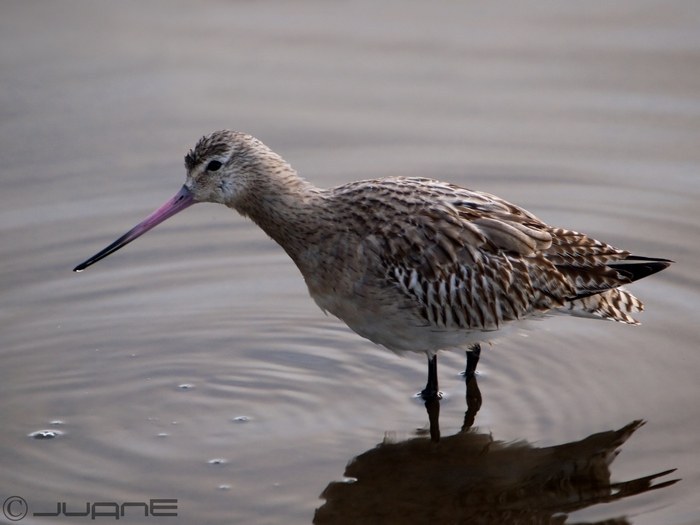
Bar-tailed Godwit
Limosa lapponica
A long-billed godwit famous for making the longest recorded nonstop migratory flights of any bird, connecting Arctic breeding grounds with wintering coasts across the Old World and Australasia.
- Size
- 37-41 cm (14.5-16 in) long, 70-80 cm wingspan
- Habitat
- Arctic tundra (breeding); coastal mudflats and estuaries (non-breeding)
- Type
- shorebird
Spotted a bird like this?
Identify any bird from a photo, free.
Overview
The Bar-tailed Godwit is a large shorebird with a long, slightly upturned, bicolored bill. Breeding males are strikingly colored, with rich brick-orange or chestnut underparts and mottled brown-and-buff upperparts; females are larger and duller, with less extensive orange coloring. Non-breeding birds of both sexes are plain grayish-brown above and pale below.
As its name suggests, the tail is finely barred rather than solidly dark, a useful distinction from other godwit species.
The species holds the record for the longest known nonstop flight of any bird, with satellite-tracked individuals of the Alaska-breeding subspecies flying more than 11,000 kilometers nonstop across the Pacific to New Zealand and eastern Australia without landing.
How to identify it
Key field marks
- Long, slightly upturned bicolored bill
- Finely barred tail (rather than solid dark or black)
- Breeding male: rich chestnut-orange underparts; female duller and paler
- No obvious white wing stripe in flight, unlike Black-tailed Godwit
Similar species
- Black-tailed Godwit shows a bold white wing stripe and solid black tail band, unlike the barred tail of Bar-tailed Godwit.
- Marbled Godwit is warmer cinnamon-buff overall with cinnamon underwings.
- Hudsonian Godwit shows a dark tail with a white base and black underwings.
Habitat & range
Bar-tailed Godwits breed on Arctic and subarctic tundra across northern Scandinavia, Russia, and Alaska. Outside the breeding season they winter on coastal mudflats and estuaries across a huge range spanning western Europe, Africa, the Middle East, South and Southeast Asia, and Australasia (including New Zealand), depending on the breeding population.
Different subspecies follow distinct migration routes, with the Alaska-breeding population undertaking the longest known nonstop overwater flights of any bird species on its journey to New Zealand and eastern Australia.
Behavior & voice
Voice
A sharp, kew-like call and a variety of chattering notes given in flight and during display on the breeding grounds.
Feeding
Probes soft mud and sand for marine worms, mollusks, and crustaceans, often feeding in large flocks alongside other shorebirds on coastal mudflats.
Nesting
Nests on the ground in a shallow scrape amid tundra vegetation. Both sexes share incubation duties, and adults perform aerial and ground displays with calling to defend the nesting territory.
Frequently asked questions
What is the Bar-tailed Godwit famous for?
Individuals of its Alaska-breeding population hold the record for the longest known nonstop flight of any bird, migrating over 11,000 kilometers across the Pacific to New Zealand and Australia without stopping.
How do you tell it from the Black-tailed Godwit?
Bar-tailed Godwit has a finely barred tail and lacks a strong white wing stripe, while Black-tailed Godwit has a solid black tail band and a bold white wing stripe.
Where does the Bar-tailed Godwit breed?
On Arctic and subarctic tundra across Scandinavia, Russia, and Alaska.
Why is it classified as Near Threatened?
Several populations, especially those relying on East Asian staging mudflats, have declined due to habitat loss along migratory stopover coastlines.
Bar-tailed Godwit guides
In-depth guides for identifying, finding, and understanding Bar-tailed Godwit.
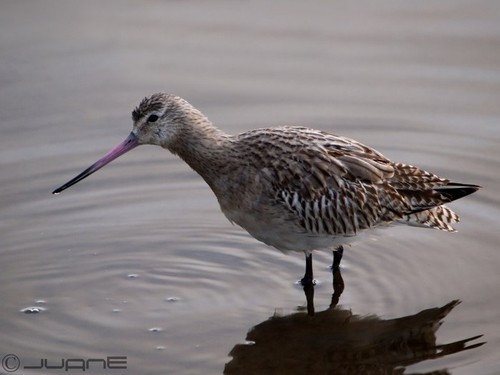
Other birds you may enjoy
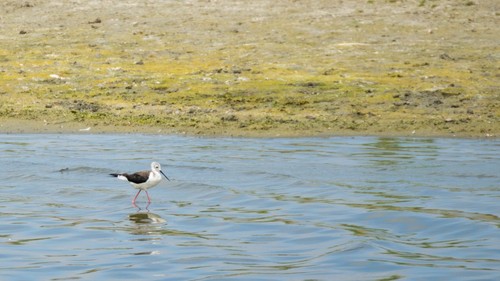
Black-winged Stilt
33-36 cm (13-14 in) long, wingspan 67-83 cm
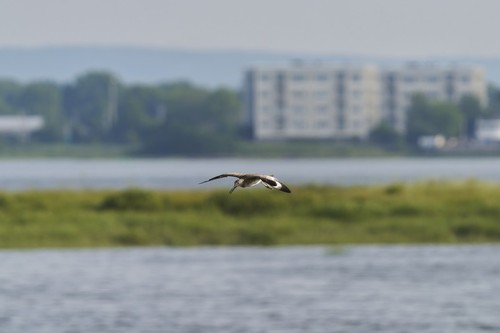
Willet
33-41 cm (13-16 in) long, 65-70 cm wingspan
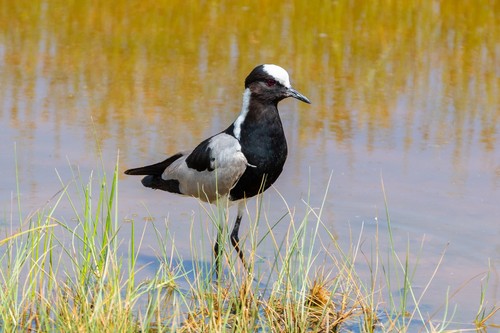
Blacksmith Lapwing
Body length about 30 cm; wingspan 55-65 cm
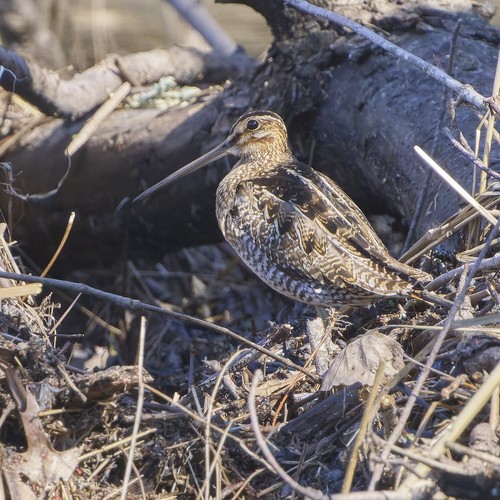
Wilson's Snipe
25-30 cm (10-12 in) long, 39-45 cm wingspan

Western Sandpiper
14-17 cm (5.5-6.7 in) long, 28-37 cm wingspan
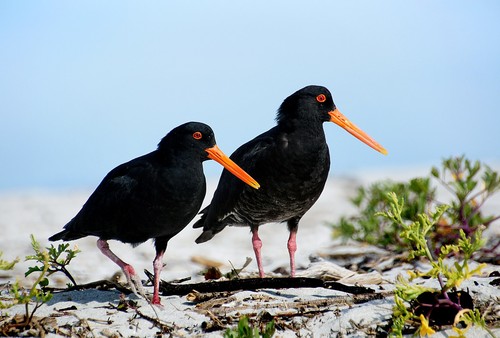
Variable Oystercatcher
46-49 cm (18-19 in) long
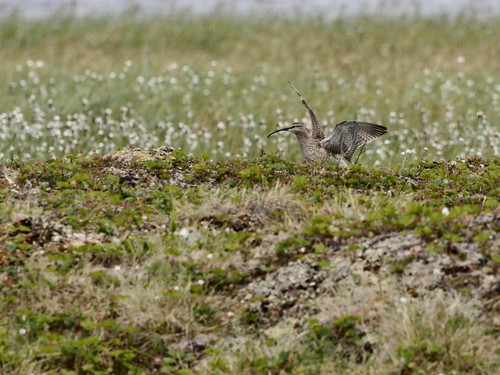
Whimbrel
40-46 cm (16-18 in) long, 76-89 cm wingspan

Wilson's Phalarope
22-24 cm (8.5-9.5 in) long, 37-43 cm wingspan
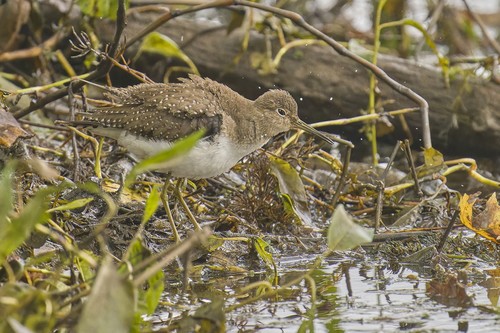
Solitary Sandpiper
19-23 cm (7.5-9 in) long, 50-56 cm wingspan
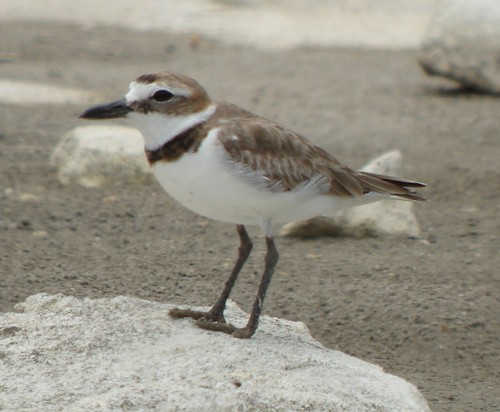
Wilson's Plover
17-19 cm (6.7-7.5 in) long, 45-50 cm wingspan
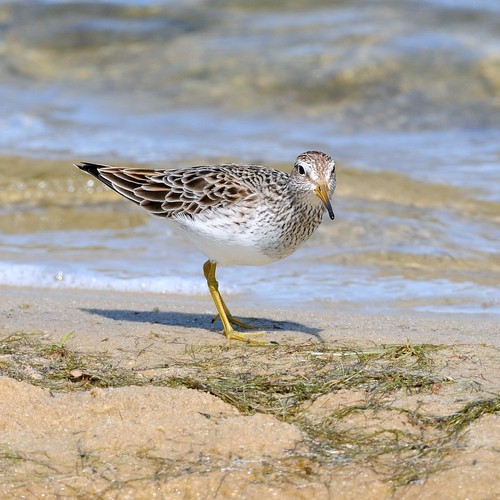
Pectoral Sandpiper
19-23 cm (7.5-9 in) long, 43-49 cm wingspan
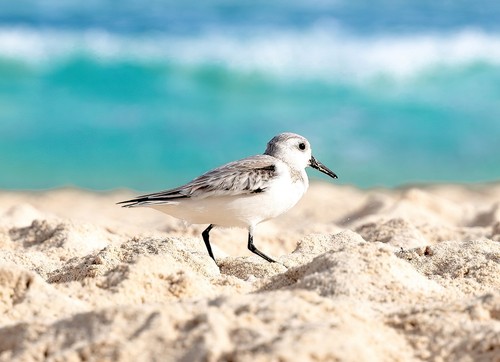
Sanderling
18-20 cm (7-8 in) long, 40-43 cm wingspan