
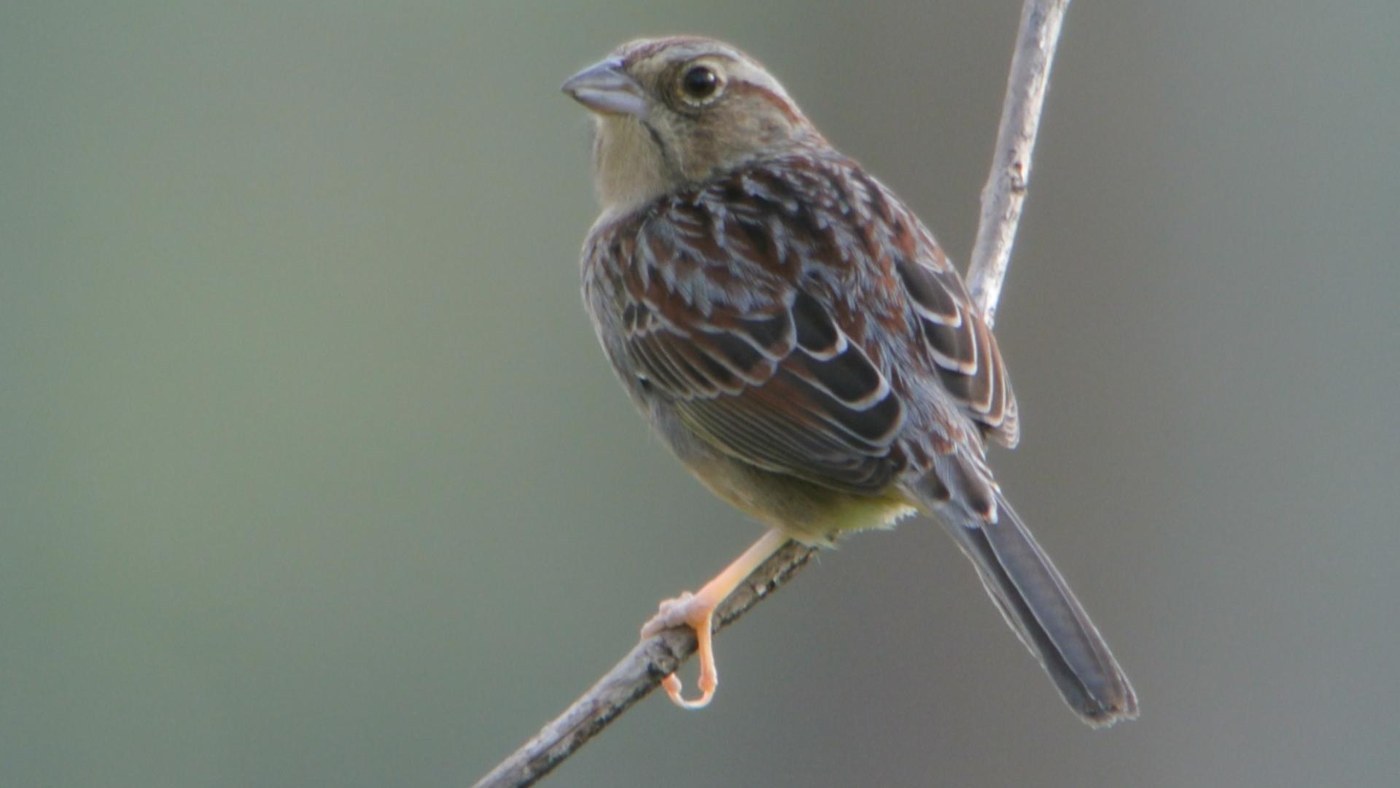
Bachman's Sparrow
Peucaea aestivalis
A secretive southeastern sparrow of open pine savanna, celebrated for one of the most beautiful songs of any North American sparrow.
- Size
- 13-15 cm (5-6 in) long, about 19-20 cm (7.5-8 in) wingspan
- Habitat
- open, fire-maintained pine woodlands with a grassy understory
- Type
- songbird
Spotted a bird like this?
Identify any bird from a photo, free.
Overview
The Bachman's Sparrow is a shy, ground-dwelling bird of the southeastern pine belt, closely tied to open, fire-maintained pine savanna with a lush grassy and herbaceous understory. Though it can be hard to see well, birders often first learn of its presence through its exceptionally beautiful, clear song.
Plumage is warm and rich: the back and crown are streaked reddish-brown or chestnut, the underparts are plain buffy-gray without streaking, and the bill and tail are proportionally large, with the tail appearing long and rounded. Overall the bird has a soft, warm-toned, somewhat nondescript look that helps it stay hidden in dense ground cover.
The species is closely associated with longleaf pine ecosystems that depend on periodic fire, and its populations have declined significantly as fire suppression and habitat conversion have reduced the extent of open pine savanna across the Southeast.
How to identify it
Key Field Marks
- Reddish-brown or chestnut streaked crown and back
- Plain, unstreaked buffy-gray breast and belly
- Large bill and long, rounded tail
- Skulking behavior, often staying hidden in grass and low cover
Similar Species
- Field Sparrow: has a pink bill and a plainer, grayer face without the same rich chestnut streaking
- Botteri's and Cassin's Sparrow: occur in different, more arid grassland habitat farther west and lack the same warm chestnut tones
The clear, whistled song followed by a trill on a different pitch is one of the best ways to confirm identification, since the bird itself is often difficult to see.
Habitat & range
Bachman's Sparrow is a habitat specialist of open pine woodlands, especially longleaf pine savanna maintained by regular fire, which keeps the understory open and grassy rather than choked with shrubs. It also uses overgrown fields, clearcuts in early regrowth stages, and other grassy openings within the pine belt.
The species is resident (non-migratory) across much of the southeastern United States, from Virginia and Florida west to Texas and Oklahoma, though northern populations may shift short distances southward in winter. Because it depends on a specific, fire-maintained habitat structure, its range has contracted as longleaf pine forests have been logged, converted to agriculture, or allowed to grow into dense, fire-suppressed woodland.
Behavior & voice
Behavior
This sparrow is notoriously secretive, spending most of its time walking or running on the ground beneath grass and low vegetation, and it can be very difficult to flush or observe well.
Voice
The song is widely regarded as one of the most beautiful of any North American sparrow: a single clear, sustained whistled note followed by a rapid trill pitched differently, with considerable variation between individual songs.
Feeding
Diet is a mix of seeds and insects, gleaned from the ground and low vegetation in open pine understory.
Nesting and Breeding
Nests are built on the ground, often domed or partially covered with a side entrance, hidden in dense grass. Clutches usually contain 3-5 white eggs, and the species can raise multiple broods in a season within suitable fire-maintained habitat.
Frequently asked questions
Why is the Bachman's Sparrow declining?
It depends on open, fire-maintained pine savanna, and loss of longleaf pine habitat along with fire suppression have caused significant population declines.
What does the Bachman's Sparrow sound like?
It sings a clear, sustained whistled note followed by a rapid trill on a different pitch, considered one of the most beautiful sparrow songs in North America.
Where does the Bachman's Sparrow live?
It lives in open pine woodlands with a grassy understory across the southeastern United States, from Virginia and Florida west to Texas.
Is the Bachman's Sparrow easy to see?
No, it is very secretive and usually stays hidden on the ground in grass, so it is more often heard than seen.
Does the Bachman's Sparrow migrate?
It is mostly resident, though some northern populations shift short distances south in winter.
Bachman's Sparrow guides
In-depth guides for identifying, finding, and understanding Bachman's Sparrow.
Other birds you may enjoy

Black Redstart
13-14.5 cm (5.1-5.7 in) long, 23-26 cm wingspan

Black-throated Sparrow
12-14 cm (4.7-5.5 in) long, about 19-20 cm (7.5-8 in) wingspan

Greater Bird-of-paradise
Body about 43 cm; males with additional flank plumes up to 50 cm and long tail wires

Blue Tit
11-12 cm (4.3-4.7 in) long, 17-20 cm wingspan

Red-billed Quelea
11.5–13 cm long, wingspan about 20–22 cm
White-plumed Antbird
13-14 cm (5-5.5 in) long

Pyrrhuloxia
19-22 cm (7.5-8.7 in) long, 30 cm wingspan

Blue-gray Tanager
16-18 cm (6-7 in) long

Blackburnian Warbler
11-13 cm (4.3-5.1 in) long, 20-22 cm wingspan

Bluethroat
13-14 cm (5.1-5.5 in) long, 20-22 cm wingspan

Eurasian Nuthatch
12-14.5 cm (4.7-5.7 in) long, 22.5-27 cm wingspan

Wood Thrush
19-21 cm (7.5-8.3 in) long, about 33 cm (13 in) wingspan