
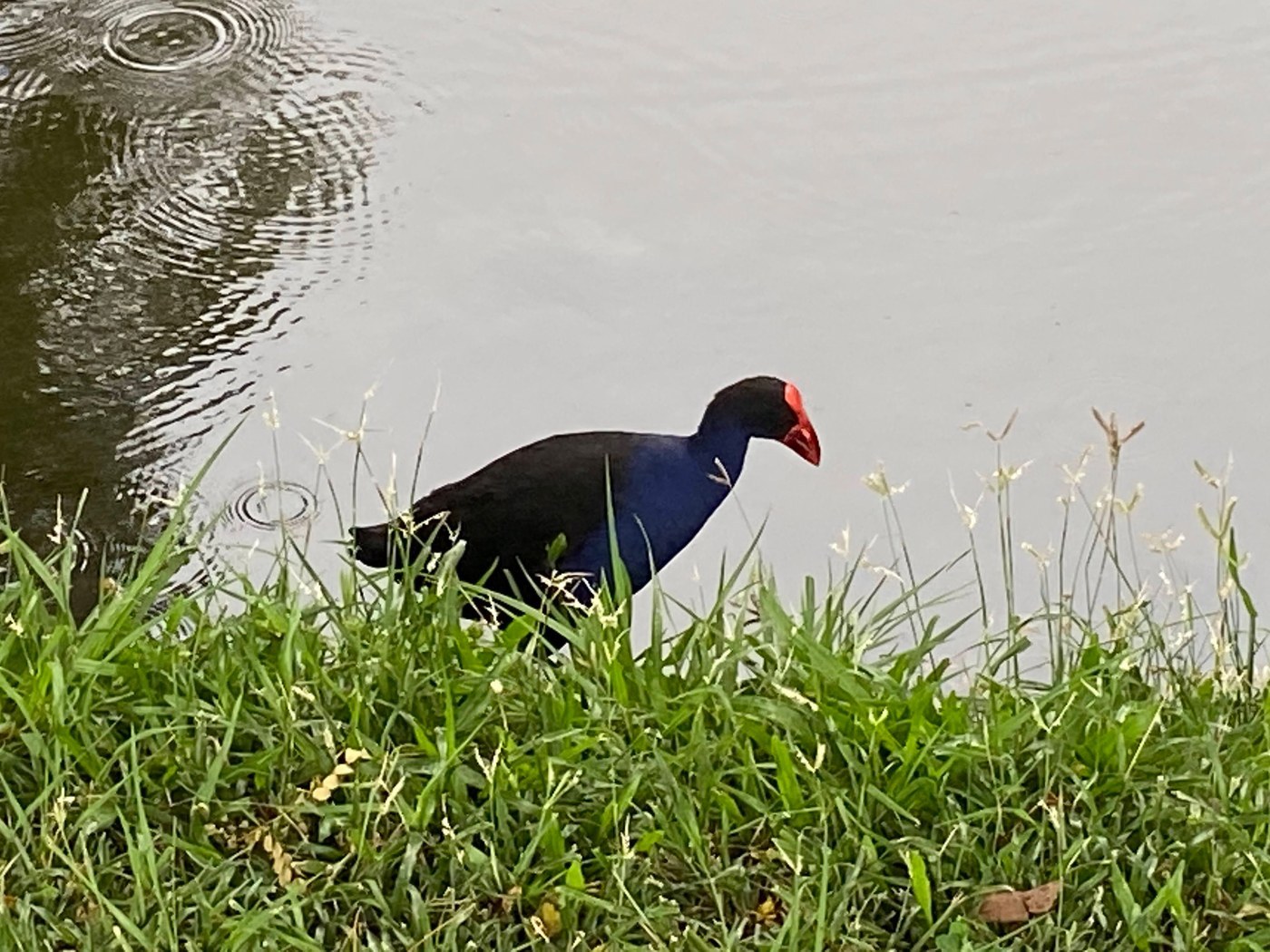
Australasian Swamphen
Porphyrio melanotus
A large, vividly deep-blue-and-purple waterbird with a red bill and frontal shield, often seen flicking its white tail as it walks.
- Size
- 45-50 cm (18-20 in) long
- Habitat
- swamps, wetlands, lake edges, and parks with water across Australia
- Type
- wading-bird
Spotted a bird like this?
Identify any bird from a photo, free.
Overview
The Australasian Swamphen is a large, unmistakable rail relative, clad in rich deep blue and purple plumage with a glossy black back, a stout red bill, and a matching red frontal shield extending up the forehead. Its long, sturdy red-orange legs and long toes allow it to walk easily across floating and waterside vegetation, and its stubby white undertail is frequently flicked as it moves.
Once lumped together with swamphens across the Old World as a single wide-ranging species, the Australasian Swamphen (including the familiar New Zealand form known as the Pukeko) is now generally recognised as a distinct species restricted to Australia, New Zealand, and nearby islands, with several other swamphen forms elsewhere now treated separately.
Bold and conspicuous compared to many of its more secretive rail relatives, the Australasian Swamphen is a familiar sight at wetlands, ornamental lakes, and waterside parks throughout much of Australia, often seen striding confidently across lawns and reed beds.
How to identify it
Key field marks
- Deep blue-purple body plumage with a glossy black back and wings
- Large red bill and red frontal shield
- Long red-orange legs and very long toes
- Short, frequently flicked white undertail
- Large size compared to most other rails and crakes
Similar species
The Buff-banded Rail is much smaller and intricately barred rather than solid blue-purple. Coots, sometimes seen alongside swamphens, are all-black with a white bill and shield rather than red, and are considerably smaller with lobed rather than long unwebbed toes. No other Australian wetland bird shares the swamphen's combination of size, deep purple-blue plumage, and red bill and shield.
Habitat & range
Habitat
This species favours densely vegetated wetlands, swamps, marshes, and the reedy margins of lakes, rivers, and dams, and adapts readily to parks and gardens with ornamental water.
Range
It is widespread across northern, eastern, and southwestern Australia wherever suitable wetland habitat occurs, and the same species complex occurs in New Zealand and various Pacific islands.
Migration
Australasian Swamphens are largely sedentary but can be locally nomadic, dispersing to newly flooded areas after rain and sometimes forming larger gatherings outside the breeding season.
Behavior & voice
Behavior
Swamphens are bold, often approachable birds that walk confidently across floating vegetation, reed beds, and open lawns, using their long toes to grip stems, and they swim readily despite lacking webbed feet.
Voice
Calls include loud, harsh screeches, gurgling notes, and various clucking and grunting sounds, often given when alarmed or during territorial disputes.
Feeding
It feeds on the soft shoots, stems, and roots of aquatic and waterside plants, often holding food in one foot while feeding with its bill, and also takes insects, frogs, and occasionally the eggs or young of other birds.
Nesting and breeding
Nests are bulky platforms of reeds and rushes built low over water or on the ground amid dense waterside vegetation. Some populations show cooperative breeding, with related adults helping to raise young, and both parents and helpers may feed the precocial black chicks.
Frequently asked questions
What is another name for the Australasian Swamphen?
It is also widely known as the Purple Swamphen, and the New Zealand form is called the Pukeko.
How do I identify an Australasian Swamphen?
Look for its deep blue-purple plumage, glossy black back, red bill and forehead shield, and long red legs, often with the white undertail flicking as it walks.
Where do Australasian Swamphens live?
They live in wetlands, swamps, and waterside vegetation across much of Australia, as well as New Zealand and nearby Pacific islands.
What do Australasian Swamphens eat?
Mainly the soft shoots and stems of aquatic plants, along with insects, frogs, and occasionally eggs or chicks of other birds.
Do Australasian Swamphens breed cooperatively?
In some populations, related adults help raise chicks together in a cooperative breeding system.
Australasian Swamphen guides
In-depth guides for identifying, finding, and understanding Australasian Swamphen.
Other birds you may enjoy
Demoiselle Crane
85-100 cm (33-39 in) long, 155-180 cm wingspan
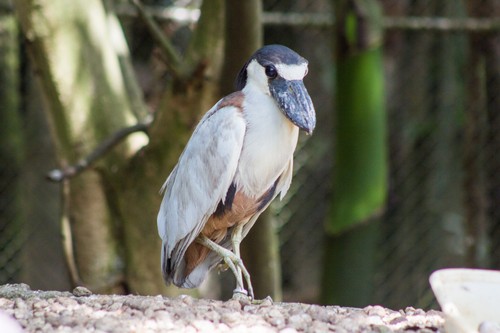
Boat-billed Heron
41-56 cm (16-22 in) long
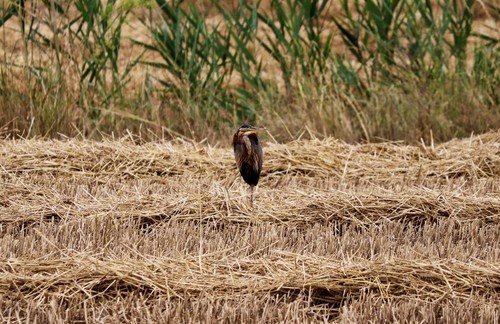
Purple Heron
78-90 cm (31-35 in) long, 120-152 cm wingspan
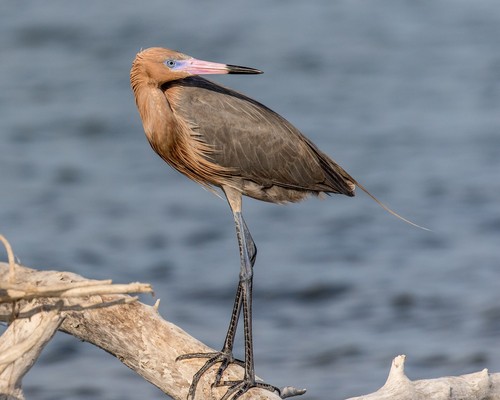
Reddish Egret
68-82 cm (27-32 in) long, 116-125 cm wingspan
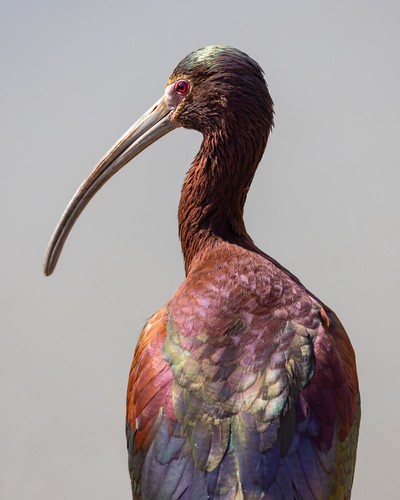
White-faced Ibis
46-56 cm (18-22 in) long, 88-93 cm wingspan
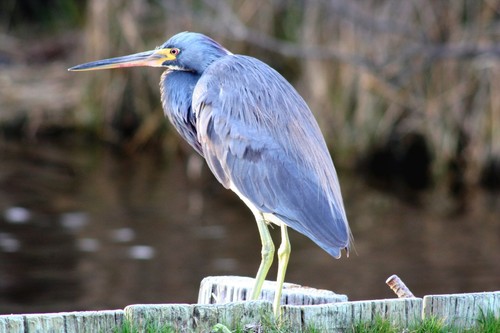
Tricolored Heron
61-76 cm (24-30 in) long, about 96 cm wingspan
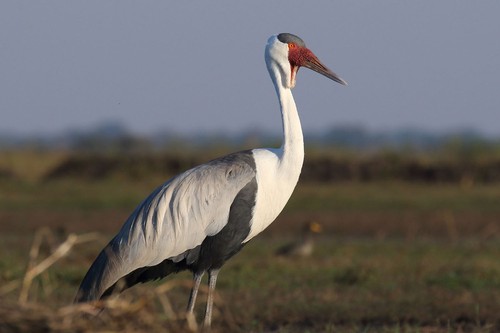
Wattled Crane
120-175 cm (47-69 in) tall, one of the tallest cranes, wingspan up to about 230 cm (7.5 ft)
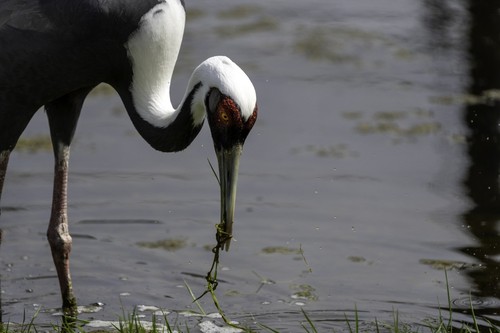
White-naped Crane
112-125 cm (44-49 in) long, 195-210 cm wingspan
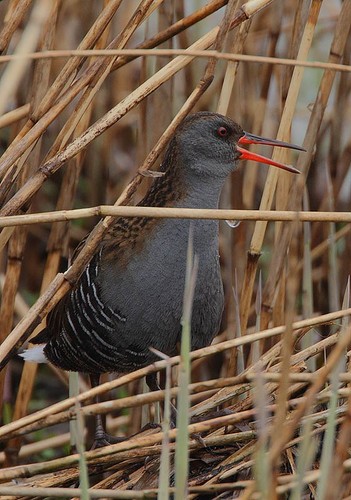
Water Rail
23-28 cm (9-11 in) long, wingspan 38-45 cm
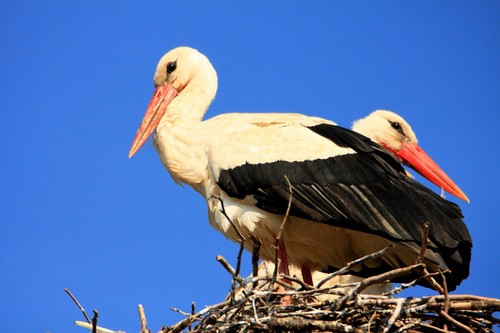
White Stork
100-125 cm (39-49 in) long, 155-215 cm wingspan
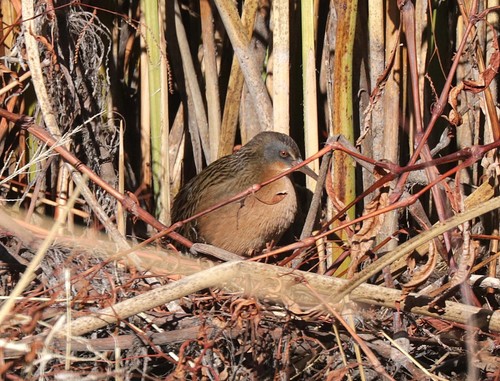
Virginia Rail
20-27 cm (8-11 in) long, wingspan 32-38 cm
Wattled Jacana
17-23 cm (7-9 in) long