
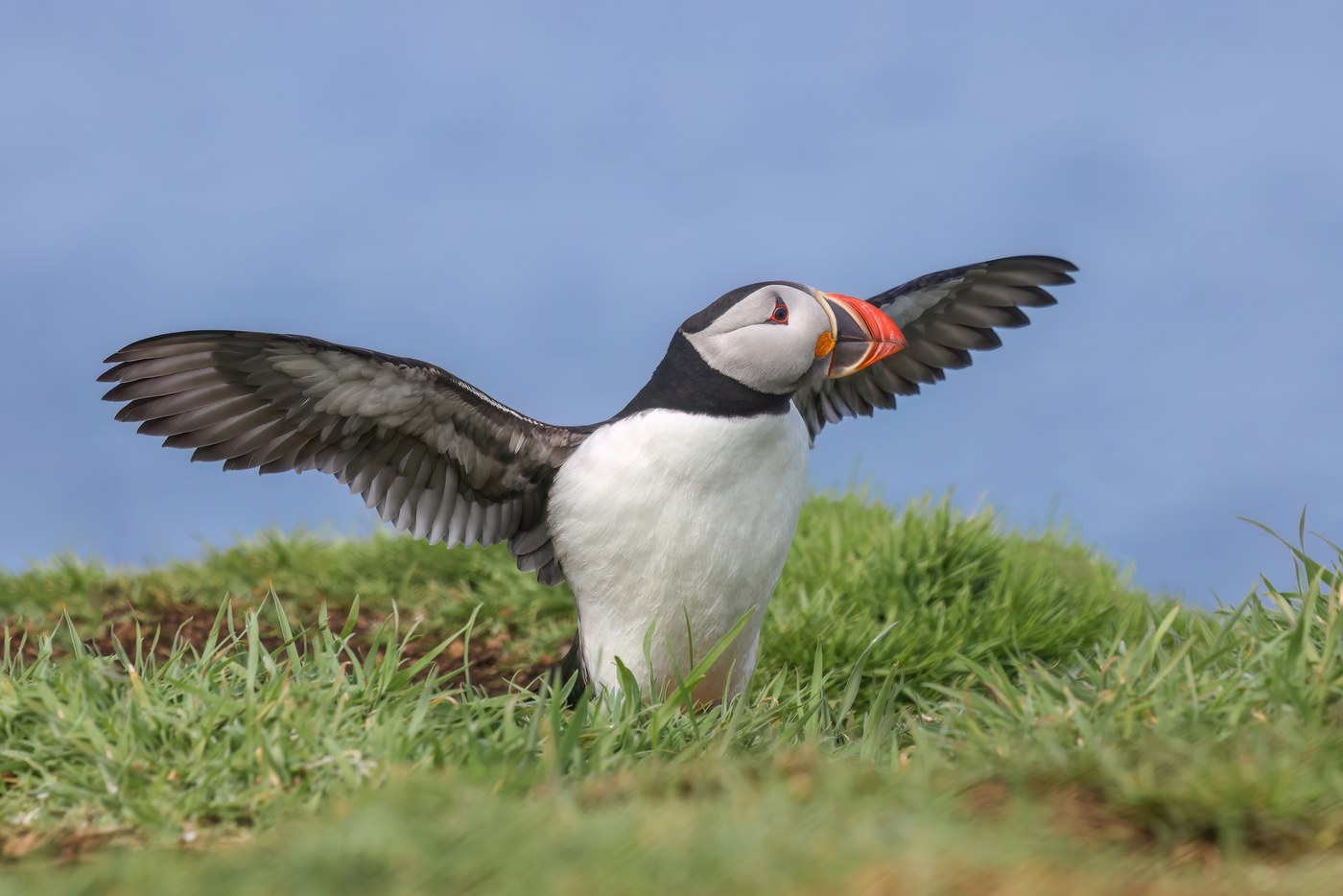
Atlantic Puffin
Fratercula arctica
A charismatic black-and-white seabird with a colorful triangular bill, nicknamed the 'sea parrot,' that nests in burrows on North Atlantic cliffs.
- Size
- 28-30 cm (11-12 in) long, 47-63 cm wingspan
- Habitat
- North Atlantic coastal cliffs and islands, offshore waters
- Type
- seabird
Spotted a bird like this?
Identify any bird from a photo, free.
Overview
The Atlantic Puffin is one of the most beloved and instantly recognizable seabirds, famous for its clownish, brightly colored bill and upright, penguin-like posture on land. In breeding plumage, the bill becomes a striking wedge of orange, yellow, and blue-grey, paired with a black cap, grey face, and crisp black-and-white body. Outside the breeding season, the bill sheds its colorful outer plates and the face darkens, giving a duller, less flamboyant appearance.
Despite its comical looks on land, the Atlantic Puffin is a superb swimmer, using its wings to "fly" underwater in pursuit of small fish, and spends the vast majority of its life far out at sea, coming to land only to breed.
How to identify it
Key field marks
- Large, colorful triangular bill in breeding season (orange, yellow, blue-grey)
- Black upperparts, cap, and neck collar
- White face and underparts
- Orange legs and feet
Similar species
- Tufted Puffin and Horned Puffin occur in the North Pacific and do not overlap in range with the Atlantic Puffin.
- Razorbill and murres share the black-and-white pattern but have slimmer, more pointed or less colorful bills lacking the puffin's distinctive rainbow bill.
- Non-breeding adults and juveniles have smaller, duller, greyish bills, making them less immediately recognizable than breeding adults.
Habitat & range
Atlantic Puffins breed on grassy cliff-top slopes and rocky islands around the North Atlantic, from northeastern North America (including Maine and eastern Canada) across Iceland, the Faroe Islands, Britain and Ireland, to Scandinavia and Arctic Russia. They nest in burrows dug into soil or use natural rock crevices on predator-free islands and headlands.
Outside the breeding season, puffins disperse widely across the open North Atlantic, spending autumn and winter entirely at sea, often far from any coastline, before returning to the same nesting colonies each spring.
Behavior & voice
Behavior
Puffins are excellent divers, using their wings to propel themselves underwater in pursuit of fish, often diving to depths of ten meters or more and remaining submerged for around 20-30 seconds.
Voice
At the colony, puffins give a low, growling "arr" call from inside their burrows; they are largely silent at sea.
Feeding
Small schooling fish such as sand eels, herring, and capelin are the primary prey, with puffins able to carry multiple fish crosswise in their bill thanks to backward-pointing spines on the palate and tongue.
Nesting and breeding
Pairs excavate or reuse burrows, sometimes over a meter long, in which a single egg is laid; both parents share incubation and chick-feeding duties, and the chick fledges alone at night, making its way to the sea unaided.
Frequently asked questions
Why is the Atlantic Puffin's bill so colorful?
The bright orange, yellow, and blue-grey outer bill plates grow in for the breeding season to attract mates and are shed afterward, revealing a smaller, duller bill in winter.
How deep can Atlantic Puffins dive?
They typically dive to depths of around 10-30 meters, using their wings to swim underwater in pursuit of small fish.
Where do Atlantic Puffins nest?
In burrows dug into grassy cliff tops and slopes, or in rock crevices, on islands and coastlines around the North Atlantic.
Why is the Atlantic Puffin considered Vulnerable?
Populations have declined due to reduced availability of small fish prey, climate change effects on food webs, and predation by introduced mammals at some colonies.
How many fish can a puffin carry in its bill at once?
Thanks to spiny structures on its palate and tongue that grip fish, a puffin can carry a dozen or more small fish crosswise in its bill at one time.
Atlantic Puffin guides
In-depth guides for identifying, finding, and understanding Atlantic Puffin.
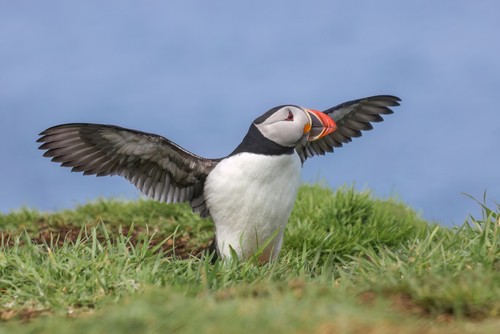
Atlantic Puffin identified by the community
Real birds identified with Bird Identifier.
Other birds you may enjoy
Peruvian Pelican
137-152 cm (54-60 in) long, up to 228 cm wingspan
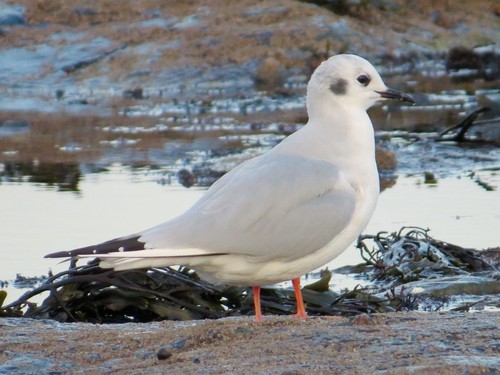
Bonaparte's Gull
28-33 cm (11-13 in) long, 76-84 cm wingspan
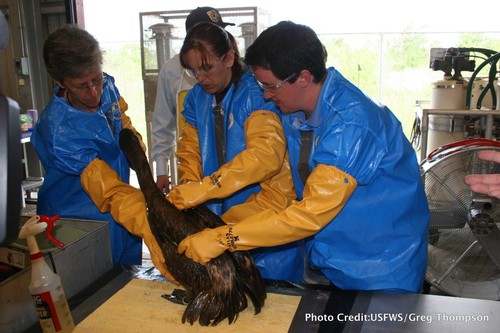
Brown Pelican
106-137 cm (42-54 in) long, 200-230 cm wingspan
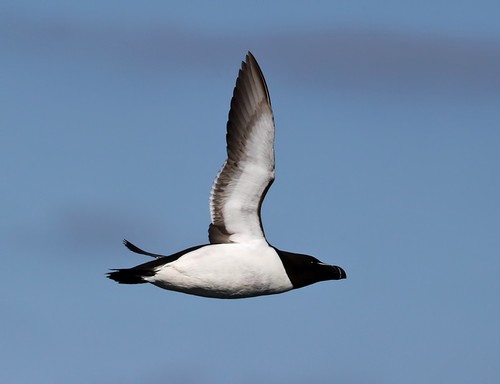
Razorbill
37-39 cm (15-15.5 in) long, 63-68 cm wingspan
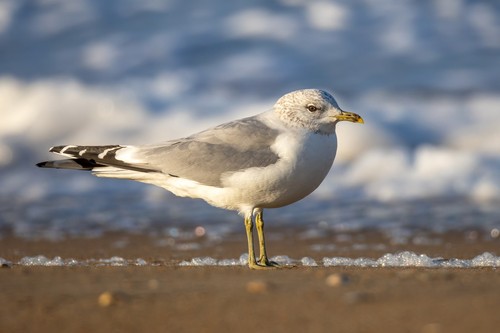
Common Gull
40-46 cm (16-18 in) long, 110-130 cm wingspan
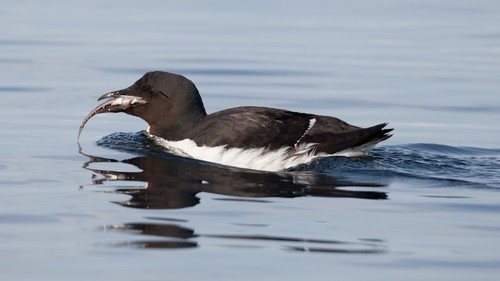
Thick-billed Murre
40-48 cm (16-19 in) long, 65-75 cm wingspan
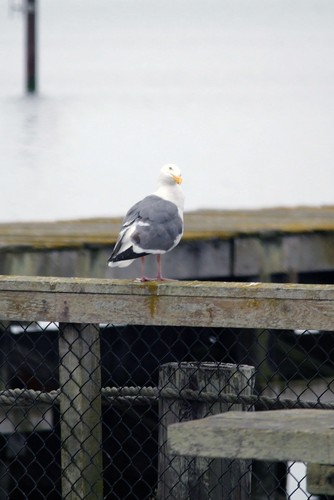
Western Gull
55-68 cm (22-27 in) long, 130-144 cm wingspan
Yellow-billed Loon
76-97 cm (30-38 in) long, 135-152 cm wingspan
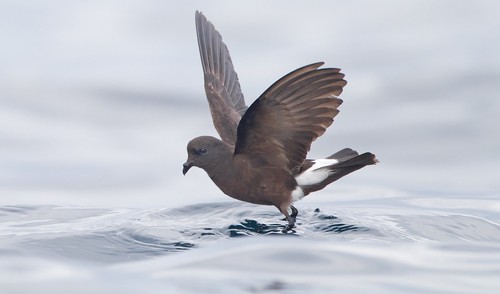
Wilson's Storm-Petrel
15-19 cm (6-7.5 in) long, wingspan 38-42 cm (15-16.5 in)
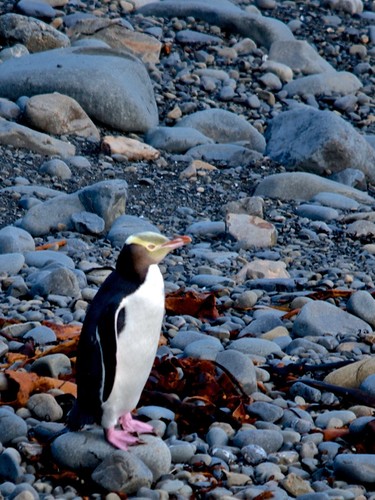
Yellow-eyed Penguin
62-79 cm (24-31 in) tall, 3-8.5 kg (6.6-18.7 lb)
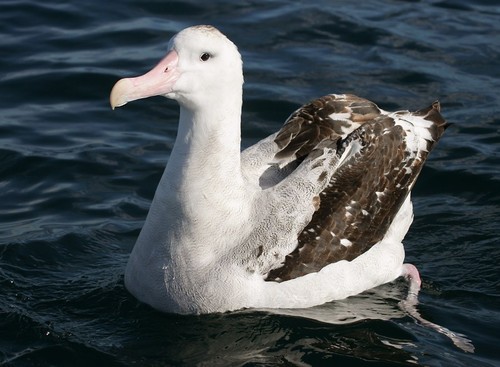
Wandering Albatross
107-135 cm (42-53 in) long, wingspan up to 3.5 m (11.5 ft)
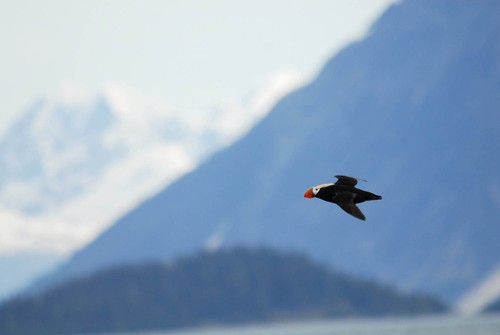
Tufted Puffin
35-41 cm (14-16 in) long, about 63-70 cm wingspan