
Anna's Hummingbird
Calypte anna
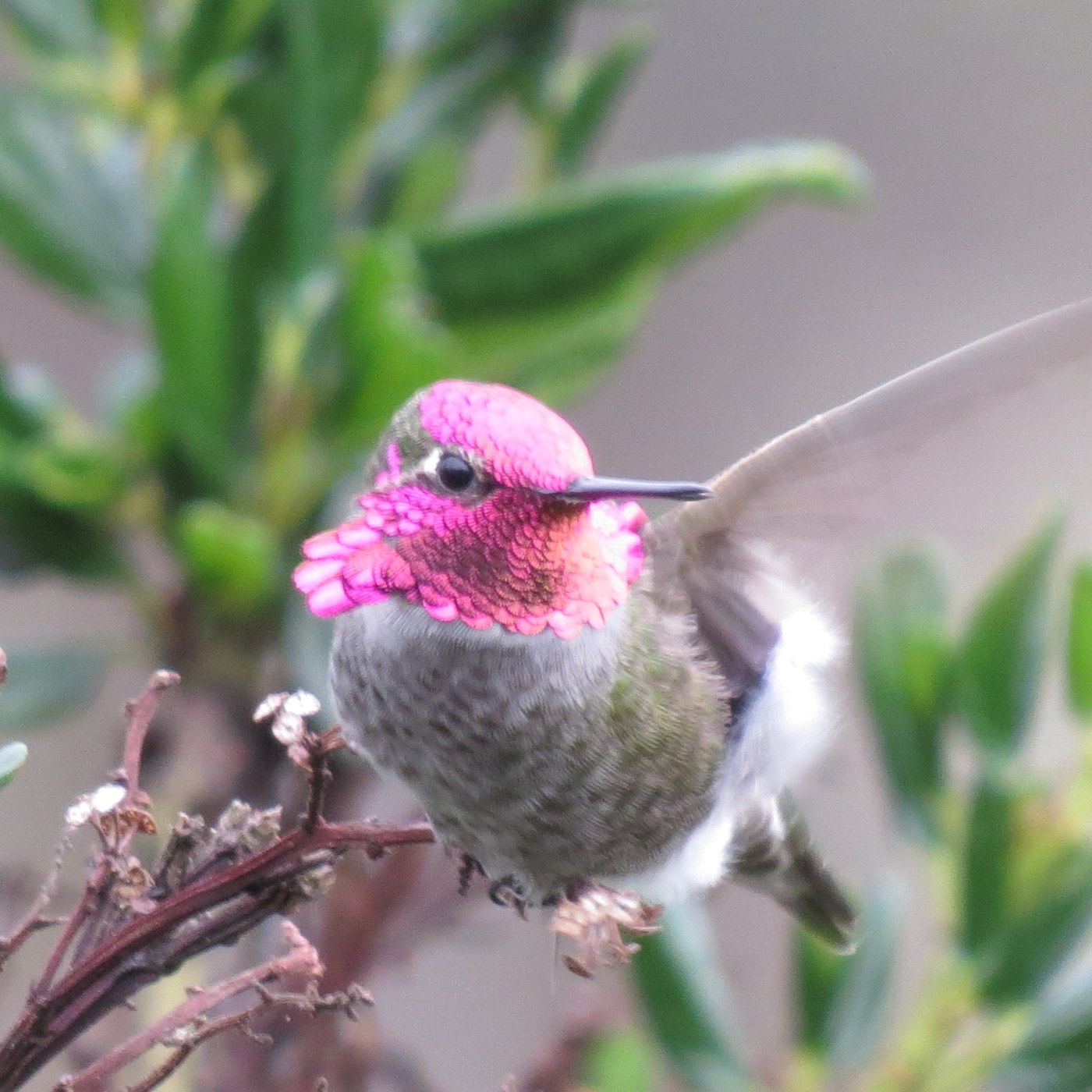
A common, non-migratory West Coast hummingbird whose males flash an iridescent rose-pink crown and throat and perform a spectacular, chirping high-speed dive display.
- Size
- 9-10 cm (3.5-4 in) long, 12 cm wingspan
- Habitat
- gardens, chaparral, and urban parks along the US West Coast, year-round
- Type
- hummingbird
Spotted a bird like this?
Identify any bird from a photo, free.
Overview
Anna's Hummingbird is the most common and familiar hummingbird along much of the Pacific Coast, thanks in large part to its ability to stay year-round in areas with mild winters and abundant garden flowers. Males are unmistakable in good light, with an iridescent rose-magenta crown and gorget that extends down over the throat—can look dull and dark when the light is wrong, a common identification pitfall. The back is emerald green and the underparts grayish.
Females lack the full colorful hood but usually show some rose-red spotting on the throat, along with a green back and grayish underparts.
How to identify it
Key field marks
- Male: iridescent rose-pink to magenta crown and throat (gorget) extending down the neck
- Female: green back, grayish underparts, variable rose spotting on throat
- Fairly stocky build for a hummingbird, relatively short bill
Similar species
- Costa's Hummingbird: male has a violet-purple gorget with extended points ('mustache') at the sides, smaller range overlap mostly in the desert Southwest.
- Black-chinned Hummingbird: male has a black throat with a thin purple base band, not extending in a full colorful hood.
- Rufous/Allen's Hummingbird: males show extensive orange-rufous coloring, quite different from Anna's green-and-rose pattern.
Habitat & range
Range and habitat
Anna's Hummingbird is a year-round resident along the Pacific Coast from British Columbia south through California into northern Mexico, using gardens, chaparral, eucalyptus groves, and urban parks. Its range has expanded considerably over the past century, aided by ornamental flowering plants and backyard feeders.
Migration
Largely non-migratory; most individuals remain on or near their breeding territory throughout the year, though some altitudinal or short-distance movement occurs.
Behavior & voice
Behavior
Males are highly territorial around feeding areas and perform a dramatic courtship display: climbing to a great height before diving steeply toward a female or intruder, pulling up sharply near the bottom while producing a loud, explosive chirp made by the tail feathers.
Voice
Males give a scratchy, buzzy song from an exposed perch, unusual among North American hummingbirds for having a regularly repeated vocal song rather than just calls.
Feeding
Feeds on nectar from a wide range of native and ornamental flowers as well as sugar-water feeders, and catches small insects and spiders in flight or by gleaning.
Nesting and breeding
Builds a small cup nest of plant down and spider silk, often decorated with lichen, placed on a branch or even on man-made structures. Breeding can begin very early in the year, sometimes in midwinter in mild coastal climates. The female alone incubates 2 eggs and raises the young.
Frequently asked questions
What does the male Anna's Hummingbird's display look like?
The male climbs high into the air and then dives steeply toward a female or rival, pulling up sharply near the bottom while making a loud chirping sound produced by his tail feathers.
Is Anna's Hummingbird migratory?
No, it is largely non-migratory and stays year-round in its Pacific Coast range, one of the few hummingbirds that regularly overwinters that far north.
How do you identify a male Anna's Hummingbird?
Look for an iridescent rose-pink to magenta crown and throat that extends down over the neck, though the color can look dark or dull unless it catches the light directly.
Where does Anna's Hummingbird live?
Along the US West Coast from British Columbia to northern Mexico, in gardens, chaparral, and urban parks, with a range that has expanded significantly due to ornamental plantings and feeders.
What does Anna's Hummingbird eat?
Mainly flower nectar and feeder sugar-water, supplemented with small insects and spiders.
Anna's Hummingbird guides
In-depth guides for identifying, finding, and understanding Anna's Hummingbird.
Other birds you may enjoy
Sword-billed Hummingbird
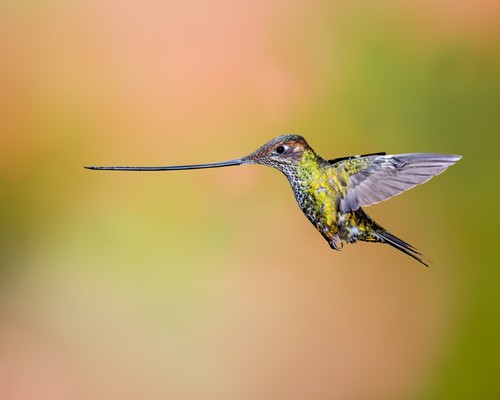
Body about 13-15 cm (5-6 in) including a bill up to 10 cm long, the longest bill relative to body size of any bird
Violet Sabrewing
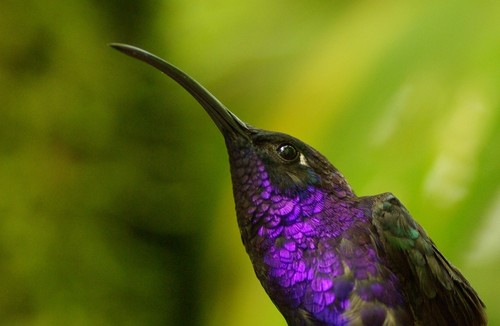
14-15 cm (5.5-6 in) long
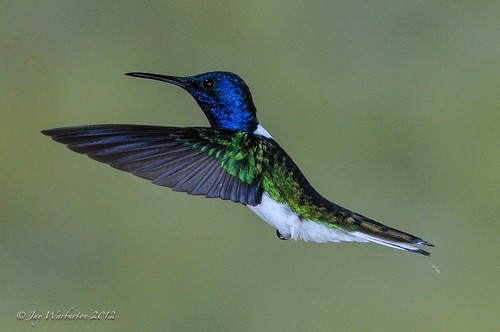
White-necked Jacobin
11-12 cm (4.3-4.7 in) long
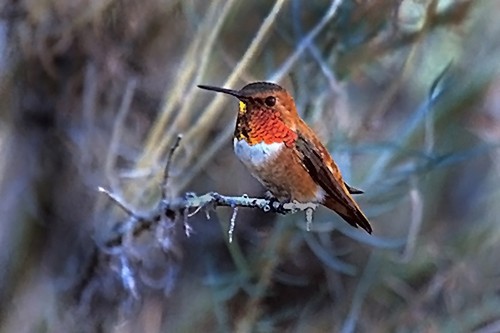
Rufous Hummingbird
8-9 cm (3-3.5 in) long, 11 cm wingspan
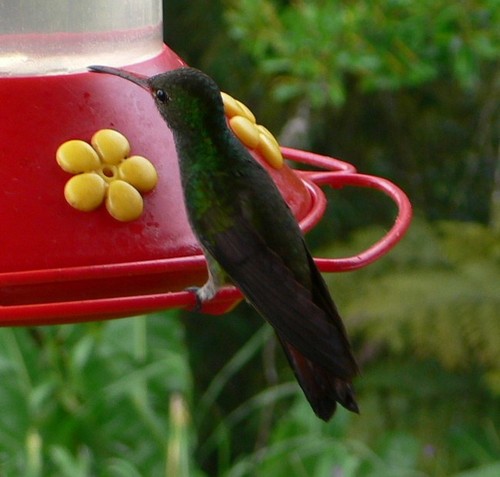
Rufous-tailed Hummingbird
10-11.5 cm (4-4.5 in) long
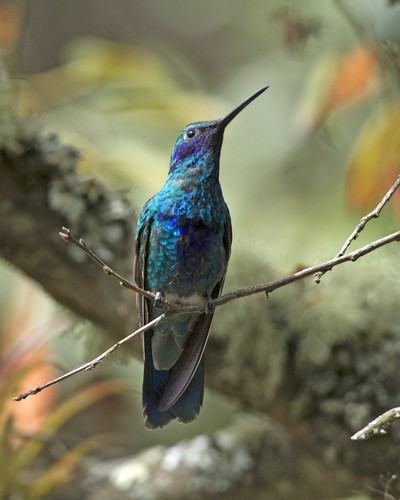
Sparkling Violetear
13-14 cm (5-5.5 in) long including bill
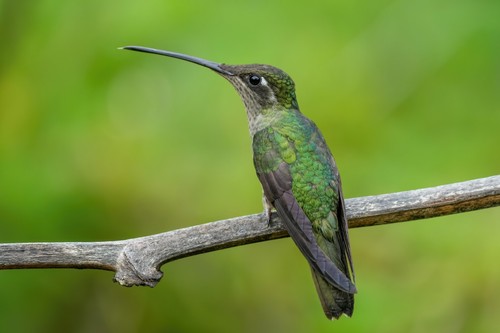
Rivoli's Hummingbird
11-14 cm (4.5-5.5 in) long, 17-18 cm wingspan
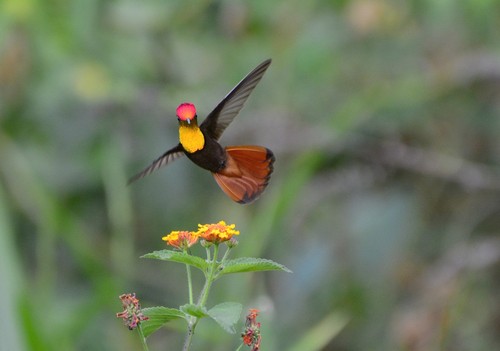
Ruby-topaz Hummingbird
7.5-9 cm (3-3.5 in) long
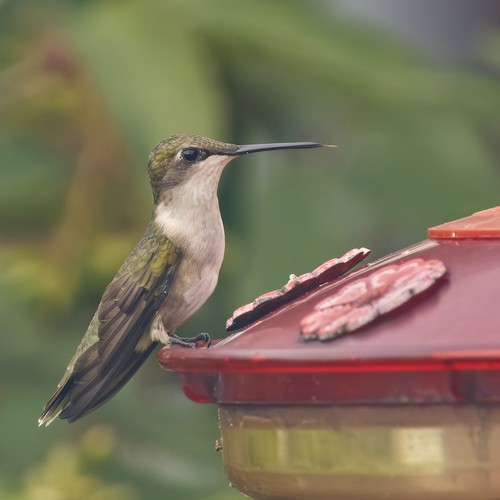
Ruby-throated Hummingbird
7-9 cm (3-3.5 in) long, 8-11 cm wingspan
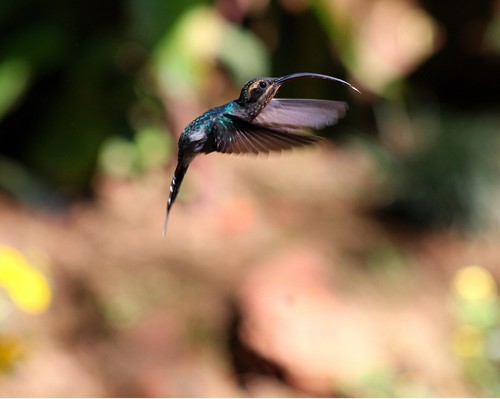
Green Hermit
15-16 cm (6-6.3 in) long including elongated central tail feathers
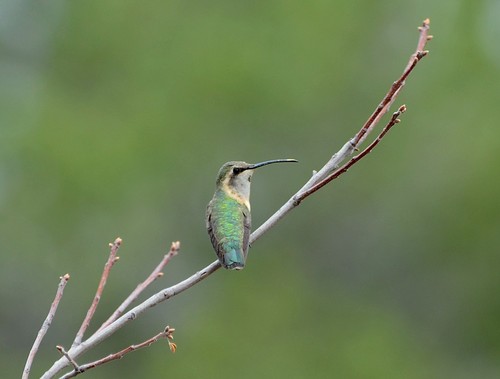
Lucifer Hummingbird
8.5-9.5 cm (3.5 in) long, 11 cm wingspan
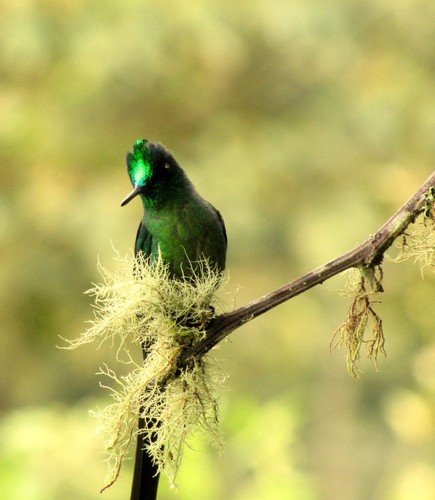
Long-tailed Sylph
males 18-19 cm (7-7.5 in) including tail; females 9-10 cm (3.5-4 in)