
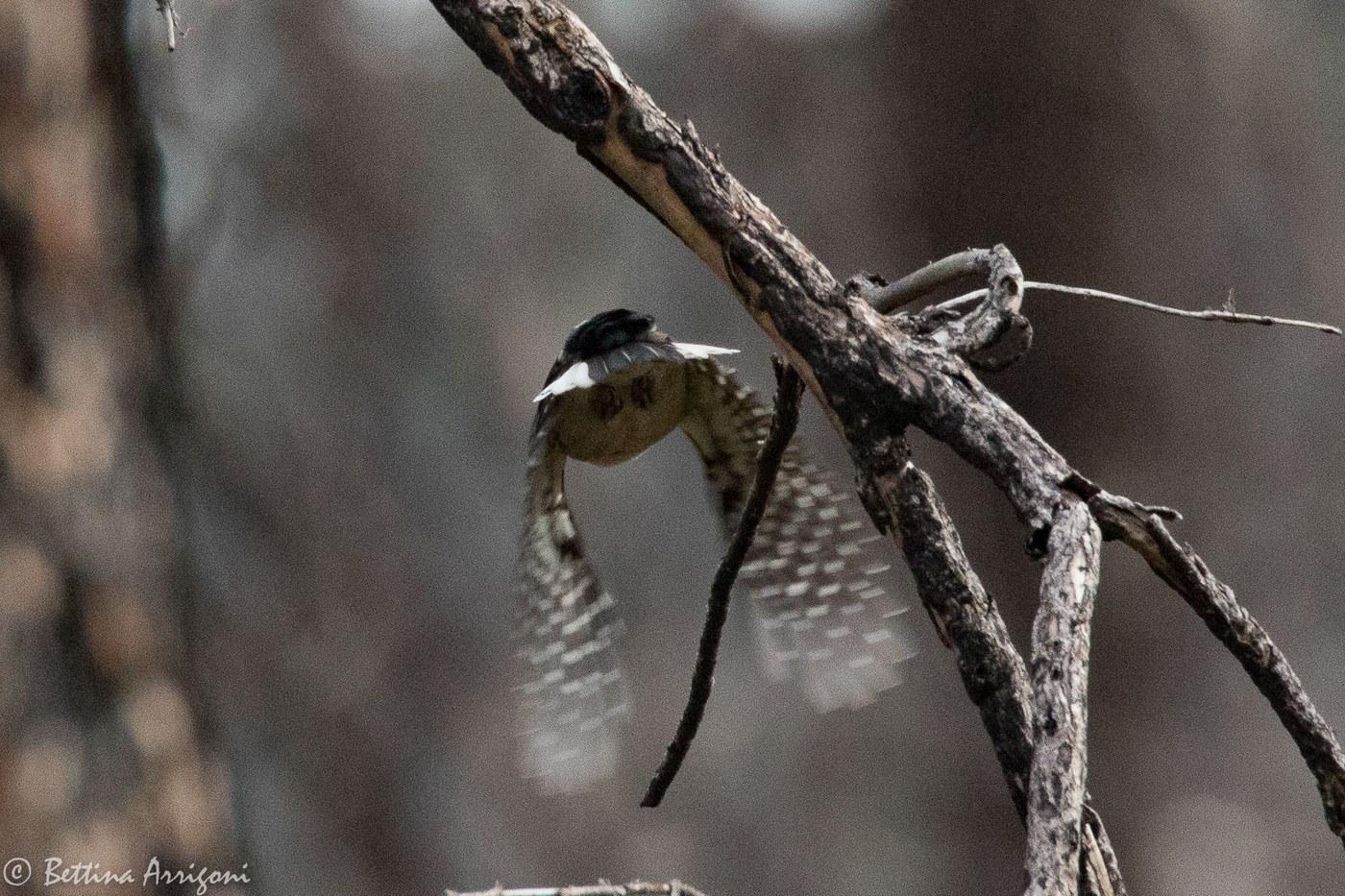
American Three-toed Woodpecker
Picoides dorsalis
A boreal woodpecker with a barred black-and-white back, three toes per foot, and a taste for beetle-infested spruce.
- Size
- 20-23 cm (8-9 in) long, 38-40 cm wingspan
- Habitat
- boreal and subalpine coniferous forests, especially spruce and fir
- Type
- woodpecker
Spotted a bird like this?
Identify any bird from a photo, free.
Overview
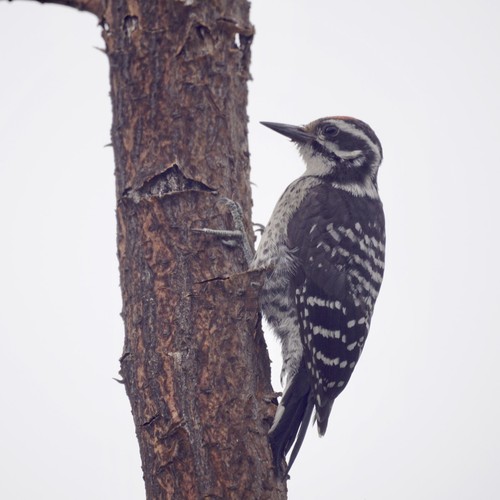
The American Three-toed Woodpecker is a small, boreal woodpecker with a black-and-white barred back, white underparts, and dark, black-barred flanks. It closely resembles the Black-backed Woodpecker but shows a barred rather than solid black back. Males sport a yellow crown patch, while females have a plain black crown.
As its name suggests, this species has only three toes on each foot, an unusual trait among woodpeckers that is thought to improve leverage while clinging to bark and delivering powerful blows.
How to identify it
Key Field Marks
- Barred black-and-white back (not solid black)
- White underparts with black barring on the flanks
- Black-and-white striped face
- Males show a yellow crown patch; females have solid black crowns
- Only three toes per foot
Similar Species
- Black-backed Woodpecker has a solid, unbarred black back and slightly larger size, and often occurs in more recently burned habitat.
- Downy and Hairy Woodpeckers have four toes and a white back stripe rather than an overall barred pattern.
Habitat & range
Habitat
This species inhabits mature and old-growth coniferous forest, particularly spruce and fir, including boreal lowlands and high-elevation subalpine forest, often near areas with standing dead or dying trees.
Range
It ranges across the boreal forest of Alaska and Canada, extending south through the Rocky Mountains, Cascades, and Sierra Nevada in the western United States.
Migration
American Three-toed Woodpeckers are largely non-migratory residents, though some individuals wander in response to local insect outbreaks.
Behavior & voice
Behavior
Like the Black-backed Woodpecker, this species flakes bark from dead and dying conifers to expose wood-boring beetle larvae, and will exploit trees killed by fire, flooding, or bark beetle outbreaks.
Voice
Calls include a sharp pik note and a descending rattle; drumming is a steady, even roll.
Feeding
The diet is dominated by beetle larvae, along with other insects and some tree sap and cambium.
Nesting
Pairs excavate a cavity in a dead or dying conifer; both parents incubate the 3-4 white eggs and share care of the young.
Frequently asked questions
How is the American Three-toed Woodpecker different from the Black-backed Woodpecker?
The Three-toed Woodpecker has a barred black-and-white back, while the Black-backed Woodpecker's back is solid black; both share yellow-crowned males and three toes per foot.
Where does the American Three-toed Woodpecker live?
It lives in boreal and high-elevation conifer forests across Alaska, Canada, and the mountainous western United States.
What does the American Three-toed Woodpecker eat?
It primarily eats wood-boring beetle larvae found under bark, along with other insects and some sap.
Why does it have only three toes?
The reduced toe count is thought to help the bird brace and lean back further while chiseling bark, improving striking power.
American Three-toed Woodpecker guides
In-depth guides for identifying, finding, and understanding American Three-toed Woodpecker.
Other birds you may enjoy
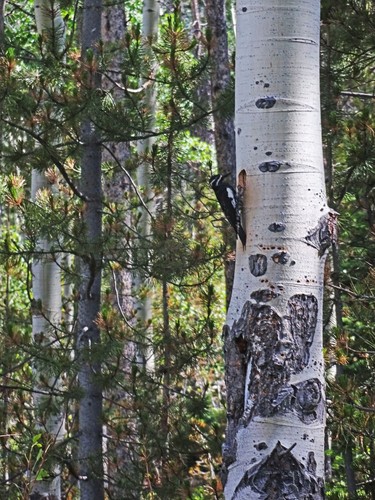
Williamson's Sapsucker
21-25 cm (8-10 in) long, 40-42 cm wingspan
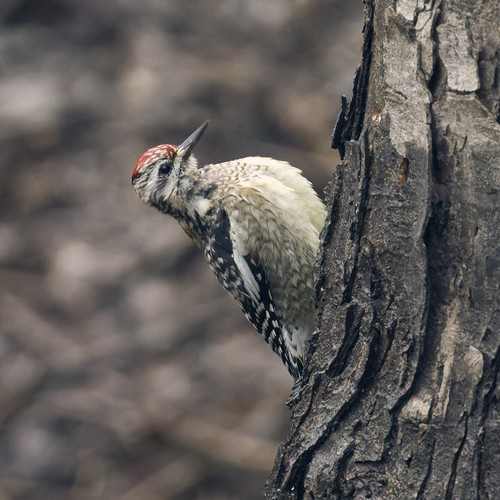
Yellow-bellied Sapsucker
18-21 cm (7-8.3 in) long, 34-40 cm wingspan
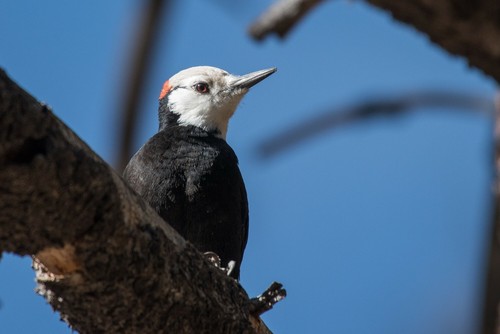
White-headed Woodpecker
20-23 cm (8-9 in) long, 38-41 cm wingspan
Red-headed Woodpecker
19-23 cm (7.5-9 in) long, 42-46 cm wingspan
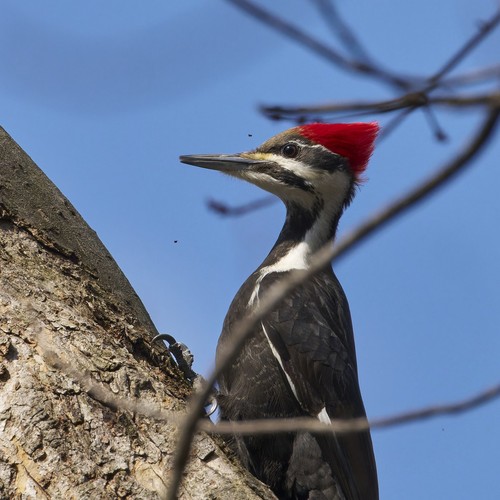
Pileated Woodpecker
40-49 cm (16-19 in) long, 66-75 cm wingspan
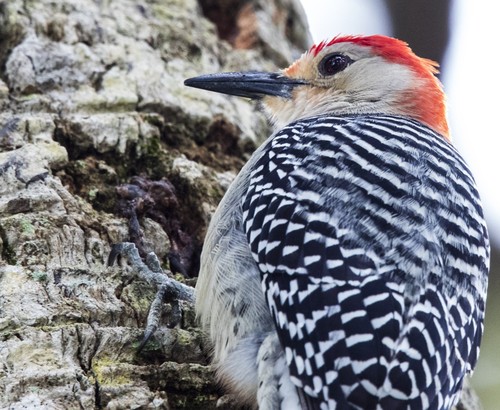
Red-bellied Woodpecker
22-27 cm (9-10.5 in) long, 38-46 cm wingspan
Nuttall's Woodpecker
18-20 cm (7-8 in) long, 34-38 cm wingspan
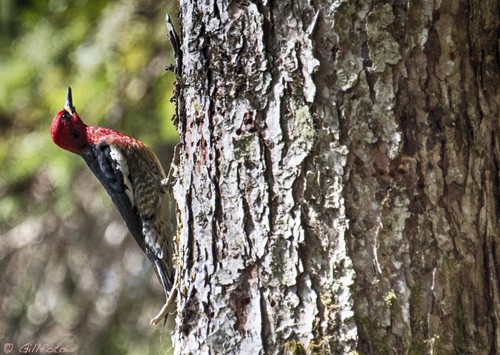
Red-breasted Sapsucker
20-23 cm (8-9 in) long, 34-40 cm wingspan
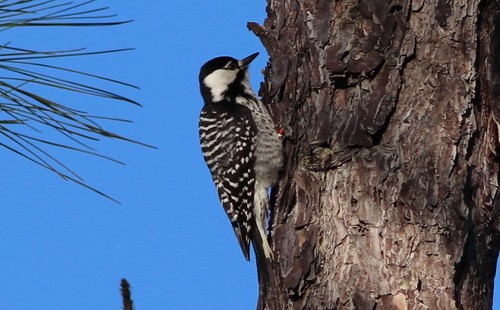
Red-cockaded Woodpecker
20-23 cm (8-9 in) long, 35-38 cm wingspan
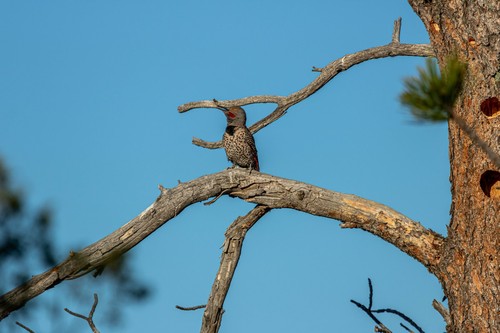
Northern Flicker
28-36 cm (11-14 in) long, 42-51 cm wingspan
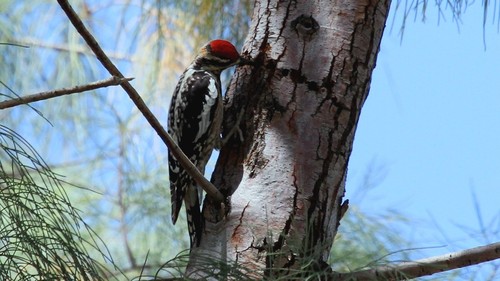
Red-naped Sapsucker
19-21 cm (7.5-8.3 in) long, 34-40 cm wingspan
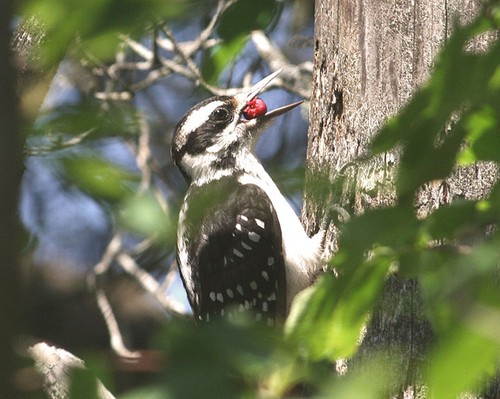
Hairy Woodpecker
23-26 cm (9-10 in) long, 33-41 cm wingspan