
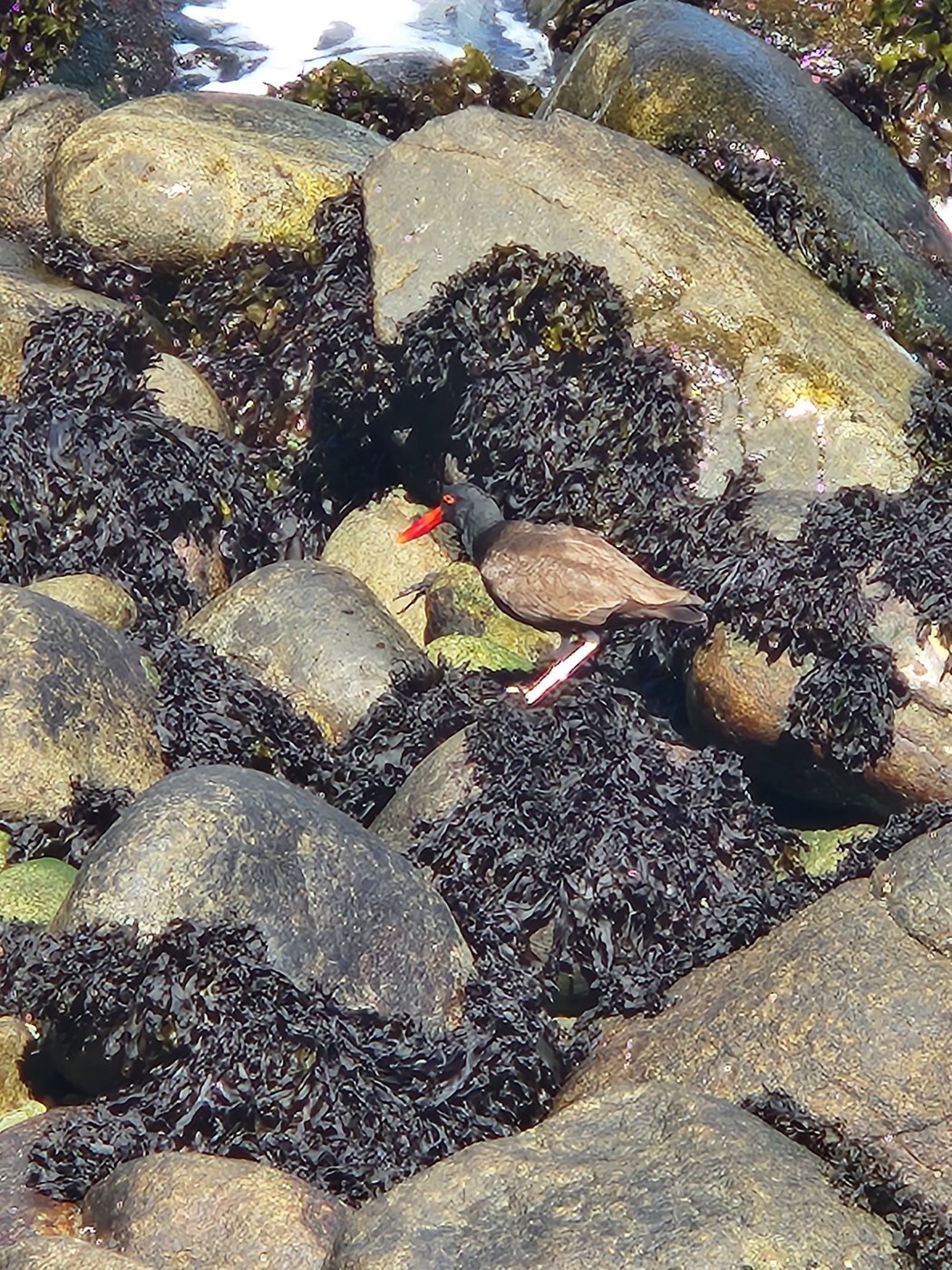
American Oystercatcher
Haematopus palliatus
A large, boldly patterned coastal shorebird with a long, bright orange-red bill built for prying open shellfish.
- Size
- 40-44 cm (16-17 in) long, wingspan 78-89 cm
- Habitat
- sandy beaches, salt marshes, and rocky or oyster shorelines along the coasts of the Americas
- Type
- shorebird
Spotted a bird like this?
Identify any bird from a photo, free.
Overview
The American Oystercatcher is a large, unmistakable shorebird with a blackish-brown head and upper breast, a dark brown back and wings, and white underparts. Its most striking feature is a long, straight, laterally flattened, bright orange-red bill, matched by pale pink legs and a yellow eye ringed in orange.
A conspicuous and noisy resident of coastal beaches and oyster reefs, it is one of the largest and most recognizable shorebirds of the Atlantic and Gulf coasts.
How to identify it
Key field marks
- Black head and upper breast
- Brown back and wings, white underparts
- Long, straight, bright orange bill
- Pale pink legs
- Yellow eye with an orange eye-ring
Similar species
The Black Oystercatcher of the Pacific coast is entirely sooty-black with no white. The Eurasian Oystercatcher has a more sharply defined black-and-white pattern and occupies a largely non-overlapping range.
Habitat & range
Habitat
Sandy and shelly beaches, salt marshes, and oyster reefs.
Range and migration
Found along the Atlantic and Gulf coasts of North America, and the Pacific and Atlantic coasts of South America. Northern populations migrate south along the coast for winter, while many populations are resident.
Behavior & voice
Behavior
Forages on tidal flats and oyster bars at low tide, using its strong, chisel-like bill to pry open or hammer through the shells of shellfish.
Voice
Loud, piercing 'wheep' calls, especially in flight.
Feeding
Oysters, clams, mussels, and other marine invertebrates.
Nesting and breeding
Territorial pairs nest in a simple scrape in sand or shell on open beaches or salt marsh islands.
Frequently asked questions
What does an American Oystercatcher eat?
Mainly oysters, clams, mussels, and other shellfish and marine invertebrates, pried open or hammered with its strong bill.
Why is the American Oystercatcher's bill orange?
The bright color likely aids in visual signaling and mate or territory displays, while its flattened, chisel shape is adapted for opening shellfish.
How is the American Oystercatcher different from the Black Oystercatcher?
The American Oystercatcher has a black head with a white belly and back, while the Black Oystercatcher is entirely sooty black.
Where do American Oystercatchers nest?
In simple scrapes on open sandy or shelly beaches and salt marsh islands along the coast.
Are American Oystercatchers threatened?
They are Least Concern overall but face pressures from beach development, disturbance, and predation, and are a conservation priority in parts of their range.
American Oystercatcher guides
In-depth guides for identifying, finding, and understanding American Oystercatcher.
Other birds you may enjoy
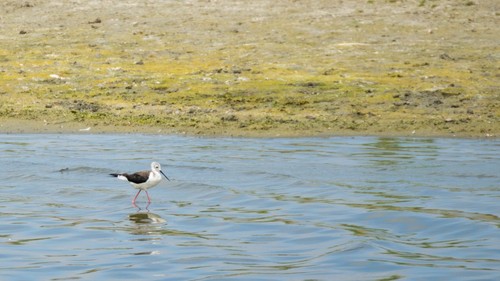
Black-winged Stilt
33-36 cm (13-14 in) long, wingspan 67-83 cm
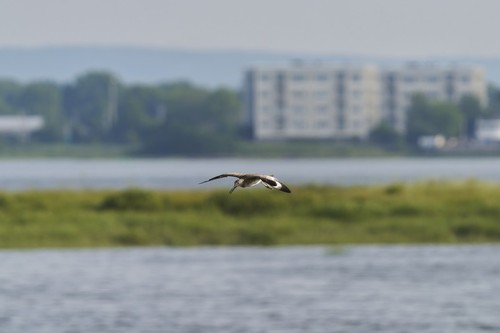
Willet
33-41 cm (13-16 in) long, 65-70 cm wingspan
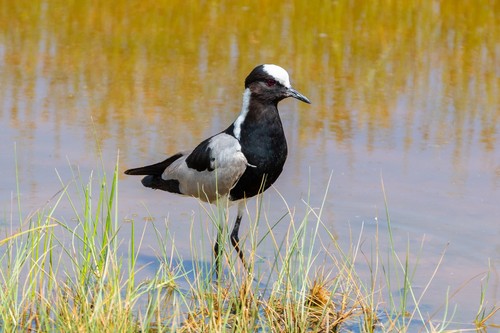
Blacksmith Lapwing
Body length about 30 cm; wingspan 55-65 cm
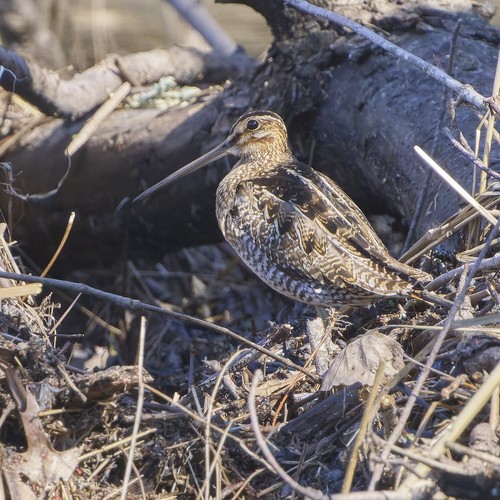
Wilson's Snipe
25-30 cm (10-12 in) long, 39-45 cm wingspan
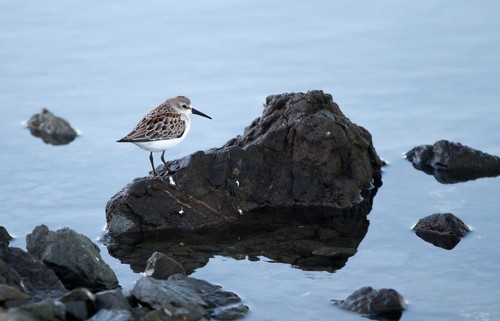
Western Sandpiper
14-17 cm (5.5-6.7 in) long, 28-37 cm wingspan
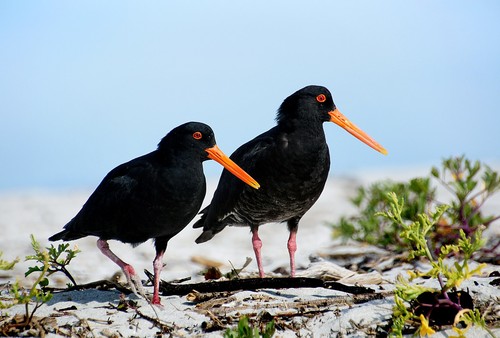
Variable Oystercatcher
46-49 cm (18-19 in) long
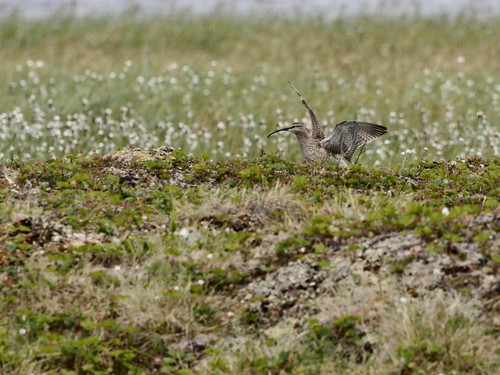
Whimbrel
40-46 cm (16-18 in) long, 76-89 cm wingspan
Wilson's Phalarope
22-24 cm (8.5-9.5 in) long, 37-43 cm wingspan
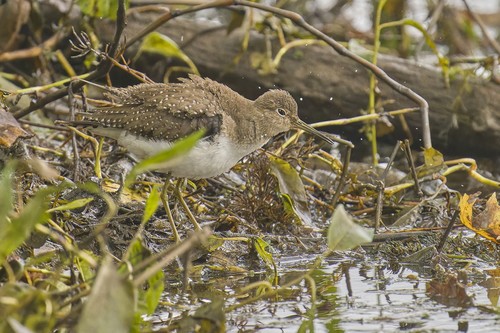
Solitary Sandpiper
19-23 cm (7.5-9 in) long, 50-56 cm wingspan
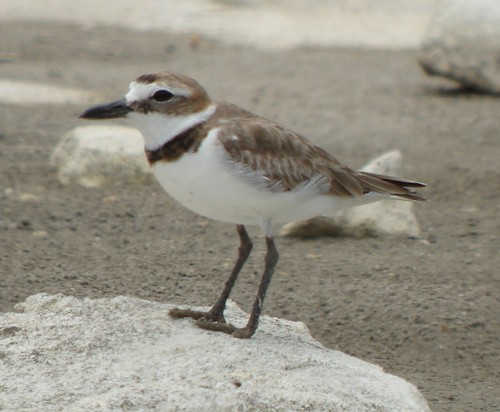
Wilson's Plover
17-19 cm (6.7-7.5 in) long, 45-50 cm wingspan
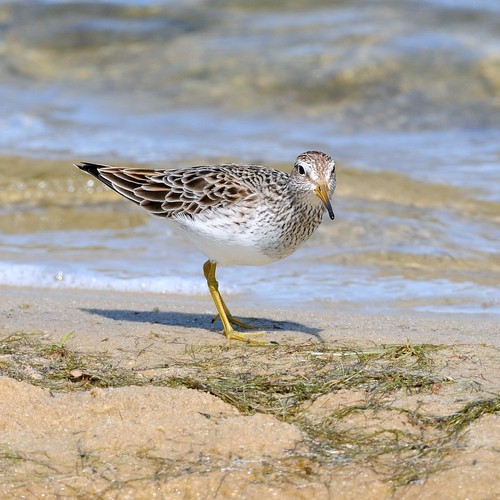
Pectoral Sandpiper
19-23 cm (7.5-9 in) long, 43-49 cm wingspan
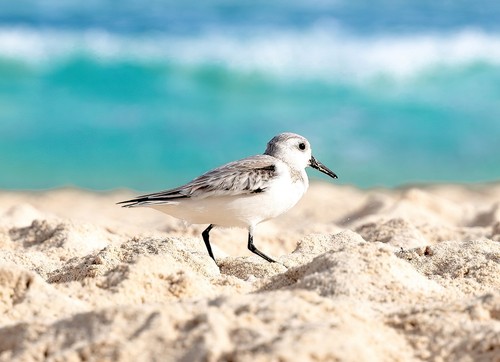
Sanderling
18-20 cm (7-8 in) long, 40-43 cm wingspan