
American Oystercatcher Identification Guide
A large, boldly patterned shorebird with a black head, brown back, white belly, and a long, bright orange-red chisel bill used to pry open shellfish on coastal beaches and oyster bars.
Read the full American Oystercatcher encyclopedia entry →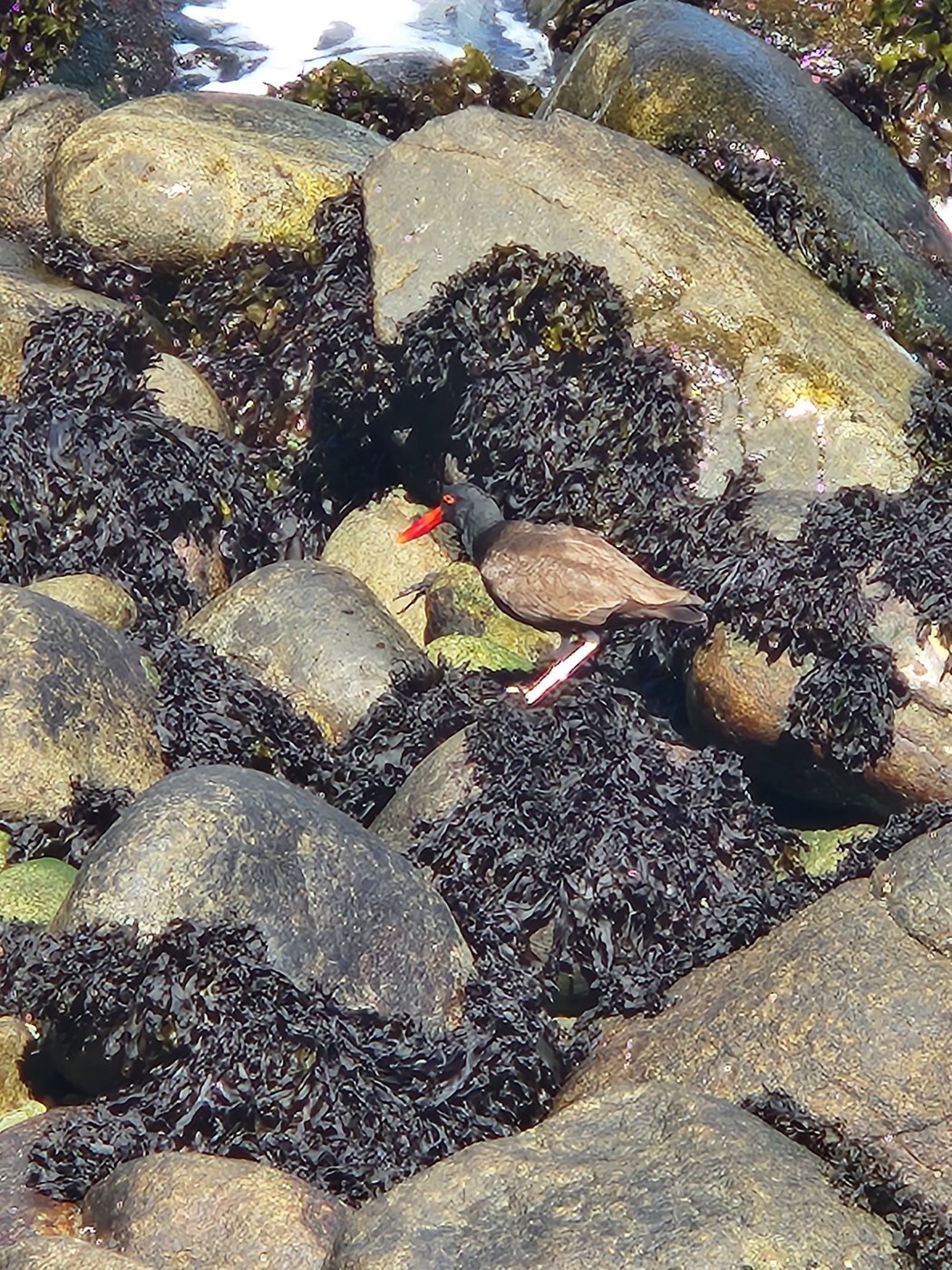
Key Field Marks
- Size: Large, heavy-bodied shorebird, about 40–44 cm (16–17 in).
- Head & upper breast: Solid black, sharply demarcated from the white lower breast and belly.
- Back & wings: Dark brown upperparts with a bold white wing stripe visible in flight; white uppertail coverts/rump.
- Bill: Long, thick, laterally flattened, and bright orange-red — a chisel-like tool used to pry open or hammer through bivalve shells.
- Eyes: Bright yellow iris with a bold orange-red eye-ring.
- Legs: Pale dull pink.
Separating Similar Species
- Black Oystercatcher: Restricted to the Pacific coast (no range overlap with American Oystercatcher along the Atlantic/Gulf), and is entirely sooty-black on the body with no white — the two species are easily told apart by both plumage and range.
- Hybrid/intergrade birds: Where American and Black Oystercatcher ranges could theoretically approach (rare), intermediate plumage patterns have been documented, but this is a minor consideration for most observers given the species' largely separate coastlines.
Habitat, Range & Season
Found along sandy beaches, barrier islands, salt marshes, and oyster reefs on the Atlantic and Gulf coasts of North America, from the northeastern U.S. south through Mexico, Central America, and the Caribbean, with disjunct populations also in parts of South America. Northern breeding populations are partially migratory, moving south in winter, while birds in the southern part of the range tend to be resident year-round.
Behavior & Voice
Forages on oyster bars, mudflats, and sandy beaches for bivalves (oysters, mussels, clams), which it opens either by stabbing between the valves to sever the adductor muscle or by hammering through the shell. Also eats other invertebrates such as marine worms. Conspicuous and often noisy, especially when defending a nest or territory; usually seen in pairs or small family groups, sometimes in larger flocks outside the breeding season.
- Call: A loud, piercing "wheep" or "kleep," often repeated persistently, especially in alarm.
Frequently asked questions
How does the American Oystercatcher open shellfish?
It uses its long, laterally flattened orange-red bill either to stab between the valves of a bivalve and sever the muscle holding the shell closed, or to hammer directly through the shell.
How can I tell American Oystercatcher from Black Oystercatcher?
American Oystercatcher has a white belly and breast contrasting with its black head and brown back, while Black Oystercatcher is entirely sooty-black. Range also separates them, as Black Oystercatcher occurs only on the Pacific coast.
Where is the best habitat to find American Oystercatchers?
Look on sandy beaches, barrier islands, salt marshes, and especially oyster bars and shellfish beds along the Atlantic and Gulf coasts.
Do American Oystercatchers migrate?
Northern breeding populations move south for winter, while birds in warmer, southern parts of the range are largely year-round residents.