
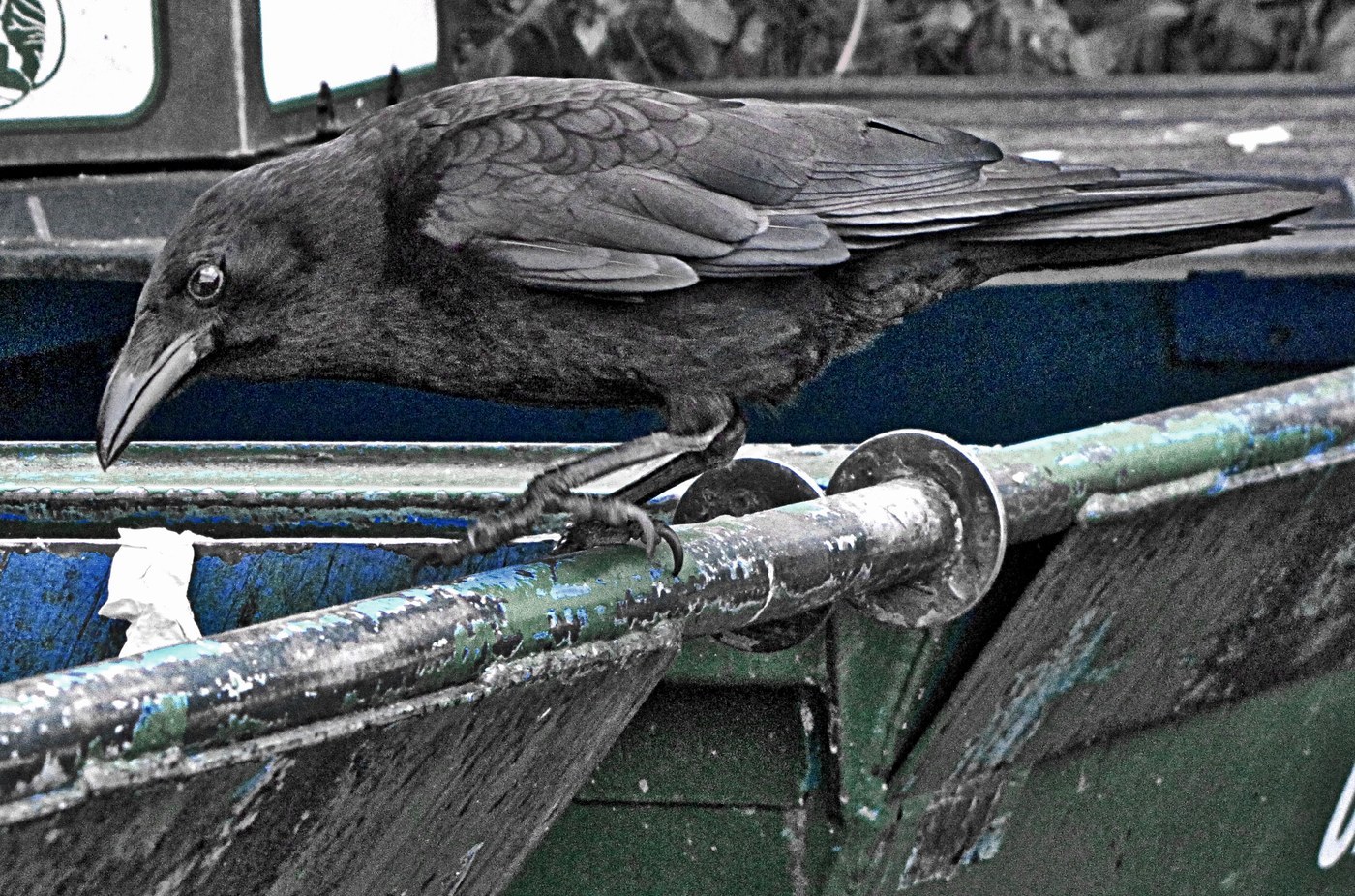
American Crow
Corvus brachyrhynchos
A highly intelligent, all-black corvid famous for its adaptability, problem-solving, and complex social behavior.
- Size
- 40-50 cm (16-20 in) long, 85-100 cm wingspan
- Habitat
- farmland, woodlands, urban and suburban areas, parks, and open country
- Type
- songbird
Spotted a bird like this?
Identify any bird from a photo, free.
Overview
The American Crow is a large, entirely glossy black bird with a stout bill, black legs, and dark eyes, found across nearly all of North America. It is one of the most familiar and widespread birds on the continent, thriving in habitats ranging from farmland and forest edges to city parks and parking lots.
Crows are renowned for their intelligence, exhibiting tool use, problem-solving abilities, and complex social structures, including the recognition of individual human faces. They live in extended family groups, with young from previous years often remaining with their parents to help raise subsequent broods.
How to identify it
Key Field Marks
- Entirely glossy black plumage, including bill, legs, and eyes
- Stout, straight bill
- Fan-shaped tail in flight, with steady, direct wingbeats
- Large size compared to blackbirds and grackles
Similar Species
- Common Raven is noticeably larger with a heavier, curved bill, a wedge-shaped tail in flight, and a deeper, croaking voice compared to the crow's higher-pitched caw.
- Fish Crow is nearly identical in appearance but smaller, with a distinctive nasal, two-syllable uh-uh call, and is restricted to coastal and riverine areas of the eastern and southeastern United States.
- Chihuahuan Raven shows white feather bases on the neck (visible when wind ruffles feathers) and inhabits arid Southwest grasslands.
Habitat & range
Habitat
American Crows are highly adaptable, occupying farmland, open woodlands, forest edges, city parks, suburban neighborhoods, and landfills.
Range
This species is found across nearly all of the contiguous United States and southern Canada, with populations extending into northern Mexico.
Migration
Northern populations migrate south for winter, often forming enormous communal roosts of thousands to millions of birds, while southern populations are largely resident year-round.
Behavior & voice
Behavior
American Crows are highly social, living in family groups and often gathering in large winter roosts. They are known for cooperative breeding, mobbing predators such as hawks and owls, and sophisticated problem-solving, including using tools and remembering human faces for years.
Voice
The familiar call is a loud, harsh caw-caw-caw, with a wide repertoire of other calls used for different social contexts, including rattles, coos, and clicks.
Feeding
Crows are opportunistic omnivores, eating insects, earthworms, small vertebrates, eggs, seeds, fruit, carrion, and human food waste; they often cache food for later use.
Nesting
Pairs build a bulky stick nest high in a tree, often aided by non-breeding helpers from previous broods; the female incubates 3-9 blue-green, brown-spotted eggs while the group defends the nest.
Frequently asked questions
How do you tell an American Crow from a Common Raven?
Ravens are larger with a heavier, curved bill, a wedge-shaped tail, shaggy throat feathers, and a deep croaking voice, while crows are smaller with a fan-shaped tail and a higher-pitched caw.
Are American Crows intelligent?
Yes, they are considered among the most intelligent birds, capable of tool use, problem-solving, and recognizing individual human faces over multiple years.
What do American Crows eat?
They are omnivorous and eat insects, small animals, seeds, fruit, carrion, and human food scraps.
Do American Crows live in family groups?
Yes, they often live in extended family groups, with young from previous years staying to help raise new broods.
Why do crows gather in large flocks in winter?
They form large communal roosts for warmth, safety in numbers, and information sharing about food sources, sometimes numbering in the thousands.
American Crow guides
In-depth guides for identifying, finding, and understanding American Crow.
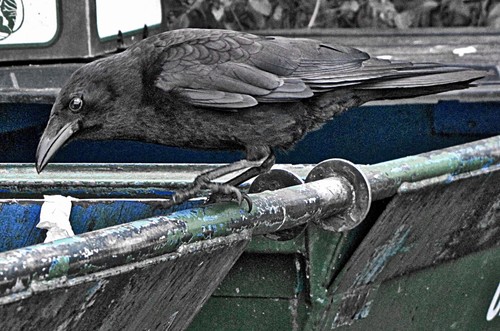
American Crow identified by the community
Real birds identified with Bird Identifier.

Other birds you may enjoy

Black Redstart
13-14.5 cm (5.1-5.7 in) long, 23-26 cm wingspan

Black-throated Sparrow
12-14 cm (4.7-5.5 in) long, about 19-20 cm (7.5-8 in) wingspan

Greater Bird-of-paradise
Body about 43 cm; males with additional flank plumes up to 50 cm and long tail wires

Blue Tit
11-12 cm (4.3-4.7 in) long, 17-20 cm wingspan

Red-billed Quelea
11.5–13 cm long, wingspan about 20–22 cm
White-plumed Antbird
13-14 cm (5-5.5 in) long

Pyrrhuloxia
19-22 cm (7.5-8.7 in) long, 30 cm wingspan

Blue-gray Tanager
16-18 cm (6-7 in) long

Blackburnian Warbler
11-13 cm (4.3-5.1 in) long, 20-22 cm wingspan

Bluethroat
13-14 cm (5.1-5.5 in) long, 20-22 cm wingspan

Eurasian Nuthatch
12-14.5 cm (4.7-5.7 in) long, 22.5-27 cm wingspan

Wood Thrush
19-21 cm (7.5-8.3 in) long, about 33 cm (13 in) wingspan