American Crow Identification Guide
A large, all-black, highly social bird best separated from the similar Common Raven by its smaller size, squared tail, and simple 'caw' call.
Read the full American Crow encyclopedia entry →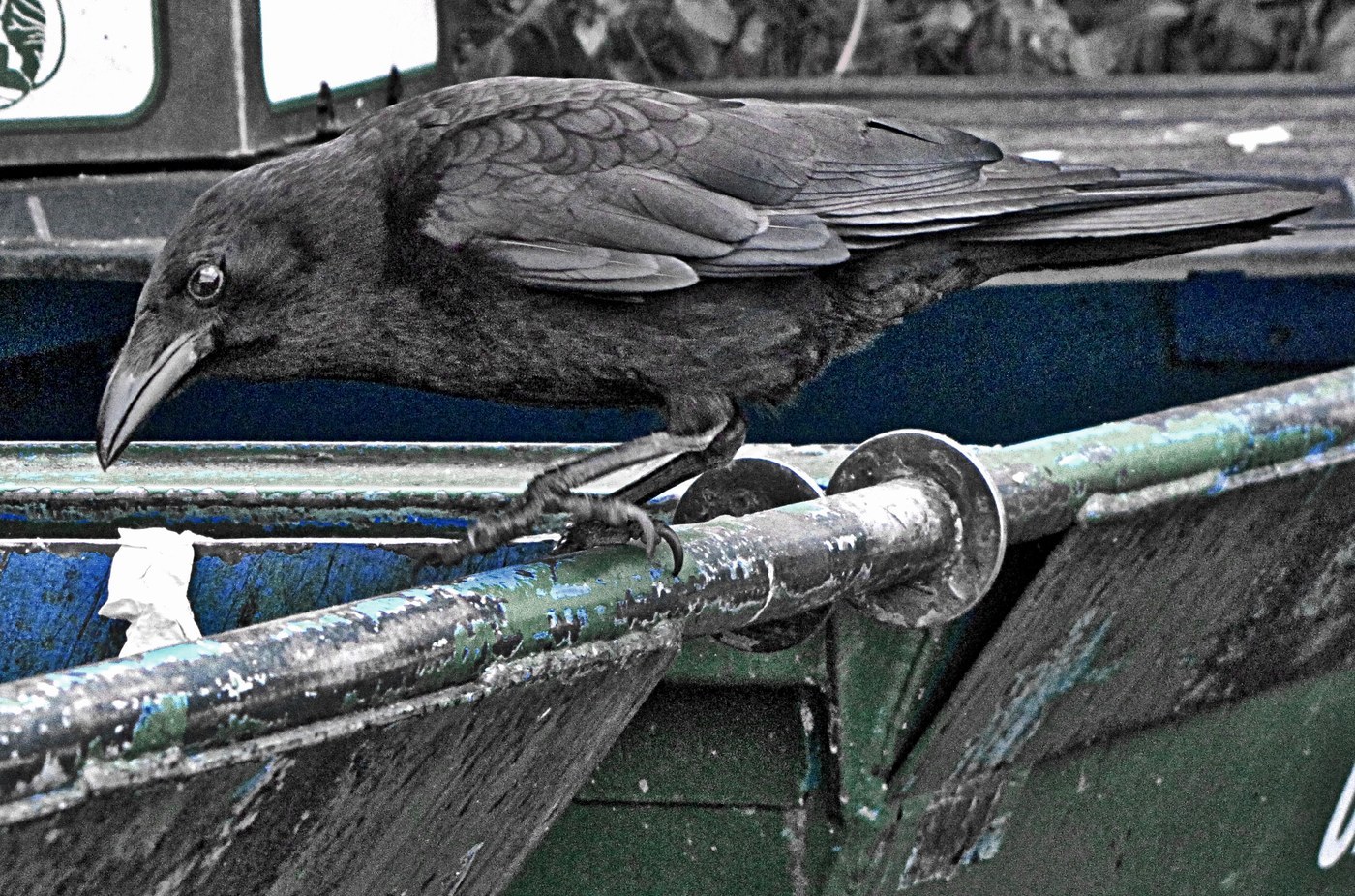
Key Field Marks
- Size: Large songbird, about 40–50 cm (16–20 in) long, entirely glossy black including bill, legs, and eyes.
- Shape: Sturdy body, moderately long bill, and a squared or fan-shaped tail in flight (not wedge-shaped).
- Flight: Steady, even wingbeats; typically flies in a fairly straight, direct path rather than soaring for long stretches.
- Plumage: Uniform glossy black with a slight bluish-purple sheen in good light; no white or gray in the plumage of adults.
Separating Similar Species
- Common Raven: Noticeably larger and heavier-billed, with shaggy throat feathers ("hackles"), a wedge-shaped tail visible in flight, and frequent soaring on flat or slightly upswept wings; voice is a deep, croaking "gronk" rather than a crisp "caw."
- Fish Crow: Smaller and more slender-billed than American Crow, with a distinctly nasal, two-syllable "car-car" or "uh-uh" call (versus the American Crow's clear "caw"); found mainly along the Atlantic and Gulf coasts and major river corridors in the eastern and southeastern U.S., often alongside American Crows where ranges overlap.
- Chihuahuan Raven: A smaller raven overlapping with American Crow in parts of the southwestern U.S. and Mexico; shows white (not gray) feather bases at the base of the neck hackles, visible only when feathers are ruffled by wind.
Habitat, Range & Season
Extremely adaptable, occurring in open woodlands, farmland, city parks, suburban neighborhoods, and virtually any habitat with scattered trees across most of North America. Non-migratory or only partially migratory in the north — northern populations may move south in winter, when American Crows often gather in enormous communal night roosts numbering in the thousands.
Behavior & Voice
Highly intelligent and social, living in extended family groups and sometimes cooperating to mob predators such as hawks and owls. Omnivorous, eating insects, carrion, grain, fruit, and human food scraps; frequently seen foraging on the ground in open areas.
- Call: The familiar, clear "caw-caw-caw," along with a range of other rattles, clicks, and softer conversational notes within family groups.
Frequently asked questions
What is the easiest way to tell an American Crow from a Common Raven?
Look at the tail shape in flight (crow: squared/fan-shaped; raven: wedge-shaped), and listen to the call (crow: clear 'caw'; raven: deep, croaking 'gronk'). Ravens are also noticeably larger and bulkier-billed.
How do American Crows differ from Fish Crows?
The two look nearly identical, so voice is the most reliable clue: American Crow gives a clear 'caw,' while Fish Crow gives a distinctly nasal, two-note 'car-car' or 'uh-uh' call. Fish Crows also stick close to coasts and major rivers in the eastern U.S.
Do American Crows migrate?
Northern populations are partially migratory, moving south in winter and often forming huge communal roosts, while crows in milder climates tend to stay resident year-round.
Why do American Crows gather in large groups?
Crows are highly social, living in extended family groups that cooperate in raising young and mobbing predators, and forming very large communal roosts (sometimes thousands of birds) outside the breeding season, likely for safety and information-sharing.
American Crow identified by the community
Recent American Crow sightings identified with Bird Identifier.