
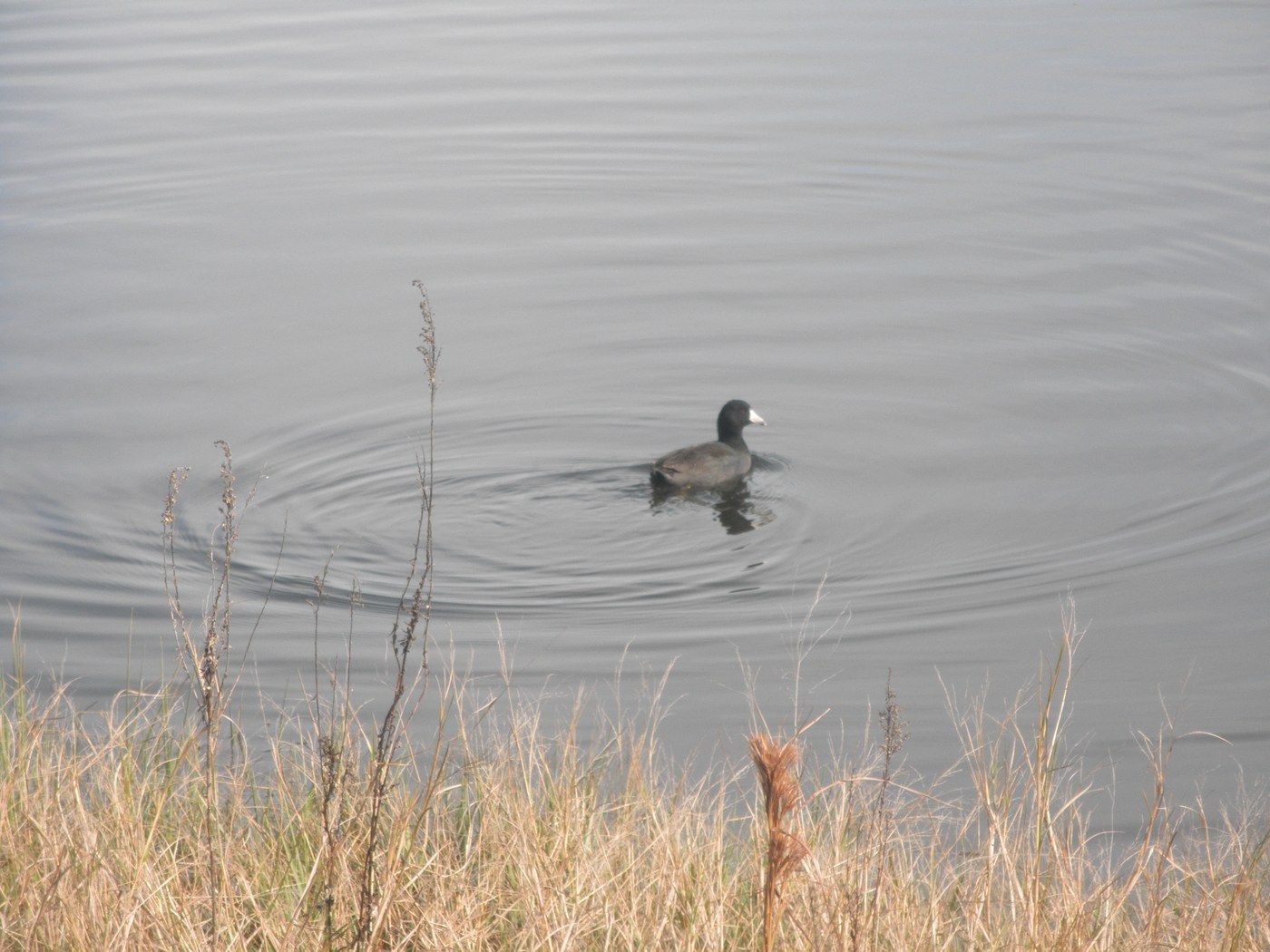
American Coot
Fulica americana
A stocky slate-grey marsh bird with a chalky white bill, often mistaken for a duck though it is actually a rail.
- Size
- 34-43 cm (13-17 in) long, wingspan 58-71 cm
- Habitat
- freshwater ponds, lakes, marshes, and slow-moving rivers across North America
- Type
- wading-bird
Spotted a bird like this?
Identify any bird from a photo, free.
Overview
The American Coot is a stocky, dark slate-grey to blackish waterbird with a rounded body, small head, and a distinctive short, chalky-white bill marked with a dark subterminal ring near the tip. A small reddish-brown frontal shield sits above the bill. Although it swims like a duck and is frequently mistaken for one, the American Coot actually belongs to the rail family, and its feet bear lobed, not webbed, toes.
Coots are common and conspicuous on ponds, lakes, and marshes throughout much of North America, often gathering in large numbers on open water outside the breeding season.
How to identify it
Key field marks
- Overall sooty-grey to blackish body plumage
- Short, chalky white bill with a dark band near the tip
- Small reddish-brown frontal shield
- Red eyes
- Greenish-yellow legs with lobed (not webbed) toes
- White patches under the tail, flashed while swimming
Similar species
Ducks have flattened, spatulate bills rather than the coot's narrow white bill, and true ducks lack the coot's characteristic head-bobbing swim. The Common Gallinule shows a red (not white) bill and frontal shield, along with a white flank stripe the coot lacks.
Habitat & range
Habitat
American Coots use freshwater ponds, lakes, marshes, slow rivers, and even golf course or city park ponds, wherever there is sufficient open water and emergent vegetation for cover.
Range and migration
Found across most of North America, from southern Canada through the United States into Mexico and Central America. Northern and interior populations migrate south for winter, while many populations in the southern and western United States are year-round residents.
Behavior & voice
Behavior
Gregarious, often forming large rafts of dozens to hundreds of birds on open water. Coots are notably aggressive and territorial during the breeding season, chasing off rivals and even their own older chicks.
Voice
A variety of grunting, cackling, and croaking calls.
Feeding
Feeds by diving, dabbling at the surface, and grazing on land, taking mostly aquatic vegetation and algae along with insects, snails, and small fish.
Nesting and breeding
Builds a floating nest platform anchored to marsh vegetation, typically laying large clutches of 8-12 eggs.
Frequently asked questions
Is an American Coot a duck?
No, despite its duck-like swimming habits, the American Coot is a member of the rail family and has lobed toes instead of webbed feet.
What is the white patch on a coot's forehead?
It's a bare frontal shield used in visual signaling of status and aggression toward rivals.
Why do coots bob their heads while swimming?
Head-bobbing is a byproduct of their paddling motion and may help them judge distance while moving.
Do American Coots migrate?
Northern and interior populations migrate south for winter, while many western and southern populations remain year-round.
What do American Coots eat?
Mostly aquatic vegetation and algae, supplemented with insects, snails, and small fish.
American Coot guides
In-depth guides for identifying, finding, and understanding American Coot.
Other birds you may enjoy
Demoiselle Crane
85-100 cm (33-39 in) long, 155-180 cm wingspan
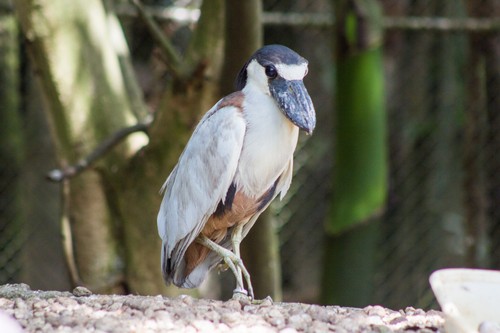
Boat-billed Heron
41-56 cm (16-22 in) long
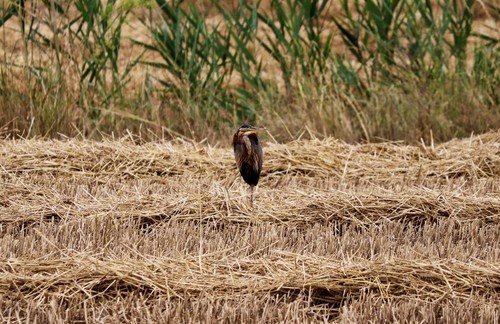
Purple Heron
78-90 cm (31-35 in) long, 120-152 cm wingspan
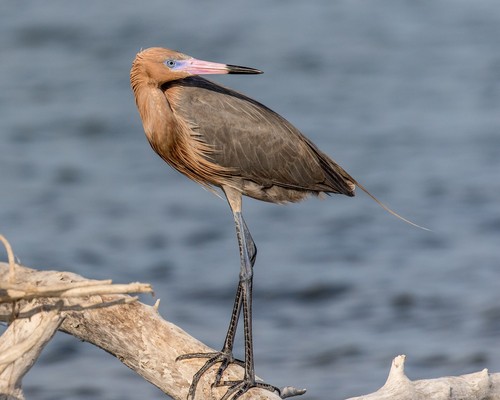
Reddish Egret
68-82 cm (27-32 in) long, 116-125 cm wingspan
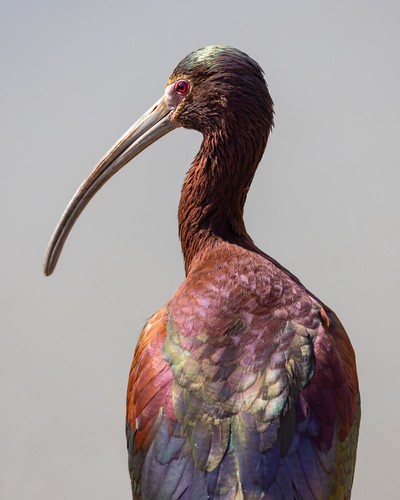
White-faced Ibis
46-56 cm (18-22 in) long, 88-93 cm wingspan
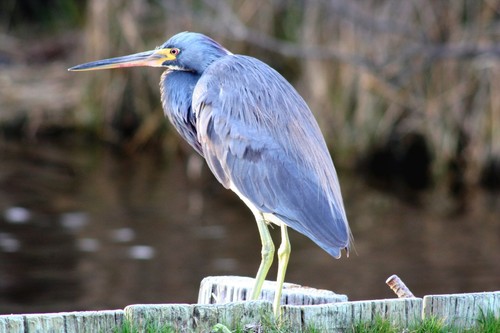
Tricolored Heron
61-76 cm (24-30 in) long, about 96 cm wingspan
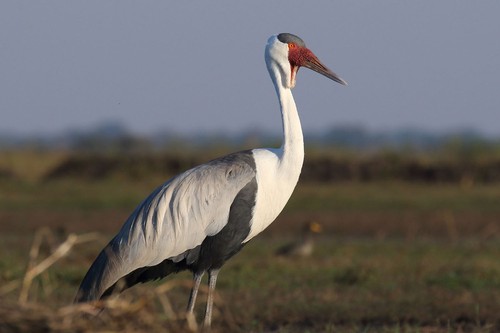
Wattled Crane
120-175 cm (47-69 in) tall, one of the tallest cranes, wingspan up to about 230 cm (7.5 ft)
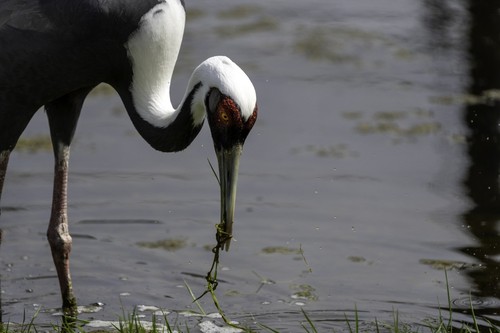
White-naped Crane
112-125 cm (44-49 in) long, 195-210 cm wingspan
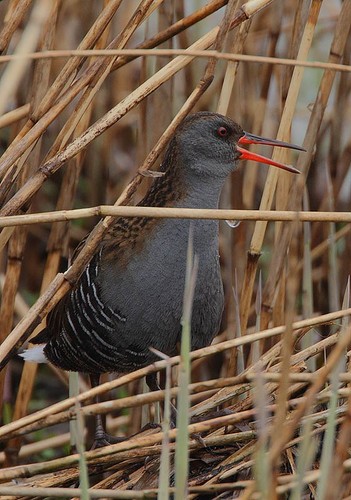
Water Rail
23-28 cm (9-11 in) long, wingspan 38-45 cm
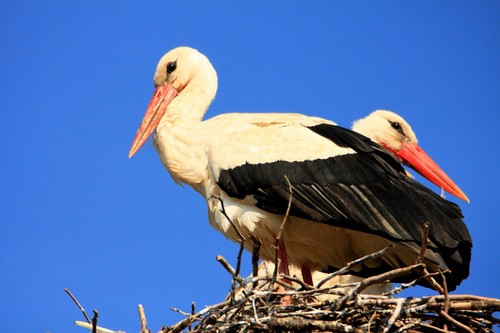
White Stork
100-125 cm (39-49 in) long, 155-215 cm wingspan
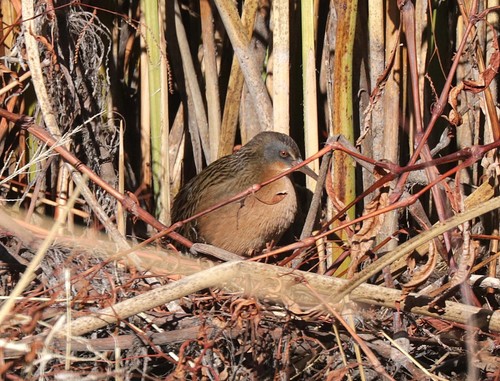
Virginia Rail
20-27 cm (8-11 in) long, wingspan 32-38 cm
Wattled Jacana
17-23 cm (7-9 in) long