
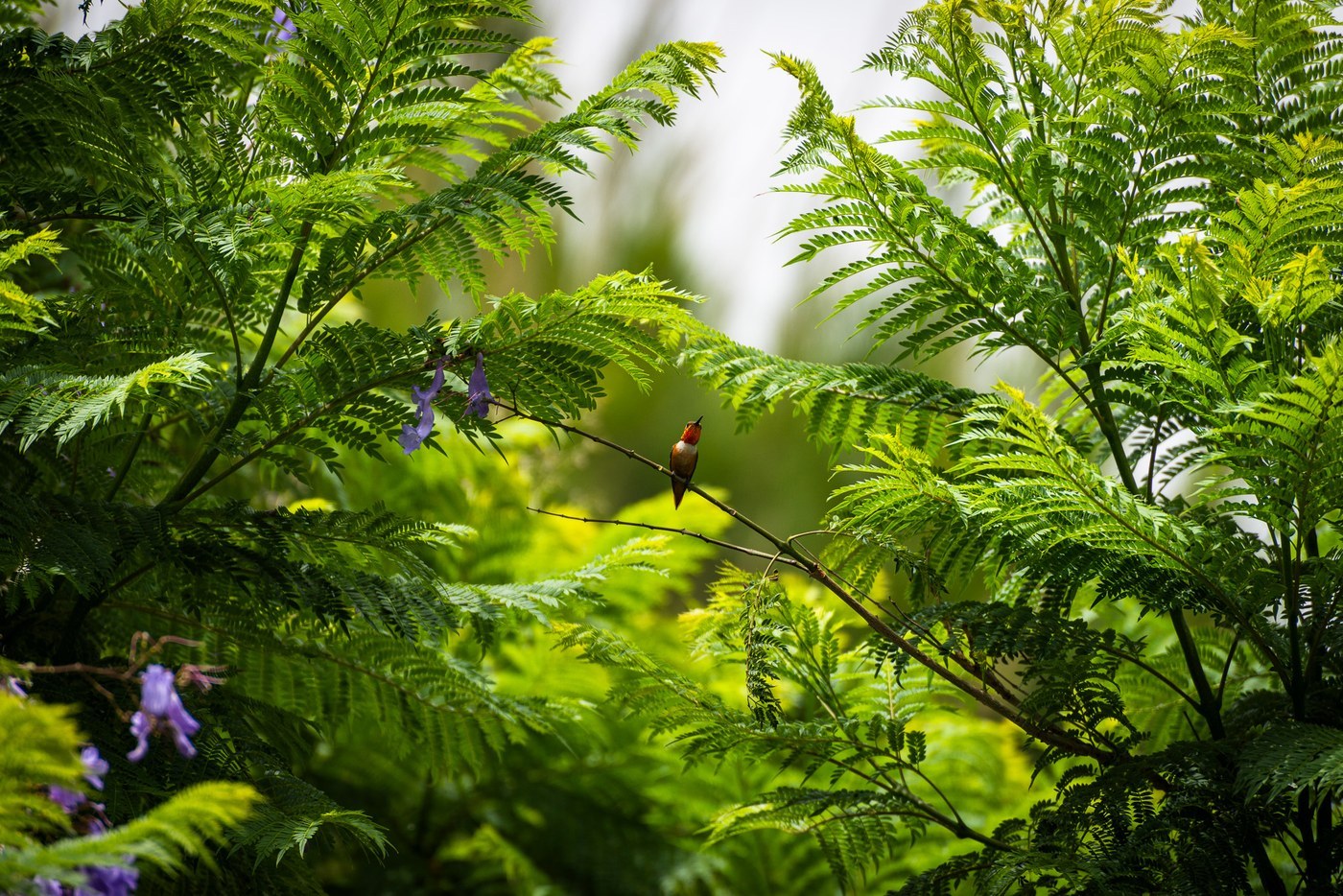
Allen's Hummingbird
Selasphorus sasin
A coastal California hummingbird nearly identical to the Rufous Hummingbird but confined to a much narrower range.
- Size
- 8-9.5 cm (3-3.5 in) long, 11 cm wingspan
- Habitat
- coastal scrub, chaparral, eucalyptus groves, and gardens
- Type
- hummingbird
Spotted a bird like this?
Identify any bird from a photo, free.
Overview
Allen's Hummingbird is a small, fiery hummingbird restricted almost entirely to a narrow strip along the Pacific coast, though a nonmigratory subspecies is resident on some southern California Channel Islands and now breeds on the adjacent mainland. Adult males typically show a green back and crown with rufous-orange flanks and tail, plus a brilliant orange-red gorget. Females and immatures closely resemble those of the Rufous Hummingbird, with a green back, rufous-washed flanks and tail base, and a lightly spotted throat.
Because Allen's and Rufous Hummingbirds overlap extensively in appearance, careful attention to range, season, and, when possible, tail feather shape is often needed for a confident identification.
How to identify it
Key Field Marks
- Male: green back and crown, orange-rufous flanks and tail, iridescent orange-red gorget
- Female/immature: green back, rufous tail base, lightly spotted throat — nearly identical to female Rufous Hummingbird
- Narrower, more pointed outer tail feathers than Rufous (best confirmed with a photo or in hand)
- Coastal southern range helps narrow down identification during breeding season
Similar Species
- Rufous Hummingbird is essentially indistinguishable in the field except by tail feather shape and a more solidly rufous back in most (not all) males.
- Broad-tailed and Calliope Hummingbirds have magenta, not orange, gorgets in males.
Habitat & range
Habitat
Allen's Hummingbirds favor coastal scrub, chaparral, eucalyptus and riparian woodland edges, and residential gardens close to the immediate coast.
Range
The migratory mainland population breeds in a narrow coastal strip from central California to southern Oregon; a separate, nonmigratory subspecies is resident on California's Channel Islands and portions of the adjacent mainland coast.
Migration
Migratory populations winter mainly in central Mexico, arriving on the breeding grounds notably early in the year, sometimes by December or January.
Behavior & voice
Behavior
Males are highly territorial around flowering shrubs and feeders and perform a distinctive J-shaped or oval display dive, ending in a sharp mechanical burst of sound from the wings and tail.
Voice
Calls include sharp, buzzy chip notes and chase calls similar to those of the Rufous Hummingbird.
Feeding
They feed on nectar from flowering shrubs such as currant, gooseberry, and eucalyptus, along with small insects taken in flight or gleaned from foliage.
Nesting
Females build a small camouflaged cup nest in shrubs or low trees, often reusing nest material from previous seasons, and typically raise the young alone.
Frequently asked questions
What is the difference between Allen's and Rufous Hummingbirds?
The two species look nearly identical; the most reliable distinction is the shape of the outer tail feathers, which is difficult to see without a close photo or the bird in hand.
Are Allen's Hummingbirds only found in California?
The migratory population breeds along a narrow coastal strip of California and southern Oregon, while a separate nonmigratory population lives year-round on the Channel Islands and nearby mainland coast.
Why is the Allen's Hummingbird considered vulnerable?
Its breeding range is unusually small and concentrated along the coast, making the species more susceptible to habitat loss and localized threats despite still being fairly common within that range.
When do Allen's Hummingbirds arrive on their breeding grounds?
They are among the earliest-arriving migratory hummingbirds, with some males reaching California as early as December or January.
Allen's Hummingbird guides
In-depth guides for identifying, finding, and understanding Allen's Hummingbird.
Other birds you may enjoy
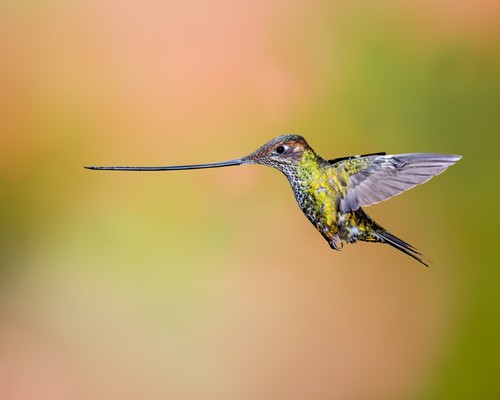
Sword-billed Hummingbird
Body about 13-15 cm (5-6 in) including a bill up to 10 cm long, the longest bill relative to body size of any bird
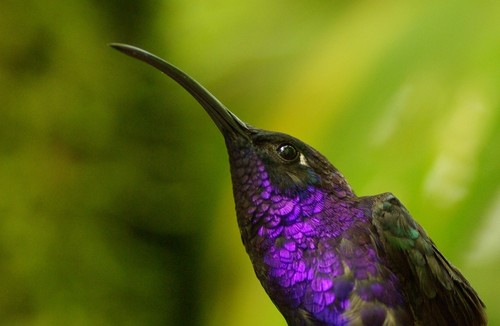
Violet Sabrewing
14-15 cm (5.5-6 in) long
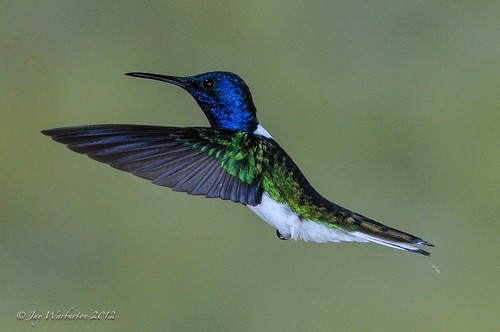
White-necked Jacobin
11-12 cm (4.3-4.7 in) long
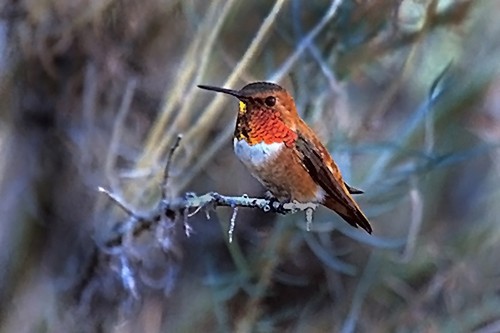
Rufous Hummingbird
8-9 cm (3-3.5 in) long, 11 cm wingspan
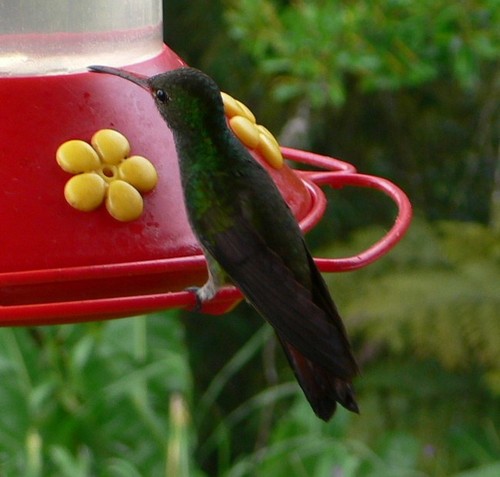
Rufous-tailed Hummingbird
10-11.5 cm (4-4.5 in) long
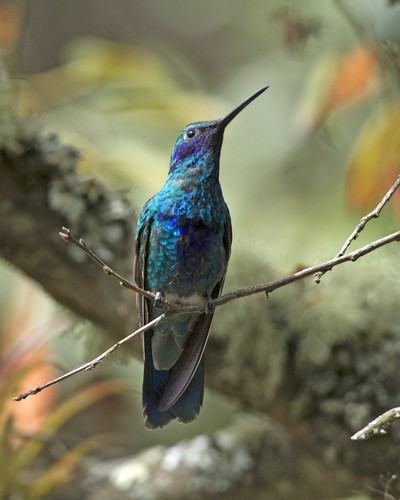
Sparkling Violetear
13-14 cm (5-5.5 in) long including bill
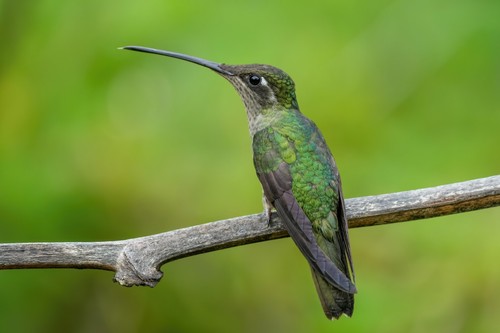
Rivoli's Hummingbird
11-14 cm (4.5-5.5 in) long, 17-18 cm wingspan
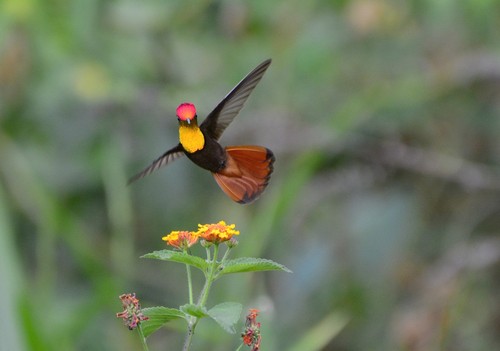
Ruby-topaz Hummingbird
7.5-9 cm (3-3.5 in) long
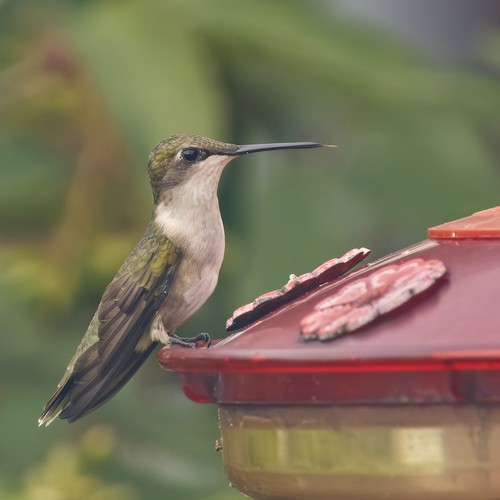
Ruby-throated Hummingbird
7-9 cm (3-3.5 in) long, 8-11 cm wingspan
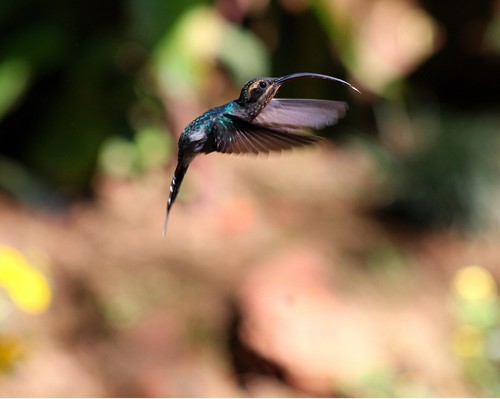
Green Hermit
15-16 cm (6-6.3 in) long including elongated central tail feathers
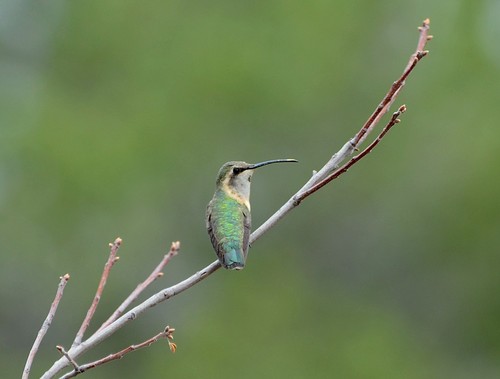
Lucifer Hummingbird
8.5-9.5 cm (3.5 in) long, 11 cm wingspan
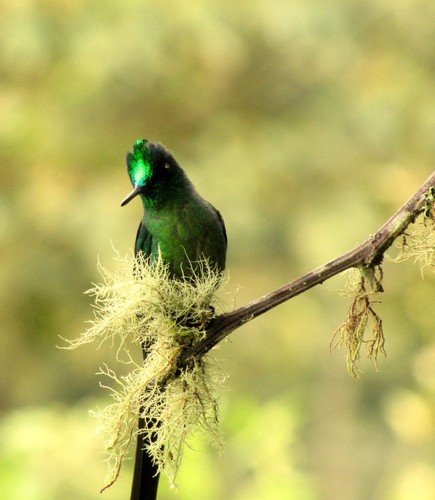
Long-tailed Sylph
males 18-19 cm (7-7.5 in) including tail; females 9-10 cm (3.5-4 in)