
Allen's Hummingbird Identification Guide
A tiny West Coast hummingbird with a fiery orange-red throat and a green (not rufous) back, best separated from Rufous Hummingbird by that back color and range.
Read the full Allen's Hummingbird encyclopedia entry →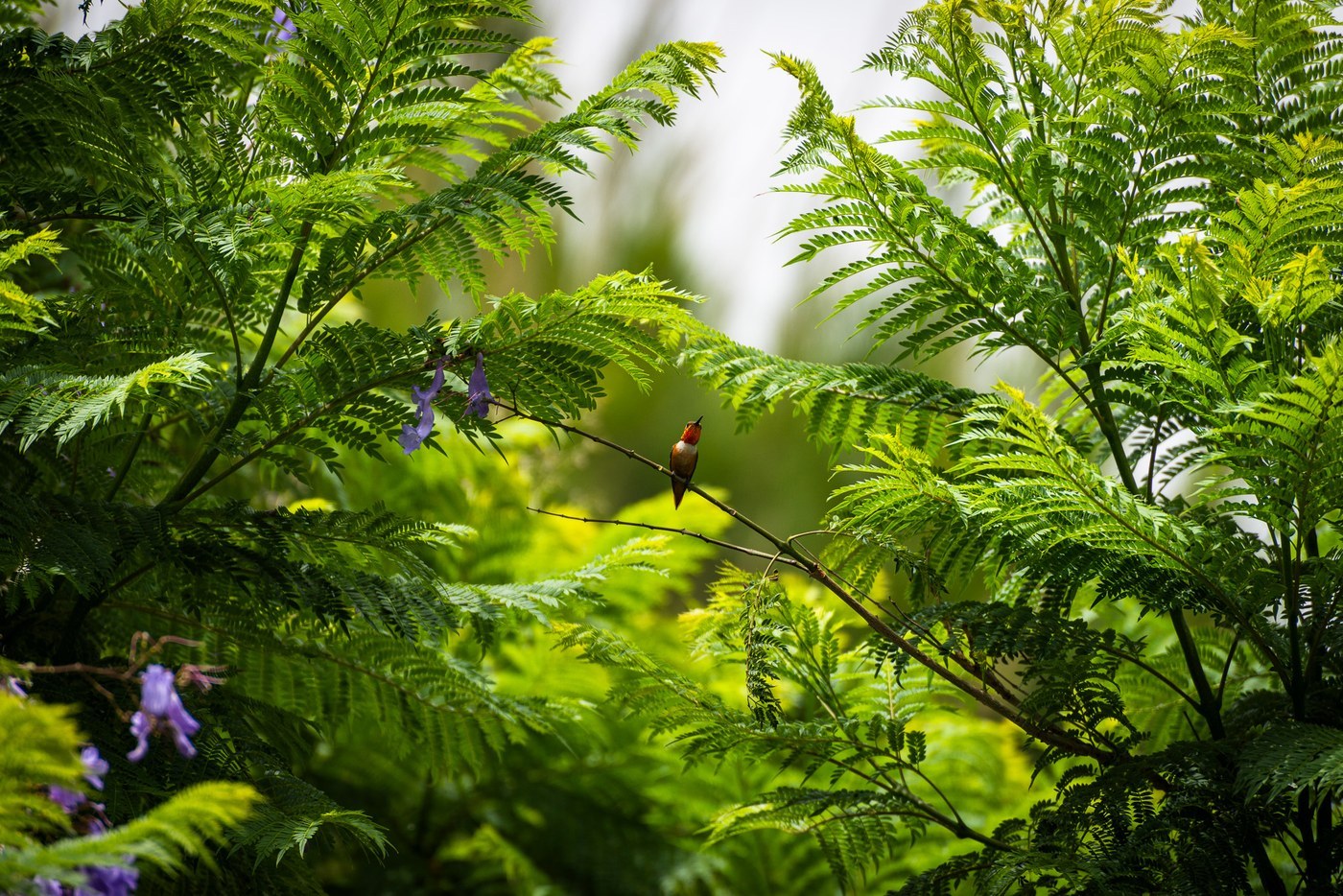
Key Field Marks
- Size: Tiny, about 8–9.5 cm long — among the smallest North American hummingbirds.
- Adult male: Brilliant orange-red iridescent gorget (throat patch), green crown and back, and rufous/orange flanks and tail — the green back is the key mark separating males from the very similar Rufous Hummingbird.
- Adult female and immatures: Green above with rufous-washed flanks and rufous at the base of the tail; the throat often shows scattered orange-red spotting or a small central patch. These plumages are nearly identical to female/immature Rufous Hummingbird and are extremely difficult to separate in the field.
Behavior
- Males perform a dramatic steep, J-shaped or figure-eight display dive accompanied by a buzzy or whining sound produced by the wings and tail.
- Feeds on nectar from flowering plants and also takes small insects, especially important for breeding females.
- Highly territorial, frequently chasing other hummingbirds away from favored flowers or feeders.
Separating It From Similar Species
- Rufous Hummingbird is the primary confusion species. Adult males are best separated by back color: Allen's has a green back, while Rufous has a rufous/copper back. Females and immatures of the two species are nearly indistinguishable in the field and are often only safely told apart by tail feather shape in the hand, or inferred from range and season.
- Range and season provide the best practical clues away from the coastal breeding strip: Allen's Hummingbird breeds mainly along the coastal fog belt of California (with resident populations on the Channel Islands and parts of southern California), while Rufous Hummingbird breeds much farther north and passes through California mainly on migration.
Where and When to See It
- Range: A narrow strip along the Pacific coast, mainly in California, with some populations resident year-round in southern California and on the Channel Islands; other populations migrate to central Mexico for winter.
- Habitat: Coastal scrub, chaparral, eucalyptus groves, and gardens along the coast.
- Season: Breeding birds typically arrive in very early spring (among the earliest-returning migrant hummingbirds); resident populations can be found year-round in parts of southern California.
Voice
- High, thin chip notes.
- Males produce a distinctive buzzy or whining trill with their wings during flight and display dives, useful for locating a bird before it is seen.
Frequently asked questions
How do I tell a male Allen's Hummingbird from a male Rufous Hummingbird?
Check the back color: Allen's Hummingbird has a green back, while Rufous Hummingbird has a rufous or copper-colored back. Both share a bright orange-red throat and rufous flanks and tail.
Can female Allen's and Rufous Hummingbirds be told apart in the field?
It's very difficult — their plumages are nearly identical, and reliable separation usually requires examining tail feather shape in the hand or relying on range and season as circumstantial evidence.
Where does Allen's Hummingbird live?
It occupies a narrow coastal strip, mainly in California, with some populations resident year-round in southern California and the Channel Islands and others migrating to central Mexico for the winter.
What does the male's display dive look like?
Males climb high and dive in a steep J-shaped or figure-eight pattern, producing a buzzy or whining sound with their wings and tail feathers as they pull out of the dive.