
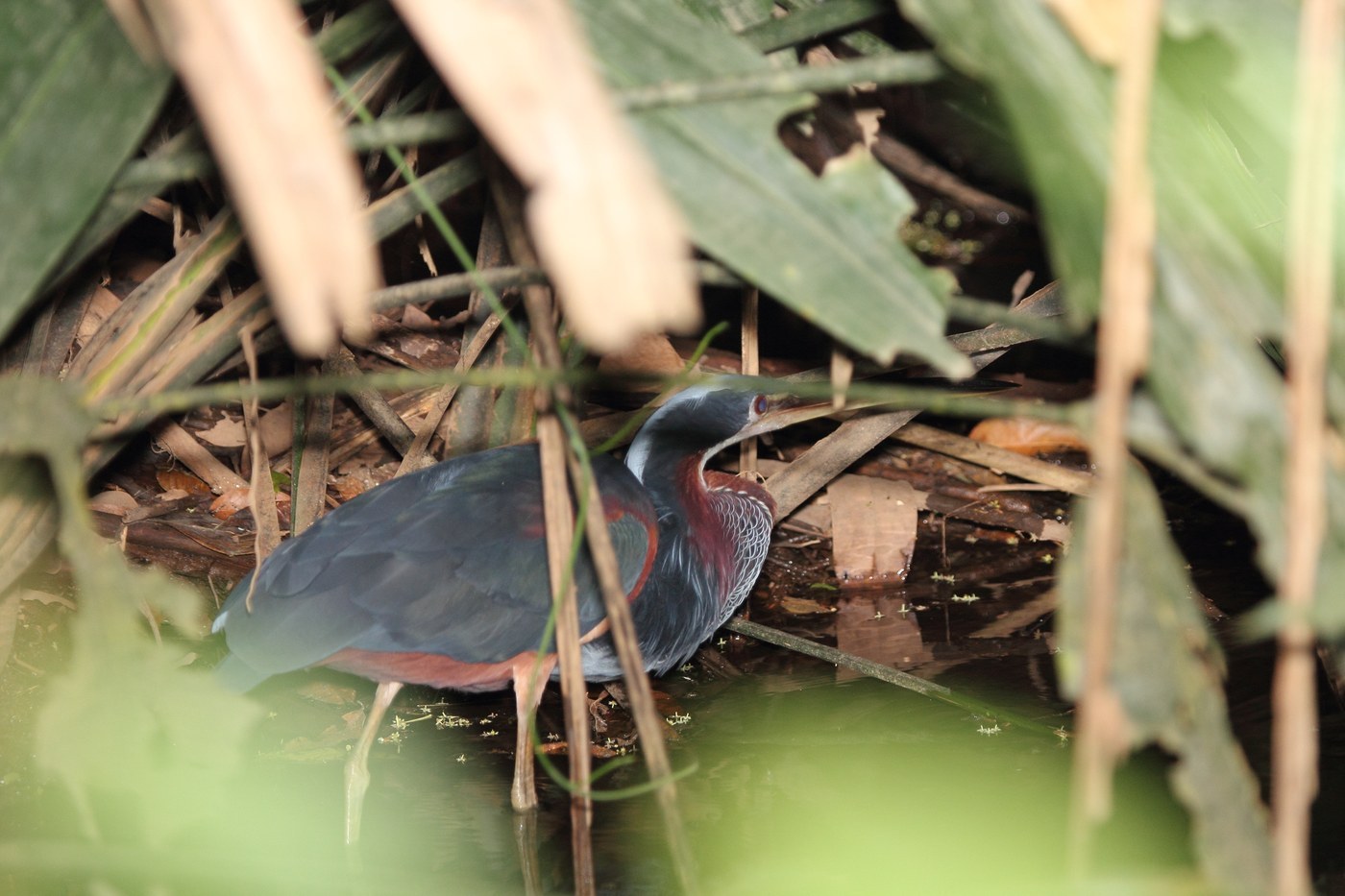
Agami Heron
Agamia agami
One of the most vividly colored herons in the world, a shy forest-swamp specialist with an iridescent green back and deep chestnut underparts.
- Size
- 66-76 cm (26-30 in) long
- Habitat
- forested swamps, streams, and flooded forest in Central and South America
- Type
- wading-bird
Spotted a bird like this?
Identify any bird from a photo, free.
Overview
The Agami Heron is widely regarded as one of the most beautiful herons in the world, combining a dark, glossy green back with a rich chestnut neck and belly, a slate-grey crown, and long, elegant plumes that trail from the head, neck, and back in breeding adults. Its bill is exceptionally long and slender relative to its body, an adaptation for hunting in narrow forest streams.
Despite its striking appearance, this is a shy and rarely seen species, spending most of its time deep within shaded, forested wetlands away from open water, which makes sightings a highlight for birdwatchers visiting Neotropical rainforests.
How to identify it
Key field marks
- Iridescent dark green back and wings
- Rich chestnut neck and belly
- Slate-grey crown with long plumes in breeding adults
- Exceptionally long, thin, dagger-like bill
Similar species
No other heron shares this striking combination of green back and chestnut underparts; juveniles are duller brown and can be mistaken for other forest herons but retain the unusually long, slender bill.
Habitat & range
Habitat
The Agami Heron is a specialist of shaded, forested wetlands: swamp forest, flooded forest, and narrow, overhung jungle streams, generally avoiding open marshes.
Range and migration
It ranges from southern Mexico through Central America into the Amazon basin of South America, and is largely resident, though some local or seasonal movements may occur in response to water levels.
Behavior & voice
Behavior
Extremely shy and solitary, Agami Herons stand motionless in shaded cover along forest streams, relying on stealth and patience rather than active pursuit, and are quick to retreat into dense vegetation when disturbed.
Voice
Generally quiet away from breeding colonies; utters low croaks and grunts when alarmed or interacting with other birds.
Feeding
Its long bill and neck allow precise strikes on fish in narrow, shallow forest streams, where it hunts by standing still or moving with extreme slowness.
Nesting and breeding
Agami Herons nest colonially in dense swamp vegetation, sometimes in large mixed colonies with other waterbirds; clutches typically contain 2-3 eggs.
Frequently asked questions
Why is the Agami Heron considered so beautiful?
It combines an iridescent green back, deep chestnut underparts, and long ornamental plumes, making it one of the most colorful herons in the world.
Where does the Agami Heron live?
In shaded swamp forests and narrow jungle streams from southern Mexico through Central America into the Amazon basin.
Why is the Agami Heron rarely seen?
It is shy and prefers dense, shaded forest wetlands rather than open marshes, making it hard to spot.
What does an Agami Heron eat?
Primarily fish, caught with its unusually long bill in narrow forest streams, along with some amphibians and insects.
Agami Heron guides
In-depth guides for identifying, finding, and understanding Agami Heron.
Other birds you may enjoy
Demoiselle Crane
85-100 cm (33-39 in) long, 155-180 cm wingspan
Boat-billed Heron
41-56 cm (16-22 in) long
Purple Heron
78-90 cm (31-35 in) long, 120-152 cm wingspan
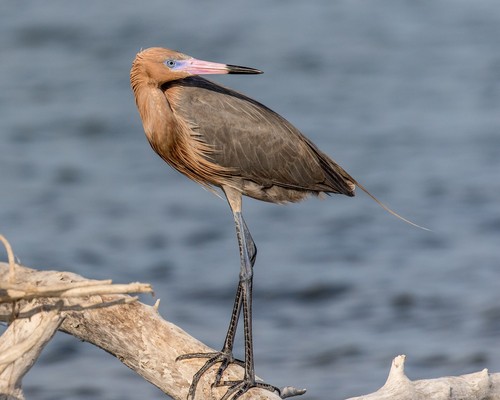
Reddish Egret
68-82 cm (27-32 in) long, 116-125 cm wingspan
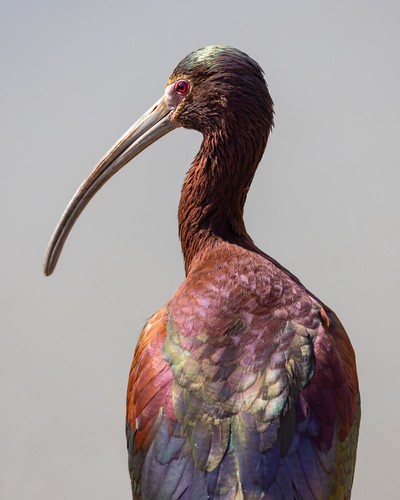
White-faced Ibis
46-56 cm (18-22 in) long, 88-93 cm wingspan
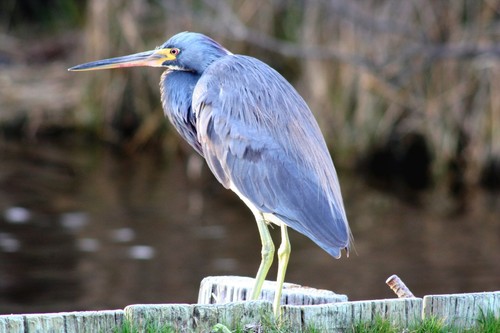
Tricolored Heron
61-76 cm (24-30 in) long, about 96 cm wingspan
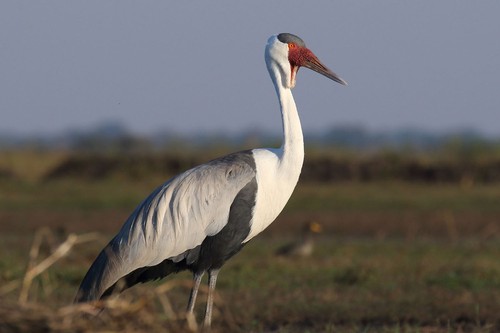
Wattled Crane
120-175 cm (47-69 in) tall, one of the tallest cranes, wingspan up to about 230 cm (7.5 ft)
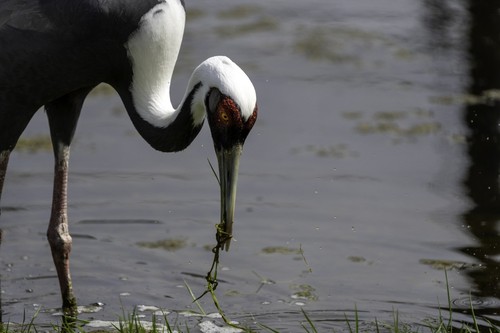
White-naped Crane
112-125 cm (44-49 in) long, 195-210 cm wingspan
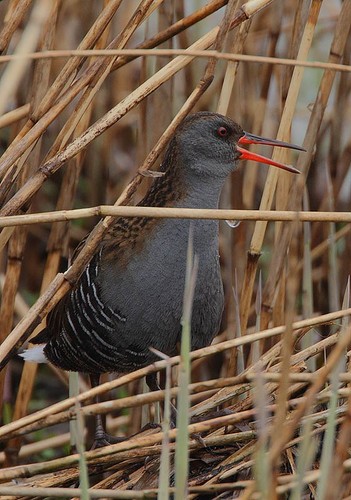
Water Rail
23-28 cm (9-11 in) long, wingspan 38-45 cm
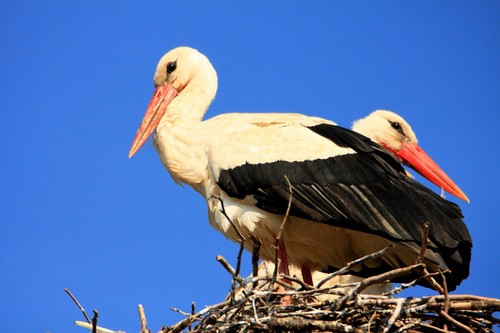
White Stork
100-125 cm (39-49 in) long, 155-215 cm wingspan
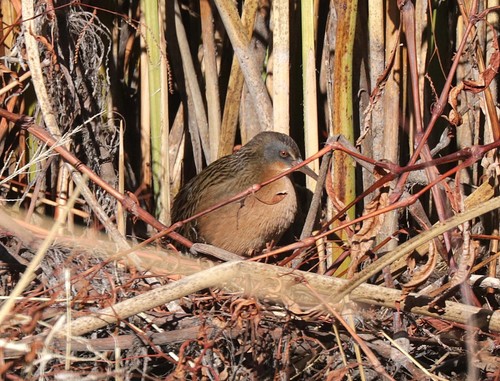
Virginia Rail
20-27 cm (8-11 in) long, wingspan 32-38 cm
Wattled Jacana
17-23 cm (7-9 in) long