
Agami Heron Identification Guide
A secretive, jewel-toned Neotropical heron with a maroon neck, glossy green back, and the proportionally longest bill and neck of any heron.
Read the full Agami Heron encyclopedia entry →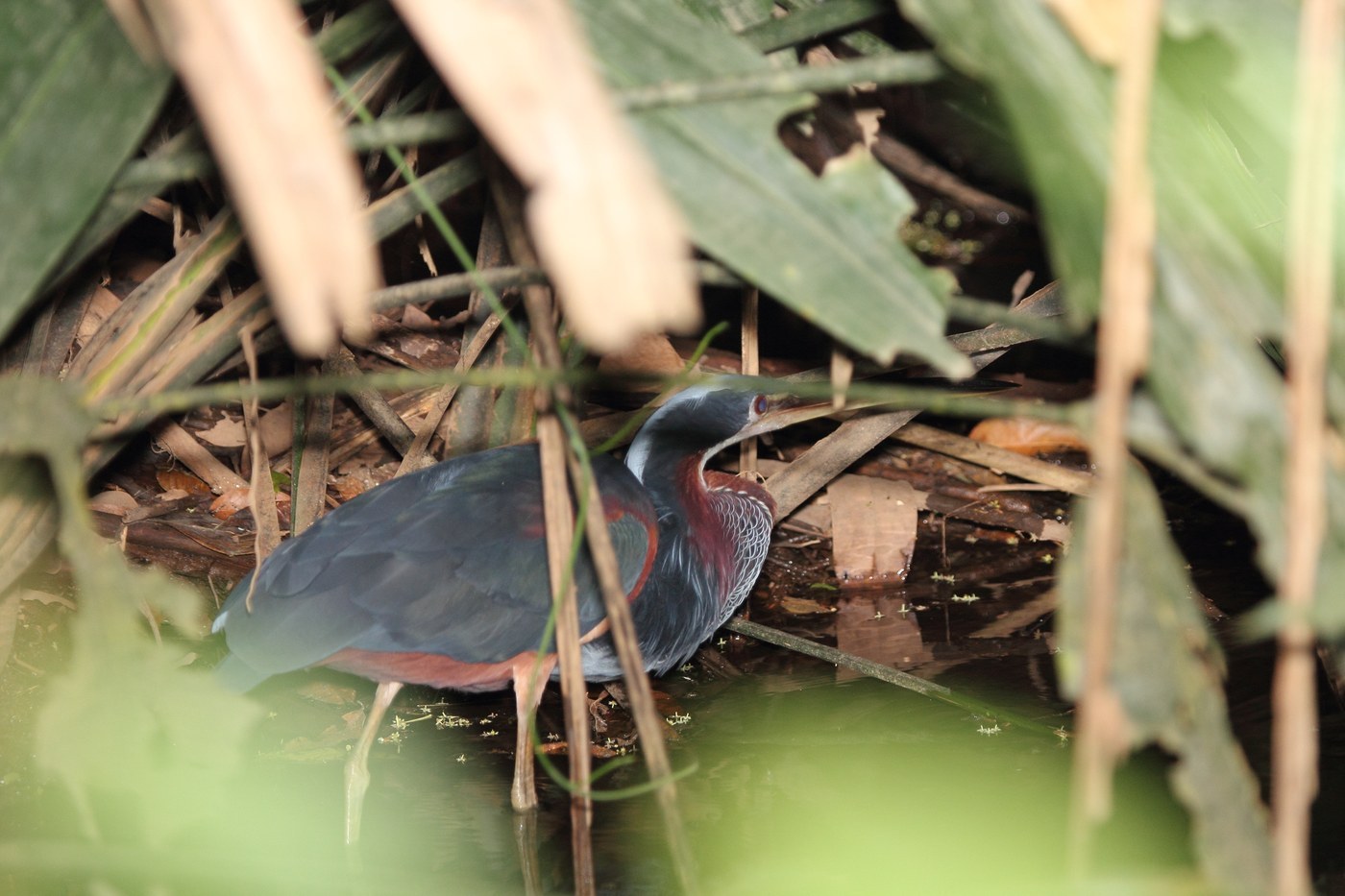
Key Field Marks
- Size: About 64–76 cm long, but exceptionally slender and long-necked compared to other herons of similar length.
- Bill: Long, thin, and dagger-like — proportionally the longest bill of any heron species, ideal for deep strikes into water.
- Plumage: Deep maroon/chestnut neck and underparts contrast with a glossy dark green-black back and crown; a bold white stripe runs down the center of the throat.
- Breeding adults: Develop elongated, pale blue-grey plumes on the back and lengthened head plumes.
- Neck: Extremely long and thin, often held in a tight S-curve; can extend to strike prey at surprising distance.
Behavior
- Highly secretive and solitary, standing motionless at the water's edge for long periods while waiting to strike prey with its exceptionally long neck and bill.
- Prefers shaded, sheltered settings rather than open marshes, making it far harder to observe than most herons.
- Rarely vocal; most encounters are visual, often brief glimpses along a forest stream.
Separating It From Similar Species
- Boat-billed Heron shares shaded, forested wetland habitat but has a broad, scoop-shaped bill and grey plumage, entirely unlike the Agami's thin bill and maroon-and-green coloring.
- No other Neotropical heron combines a chestnut neck, glossy green back, white throat stripe, and needle-thin bill, so a clear view usually confirms the identification.
- Juveniles are duller and browner but retain the diagnostic long thin bill and slender build that separate them from young night-herons.
Where and When to See It
- Range: Central America through northern and central South America.
- Habitat: Shaded forest streams, swamp margins, and mangrove creeks with overhanging vegetation — rarely seen in open water.
- Season: Largely resident, though some populations shift locally with water levels and breeding activity; best looked for by quietly scanning shaded stream edges rather than open lakes.
Voice
- Generally silent; occasionally gives low, guttural croaks, most often near nesting colonies.
Frequently asked questions
What is the most distinctive feature of the Agami Heron?
Its exceptionally long, thin bill and neck relative to its body size, combined with a maroon neck and glossy green back, make it one of the most striking and easily identified herons once seen well.
Why is the Agami Heron hard to spot?
It is solitary and secretive, preferring shaded forest streams and swamp edges over open water, and it stands motionless for long periods, making it easy to overlook.
How is it different from the Boat-billed Heron, which shares similar habitat?
The Boat-billed Heron has a broad, scoop-shaped bill and greyish plumage, while the Agami Heron has a thin, needle-like bill and a maroon-and-green color pattern.
Where should I look for an Agami Heron?
Quietly walk or boat along shaded forest streams, swamp margins, or mangrove creeks in Central or South America, scanning the water's edge for a motionless standing bird.