
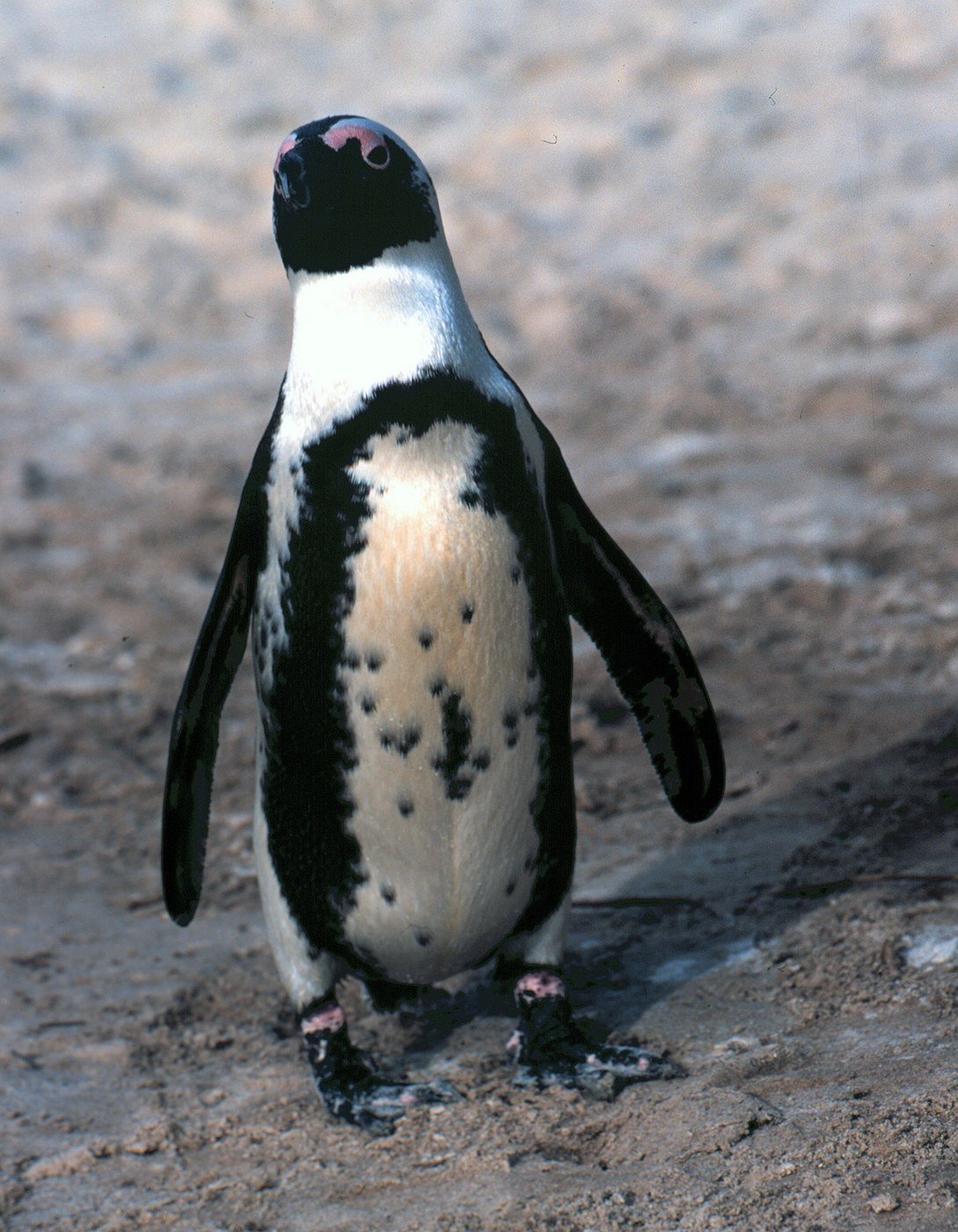
African Penguin
Spheniscus demersus
The only penguin species breeding on the African continent, named for its loud, donkey-like braying call and identified by a black facial mask and unique belly-spot pattern.
- Size
- 60-70 cm (24-28 in) tall, 2-5 kg (4.4-11 lb)
- Habitat
- rocky and sandy coastlines and offshore islands of southern Africa
- Type
- seabird
Spotted a bird like this?
Identify any bird from a photo, free.
Overview
The African Penguin is the sole penguin species that breeds on the African mainland and its offshore islands, found along the coasts of South Africa and Namibia. It has a black back, white underside, and a distinctive black band that curves down each side of the chest, along with a scattering of black spots on the belly that form a pattern unique to each individual bird, much like a fingerprint.
A bare patch of pink skin above each eye helps the bird shed excess heat in the African sun. The species is often called the "Jackass Penguin" for its loud, braying call, reminiscent of a donkey.
Once numbering in the millions, African Penguin populations have collapsed dramatically over the past century due to historic egg collecting, competition with commercial fisheries for food, and oil pollution, making it one of the most at-risk penguin species today.
How to identify it
Key field marks
- Black facial mask and black band curving down each flank onto the chest
- Irregular black spots scattered across the white belly, unique to each bird
- Pink patches of bare skin above the eyes
- Black bill with a pale grey band near the tip
Similar species
- Humboldt and Magellanic Penguins share a similar banded pattern but occur only in South America and lack the pink eye patches; range alone separates them from African Penguins in the wild.
- Juvenile African Penguins are mostly grey-blue above and white below, without the adult's bold black band, and can look similar to young Humboldt or Magellanic Penguins.
Habitat & range
African Penguins breed exclusively along the coasts and offshore islands of South Africa and Namibia, within the cold, food-rich waters influenced by the Benguela Current. Colonies are found on rocky islands, and in a few locations, on mainland beaches, including well-known colonies near Cape Town.
The species does not undertake long migrations, though non-breeding birds may disperse along the coast in search of food, and colony locations have shifted in recent decades as fish stocks have moved.
Behavior & voice
Voice
African Penguins are named for their loud, braying call, which sounds remarkably like a donkey and is used at colonies for pair bonding and territory defense.
Feeding
They are pursuit divers that chase down small schooling fish such as sardines and anchovies, along with squid, diving to moderate depths and covering considerable distances on foraging trips.
Nesting and breeding
Pairs traditionally dug burrows in thick layers of guano, though guano scraping in past centuries forced many colonies to nest instead in the open or under vegetation, leaving eggs and chicks more exposed to heat and predators. Pairs generally lay two eggs and both parents share incubation and chick-rearing duties.
Frequently asked questions
Why is the African Penguin also called the Jackass Penguin?
It earned this nickname because its loud call sounds like a braying donkey.
Where do African Penguins live?
They live only along the coasts and offshore islands of South Africa and Namibia, in the cold waters of the Benguela Current.
What is unique about African Penguin markings?
Each bird has a distinct pattern of black spots on its white belly, similar to a human fingerprint, allowing individuals to be recognized.
Are African Penguins endangered?
Yes, the African Penguin is classified as Critically Endangered, with populations having declined sharply due to reduced fish stocks, habitat disturbance, and past egg harvesting.
Why do African Penguins have pink patches above their eyes?
These bare pink patches are used to release body heat and help the birds cope with warm African temperatures on land.
African Penguin guides
In-depth guides for identifying, finding, and understanding African Penguin.
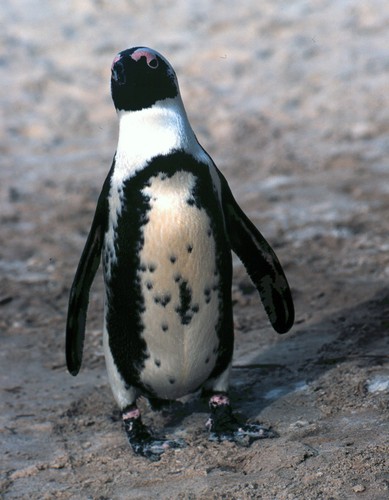
African Penguin identified by the community
Real birds identified with Bird Identifier.
Other birds you may enjoy
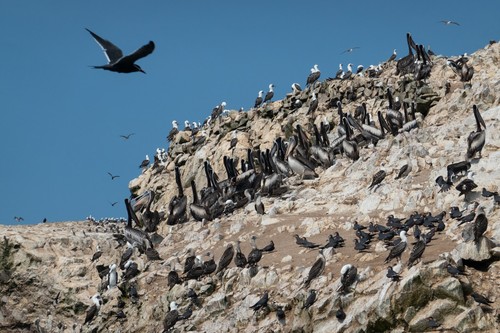
Peruvian Pelican
137-152 cm (54-60 in) long, up to 228 cm wingspan
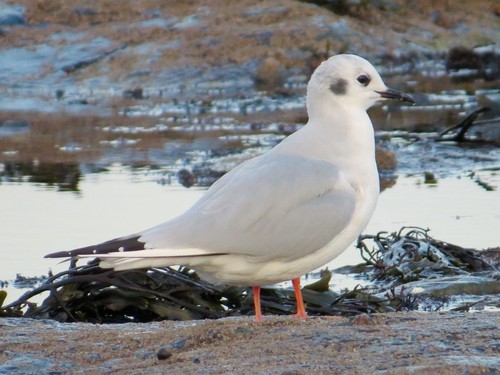
Bonaparte's Gull
28-33 cm (11-13 in) long, 76-84 cm wingspan
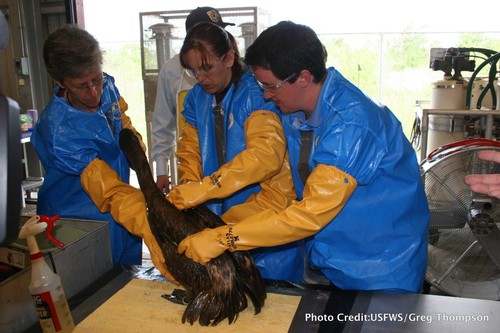
Brown Pelican
106-137 cm (42-54 in) long, 200-230 cm wingspan
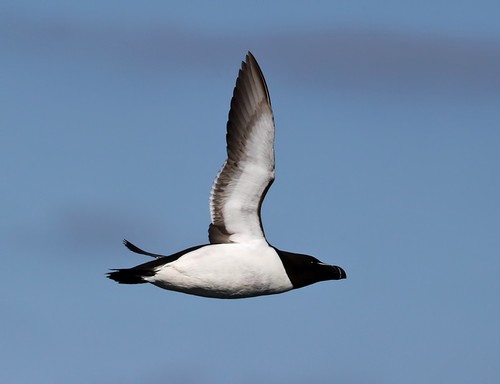
Razorbill
37-39 cm (15-15.5 in) long, 63-68 cm wingspan
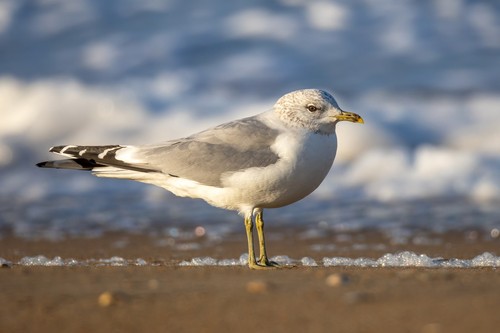
Common Gull
40-46 cm (16-18 in) long, 110-130 cm wingspan
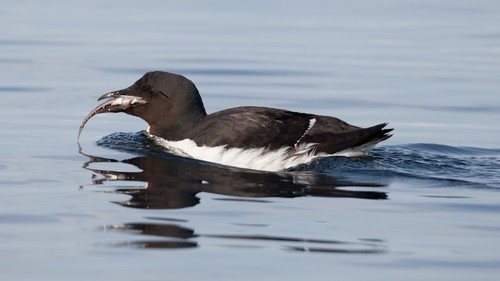
Thick-billed Murre
40-48 cm (16-19 in) long, 65-75 cm wingspan
Western Gull
55-68 cm (22-27 in) long, 130-144 cm wingspan
Yellow-billed Loon
76-97 cm (30-38 in) long, 135-152 cm wingspan
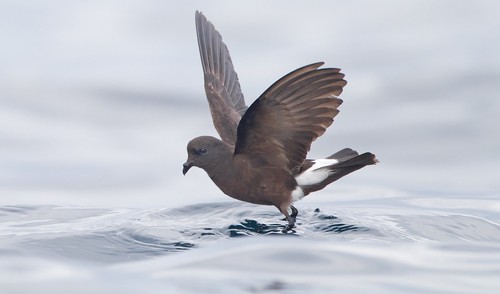
Wilson's Storm-Petrel
15-19 cm (6-7.5 in) long, wingspan 38-42 cm (15-16.5 in)
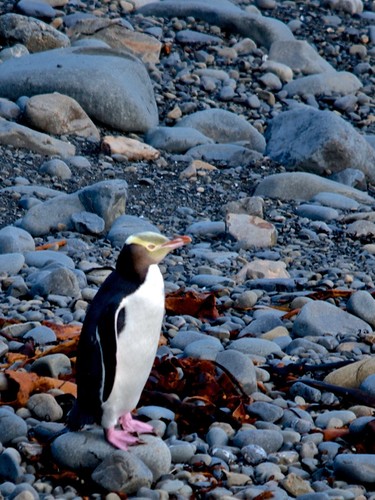
Yellow-eyed Penguin
62-79 cm (24-31 in) tall, 3-8.5 kg (6.6-18.7 lb)
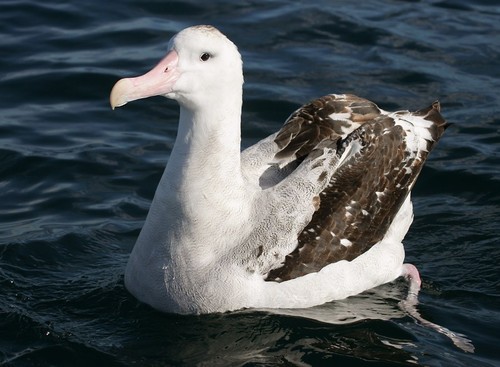
Wandering Albatross
107-135 cm (42-53 in) long, wingspan up to 3.5 m (11.5 ft)
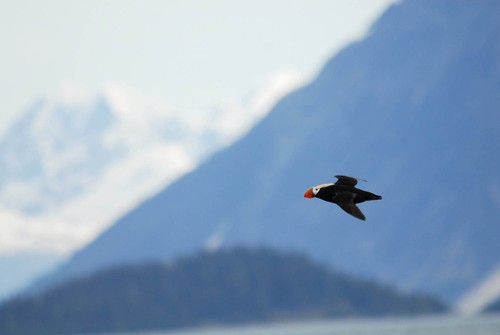
Tufted Puffin
35-41 cm (14-16 in) long, about 63-70 cm wingspan