
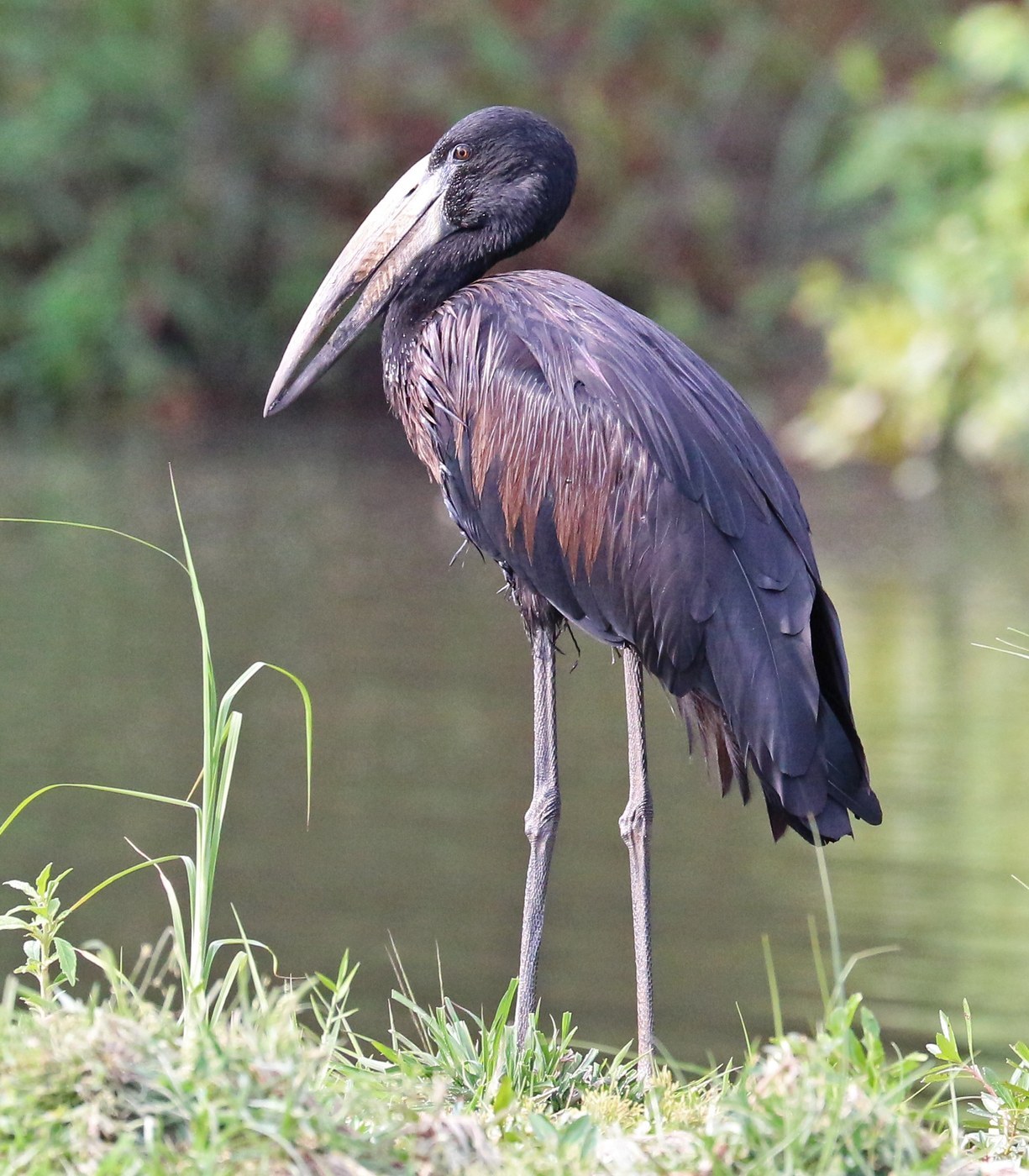
African Openbill
Anastomus lamelligerus
A dark, glossy African stork whose uniquely gapped bill is specially shaped for extracting freshwater snails from their shells.
- Size
- 80-94 cm long; wingspan about 150 cm
- Habitat
- Freshwater wetlands, marshes, floodplains, and lake margins across sub-Saharan Africa
- Type
- wading-bird
Spotted a bird like this?
Identify any bird from a photo, free.
Overview
The African Openbill is a medium-sized stork found across the wetlands of sub-Saharan Africa, notable for the distinctive gap between its upper and lower mandibles that gives the species its name.
Appearance
Adult plumage is dark, glossy blackish with green or purple iridescence on the wings in good light, appearing almost entirely dark at a distance. The legs are dark, and the bill is dull grayish-brown. The signature feature is the noticeable gap that remains between the mandibles even when the bill is closed, except near the tip, which is used to grip and extract snails from their shells. Juveniles are duller brown without strong iridescence.
How to identify it
Key field marks
- Overall dark, glossy blackish plumage with iridescent sheen
- Distinctive gap in the bill between the upper and lower mandibles
- Medium-large stork shape with long legs and neck
- Often seen foraging in shallow wetlands, probing for snails
Similar species
Other dark storks such as the Abdim's Stork are smaller with a shorter bill lacking the diagnostic gap, and Abdim's Stork shows white underparts and rump. The Openbill's uniquely gapped bill is unmistakable at close range and separates it from all other African storks.
Habitat & range
Habitat
Associated with shallow freshwater wetlands, marshes, floodplains, swamps, and lake edges where apple snails and other mollusks are abundant.
Range
Widely distributed across sub-Saharan Africa, from Senegal east to Ethiopia and south through the Congo Basin, East Africa, and southern Africa, including Madagascar.
Migration
Largely sedentary but nomadic in response to water levels and prey availability, moving to newly flooded areas and departing as wetlands dry out; some seasonal and local movements are recorded.
Behavior & voice
Behavior
African Openbills forage by wading slowly through shallow water and mud, probing for snails, and often gather in flocks, particularly at abundant snail concentrations. They are gregarious and frequently nest and roost communally, sometimes alongside other waterbirds.
Voice
Generally silent away from breeding colonies; at nests they produce bill-clattering displays and occasional grunting or croaking sounds.
Feeding
Specializes on freshwater apple snails, using the gap in its bill as a tool-like mechanism to extract the snail's body from the shell without crushing it; it also eats other mollusks, crabs, frogs, and worms.
Nesting and breeding
Breeds colonially, often in large mixed heronries, building stick nests in trees over or near water. Clutches typically contain two to four eggs, with both parents sharing incubation and chick-rearing duties.
Frequently asked questions
Why does the African Openbill have a gap in its bill?
The gap between the mandibles helps the stork grip and extract the soft body of freshwater snails, its primary prey, from the shell.
What does the African Openbill eat?
Mainly freshwater apple snails and other mollusks, along with crabs, frogs, and worms found in shallow wetlands.
Where does the African Openbill live?
It inhabits freshwater marshes, floodplains, and lake edges across much of sub-Saharan Africa and Madagascar.
Is the African Openbill the same as other openbill storks?
No, it is a distinct species from the Asian Openbill; both share the gapped-bill adaptation for eating snails but occur on different continents.
African Openbill guides
In-depth guides for identifying, finding, and understanding African Openbill.
Other birds you may enjoy
Demoiselle Crane
85-100 cm (33-39 in) long, 155-180 cm wingspan
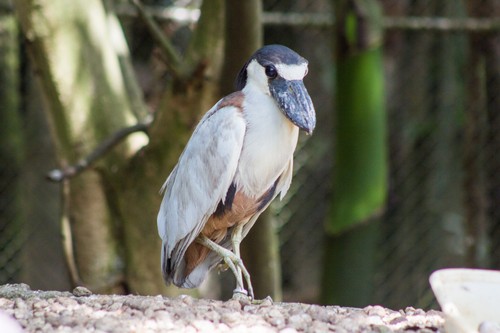
Boat-billed Heron
41-56 cm (16-22 in) long
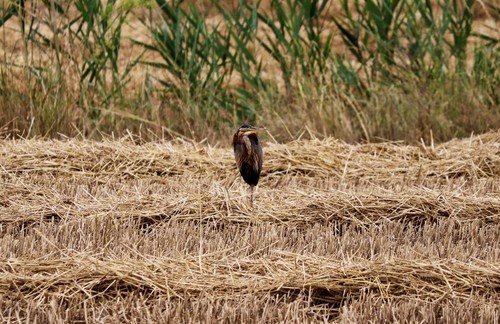
Purple Heron
78-90 cm (31-35 in) long, 120-152 cm wingspan
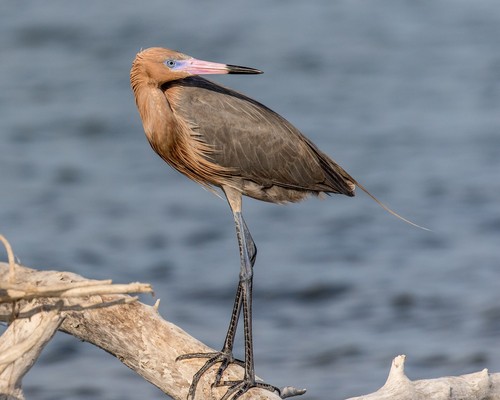
Reddish Egret
68-82 cm (27-32 in) long, 116-125 cm wingspan
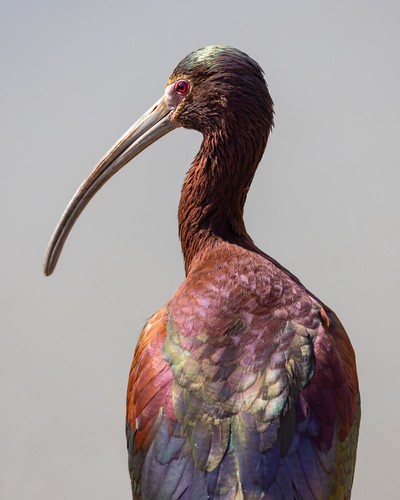
White-faced Ibis
46-56 cm (18-22 in) long, 88-93 cm wingspan
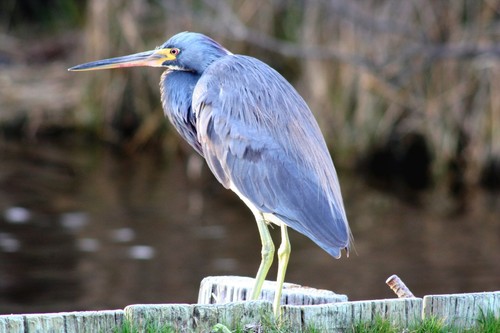
Tricolored Heron
61-76 cm (24-30 in) long, about 96 cm wingspan
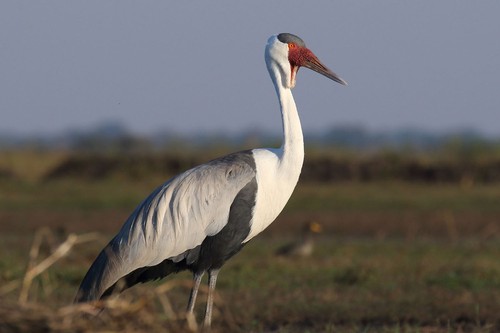
Wattled Crane
120-175 cm (47-69 in) tall, one of the tallest cranes, wingspan up to about 230 cm (7.5 ft)
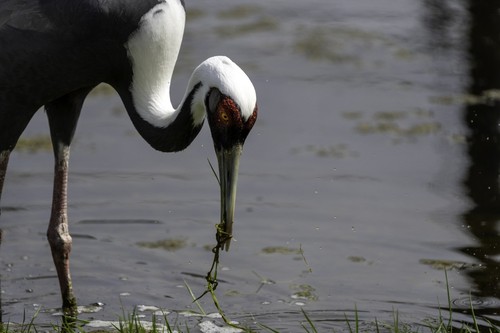
White-naped Crane
112-125 cm (44-49 in) long, 195-210 cm wingspan
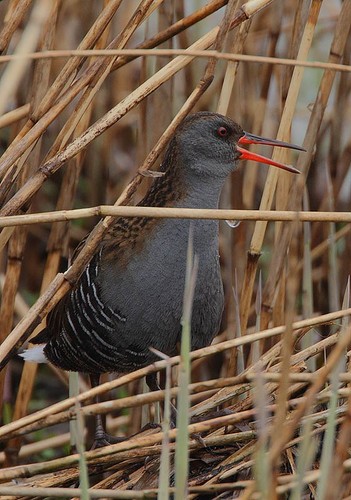
Water Rail
23-28 cm (9-11 in) long, wingspan 38-45 cm
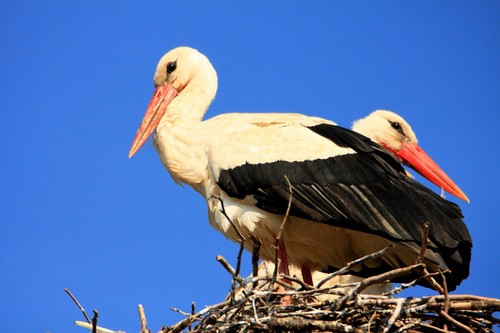
White Stork
100-125 cm (39-49 in) long, 155-215 cm wingspan
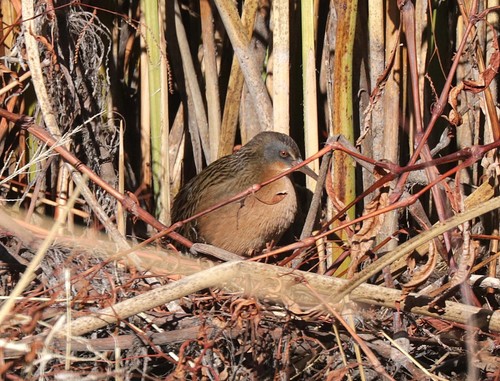
Virginia Rail
20-27 cm (8-11 in) long, wingspan 32-38 cm
Wattled Jacana
17-23 cm (7-9 in) long