
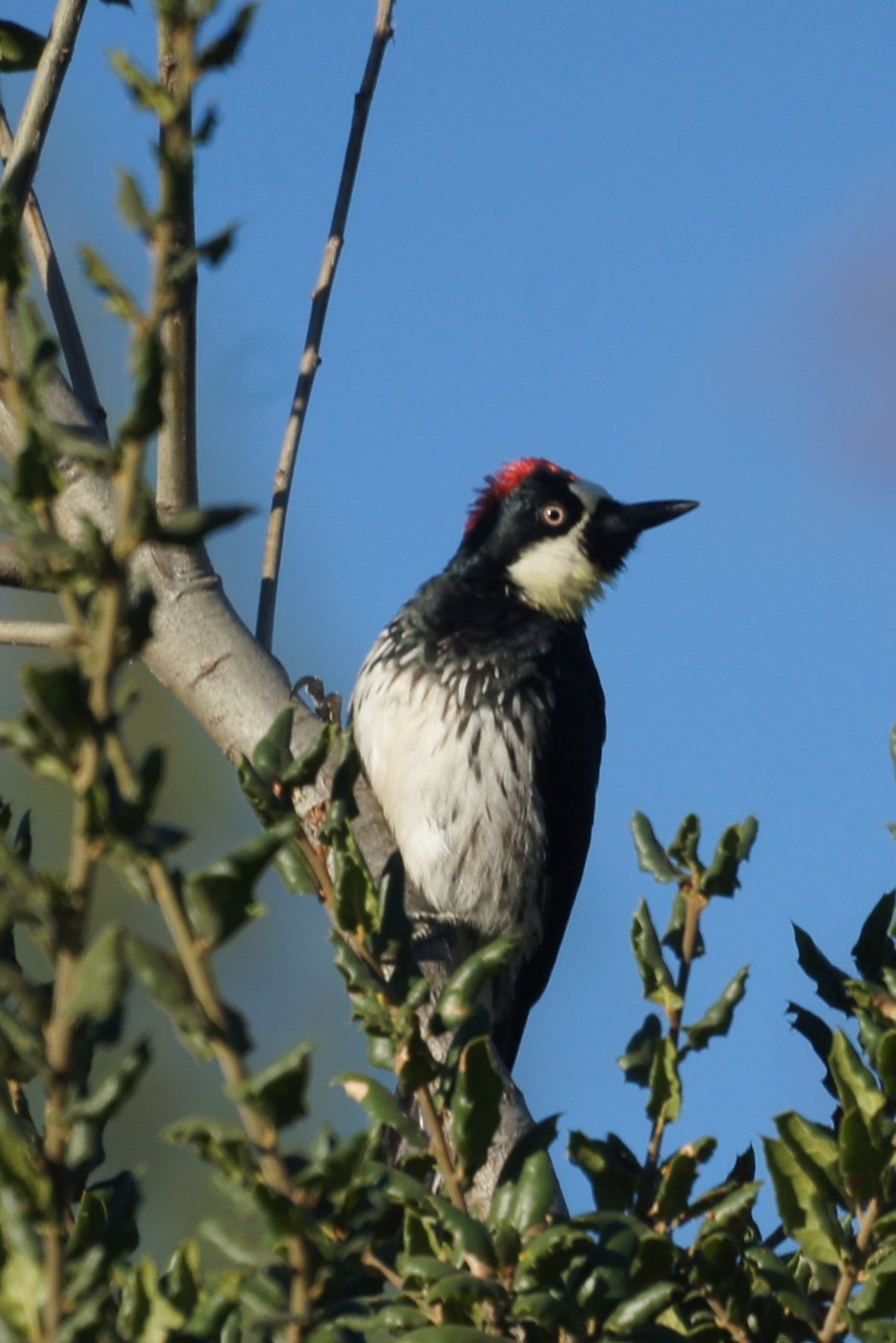
Acorn Woodpecker
Melanerpes formicivorus
A boldly patterned, clown-faced woodpecker famous for its highly social behavior and its habit of stockpiling thousands of acorns in communal granary trees.
- Size
- 21-23 cm (8-9 in) long, 36-43 cm wingspan
- Habitat
- oak and oak-pine woodlands of the southwestern US south through Central and South America
- Type
- woodpecker
Spotted a bird like this?
Identify any bird from a photo, free.
Overview
The Acorn Woodpecker is a striking, gregarious woodpecker best known for its comical "clown face" pattern and its extraordinary habit of storing enormous caches of acorns in specially excavated granary trees. It has a glossy black back, white rump, and a boldly patterned face combining a white forehead, black eye patch, and a red crown that together give it an unmistakable, almost cartoonish appearance.
Unlike most woodpeckers, this species lives in complex, cooperative family groups that jointly defend, maintain, and share a granary tree, sometimes drilled with thousands of individual holes each fitted precisely with a single acorn.
This highly social lifestyle, cooperative breeding system, and dependence on year-round oak mast make the Acorn Woodpecker one of the most behaviorally fascinating woodpeckers in North America.
How to identify it
Key Field Marks
- Bold "clown face" pattern: white forehead, black surrounding the eye, red crown
- Glossy black back and chest with a white rump and belly
- Pale yellowish throat; white wing patches visible in flight
- Often seen in noisy family groups near oak woodland, and near granary trees riddled with acorn-filled holes
Similar Species
- No other North American woodpecker shares the same bold facial pattern combined with communal granary behavior; Red-headed Woodpecker has an entirely red head rather than the Acorn Woodpecker's patterned white/black/red combination.
Habitat & range
Acorn Woodpeckers inhabit oak and oak-pine woodlands from the southwestern United States (California, Arizona, New Mexico, and west Texas) south through Mexico and Central America into parts of South America, closely tied to the presence of oaks for their acorn caches.
This species is non-migratory and highly sedentary, with family groups defending the same territory, including their granary tree, for many years or even generations.
Behavior & voice
Behavior
Acorn Woodpeckers live in cooperative social groups of several related and unrelated adults that jointly defend a communal granary tree and territory, share incubation and feeding duties, and sometimes engage in complex, competitive breeding arrangements involving multiple males and females.
Voice
The species is notably vocal, giving a loud, raucous "waka-waka-waka" or "ja-cob, ja-cob" call frequently throughout the day, along with various chattering and scolding notes among group members.
Feeding
Acorns are the dietary staple, particularly in fall and winter, stored individually in custom-drilled holes in a granary tree (or occasionally utility poles or buildings) that the group defends fiercely from acorn thieves such as jays and squirrels; insects caught in flight, sap, and fruit round out the diet, especially in the breeding season.
Nesting & Breeding
Groups cooperatively excavate a nest cavity, and multiple females may lay eggs in the same nest in complex polygynandrous arrangements, with multiple group members, including non-breeding helpers, assisting in incubation and feeding of the young.
Frequently asked questions
Why does the Acorn Woodpecker store acorns in trees?
It drills thousands of individual holes into a communal "granary" tree, fitting one acorn snugly into each hole to create a stockpile of food that the family group defends and relies on through the year, especially winter.
Do Acorn Woodpeckers live in groups?
Yes, they are unusually social for woodpeckers, living in cooperative family groups that jointly defend territory and granary trees and can include multiple breeding adults plus non-breeding helpers.
What does an Acorn Woodpecker's face look like?
It has a distinctive bold pattern often described as clown-like, with a white forehead, black patch around the eye, red crown, and pale throat.
Where do Acorn Woodpeckers live?
They inhabit oak and oak-pine woodlands from the southwestern United States south through Mexico, Central America, and into parts of South America.
Acorn Woodpecker guides
In-depth guides for identifying, finding, and understanding Acorn Woodpecker.
Other birds you may enjoy
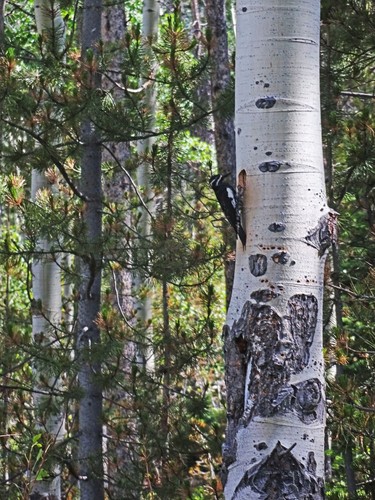
Williamson's Sapsucker
21-25 cm (8-10 in) long, 40-42 cm wingspan
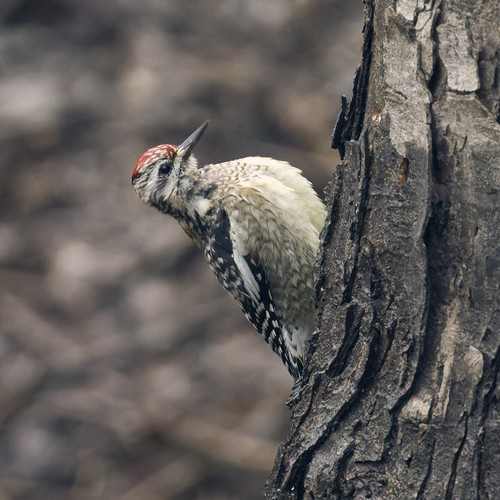
Yellow-bellied Sapsucker
18-21 cm (7-8.3 in) long, 34-40 cm wingspan
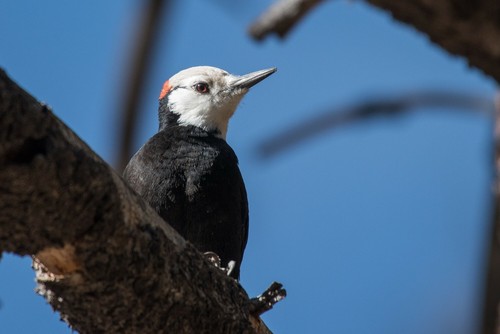
White-headed Woodpecker
20-23 cm (8-9 in) long, 38-41 cm wingspan
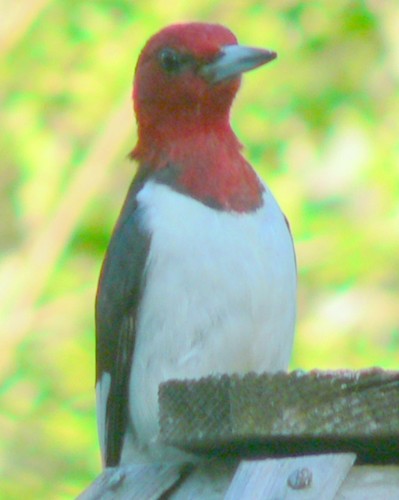
Red-headed Woodpecker
19-23 cm (7.5-9 in) long, 42-46 cm wingspan
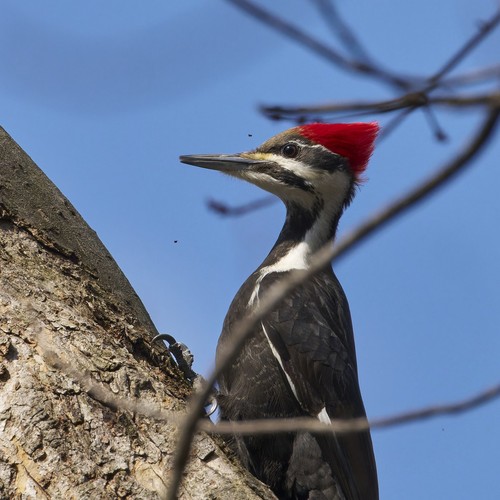
Pileated Woodpecker
40-49 cm (16-19 in) long, 66-75 cm wingspan
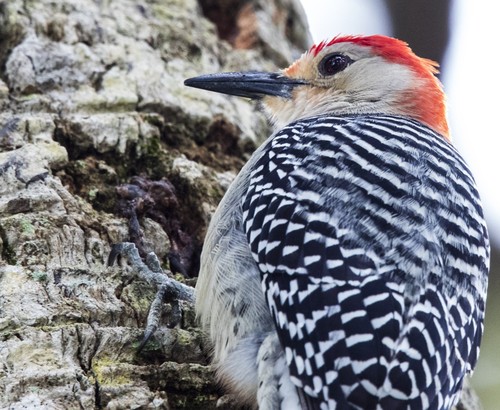
Red-bellied Woodpecker
22-27 cm (9-10.5 in) long, 38-46 cm wingspan
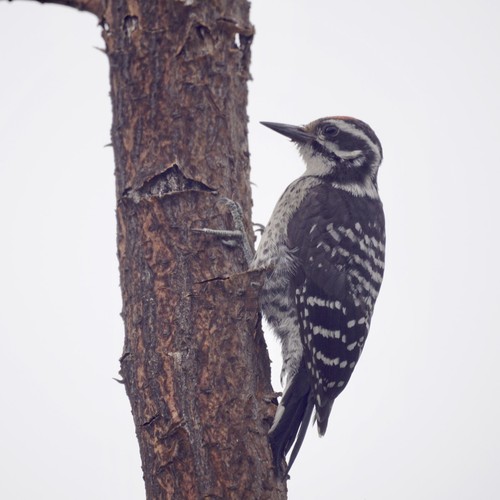
Nuttall's Woodpecker
18-20 cm (7-8 in) long, 34-38 cm wingspan
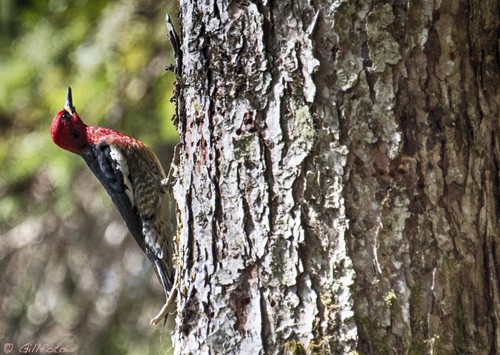
Red-breasted Sapsucker
20-23 cm (8-9 in) long, 34-40 cm wingspan
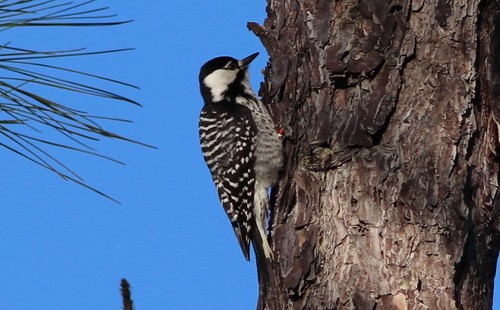
Red-cockaded Woodpecker
20-23 cm (8-9 in) long, 35-38 cm wingspan
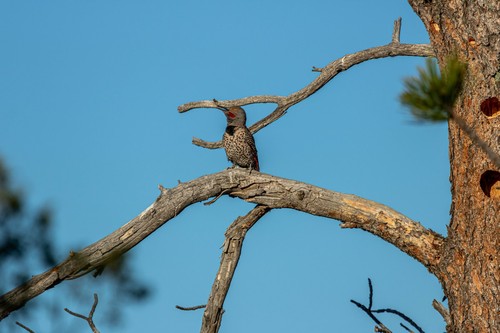
Northern Flicker
28-36 cm (11-14 in) long, 42-51 cm wingspan
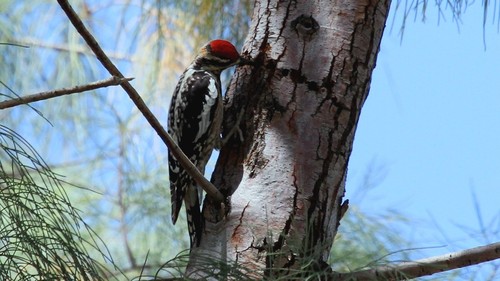
Red-naped Sapsucker
19-21 cm (7.5-8.3 in) long, 34-40 cm wingspan
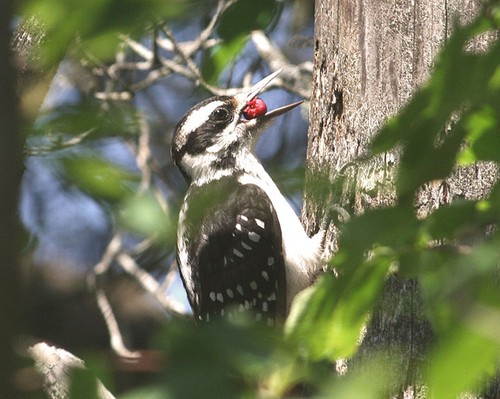
Hairy Woodpecker
23-26 cm (9-10 in) long, 33-41 cm wingspan