
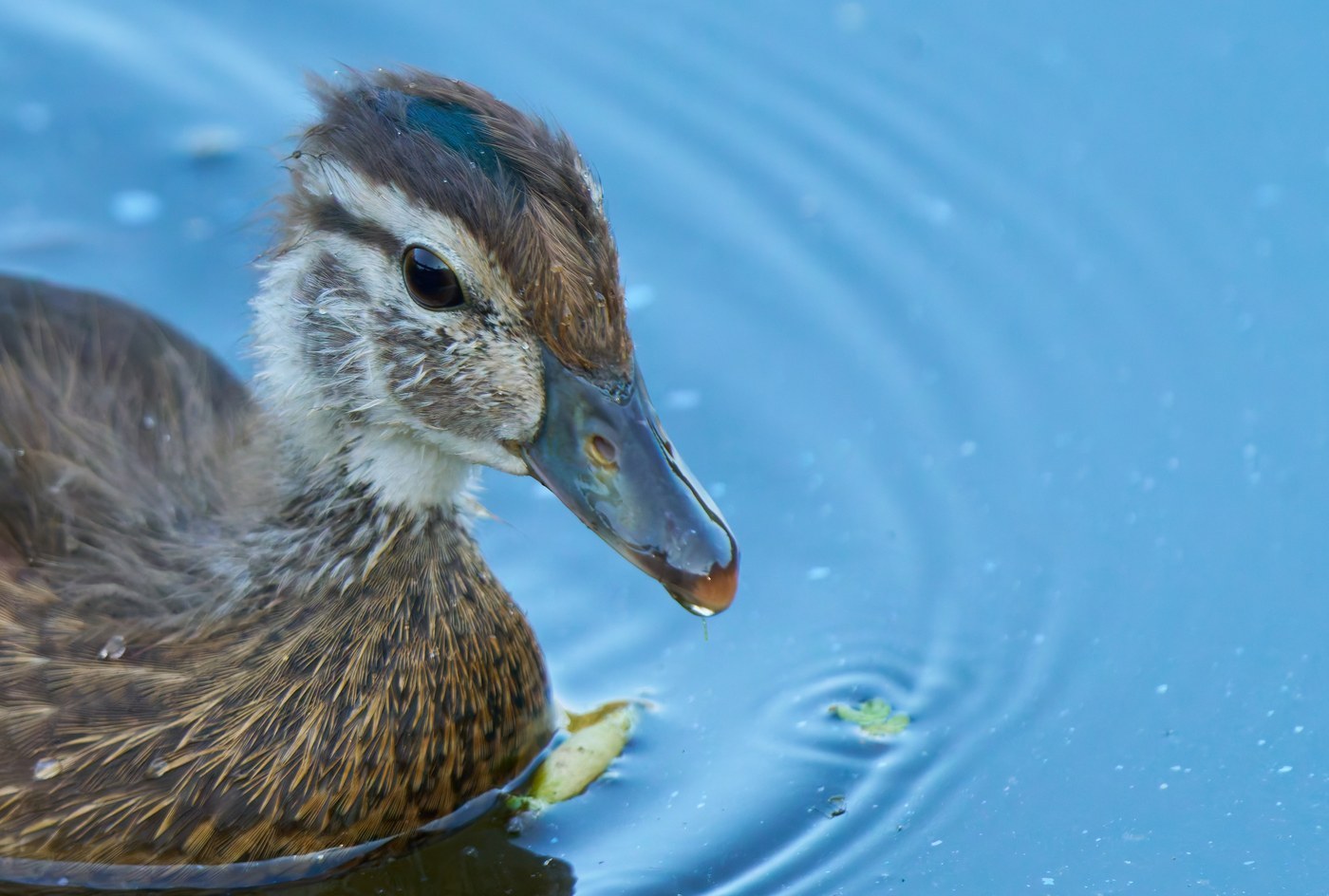
Wood Duck
Aix sponsa
Widely considered one of the most strikingly colorful ducks in North America, the male wears an iridescent green-and-purple crest, chestnut breast, and bold white facial markings.
- Size
- 47-54 cm (18.5-21 in) long, 66-73 cm wingspan
- Habitat
- wooded swamps, forested rivers, and ponds with overhanging trees across much of North America
- Type
- waterfowl
Spotted a bird like this?
Identify any bird from a photo, free.
Overview
The Wood Duck is among the most ornately patterned waterfowl in the world. The breeding drake combines an iridescent green-and-purple crested head streaked with fine white lines, a bright red eye and bill base, a rich chestnut breast speckled with white, and buffy-gold flanks, all outlined with crisp black-and-white pinstripes.
Females are more subdued grayish-brown but are readily identified by a distinctive white teardrop-shaped eye-ring and a spiky crest. Both sexes are relatively small, compact ducks perfectly adapted to life in wooded wetlands, with sharp claws that allow them to perch and even nest in tree cavities.
How to identify it
Key Field Marks
- Breeding drake: iridescent green-and-purple crested head with white pinstripes, red eye, chestnut breast with white speckling, boxy head shape
- Female: gray-brown overall with a bold white teardrop eye-ring and a small crest
- Both sexes: squared-off head shape and relatively long, broad tail
Similar Species
The male Wood Duck's combination of iridescent crest, red eye, and ornate patterning is unmistakable and shared by no other North American duck (aside from the introduced/escaped Mandarin Duck, its closest relative). Female Wood Ducks can be told from other female dabblers by the distinctive white teardrop eye-ring and crested head shape.
Habitat & range
Wood Ducks are closely tied to wooded wetlands: forested swamps, beaver ponds, slow rivers, and lake edges with mature trees nearby, since they nest in natural tree cavities or nest boxes rather than on the ground. They are found across much of the eastern United States and southern Canada year-round to migratory, plus a separate population along the Pacific coast.
Northern populations migrate south for winter, while many populations in the milder eastern and southern U.S. are resident. The widespread installation of artificial nest boxes has significantly helped Wood Duck populations recover from historic lows caused by hunting and habitat loss in the early 20th century.
Behavior & voice
Wood Ducks forage by dabbling in shallow water and foraging on land, eating acorns, seeds, aquatic plants, and insects, and are notably capable of perching and walking on tree branches thanks to sharp claws. Newly hatched ducklings famously leap from high tree cavity nest entrances to the ground or water below within a day of hatching, an astonishing feat given the heights sometimes involved.
The male's call is a thin, rising whistle, while the female gives a loud, distinctive rising "oo-eek" squeal, often given in alarm when flushed, that is one of the most recognizable duck calls in wooded wetlands. Pairs form in fall and winter, and the female alone incubates a clutch of 9-14 eggs in a tree cavity or nest box, sometimes 20 feet or more above the ground or water.
Frequently asked questions
Why does the Wood Duck nest in trees?
Unlike most ducks, it evolved to nest in natural tree cavities, an adaptation to its wooded wetland habitat; it also readily uses artificial nest boxes.
How do Wood Duck ducklings get out of tree cavity nests?
Within about a day of hatching, ducklings climb to the cavity entrance and leap down to the ground or water below, often from considerable heights, unharmed thanks to their light weight and downy cushioning.
How do you identify a female Wood Duck?
Look for her gray-brown plumage, small crest, and a distinctive bold white teardrop-shaped ring around the eye.
What does a Wood Duck sound like?
The female gives a loud, rising "oo-eek" squeal, especially when flushed, while the male gives a thinner rising whistle.
What do Wood Ducks eat?
They eat acorns, seeds, aquatic vegetation, and insects, foraging both in water and on land.
Wood Duck guides
In-depth guides for identifying, finding, and understanding Wood Duck.
Other birds you may enjoy
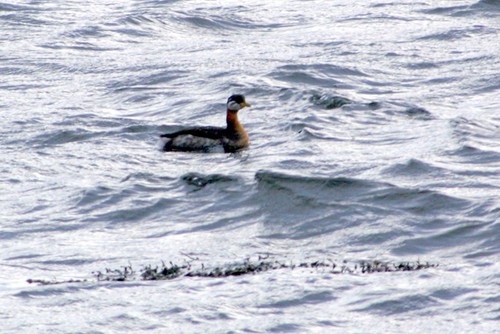
Red-necked Grebe
40-55 cm (16-22 in) long, 77-85 cm wingspan
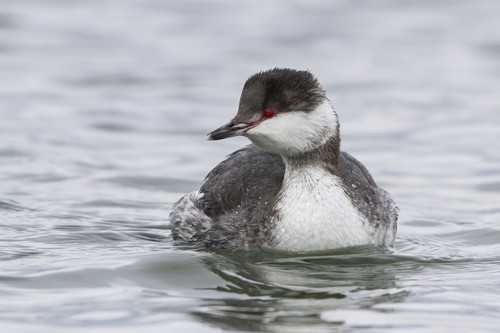
Horned Grebe
31-38 cm (12-15 in) long, 46-55 cm wingspan
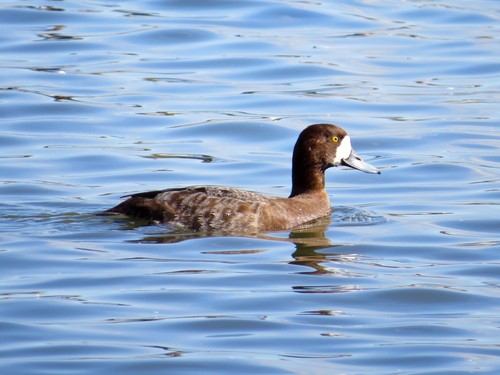
Greater Scaup
42-51 cm (16.5-20 in) long, 71-84 cm wingspan
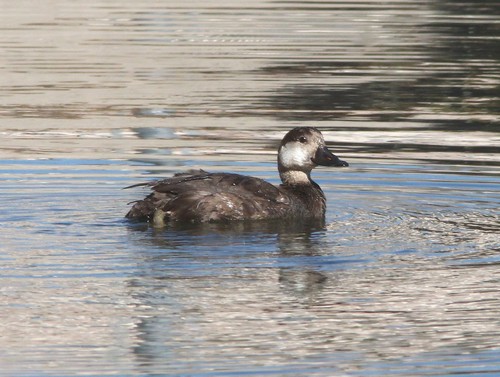
Black Scoter
43-54 cm (17-21 in) long, 79-90 cm wingspan
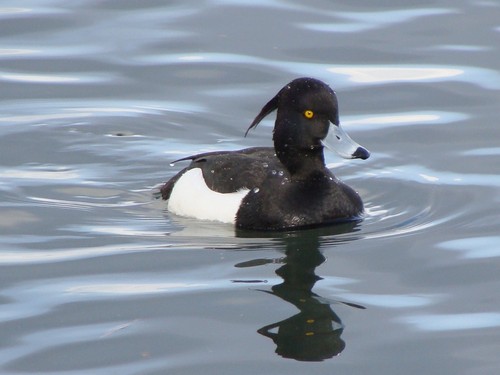
Tufted Duck
40-47 cm (16-18.5 in) long, 67-73 cm wingspan
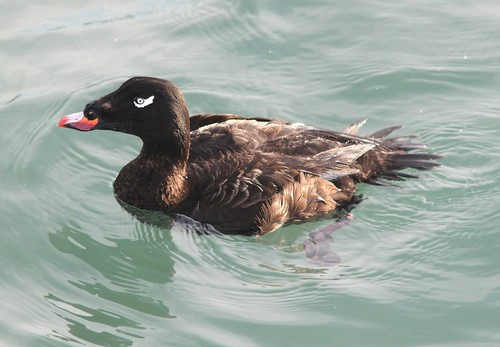
White-winged Scoter
48-58 cm (19-23 in) long, 86-99 cm wingspan
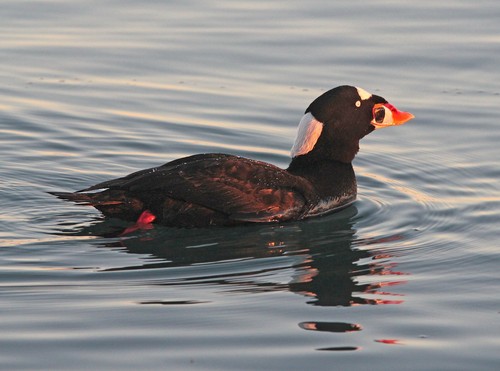
Surf Scoter
45-56 cm (18-22 in) long, 78-92 cm wingspan
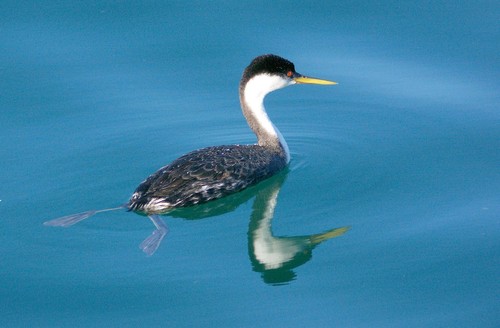
Western Grebe
56-74 cm (22-29 in) long, 79-102 cm wingspan
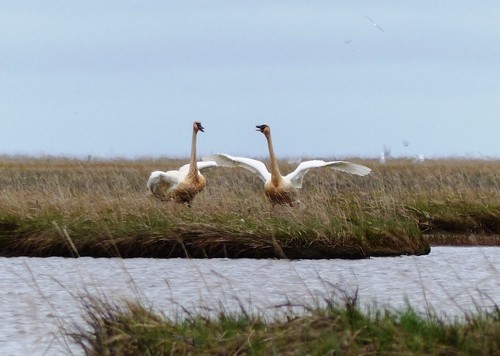
Tundra Swan
115-150 cm (45-59 in) long, about 180 cm wingspan
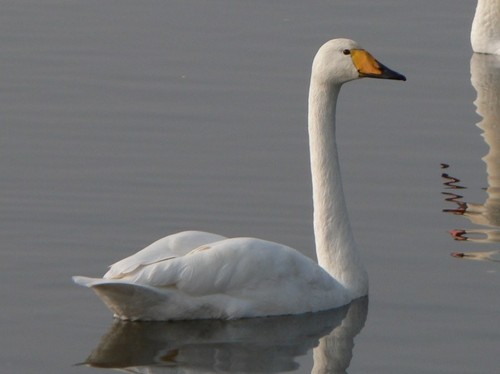
Whooper Swan
140-165 cm (55-65 in) long, 205-235 cm wingspan
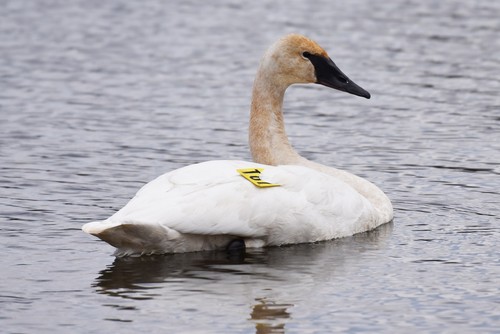
Trumpeter Swan
150-180 cm (59-71 in) long, up to 300 cm wingspan
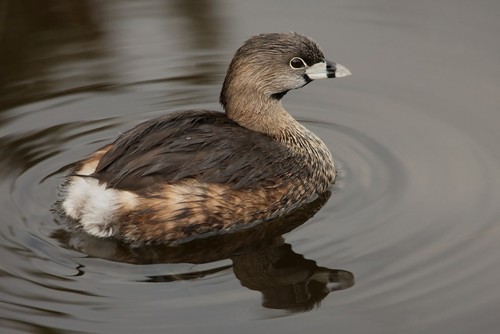
Pied-billed Grebe
31-38 cm (12-15 in) long, 45-62 cm wingspan