
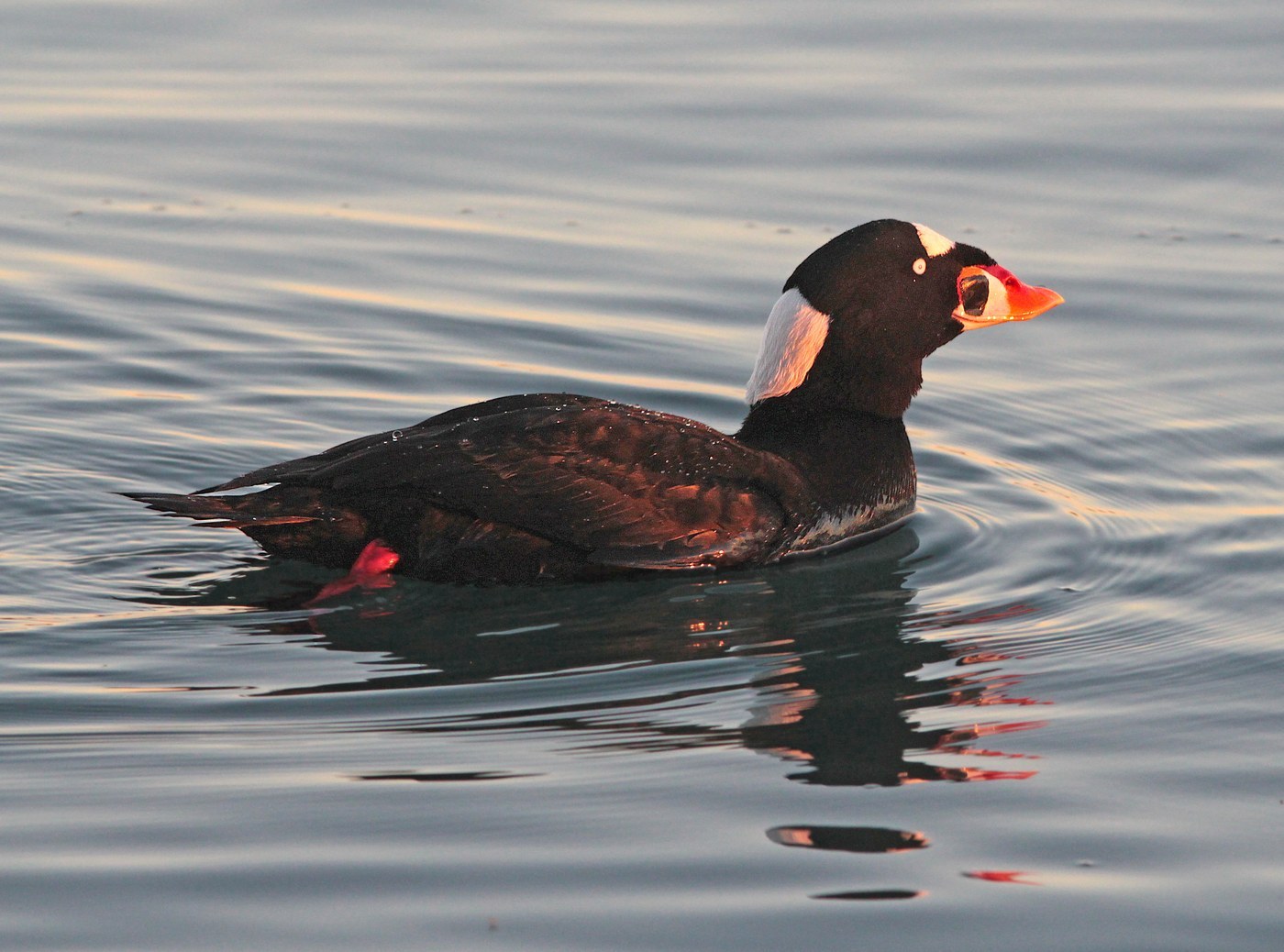
Surf Scoter
Melanitta perspicillata
A black sea duck with a bold multicolored bill patch, males marked with white patches on the forehead and nape.
- Size
- 45-56 cm (18-22 in) long, 78-92 cm wingspan
- Habitat
- boreal lakes (breeding), rocky and sandy coastal waters (winter)
- Type
- waterfowl
Spotted a bird like this?
Identify any bird from a photo, free.
Overview
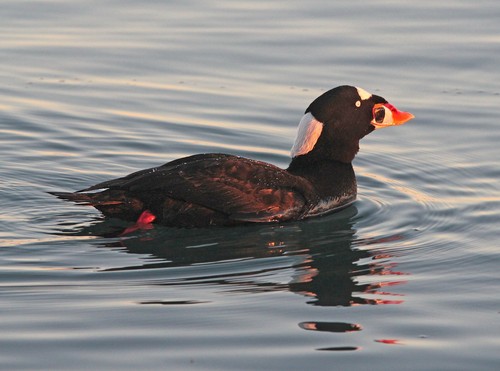
The Surf Scoter is a chunky black sea duck instantly recognizable by the male's bold, multicolored bill patch of orange, white, and black, paired with white patches on the forehead and nape that give rise to the old nickname "skunk-headed coot." Females are sooty brown overall with faint pale patches on the face and a plainer dark bill.
Surf Scoters breed on boreal lakes and winter along rocky and sandy coastlines, where they are often seen diving through crashing surf, riding out the waves with remarkable ease.
How to identify it
Key field marks
- All-black male body with a swollen, brightly patterned orange-white-black bill and white patches on the forehead and nape
- Female: dark brownish overall with two indistinct pale face patches and a plain dark bill
- Stocky, large-headed profile; flies in loose lines low over the water
Similar species
The White-winged Scoter is larger, shows a white speculum patch in the wing (visible in flight or as a fold on the swimming bird), and has a comma-shaped white eye mark rather than the Surf Scoter's forehead/nape patches. The Black Scoter male is entirely black except for a yellow-orange knob at the base of the bill, lacking white head patches altogether.
Habitat & range
Surf Scoters breed on freshwater lakes and ponds in the boreal forest and forest-tundra of Canada and Alaska. In winter, they move to coastal waters, favoring both rocky shorelines and sandy nearshore zones along the Pacific and Atlantic coasts, where they dive through the surf to feed.
Behavior & voice
Behavior
Surf Scoters dive to the seabed for food, often in the turbulence of breaking waves, and typically gather in flocks that can number in the hundreds or thousands during migration and winter.
Voice
Generally quiet; males give low guttural or gurgling calls during courtship, while females give harsh croaking notes.
Feeding
Mollusks, especially mussels and clams, along with crustaceans, obtained by diving in shallow coastal waters.
Nesting
Nests on the ground near freshwater lakes in the boreal forest, well hidden in low vegetation; clutches typically hold 5-9 eggs.
Frequently asked questions
Why is the Surf Scoter nicknamed the 'skunk-headed coot'?
The old folk name references the male's bold white patches on the forehead and nape set against an otherwise all-black head and body.
How do you tell Surf Scoter from White-winged Scoter?
Surf Scoter males have white forehead and nape patches and a large multicolored bill, while White-winged Scoters show a white speculum in the wing and a comma-shaped white eye mark instead of head patches.
What do Surf Scoters eat?
Mainly mussels and other mollusks, along with crustaceans, obtained by diving in coastal waters, often within breaking surf.
Where do Surf Scoters breed?
On freshwater lakes and ponds in the boreal forest of Canada and Alaska, far from the coastal waters where they winter.
Surf Scoter guides
In-depth guides for identifying, finding, and understanding Surf Scoter.
Other birds you may enjoy
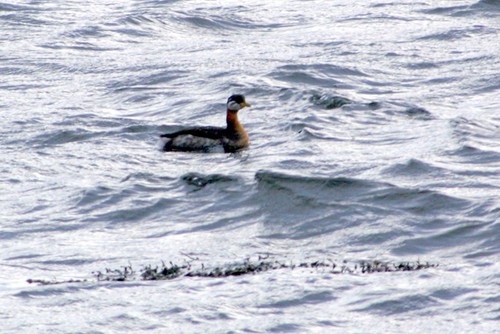
Red-necked Grebe
40-55 cm (16-22 in) long, 77-85 cm wingspan
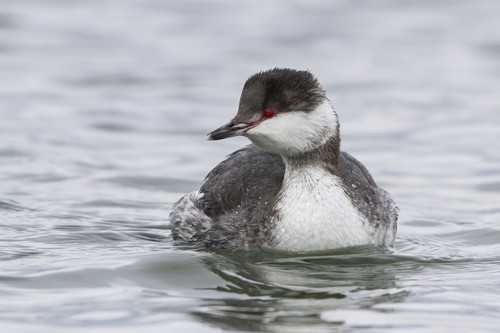
Horned Grebe
31-38 cm (12-15 in) long, 46-55 cm wingspan
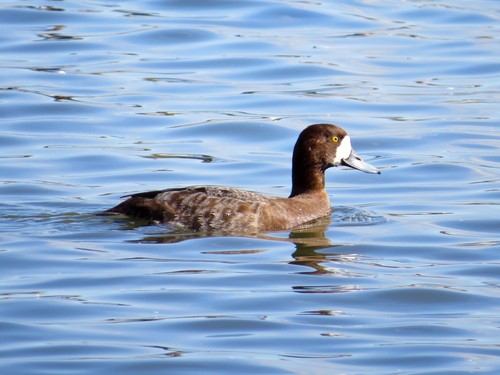
Greater Scaup
42-51 cm (16.5-20 in) long, 71-84 cm wingspan
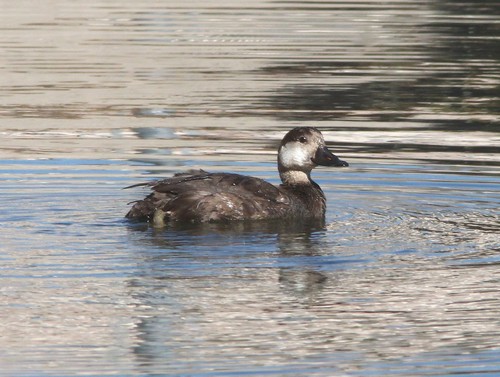
Black Scoter
43-54 cm (17-21 in) long, 79-90 cm wingspan
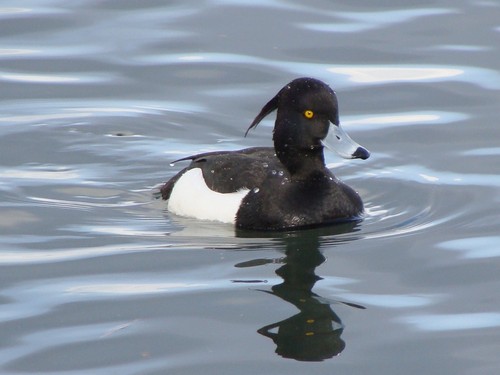
Tufted Duck
40-47 cm (16-18.5 in) long, 67-73 cm wingspan
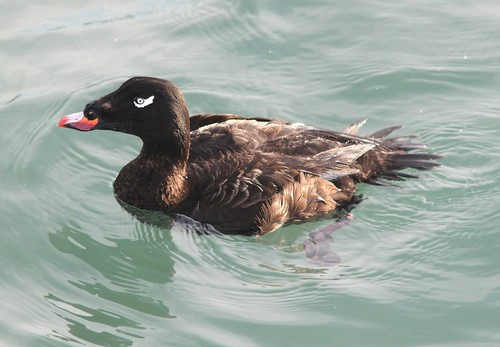
White-winged Scoter
48-58 cm (19-23 in) long, 86-99 cm wingspan
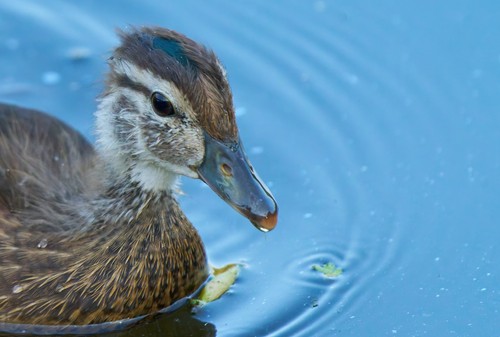
Wood Duck
47-54 cm (18.5-21 in) long, 66-73 cm wingspan
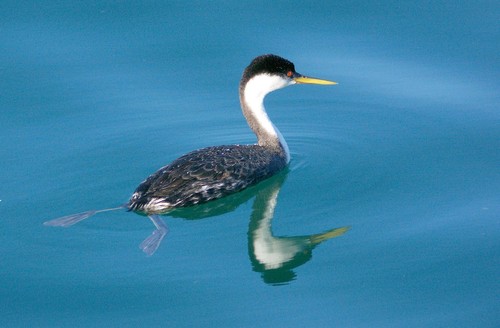
Western Grebe
56-74 cm (22-29 in) long, 79-102 cm wingspan
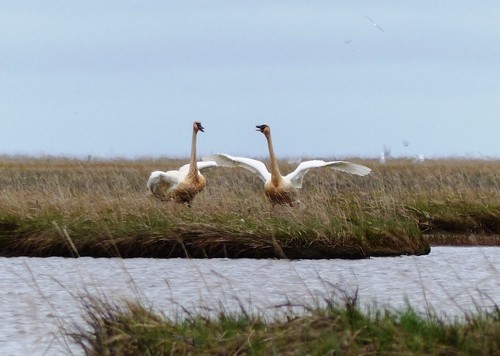
Tundra Swan
115-150 cm (45-59 in) long, about 180 cm wingspan
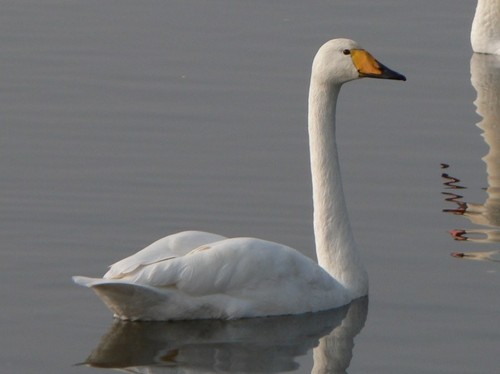
Whooper Swan
140-165 cm (55-65 in) long, 205-235 cm wingspan
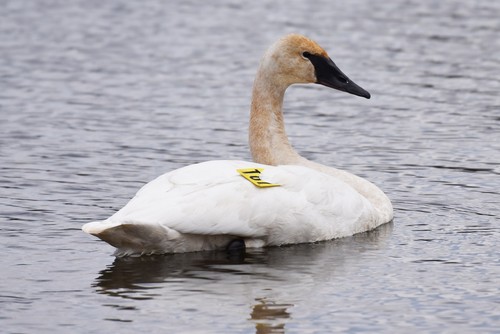
Trumpeter Swan
150-180 cm (59-71 in) long, up to 300 cm wingspan
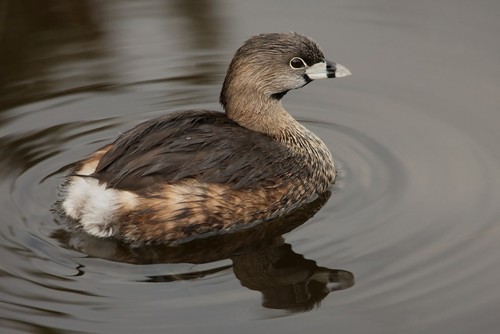
Pied-billed Grebe
31-38 cm (12-15 in) long, 45-62 cm wingspan