
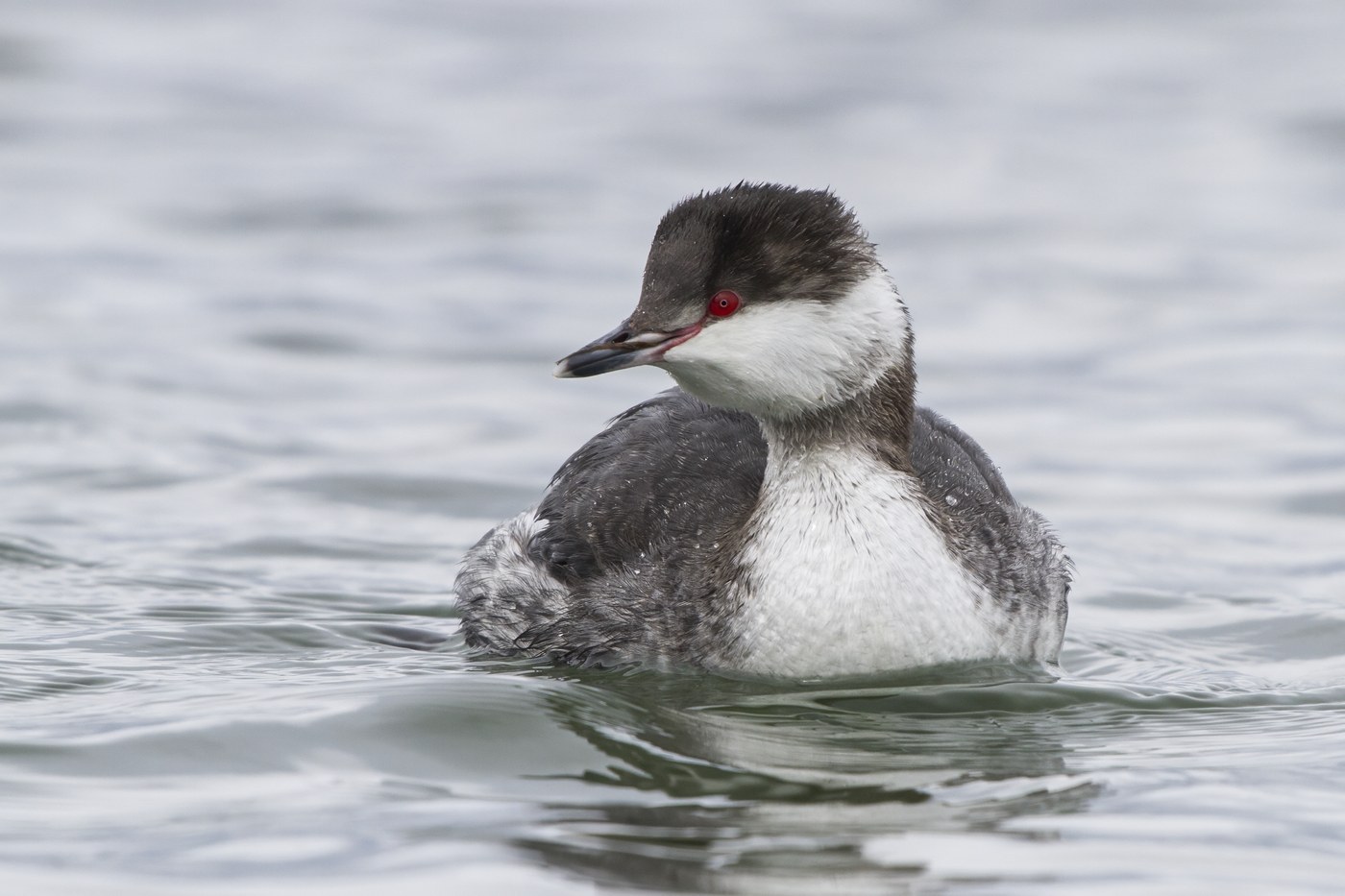
Horned Grebe
Podiceps auritus
A small, striking grebe that in breeding plumage sports golden "horn" tufts of feathers behind bright red eyes.
- Size
- 31-38 cm (12-15 in) long, 46-55 cm wingspan
- Habitat
- freshwater ponds and marshes for breeding, coastal and open waters in winter
- Type
- waterfowl
Spotted a bird like this?
Identify any bird from a photo, free.
Overview
The Horned Grebe, known in Europe as the Slavonian Grebe, is a small, compact diving bird famed for its dramatic breeding plumage. Breeding adults show a black head adorned with golden-buff tufts of feathers fanning out behind the eye like small horns, a rich chestnut neck and flanks, and a black back, all offset by piercing red eyes. In non-breeding plumage it becomes far plainer, with a black cap sharply demarcated from white cheeks and throat.
It breeds on small northern lakes and ponds and is one of several grebe species that undergo a dramatic seasonal transformation in appearance.
How to identify it
Key field marks
- Breeding: black head with golden ear tufts, chestnut neck and flanks, red eyes
- Non-breeding: black cap sharply cut off from white cheeks, throat, and foreneck, straight thin bill
- Compact body shape with a relatively flat crown
Similar species
- Eared Grebe in winter has a more diffuse, less sharply demarcated dark cap and a peaked crown, plus a slightly upturned bill.
- Red-necked Grebe is larger with a heavier, mostly yellow-based bill.
Habitat & range
Habitat
Breeds on small, shallow freshwater ponds and marshes with emergent vegetation; winters mainly on sheltered coastal bays and estuaries.
Range
Breeds across northern North America and northern Eurasia; winters along temperate coastlines to the south.
Migration
A regular migrant, moving from inland breeding waters to coastal or large open-water wintering sites.
Behavior & voice
Behavior
Often seen alone or in small loose groups, diving frequently to forage and performing elaborate mutual courtship displays involving head-shaking and "weed dances" on the breeding grounds.
Voice
Gives a variety of trilling, chattering, and shrieking calls on the breeding grounds; largely silent in winter.
Feeding
Dives to catch aquatic insects, small fish, and crustaceans.
Nesting
Builds a floating nest anchored to vegetation in shallow water; typically lays 4-5 pale bluish-white eggs.
Frequently asked questions
Why is it called the Horned Grebe?
Breeding adults grow tufts of golden feathers behind the eyes that fan out like small horns, giving the species its name.
What is the difference between a Horned Grebe and an Eared Grebe in winter?
The Horned Grebe has a sharply defined black cap against white cheeks and a flatter crown, while the Eared Grebe shows a more blended, dusky face and a peaked crown.
Is the Horned Grebe endangered?
It is classified as Vulnerable due to population declines linked to habitat loss on its breeding grounds and other pressures.
Where do Horned Grebes breed?
They breed on small freshwater ponds and marshes across northern North America and northern Eurasia.
Horned Grebe guides
In-depth guides for identifying, finding, and understanding Horned Grebe.
Other birds you may enjoy

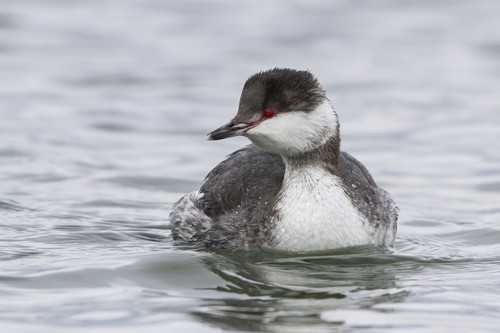
Red-necked Grebe
40-55 cm (16-22 in) long, 77-85 cm wingspan
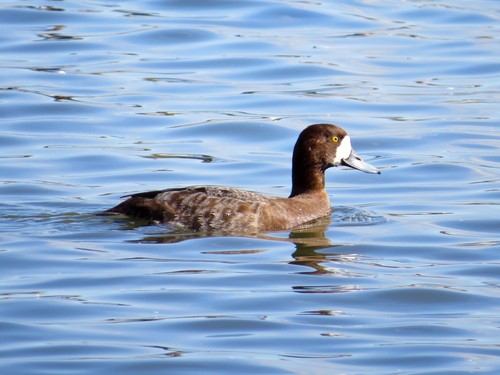
Greater Scaup
42-51 cm (16.5-20 in) long, 71-84 cm wingspan

Black Scoter
43-54 cm (17-21 in) long, 79-90 cm wingspan
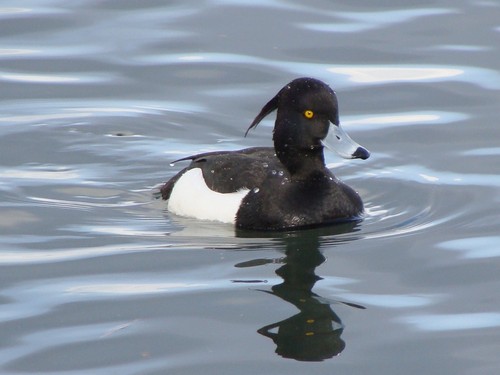
Tufted Duck
40-47 cm (16-18.5 in) long, 67-73 cm wingspan
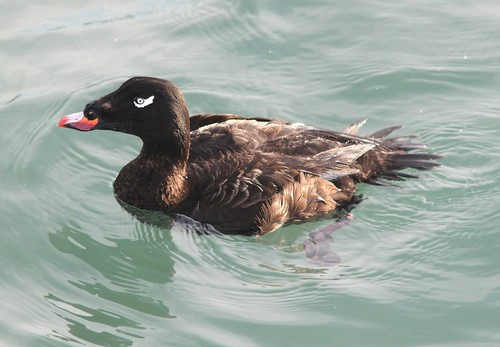
White-winged Scoter
48-58 cm (19-23 in) long, 86-99 cm wingspan
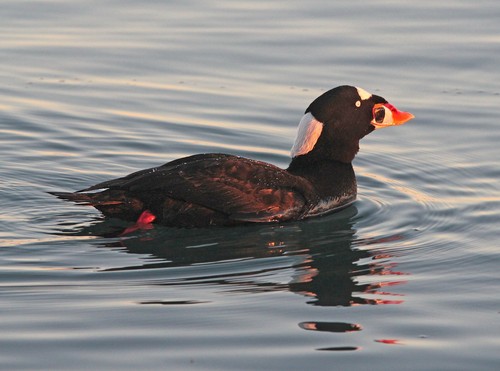
Surf Scoter
45-56 cm (18-22 in) long, 78-92 cm wingspan
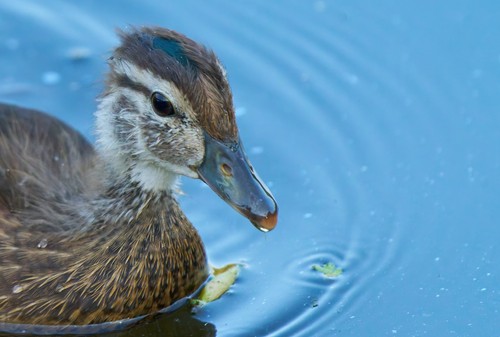
Wood Duck
47-54 cm (18.5-21 in) long, 66-73 cm wingspan
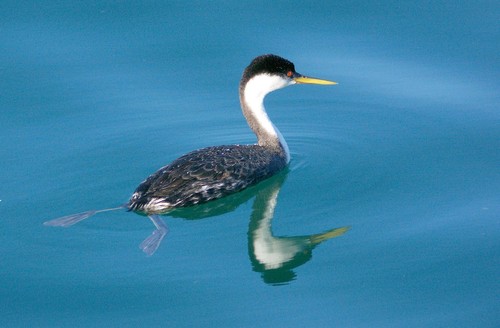
Western Grebe
56-74 cm (22-29 in) long, 79-102 cm wingspan
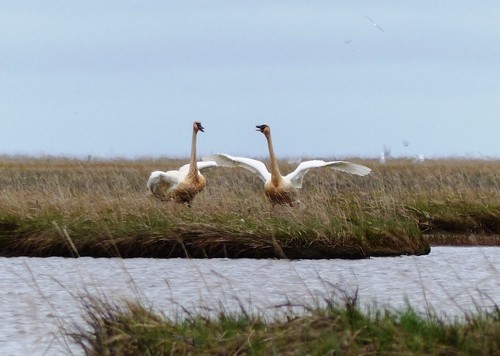
Tundra Swan
115-150 cm (45-59 in) long, about 180 cm wingspan
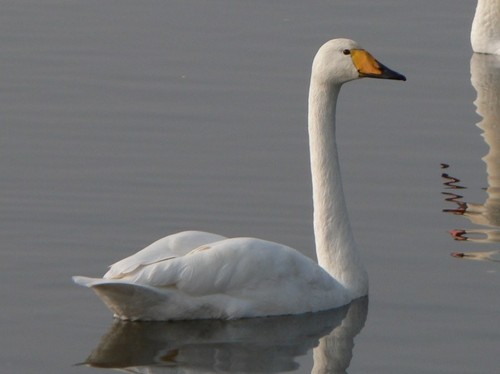
Whooper Swan
140-165 cm (55-65 in) long, 205-235 cm wingspan
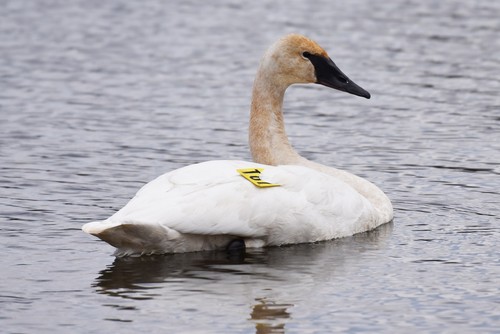
Trumpeter Swan
150-180 cm (59-71 in) long, up to 300 cm wingspan
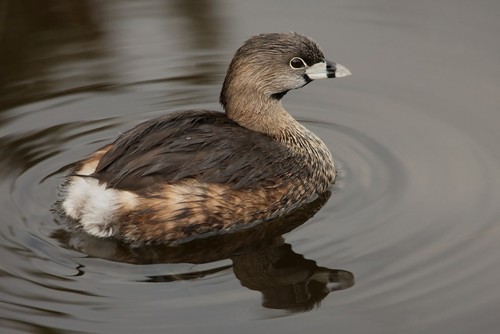
Pied-billed Grebe
31-38 cm (12-15 in) long, 45-62 cm wingspan