
Tufted Duck
Aythya fuligula
A compact Eurasian diving duck with a drooping head tuft, the drake strikingly patterned in black and white and occasionally found among scaup flocks in North America.
- Size
- 40-47 cm (16-18.5 in) long, 67-73 cm wingspan
- Habitat
- lakes, reservoirs, and ponds across Eurasia; rare but regular visitor to North America
- Type
- waterfowl
Spotted a bird like this?
Identify any bird from a photo, free.
Overview
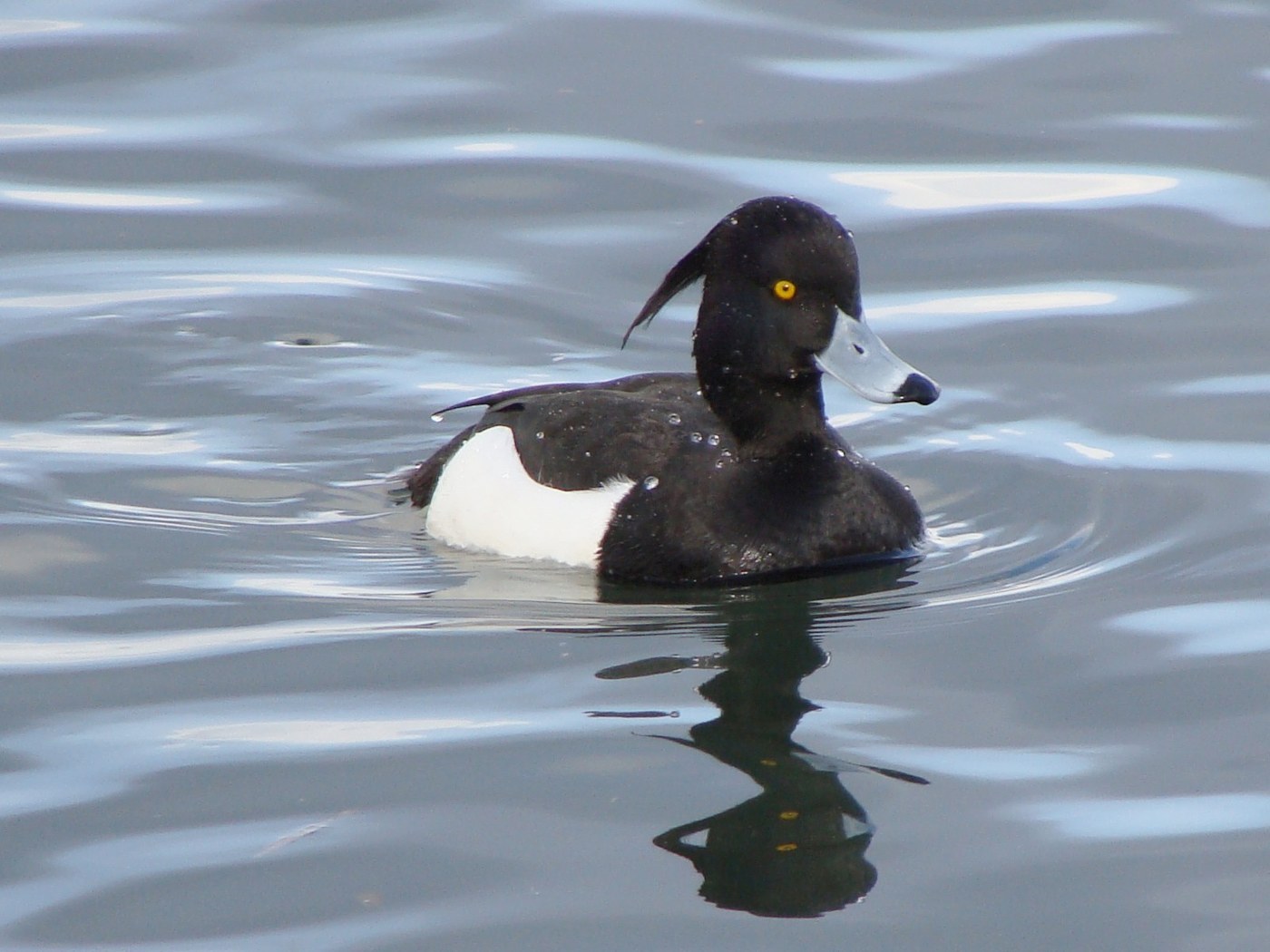
The Tufted Duck is a compact diving duck native to Eurasia, closely related to the North American scaup species and sharing a similar general shape and habits. The breeding drake is boldly patterned in glossy black and crisp white, with clean white flanks contrasting sharply against an all-black head, neck, breast, and back, plus a distinctive drooping tuft of feathers trailing from the back of the head.
Females are brown overall, sometimes showing a small white patch at the base of the bill (less extensive than in scaup) and a shorter head tuft. The species is a rare but regular visitor to North America, most often found in winter among flocks of scaup.
How to identify it
Key Field Marks
- Breeding drake: bold black-and-white pattern with clean white flanks, all-black head/neck/breast/back, and a long drooping head tuft
- Female: brown overall with a shorter tuft and sometimes a small pale patch at the bill base
- Yellow eye in both sexes
- Rounded head shape overall, similar in build to scaup
Similar Species
Greater and Lesser Scaup lack the distinctive drooping head tuft and have grayer (rather than pure white) backs on the drake. In North America, careful scrutiny of scaup flocks in winter is the typical way vagrant Tufted Ducks are found, with the tuft and stark white flanks being the key giveaways.
Habitat & range
Tufted Ducks breed across a broad swath of temperate and northern Eurasia, from the British Isles east through Russia, favoring lakes, ponds, and slow rivers with adjacent vegetation. Many populations are migratory, wintering on lakes, reservoirs, and coastal waters farther south across Europe and Asia.
The species occurs as a rare but increasingly regular vagrant in North America, particularly along the Pacific and Atlantic coasts and around the Great Lakes, typically detected in winter among large flocks of scaup.
Behavior & voice
Tufted Ducks dive to feed on mollusks and other aquatic invertebrates, along with some plant material, in a manner very similar to North American scaup, often foraging in mixed flocks with related diving ducks where their ranges overlap. They are highly social and gregarious outside the breeding season.
The voice is generally quiet; males give soft whistled notes during courtship displays, while females give a harsh growling call similar to other Aythya ducks. Nests are built on the ground close to water, typically well concealed in vegetation, with females incubating 8-11 eggs alone.
Frequently asked questions
Is the Tufted Duck found in North America?
It occurs as a rare but regular vagrant, mainly in winter, most often detected among flocks of scaup along the coasts and around the Great Lakes.
What is the most distinctive feature of a Tufted Duck?
The drooping tuft of feathers trailing from the back of the head, combined with a bold black-and-white pattern with clean white flanks.
How is the Tufted Duck related to scaup?
It is a close Old World relative in the same genus (Aythya), sharing similar shape, diving habits, and diet.
What do Tufted Ducks eat?
They dive for mollusks and other aquatic invertebrates, along with some plant material.
Where do Tufted Ducks breed?
They breed across temperate and northern Eurasia, from the British Isles east through Russia.
Tufted Duck guides
In-depth guides for identifying, finding, and understanding Tufted Duck.
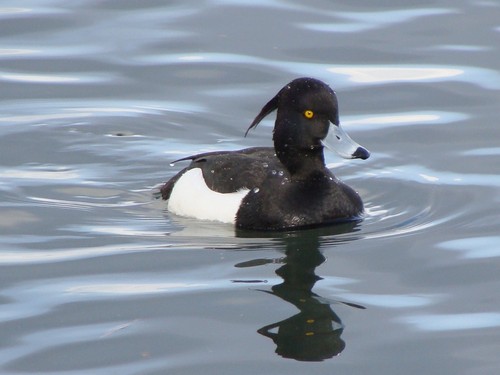
Tufted Duck identified by the community
Real birds identified with Bird Identifier.
Other birds you may enjoy
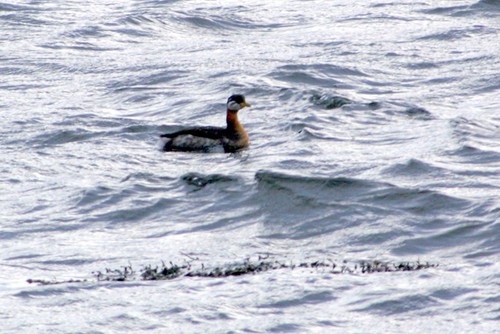
Red-necked Grebe
40-55 cm (16-22 in) long, 77-85 cm wingspan
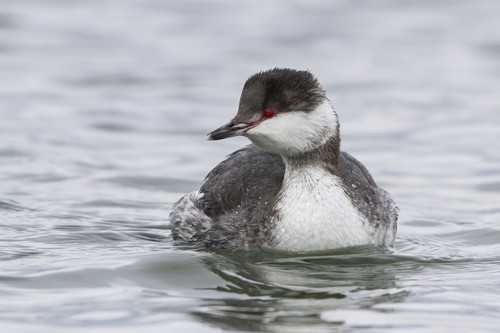
Horned Grebe
31-38 cm (12-15 in) long, 46-55 cm wingspan
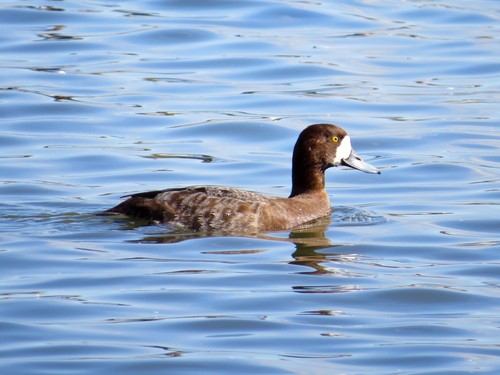
Greater Scaup
42-51 cm (16.5-20 in) long, 71-84 cm wingspan
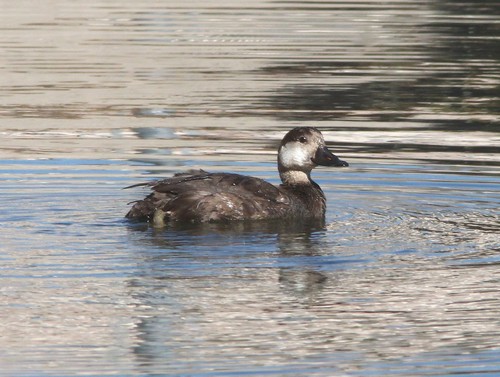
Black Scoter
43-54 cm (17-21 in) long, 79-90 cm wingspan
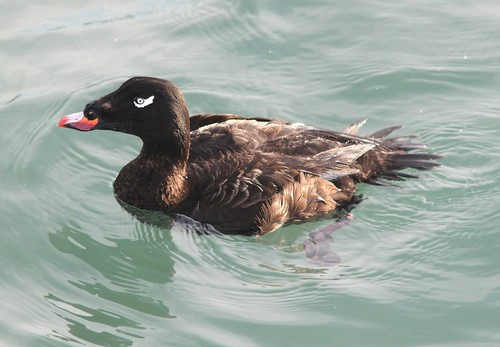
White-winged Scoter
48-58 cm (19-23 in) long, 86-99 cm wingspan
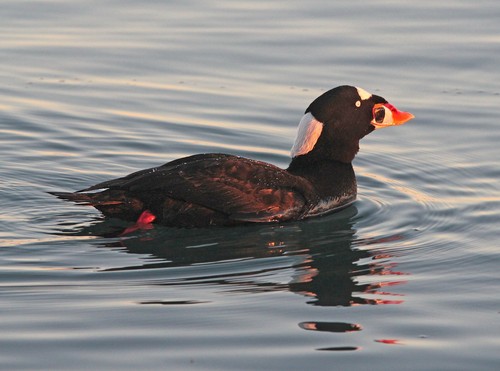
Surf Scoter
45-56 cm (18-22 in) long, 78-92 cm wingspan
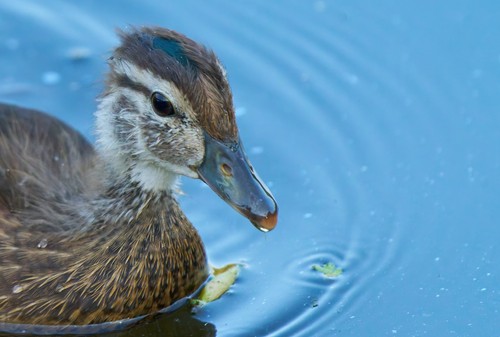
Wood Duck
47-54 cm (18.5-21 in) long, 66-73 cm wingspan
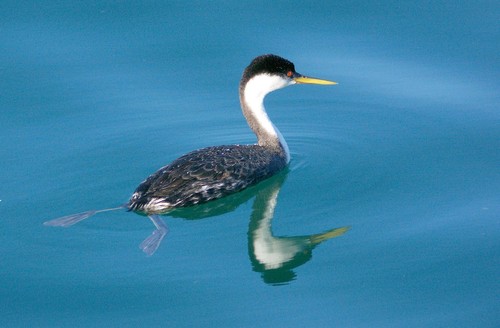
Western Grebe
56-74 cm (22-29 in) long, 79-102 cm wingspan
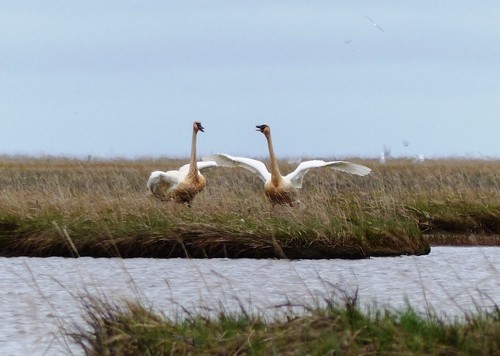
Tundra Swan
115-150 cm (45-59 in) long, about 180 cm wingspan
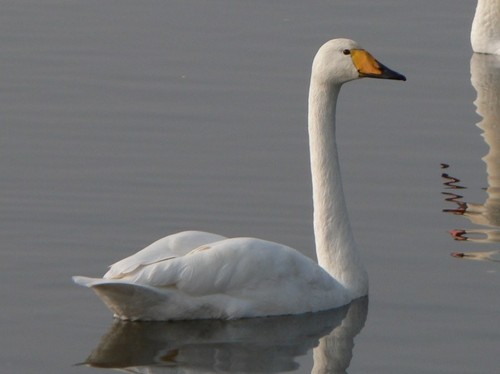
Whooper Swan
140-165 cm (55-65 in) long, 205-235 cm wingspan
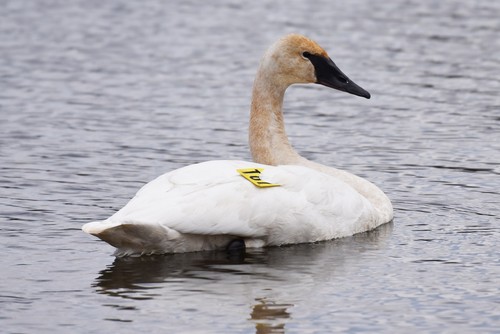
Trumpeter Swan
150-180 cm (59-71 in) long, up to 300 cm wingspan
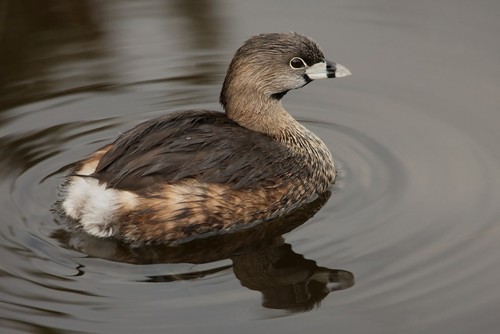
Pied-billed Grebe
31-38 cm (12-15 in) long, 45-62 cm wingspan