
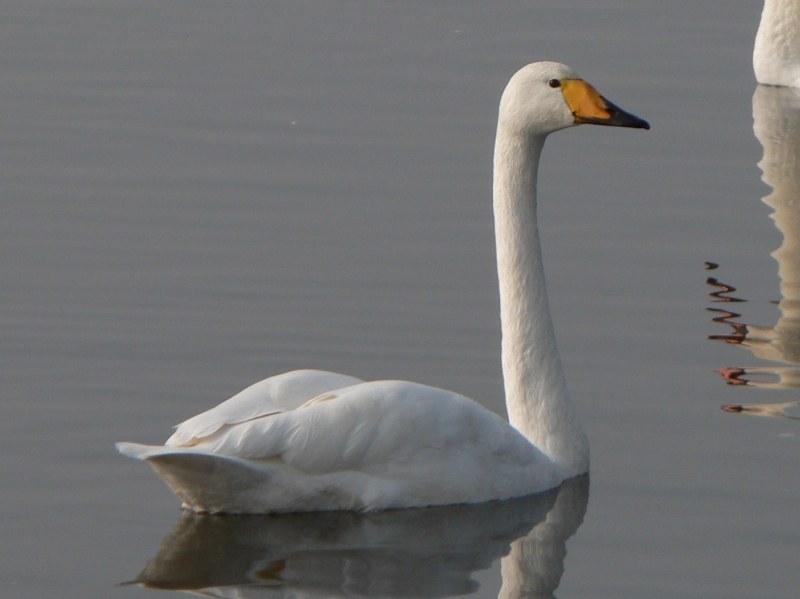
Whooper Swan
Cygnus cygnus
A large Eurasian swan with a yellow-and-black bill and a loud, bugling voice, breeding across the far north and famed for long migratory flights.
- Size
- 140-165 cm (55-65 in) long, 205-235 cm wingspan
- Habitat
- northern lakes, marshes, and rivers for breeding; ice-free lakes, estuaries, and farmland in winter
- Type
- waterfowl
Spotted a bird like this?
Identify any bird from a photo, free.
Overview
The Whooper Swan is a large, all-white swan of northern Eurasia, distinguished by a wedge-shaped yellow-and-black bill, with the yellow extending forward from the base in a pointed patch, and a straight, somewhat angular neck usually held erect. It is the national bird of Finland and features prominently in European folklore and mythology, including the legend of the Children of Lir.
Whooper Swans are capable of remarkable long-distance flights, including some of the highest-altitude and longest overwater migratory flights recorded among swans, such as crossings of the North Sea between Iceland and Britain.
How to identify it
Key field marks
- Yellow bill base extending forward in a pointed wedge, with a black tip
- Straight neck, typically held erect rather than curved
- Large, all-white body
- Loud, far-carrying bugling calls
Similar species
- Bewick's Swan: smaller, with a more rounded (not pointed) area of yellow on the bill that does not extend as far forward
- Mute Swan: orange bill with a black knob, curved neck, quieter voice
The pointed, wedge-shaped yellow bill patch and loud bugling calls are the clearest way to identify a Whooper Swan.
Habitat & range
Range and habitat
Whooper Swans breed across subarctic and northern temperate Eurasia, including Iceland, Scandinavia, and Russia, nesting on tundra lakes, bogs, and marshes.
Migration
The species migrates south in winter to ice-free wetlands, lakes, and coastal areas across Britain, continental Europe, and East Asia, with Icelandic breeders undertaking one of the longest and highest nonstop overwater migrations of any swan to reach wintering grounds in Britain and Ireland.
Behavior & voice
Behavior
Whooper Swans are social outside the breeding season, gathering in flocks on lakes and estuaries, and pairs perform coordinated calling displays with necks raised and wings partly spread.
Voice
The call is a loud, resonant, bugling or honking "whoop-whoop," from which the species gets its name, often given in flight or as a duet between mates.
Feeding
They feed by grazing on grasses and by dabbling or upending for aquatic vegetation, and readily forage on farmland for grain and root crop remnants during migration and winter.
Nesting and breeding
Pairs mate for life and build a large mound nest of vegetation near water; the female incubates the eggs while the male stands guard, and family groups typically migrate and winter together.
Frequently asked questions
How do you tell a Whooper Swan from a Mute Swan?
The Whooper Swan has a yellow-and-black bill and holds its neck straight, while the Mute Swan has an orange bill with a black knob and a curved neck.
Why is it called a Whooper Swan?
It is named for its loud, resonant bugling or 'whooping' call, quite different from the quieter Mute Swan.
How far do Whooper Swans migrate?
Icelandic-breeding Whooper Swans make one of the longest nonstop overwater migratory flights of any swan, crossing several hundred kilometers of open ocean to reach wintering grounds in Britain and Ireland.
Is the Whooper Swan a national symbol anywhere?
Yes, it is the national bird of Finland and holds cultural significance in several northern European countries.
Whooper Swan guides
In-depth guides for identifying, finding, and understanding Whooper Swan.
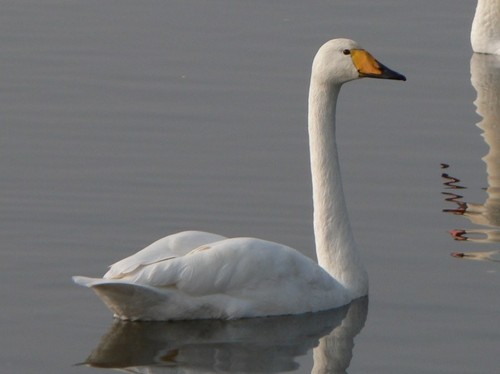
Other birds you may enjoy
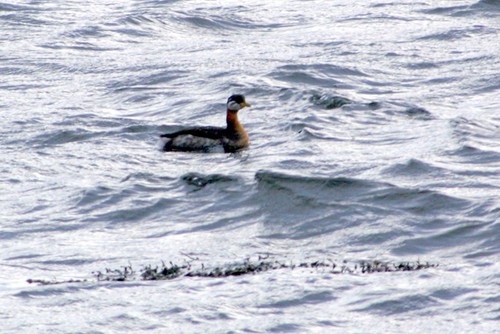
Red-necked Grebe
40-55 cm (16-22 in) long, 77-85 cm wingspan
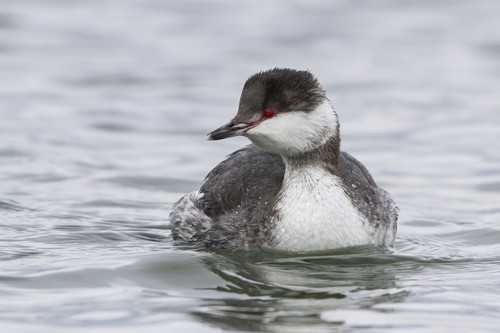
Horned Grebe
31-38 cm (12-15 in) long, 46-55 cm wingspan
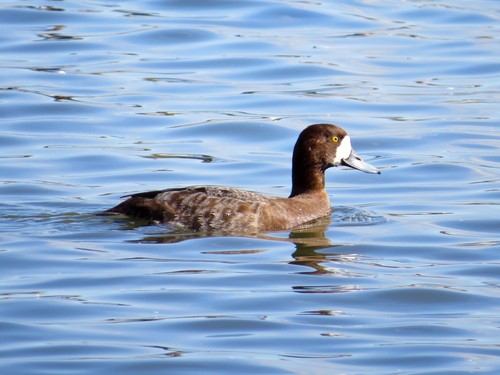
Greater Scaup
42-51 cm (16.5-20 in) long, 71-84 cm wingspan
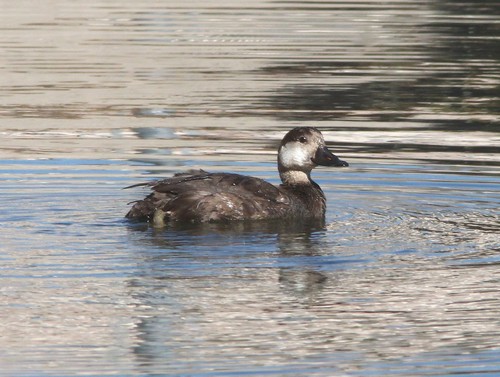
Black Scoter
43-54 cm (17-21 in) long, 79-90 cm wingspan
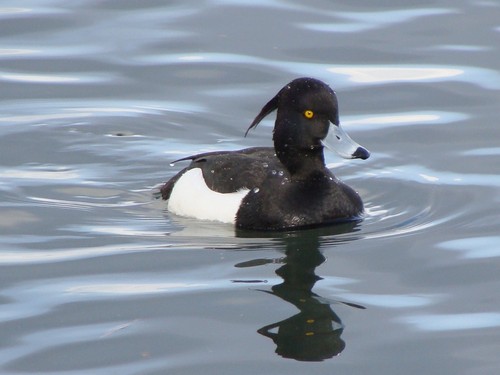
Tufted Duck
40-47 cm (16-18.5 in) long, 67-73 cm wingspan
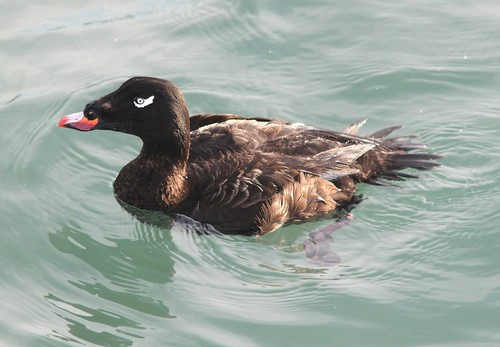
White-winged Scoter
48-58 cm (19-23 in) long, 86-99 cm wingspan
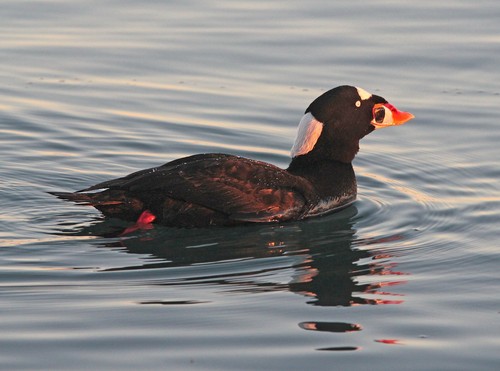
Surf Scoter
45-56 cm (18-22 in) long, 78-92 cm wingspan
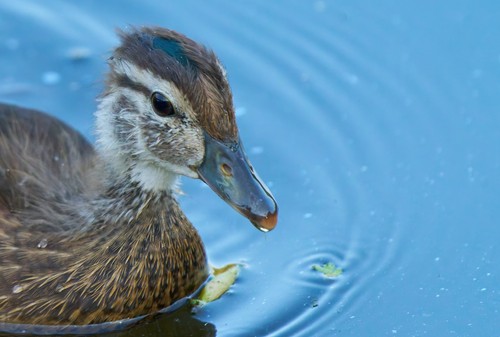
Wood Duck
47-54 cm (18.5-21 in) long, 66-73 cm wingspan
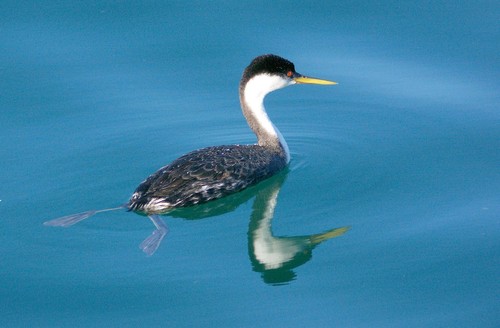
Western Grebe
56-74 cm (22-29 in) long, 79-102 cm wingspan
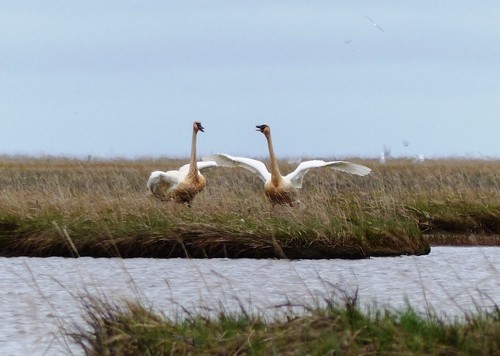
Tundra Swan
115-150 cm (45-59 in) long, about 180 cm wingspan
Trumpeter Swan
150-180 cm (59-71 in) long, up to 300 cm wingspan
Pied-billed Grebe
31-38 cm (12-15 in) long, 45-62 cm wingspan