
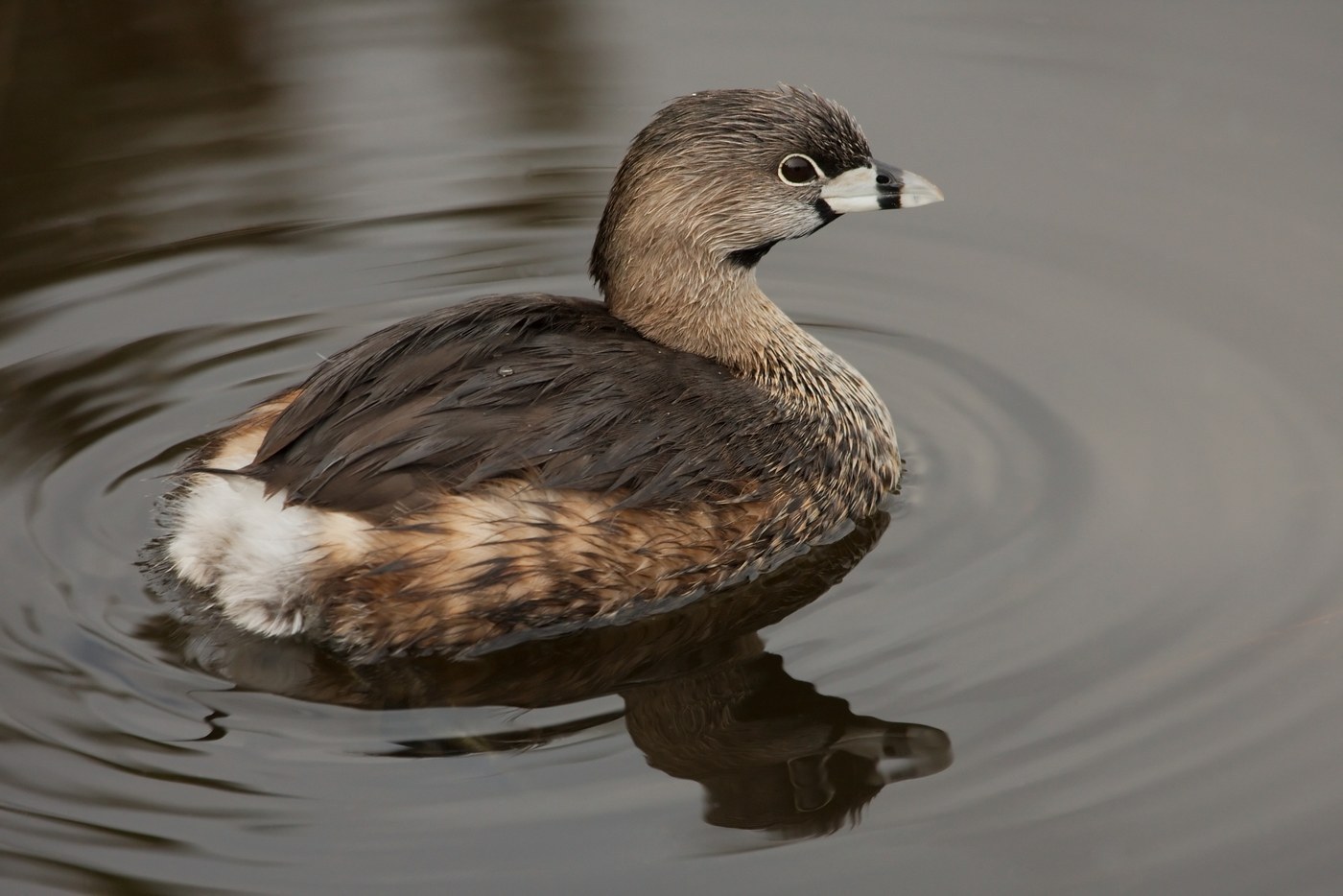
Pied-billed Grebe
Podilymbus podiceps
A chunky, secretive brown grebe of the Americas, named for its thick, pale bill marked with a black ring in the breeding season.
- Size
- 31-38 cm (12-15 in) long, 45-62 cm wingspan
- Habitat
- freshwater ponds, marshes, and lakes with dense vegetation
- Type
- waterfowl
Spotted a bird like this?
Identify any bird from a photo, free.
Overview
The Pied-billed Grebe is a small, stocky, brown waterbird notable among grebes for its thick, chicken-like bill rather than the thin, pointed bill typical of most grebe species. In breeding plumage the bill turns pale bluish-white with a bold black band around it, giving the species its common name. It has a short neck, a fluffy white patch under the tail, and an overall dumpy, unobtrusive appearance that helps it blend into dense marsh vegetation.
Often called the "water witch" for its habit of silently sinking below the surface rather than diving, it is one of the most widespread and adaptable grebes in the Western Hemisphere.
How to identify it
Key field marks
- Small, stocky body with a short neck
- Thick, pale bill with a black ring in breeding plumage
- Fluffy white undertail patch, often flicked visibly
- Brown overall plumage lacking the bold head patterns of many other grebes
Similar species
- Least Grebe (in range overlap areas) is smaller with a thin dark bill and yellow eye.
- Other grebes such as Horned or Eared Grebe have thin, pointed bills and more patterned plumage, unlike the plain brown Pied-billed Grebe.
Habitat & range
Habitat
Favors freshwater ponds, marshes, sloughs, and lake edges with abundant emergent vegetation for cover.
Range
Found throughout much of North, Central, and South America, from southern Canada to Argentina.
Migration
Northern populations migrate south in winter to ice-free waters, while southern populations are largely resident.
Behavior & voice
Behavior
Notoriously secretive, often slowly submerging its body underwater like a submarine to escape detection rather than diving with a splash.
Voice
Gives a loud, far-carrying series of cackling, whooping notes, often described as "cow-cow-cow-cow-cowp-cowp", frequently heard from dense marsh vegetation.
Feeding
Dives to catch small fish, crustaceans, and aquatic insects, using its thick bill to crush hard-shelled prey such as crayfish.
Nesting
Builds a floating platform nest anchored to marsh vegetation; typically lays 4-7 bluish-white eggs that quickly become nest-stained.
Frequently asked questions
Why is it called the Pied-billed Grebe?
Its common name refers to the pale, pied (two-toned) bill marked with a bold black ring that develops during the breeding season.
Why is the Pied-billed Grebe called the water witch?
It can silently sink below the water's surface without diving or splashing, seeming to vanish, which earned it the nickname "water witch".
What does a Pied-billed Grebe eat?
It eats small fish, crustaceans such as crayfish, and aquatic insects, using its thick bill to crush harder prey.
Where can you find Pied-billed Grebes?
They inhabit freshwater ponds, marshes, and lakes with dense vegetation across much of North, Central, and South America.
Pied-billed Grebe guides
In-depth guides for identifying, finding, and understanding Pied-billed Grebe.
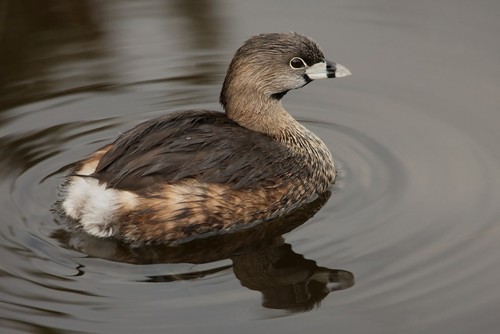
Other birds you may enjoy
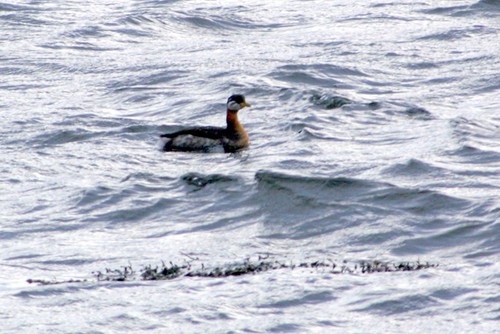
Red-necked Grebe
40-55 cm (16-22 in) long, 77-85 cm wingspan
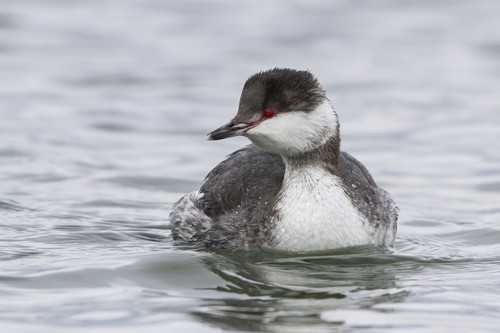
Horned Grebe
31-38 cm (12-15 in) long, 46-55 cm wingspan
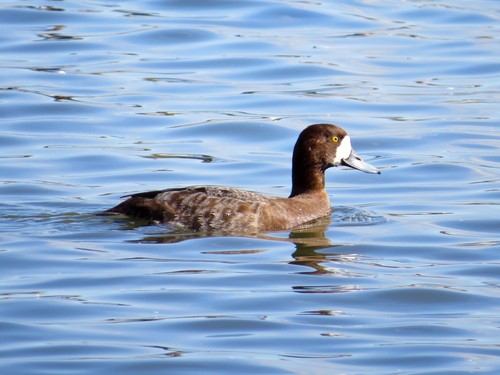
Greater Scaup
42-51 cm (16.5-20 in) long, 71-84 cm wingspan
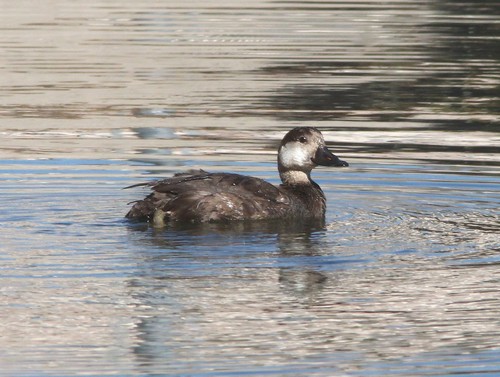
Black Scoter
43-54 cm (17-21 in) long, 79-90 cm wingspan
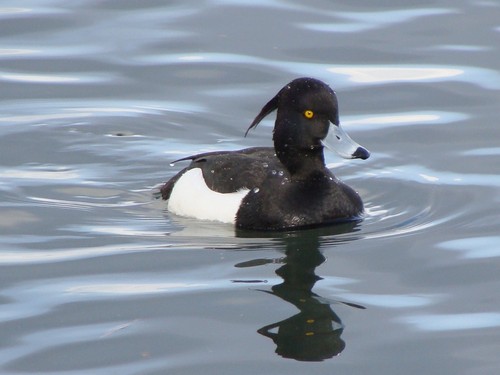
Tufted Duck
40-47 cm (16-18.5 in) long, 67-73 cm wingspan
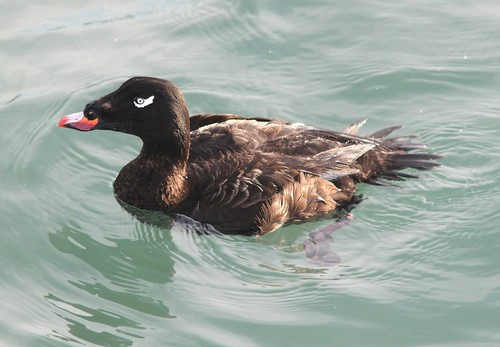
White-winged Scoter
48-58 cm (19-23 in) long, 86-99 cm wingspan
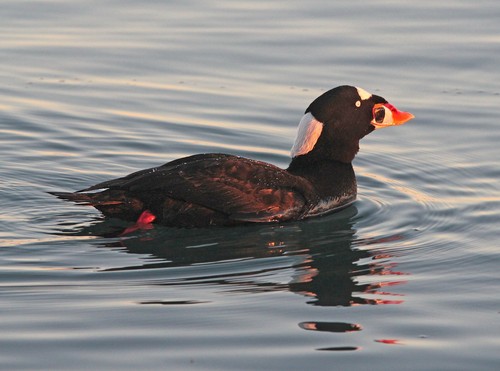
Surf Scoter
45-56 cm (18-22 in) long, 78-92 cm wingspan
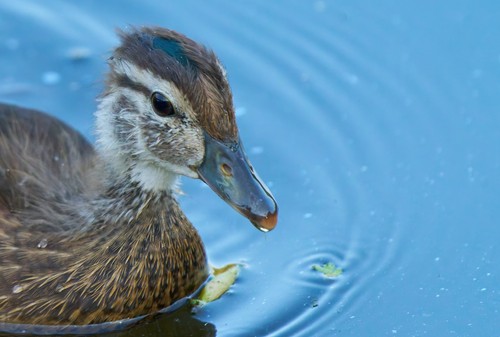
Wood Duck
47-54 cm (18.5-21 in) long, 66-73 cm wingspan
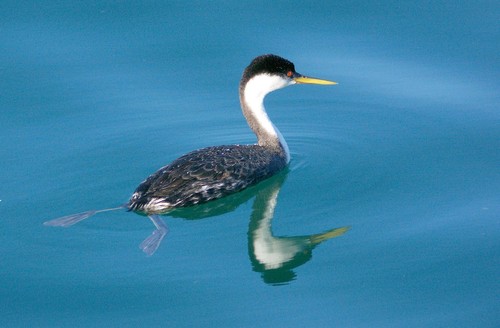
Western Grebe
56-74 cm (22-29 in) long, 79-102 cm wingspan
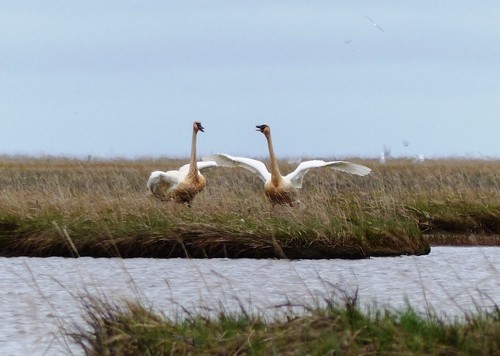
Tundra Swan
115-150 cm (45-59 in) long, about 180 cm wingspan
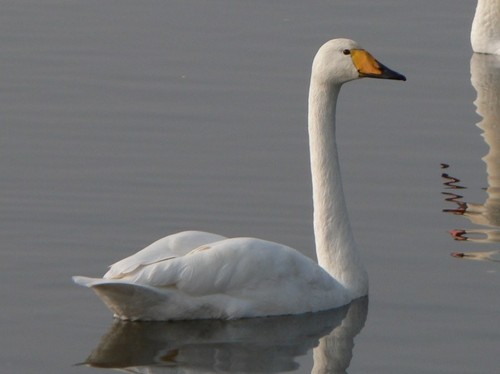
Whooper Swan
140-165 cm (55-65 in) long, 205-235 cm wingspan
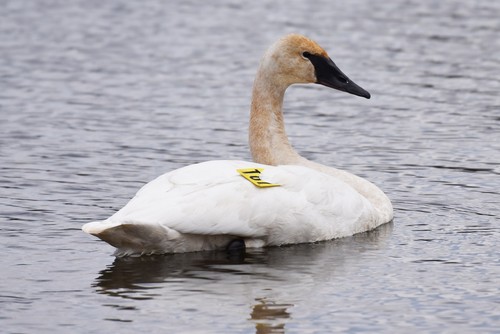
Trumpeter Swan
150-180 cm (59-71 in) long, up to 300 cm wingspan