
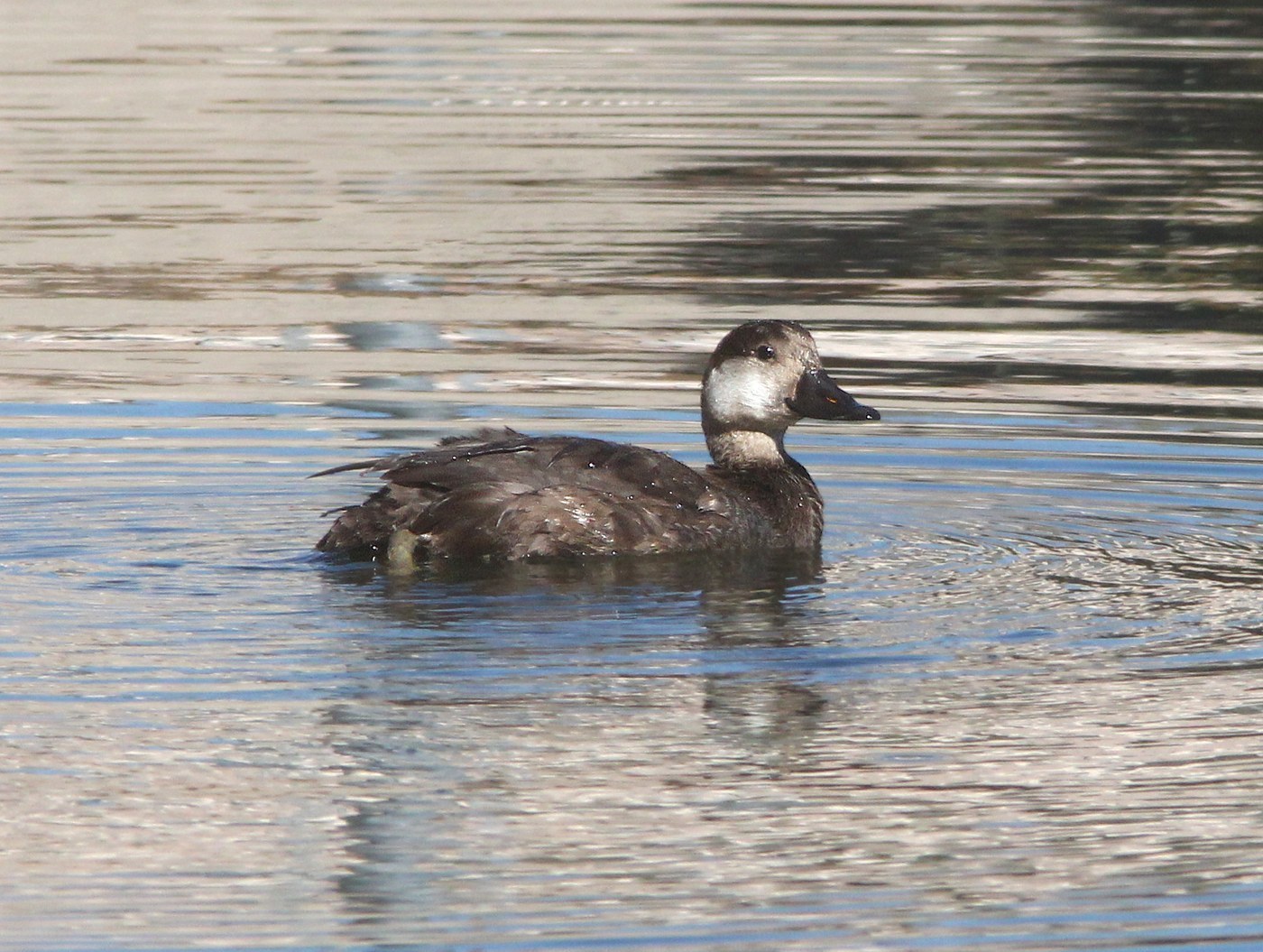
Black Scoter
Melanitta americana
An all-black sea duck whose males show a bright orange-yellow knob at the base of the bill.
- Size
- 43-54 cm (17-21 in) long, 79-90 cm wingspan
- Habitat
- tundra and boreal lakes (breeding), rocky and sandy coastal waters (winter)
- Type
- waterfowl
Spotted a bird like this?
Identify any bird from a photo, free.
Overview
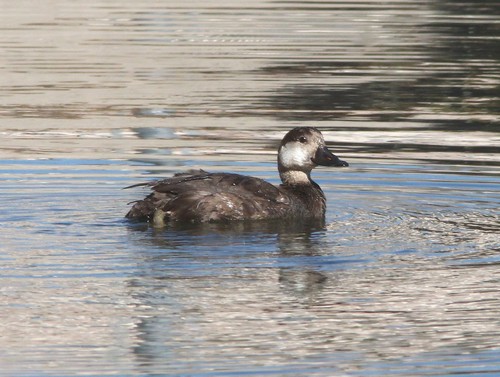
The Black Scoter is the plainest-looking of the three scoter species, with males entirely glossy black except for a bright yellow-orange knob at the base of the bill. Females are dark brownish overall with a contrasting pale cheek and throat that sets off a dark cap, distinguishing them from the more patchily marked female Surf and White-winged Scoters.
Black Scoters breed on subarctic tundra and boreal lakes, then winter in large flocks along rocky and sandy coastlines, where their all-dark silhouette and buoyant, low profile on the water are distinctive.
How to identify it
Key field marks
- Male: entirely glossy black body with a bright orange-yellow knob at the base of an otherwise black bill
- Female: dark brown body with a pale cheek and throat contrasting against a blackish cap, lacking the white patches of other female scoters
- Rounded head shape and stocky build typical of scoters
Similar species
Unlike the Surf Scoter (white forehead/nape patches) and White-winged Scoter (white wing speculum), the male Black Scoter shows no white anywhere on the body, only the bill knob. Female Black Scoters are best told from other female scoters by their evenly pale face/throat contrasting with a dark cap, rather than distinct spots.
Habitat & range
Black Scoters breed on tundra ponds and lakes in the subarctic and low Arctic of North America and eastern Siberia, generally farther north and more sparsely distributed than the other scoters. In winter, they gather along both Atlantic and Pacific coastlines in dense flocks, favoring nearshore waters over sand and gravel bottoms.
Behavior & voice
Behavior
Forages by diving in coastal and lake waters, often in tightly packed flocks; flight involves rapid wingbeats low over the water, frequently in long lines.
Voice
One of the more vocal sea ducks, males give a distinctive, musical, whistled 'cour-loo' call, often heard from wintering flocks.
Feeding
Mollusks, especially mussels and clams, along with crustaceans, obtained by diving to the bottom.
Nesting
Nests on the ground near tundra ponds and lakes, concealed in low vegetation; clutches typically hold 5-9 eggs.
Frequently asked questions
How do you identify a male Black Scoter?
It is the only scoter that is entirely black-bodied with no white markings, distinguished by a bright yellow-orange knob at the base of the bill.
What sound does the Black Scoter make?
Males give a musical, whistled 'cour-loo' call, making it one of the more vocal sea ducks, especially noticeable in wintering flocks.
Where do Black Scoters breed?
On tundra ponds and lakes in the subarctic and low Arctic of North America and eastern Siberia.
What do Black Scoters eat?
Mainly mollusks such as mussels and clams, along with crustaceans, obtained by diving.
Black Scoter guides
In-depth guides for identifying, finding, and understanding Black Scoter.
Other birds you may enjoy
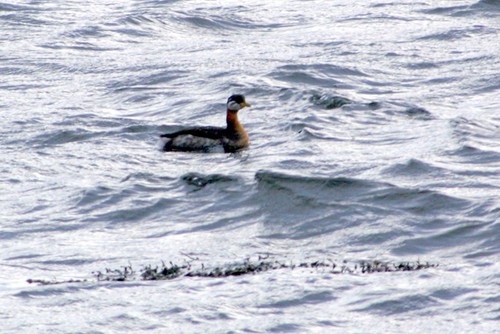
Red-necked Grebe
40-55 cm (16-22 in) long, 77-85 cm wingspan
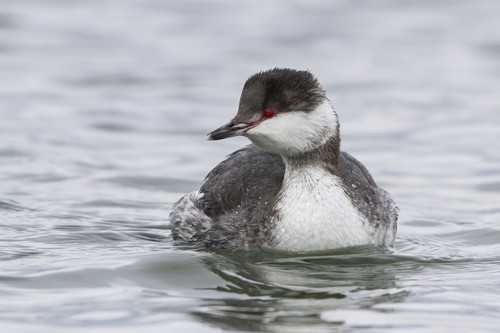
Horned Grebe
31-38 cm (12-15 in) long, 46-55 cm wingspan
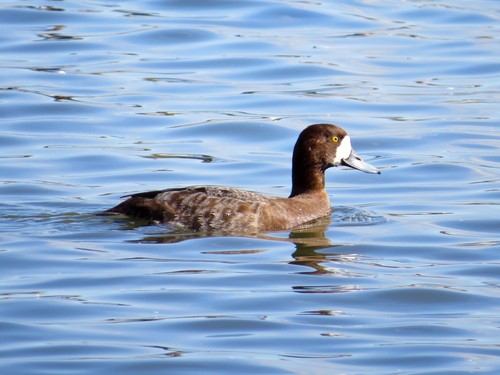
Greater Scaup
42-51 cm (16.5-20 in) long, 71-84 cm wingspan
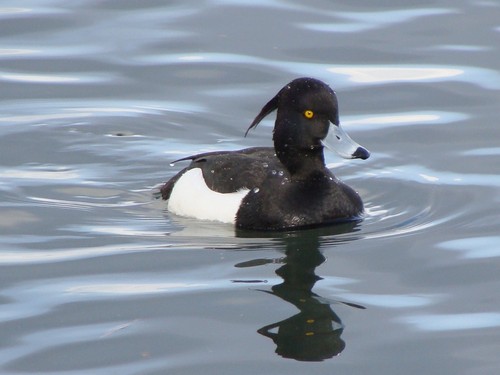
Tufted Duck
40-47 cm (16-18.5 in) long, 67-73 cm wingspan
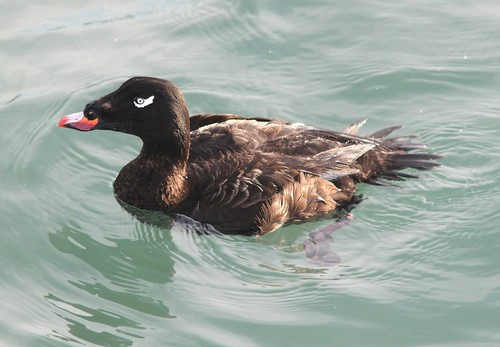
White-winged Scoter
48-58 cm (19-23 in) long, 86-99 cm wingspan
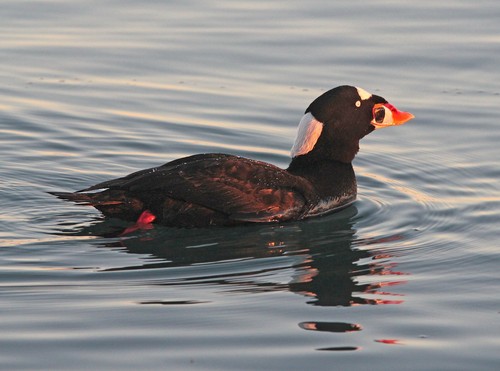
Surf Scoter
45-56 cm (18-22 in) long, 78-92 cm wingspan
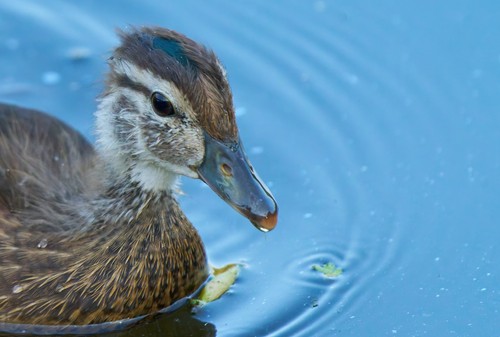
Wood Duck
47-54 cm (18.5-21 in) long, 66-73 cm wingspan
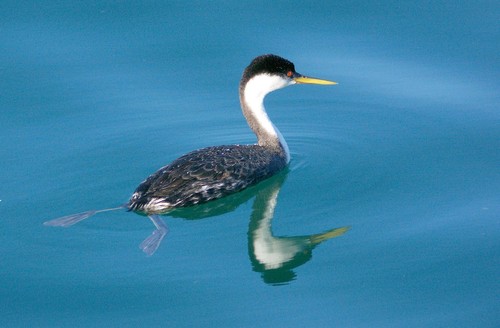
Western Grebe
56-74 cm (22-29 in) long, 79-102 cm wingspan
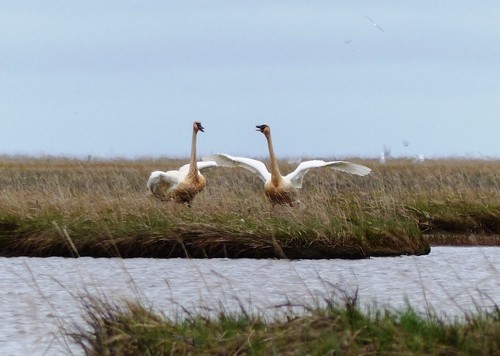
Tundra Swan
115-150 cm (45-59 in) long, about 180 cm wingspan
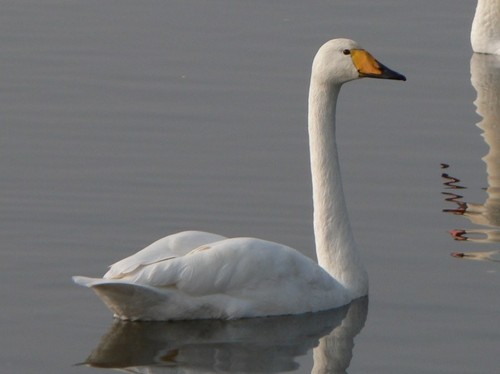
Whooper Swan
140-165 cm (55-65 in) long, 205-235 cm wingspan
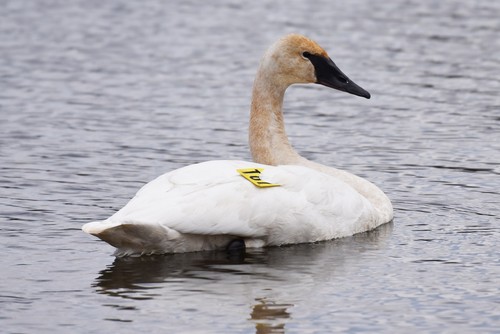
Trumpeter Swan
150-180 cm (59-71 in) long, up to 300 cm wingspan
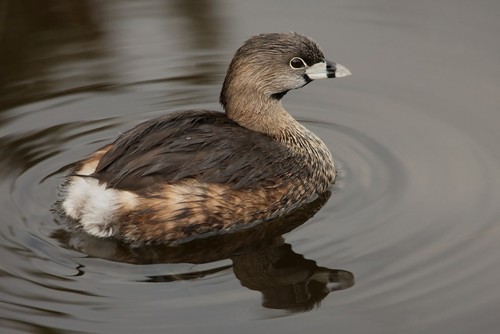
Pied-billed Grebe
31-38 cm (12-15 in) long, 45-62 cm wingspan