
Black Scoter Identification Guide
A sea duck whose male is the only all-black North American duck, made unmistakable by a bulbous bright orange-yellow knob at the base of the bill.
Read the full Black Scoter encyclopedia entry →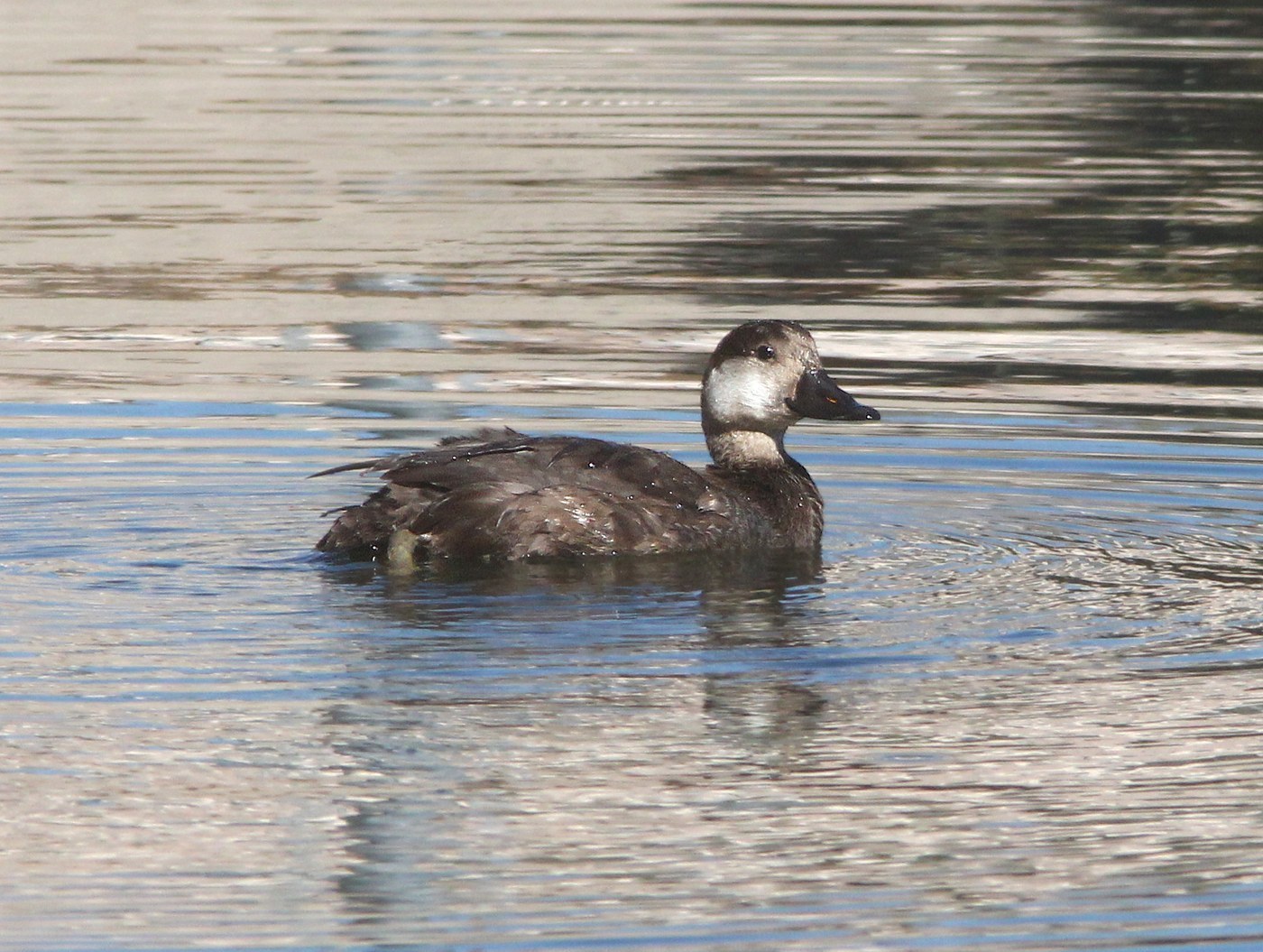
Key Field Marks
- Adult male: entirely glossy black plumage from head to tail with no white patches anywhere on the body — the only scoter, and one of very few ducks, with completely unbroken black plumage.
- Bill shows a distinctive swollen, bulbous knob at the base, bright orange-yellow in adult males, contrasting sharply against the black plumage and face.
- Adult female: dark blackish-brown overall with a paler, contrastingly pale cheek and lower face against a darker cap, giving a distinctly "capped" appearance; bill is dark and lacks the male's knob.
- Overall a chunky, thick-necked sea duck typical of the scoter group, riding low in the water.
Behavior
- Forms large rafts on open coastal and offshore waters outside the breeding season, often associating with other scoter species.
- Dives to feed on mollusks, crustaceans, and other benthic invertebrates in coastal marine waters.
- Unusually vocal for a duck: males give musical, whistled calls, quite different from the quacks or grunts typical of most ducks.
Separating from Similar Species
- Surf Scoter: male shows bold white patches on the forehead and nape and a multicolored (black, white, orange, red) bill, unlike the uniformly black plumage and simple orange-knobbed bill of Black Scoter.
- White-winged Scoter: shows an obvious white wing patch visible both at rest and in flight, absent entirely in Black Scoter.
- Female Black Scoter is best told from female Surf and White-winged Scoters by its more sharply demarcated pale cheek against a dark cap, without the double pale face patches of female Surf Scoter or the white wing patch of White-winged Scoter.
Habitat & Range
- Breeds on tundra and taiga lakes in Alaska and northern Canada; a closely related form (sometimes considered the same species, Common Scoter) breeds across northern Eurasia.
- Winters along both the Atlantic and Pacific coasts of North America, favoring nearshore ocean waters, bays, and inlets, typically in flocks.
- Rarely found far inland except as scattered migrants or occasional vagrants on large lakes.
Voice
- Males give a distinctive musical, whistled "curloo" or similar call, notably more melodious than the calls of most other ducks; females give lower, harsher notes.
Frequently asked questions
What is the easiest way to identify a male Black Scoter?
Look for entirely glossy black plumage with no white patches anywhere, combined with a bulbous bright orange-yellow knob at the base of the bill.
How do I tell Black Scoter from Surf Scoter?
Male Surf Scoter has bold white patches on the forehead and nape and a multicolored bill, while male Black Scoter is entirely black with a simple orange-knobbed bill and no white markings.
How can I recognize a female Black Scoter?
Look for dark blackish-brown body plumage with a contrastingly pale cheek and lower face set against a darker cap, giving a 'capped' appearance.
Is the Black Scoter's call unusual for a duck?
Yes, males give a musical, whistled call that is more melodious than the quacks or grunts typical of most ducks.