
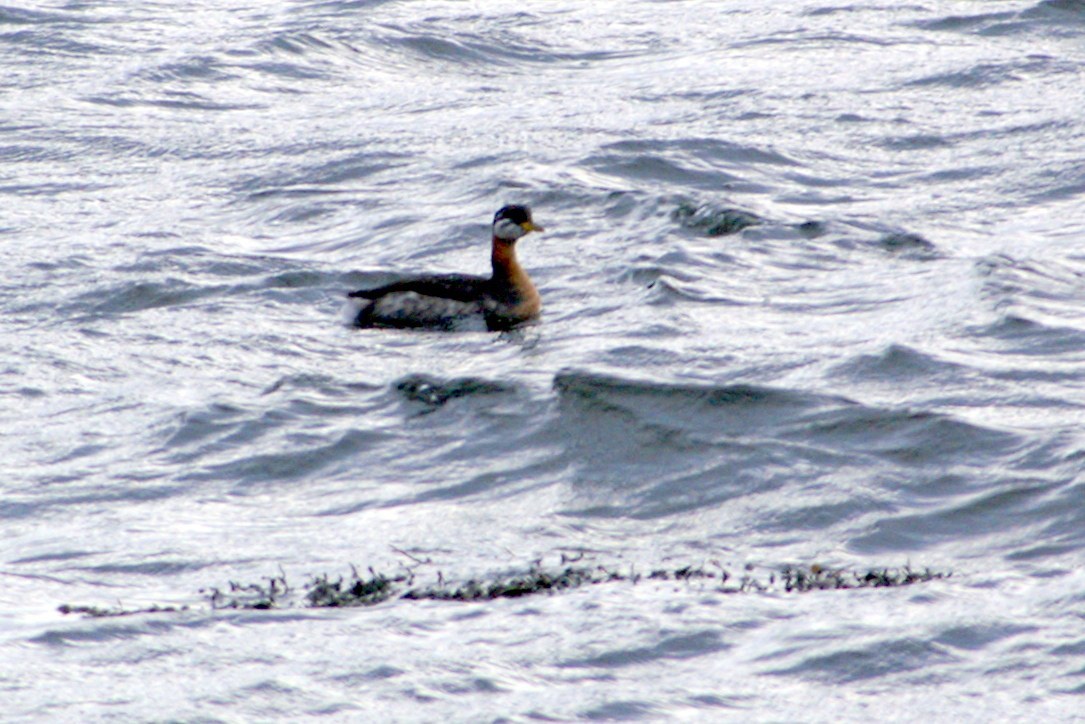
Red-necked Grebe
Podiceps grisegena
A robust, medium-large grebe with a rich chestnut neck and white cheek patch in breeding plumage, larger and bulkier than most other grebes.
- Size
- 40-55 cm (16-22 in) long, 77-85 cm wingspan
- Habitat
- freshwater lakes and marshes for breeding, coastal and open waters in winter
- Type
- waterfowl
Spotted a bird like this?
Identify any bird from a photo, free.
Overview
The Red-necked Grebe is a stocky, medium-large grebe intermediate in size between the small Horned or Eared Grebes and the very large Western Grebe. In breeding plumage it shows a rich reddish-chestnut neck, a black cap, contrasting pale grey cheeks, and a stout, mostly yellow bill with a dark tip. Non-breeding birds are duller grey-brown but retain a relatively heavy, dagger-shaped bill that helps distinguish them from other grebes at that time of year.
It is a powerful swimmer and diver, well adapted to both freshwater breeding lakes and rougher coastal winter waters.
How to identify it
Key field marks
- Breeding: chestnut-red neck, black cap, pale grey cheeks, thick yellow-based bill with a dark tip
- Non-breeding: grey-brown overall with a whitish foreneck and a notably heavy bill compared to smaller grebes
- Stocky, thick-necked build
Similar species
- Horned Grebe and Eared Grebe are both smaller with thinner, all-dark bills.
- Great Crested Grebe is similarly large but has a longer, thinner neck and distinctive head plumes/tippets rather than a solid chestnut neck.
Habitat & range
Habitat
Breeds on freshwater lakes, ponds, and marshes with emergent vegetation; winters mainly on sheltered coastal bays and estuaries.
Range
Breeds across northern North America and northern Eurasia; winters along temperate coastlines to the south.
Migration
A regular migrant moving between inland breeding lakes and coastal wintering waters each year.
Behavior & voice
Behavior
Generally less gregarious than some grebe species, often seen singly or in pairs, though loose winter concentrations can occur at productive coastal sites.
Voice
Gives loud, braying, almost horse-like whinnying calls during the breeding season.
Feeding
Dives to catch fish, aquatic insects, and crustaceans, using its stout bill to handle larger prey than many smaller grebes can manage.
Nesting
Builds a floating nest anchored to vegetation in shallow water; typically lays 4-5 pale bluish-white eggs.
Frequently asked questions
How do you identify a Red-necked Grebe?
Look for a stocky, medium-large grebe with a rich chestnut neck, black cap, pale grey cheeks, and a stout yellow-based bill in breeding plumage.
What does the Red-necked Grebe's call sound like?
It gives loud, braying, whinny-like calls during the breeding season, quite different from the trills of smaller grebes.
Where do Red-necked Grebes winter?
They typically winter on sheltered coastal bays and estuaries after breeding on inland freshwater lakes.
How does the Red-necked Grebe compare in size to other grebes?
It is larger and bulkier than Horned or Eared Grebes but smaller than the very large Western and Clark's Grebes.
Red-necked Grebe guides
In-depth guides for identifying, finding, and understanding Red-necked Grebe.
Other birds you may enjoy
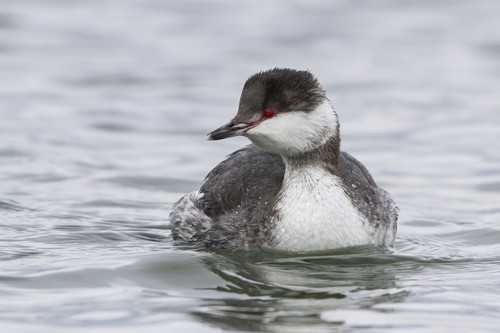
Horned Grebe
31-38 cm (12-15 in) long, 46-55 cm wingspan
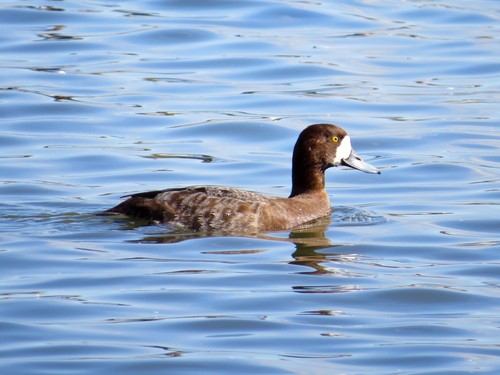
Greater Scaup
42-51 cm (16.5-20 in) long, 71-84 cm wingspan
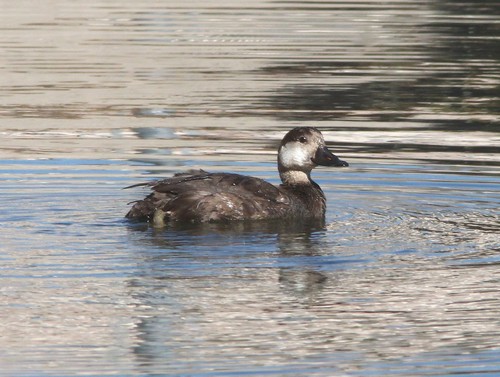
Black Scoter
43-54 cm (17-21 in) long, 79-90 cm wingspan
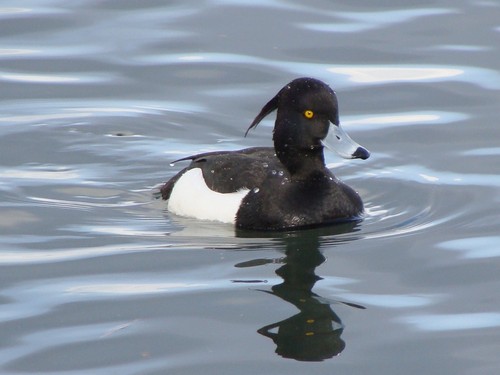
Tufted Duck
40-47 cm (16-18.5 in) long, 67-73 cm wingspan
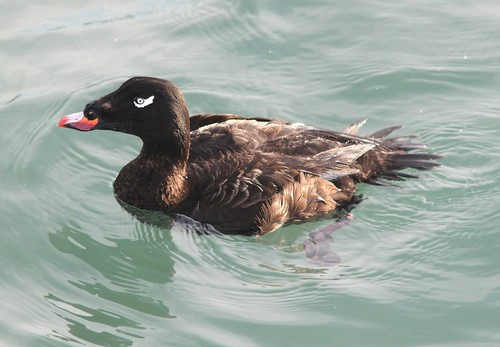
White-winged Scoter
48-58 cm (19-23 in) long, 86-99 cm wingspan
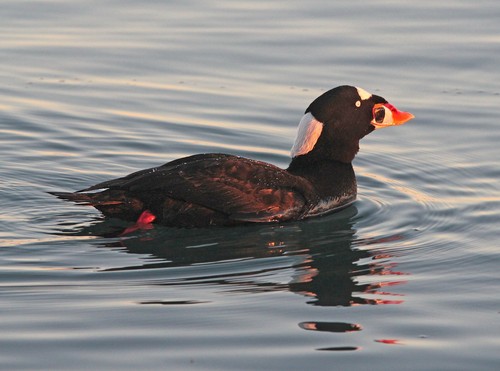
Surf Scoter
45-56 cm (18-22 in) long, 78-92 cm wingspan
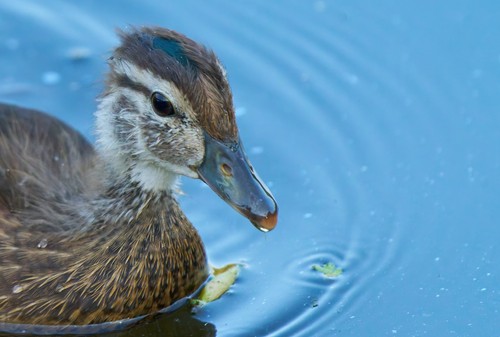
Wood Duck
47-54 cm (18.5-21 in) long, 66-73 cm wingspan
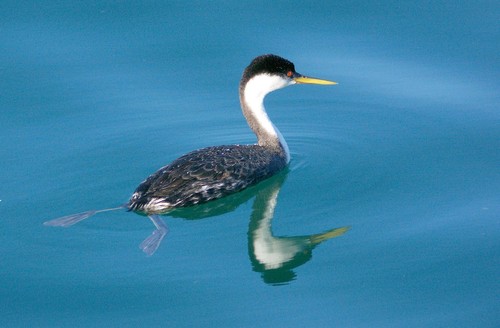
Western Grebe
56-74 cm (22-29 in) long, 79-102 cm wingspan
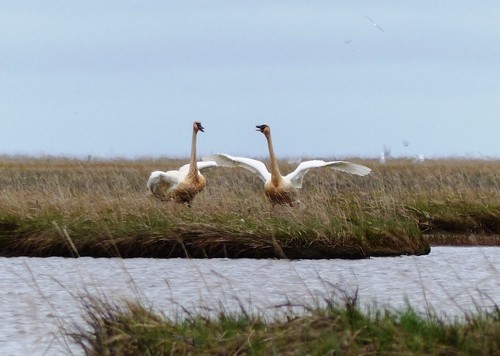
Tundra Swan
115-150 cm (45-59 in) long, about 180 cm wingspan
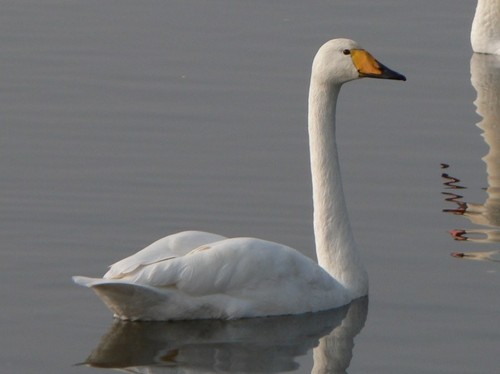
Whooper Swan
140-165 cm (55-65 in) long, 205-235 cm wingspan
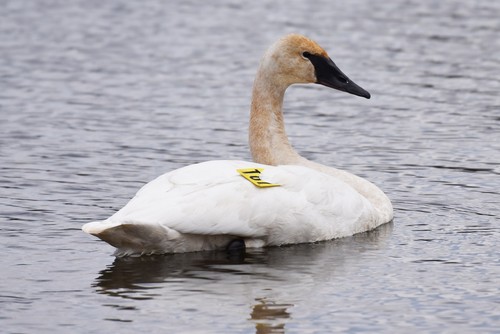
Trumpeter Swan
150-180 cm (59-71 in) long, up to 300 cm wingspan
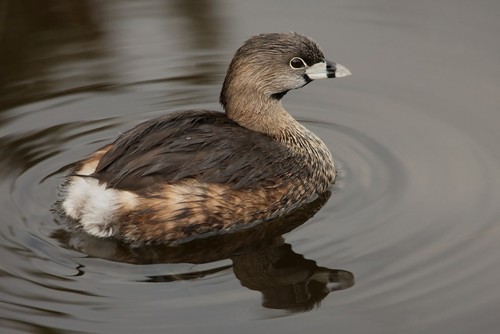
Pied-billed Grebe
31-38 cm (12-15 in) long, 45-62 cm wingspan