
Red-necked Grebe Identification Guide
A medium-large waterbird with a chestnut-red neck and dagger-like yellow-based bill in breeding plumage, and a blocky gray-and-white look in winter.
Read the full Red-necked Grebe encyclopedia entry →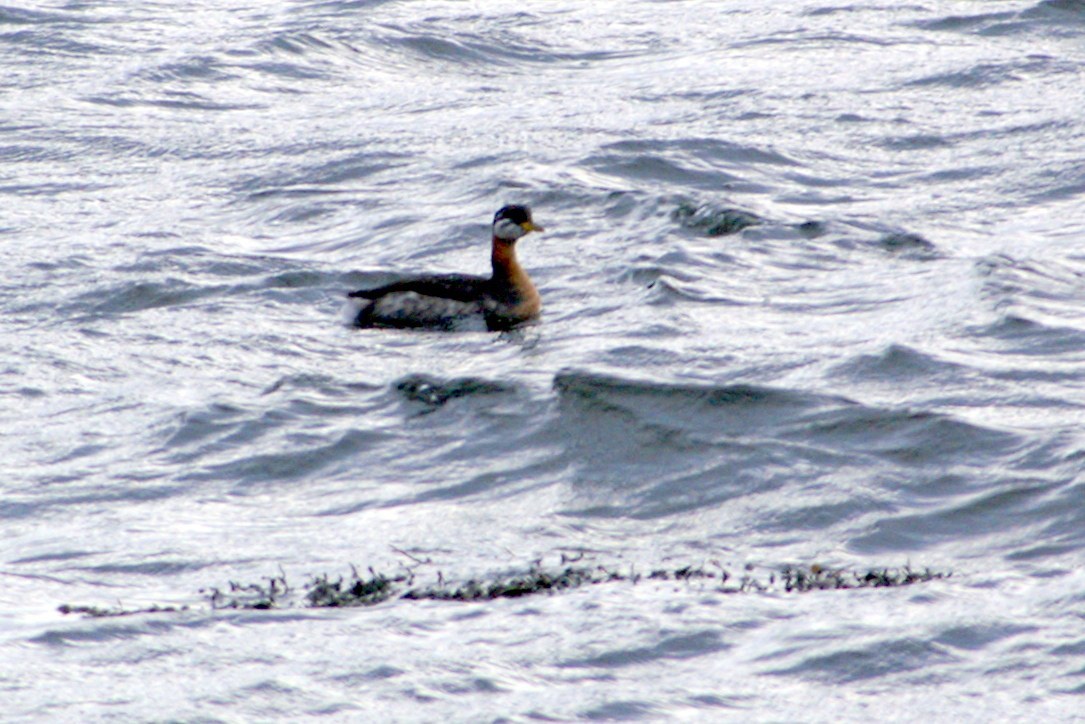
Key Field Marks
- Medium-large grebe with a thick neck, blocky head, and a long, straight, dagger-shaped bill
- Breeding plumage: rich chestnut-red neck and upper breast, black cap extending below the eye, pale gray cheek patch, and a dark bill with a distinct yellow base
- Non-breeding plumage: neck and face become dingy grayish-white, but the thick neck, blocky head shape, and heavy straight bill remain useful marks distinguishing it from other grebes
- Overall stockier and larger than Horned or Eared Grebe, with a flatter crown profile
Similar Species
- Horned Grebe: smaller and more compact with a thinner, shorter bill, and in breeding plumage shows golden "horn" head plumes and a black (not chestnut) neck; in winter shows sharper black-and-white contrast on the face than Red-necked Grebe's smudgier gray-brown pattern.
- Western Grebe / Clark's Grebe: much longer, slimmer neck and longer, thinner bill, mostly restricted to the western half of North America, and lack the chestnut breeding neck color.
- Great Crested Grebe (Eurasia): longer neck and head with prominent dark head tufts and ear-like plumes in breeding plumage, not present in Red-necked Grebe.
- Bill shape and thickness, plus overall body bulk, are the most reliable marks in duller non-breeding plumage.
Habitat, Range & Season
- Breeds on freshwater lakes, ponds, and marshes with emergent vegetation across boreal and subarctic regions of North America and Eurasia
- Builds a floating nest anchored to vegetation
- Winters primarily along both North American coasts (and large ice-free inland lakes/rivers in Eurasia), often in nearshore marine waters, bays, and large lakes
- Migrates overland as well as along coastlines, sometimes turning up on inland reservoirs during migration
Voice
- Gives loud, far-carrying wailing and braying calls on the breeding grounds, often compared to a horse's whinny or a loud laughing cackle
- Largely silent in winter on coastal and open water
Frequently asked questions
What is the best field mark for breeding Red-necked Grebe?
A chestnut-red neck combined with a dark cap, pale gray cheek, and a dagger-like bill with a yellow base.
How do I identify a non-breeding Red-necked Grebe?
Look for a large, blocky-headed grebe with a thick, straight, heavy bill and a dingy grayish neck — the bulk and bill shape separate it from smaller grebes like Horned Grebe.
Where does Red-necked Grebe spend the winter?
Mainly along coastal waters of North America and Eurasia, in bays and nearshore marine habitat, as well as some large ice-free lakes.
What does Red-necked Grebe sound like on its breeding grounds?
It gives loud, wailing, horse-like braying or whinnying calls that carry far across the water, quite different from its silence in winter.