
Surf Scoter Identification Guide
A chunky black North American sea duck, males instantly recognizable by their oversized, multicolored bill patterned with white, orange, and black, often seen riding ocean swells in coastal waters.
Read the full Surf Scoter encyclopedia entry →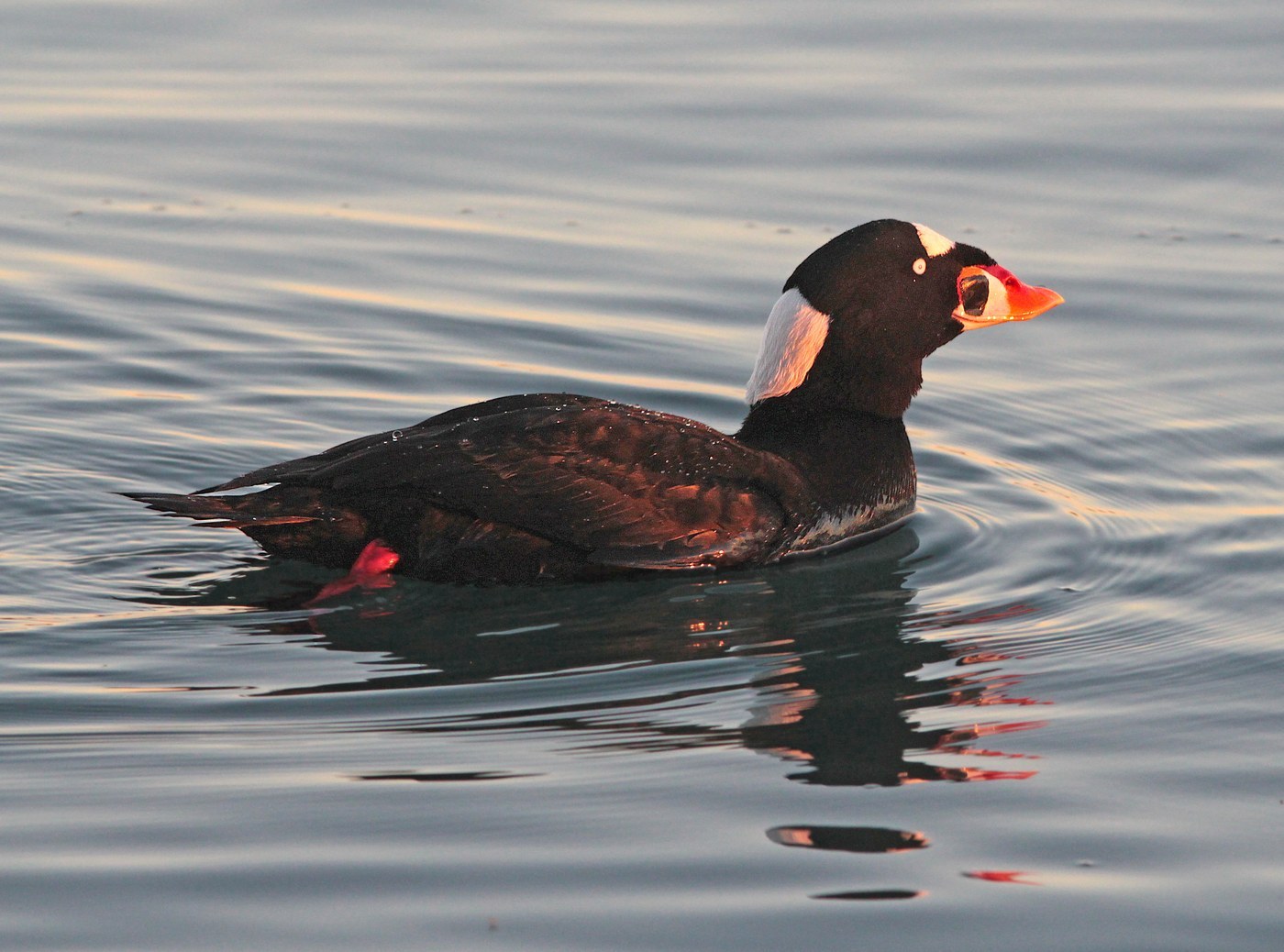
Size & Shape
The Surf Scoter is a stocky, large-headed sea duck about 43-53 cm (17-21 in) long, with a thick neck, a sloping forehead, and a notably large, wedge-shaped bill that gives the head a distinctive profile even at a distance.
Plumage & Key Field Marks
- Adult males are entirely black except for bold white patches on the forehead and nape, plus a massive bill boldly patterned in white, orange-red, and black with a black spot near the base — earning the nickname "skunk-headed coot" among some birders.
- Adult females are sooty brown overall, somewhat paler on the face with two indistinct pale patches (one before and one behind the eye), and a smaller, plainer grayish bill lacking the male's bold pattern.
- In flight, both sexes show all-dark wings with no pale speculum or wing patch, distinguishing them from White-winged Scoter.
Behavior
Surf Scoters are diving ducks that forage by diving to the seafloor for mollusks, especially mussels and clams, in the surf zone and coastal waters. They often raft in large flocks, riding breaking waves just offshore (hence the name), and can also be found on large inland lakes during migration.
Similar Species
- White-winged Scoter shows a white speculum patch visible on the folded wing and in flight, a smaller, less bulbous bill, and a small white comma-shaped mark below/behind the eye rather than large white forehead/nape patches.
- Black Scoter males are entirely black with a simple yellow-orange knob at the base of the bill only, lacking any white on the head; females are dark brown with pale cheeks but no white nape patch.
- Female scoters of all three species are notoriously similar; focus on bill shape/size and the presence/pattern of pale face patches to separate them.
Voice
Surf Scoters are generally quiet. Males may give low, gurgling or croaking calls during courtship; females give a harsh, guttural croak, but scoters are far less vocal than most puddle ducks and vocalizations are rarely the primary ID tool.
Habitat, Range & Season
Surf Scoters breed on freshwater lakes and tundra ponds across the boreal forest and subarctic of Alaska and Canada in summer. They winter along both the Pacific and Atlantic coasts of North America, from the Aleutians to Baja California in the west and from the Canadian Maritimes to the Gulf Coast in the east, favoring nearshore ocean waters, bays, and occasionally large lakes during migration (fall through spring along the coasts).
Frequently asked questions
What is the easiest field mark for a male Surf Scoter?
The oversized, multicolored bill (white, orange, and black) combined with bold white patches on the forehead and nape against otherwise all-black plumage.
How do I tell female Surf Scoter from female White-winged Scoter?
Female Surf Scoter lacks any white in the wing and has a smaller, plainer bill, while White-winged Scoter shows a white speculum patch visible on the closed wing and in flight.
Where do Surf Scoters spend the winter?
Along both the Pacific and Atlantic coasts of North America, often rafting in flocks just offshore in the surf zone and adjacent bays.
Do Surf Scoters breed near the ocean?
No, they breed on freshwater lakes and tundra ponds in the boreal and subarctic interior of Alaska and Canada, then move to coastal waters for winter.
What do Surf Scoters eat?
Mainly mollusks such as mussels and clams, obtained by diving to the sea floor, along with some crustaceans and aquatic invertebrates.